Dangerous Goods Transport — The Most Regulated Freight in the Industry Requires the Most Experienced Team
Liquid Bulk Tanker Transport Solutions.
What is Liquid Bulk Tanker Transport?

Dangerous goods transport refers to the regulated shipment of substances classified as hazardous under DOT 49 CFR or international equivalents including IMDG for ocean and IATA DGR for air. For liquid bulk freight, the most common dangerous goods classifications are Class 3 (flammable liquids), Class 6.1 (toxic substances), and Class 8 (corrosive substances). Each classification carries specific carrier certification requirements, documentation standards, placarding rules, and equipment compatibility requirements.

Dangerous goods transport is where the stakes in liquid bulk logistics are highest — and where the gap between a specialist and a generalist is most consequential. A documentation error on a Class 8 corrosive isn't an administrative inconvenience. It's a potential out-of-service notice, a significant DOT fine, or in the worst case, a safety incident.

We've been moving dangerous goods since 1994. Our compliance team has tracked every meaningful change to the DOT Hazardous Materials Regulations over three decades. We know the classification system, the documentation requirements, the carrier certification standards, and the international compliance codes inside out.

When a procurement director asks us whether a shipment is compliant, the answer isn't "we believe so" or "the carrier should handle that." The answer is yes — because we verified it ourselves before the truck moved.

The three classes we work with most

Class 3 — flammable liquids

The most common hazmat classification in liquid bulk chemical shipping. Any liquid with a flash point at or below 60°C (140°F) falls here — which covers an enormous range of industrial chemicals and solvents.

Common Class 3 liquid bulk products: Acetone, methanol, ethanol, isopropyl alcohol, toluene, xylene, MEK, ethyl acetate, gasoline, diesel, jet fuel, and most petroleum distillates and organic solvent intermediates.

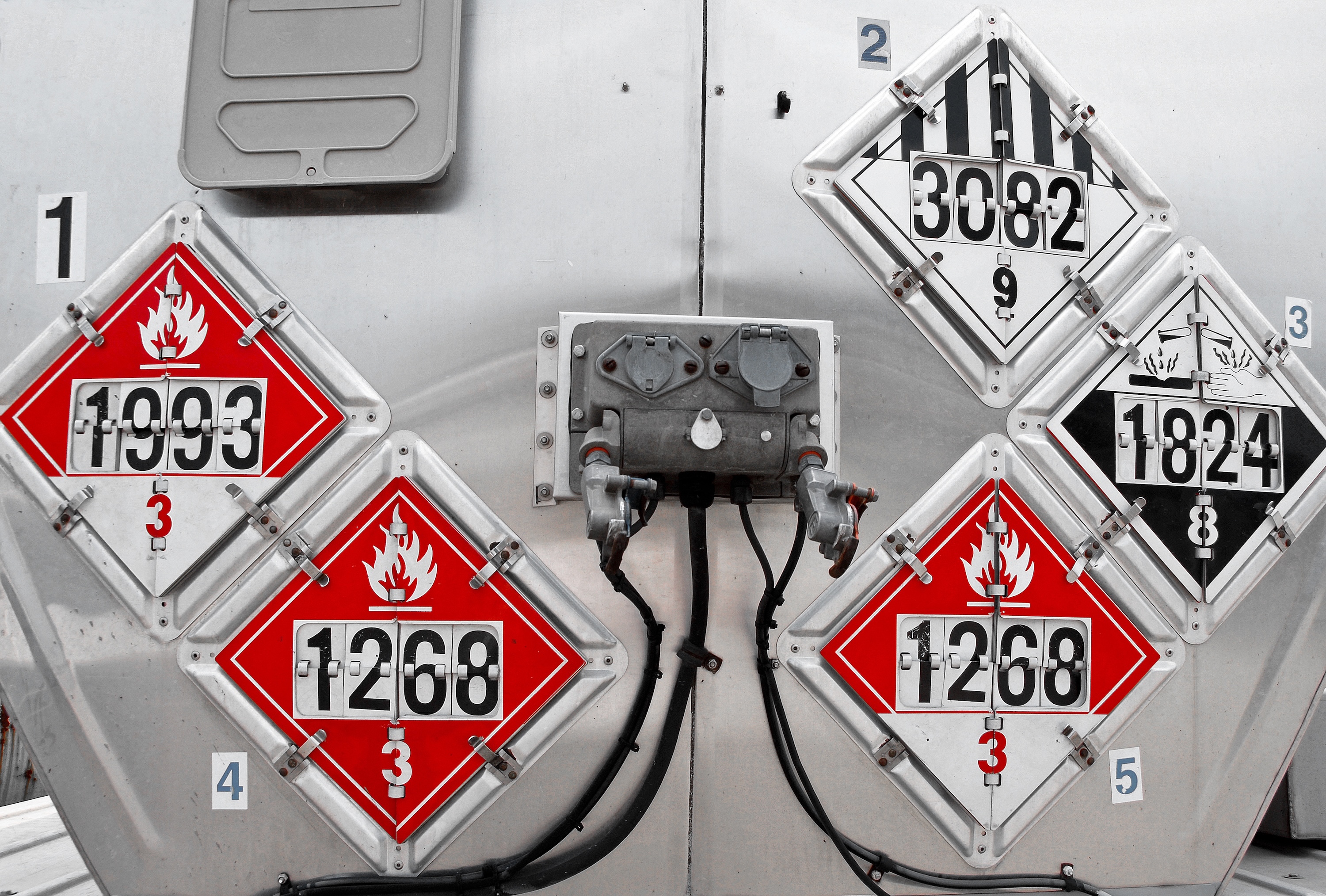
What's required: Flammable placard on the vehicle, UN identification number on shipping papers and bulk container, complete hazmat shipping paper with emergency response telephone number, HAZMAT-endorsed CDL driver. For certain flammable liquids that are also toxic, subsidiary hazard labeling applies.

Class 6.1 — toxic liquids

Toxic liquids are substances known or presumed to be toxic to humans through inhalation, ingestion, or skin contact. Within Class 6.1, Toxic Inhalation Hazard (TIH) materials carry additional requirements because their inhalation risk makes them particularly dangerous during a transportation incident.

Common Class 6.1 liquid bulk products: Aniline, chloroform, carbon disulfide, methyl bromide solutions, and various industrial chemical intermediates classified as acutely toxic.

What's required: Poison placard, TIH designation and additional emergency provisions for inhalation hazard materials, detailed emergency response information on all shipping papers.

Class 8 — corrosive substances

Corrosives cause visible destruction of human tissue or severe corrosion of metal. This class includes some of the most commonly moved industrial chemicals — and some of the most consequential to get wrong from a compliance and safety standpoint.

Common Class 8 liquid bulk products: Sulfuric acid, hydrochloric acid, nitric acid, phosphoric acid, sodium hydroxide solution, potassium hydroxide solution, acetic acid, formic acid, and other industrial acids and bases.

What's required: Corrosive placard, stainless steel or appropriately lined tanker — a bare aluminum tank with a concentrated acid is not an option — specific loading and unloading protocols for concentrated corrosives.

Dual-classified and multi-hazard materials

Many chemicals carry more than one dangerous goods classification. A toxic flammable liquid carries both Class 3 and Class 6.1 designations. A flammable corrosive carries Class 3 and Class 8. These require primary and subsidiary hazard labeling, more detailed shipping papers, and careful carrier selection. Our compliance team handles dual and multi-hazard classification as routine — not as an edge case that requires special handling.

Our dangerous goods compliance process

We verify compliance ourselves. We don't rely on the carrier to catch what we missed.

Classification review

Product SDS, CAS number, UN number, hazmat class, packing group, and applicable special provisions — all confirmed before a carrier is assigned. If there's any ambiguity we resolve it before booking, not during transit.

Carrier verification

Active DOT hazmat operating authority, current HAZMAT CDL endorsement, appropriate equipment for the specific hazmat class, insurance meeting our hazmat coverage minimums, current CSA safety ratings. Verified. Every time.

Documentation

Hazmat shipping papers with all required fields, bill of lading with emergency response information, SDS on file, placard instructions confirmed with the carrier, TIH and marine pollutant designations noted where applicable. In order before dispatch.

Carrier briefing

The driver is briefed on product-specific hazards, facility protocols, and emergency contact procedures before the truck moves. This is not optional.

International dangerous goods

For DG shipments by ocean, IMDG Code compliance applies. For air, IATA DGR. Our team manages the additional classification, packing, marking, and documentation requirements for international dangerous goods as part of our international logistics services.

Thirty years of dangerous goods. Zero tolerance for getting it wrong.

Most compliance failures in dangerous goods transport don't come from bad intentions. They come from providers who don't fully understand what they're managing — a misclassified product, an expired carrier certification, a shipping paper missing a required field. These are the failures that happen when dangerous goods logistics is treated as a standard freight transaction.

At Total Connection it has never been a standard freight transaction. Every dangerous goods shipment goes through the same rigorous compliance process regardless of the chemical, the lane, or the urgency. The process doesn't get shortened when we're in a hurry. That's not flexibility — that's the job.

Moving Dangerous Goods? Let's Make Sure It's Done Right.
FAQS/

Frequently asked questions

How do I determine the correct dangerous goods classification for my liquid chemical?

Start with Section 14 (Transport Information) of the product's Safety Data Sheet. It identifies the DOT hazard class, UN number, packing group, and proper shipping name for regulated products. If the classification is ambiguous — because some SDS documents are more complete than others — our compliance team can review the product information and confirm the correct classification. We'd rather resolve this before the shipment than during it.

What is a packing group and why does it matter?

Packing groups (I, II, or III) reflect the degree of danger the hazardous material presents — Group I being greatest, Group III being least. The packing group affects documentation specifics, quantity thresholds for certain regulatory exemptions, and in some cases equipment or carrier requirements. It must be correctly identified and documented on all shipping papers.

What are DOT civil penalties for hazmat non-compliance?

Current DOT civil penalties for hazmat violations reach up to $84,425 per violation per day for standard violations, and up to $196,992 per violation for incidents resulting in death, serious injury, or significant property damage. Beyond financial penalties, a non-compliant shipment can be placed out of service immediately — which means your freight stops moving and your supply chain waits. Working with a provider who manages compliance proactively is the only way to make these numbers irrelevant to your operation.

What is CHEMTREC and why is it required on shipping papers?

CHEMTREC (Chemical Transportation Emergency Center) provides 24-hour emergency response information to first responders during hazmat transportation incidents. DOT requires a 24-hour emergency response telephone number — typically CHEMTREC — on all hazmat shipping papers. This is a non-negotiable regulatory requirement and it appears on every dangerous goods shipment we manage.

Can you ship dangerous goods internationally?

Yes. International dangerous goods by ocean are governed by the IMDG Code, which has different classification, packing, marking, labeling, and documentation requirements from DOT domestic rules. By air, IATA Dangerous Goods Regulations apply. Our team manages international DG compliance as part of our international logistics services — including the shipper's declaration, proper packing certification, and all required documentation for international movement.

What happens when dangerous goods are improperly classified or documented?

At minimum: rejection by the carrier, port, or customs at the border. More seriously: significant DOT fines, shipment placed out of service, supply chain disruption, and — if a documentation error contributes to an incident — potential liability exposure that goes well beyond the freight cost. This is why classification and documentation for dangerous goods isn't something to delegate to a broker who treats it as a secondary concern.

How do you handle dangerous goods shipments that require multiple hazmat classifications?

Dual and multi-classified dangerous goods require primary and subsidiary hazard labeling on the shipping papers and the vehicle, careful selection of carriers certified for all applicable hazmat classes, and more detailed documentation than single-classification shipments. Our compliance team manages multi-hazard classification as a routine part of our process — it's one of the areas where the difference between a specialist and a generalist broker is most apparent.

Get A Quote Today - Cargo X Webflow Template