
Project Cargo Logistics and Heavy Haul
Total Connection plans and executes project cargo moves for oversized and overweight equipment: drilling rig mobilization, plant components, transformers, vessels and reels. We arrange the trailers, permits, escorts, route surveys, cranes and breakbulk or RoRo ocean legs, and run the schedule from the yard to the site.
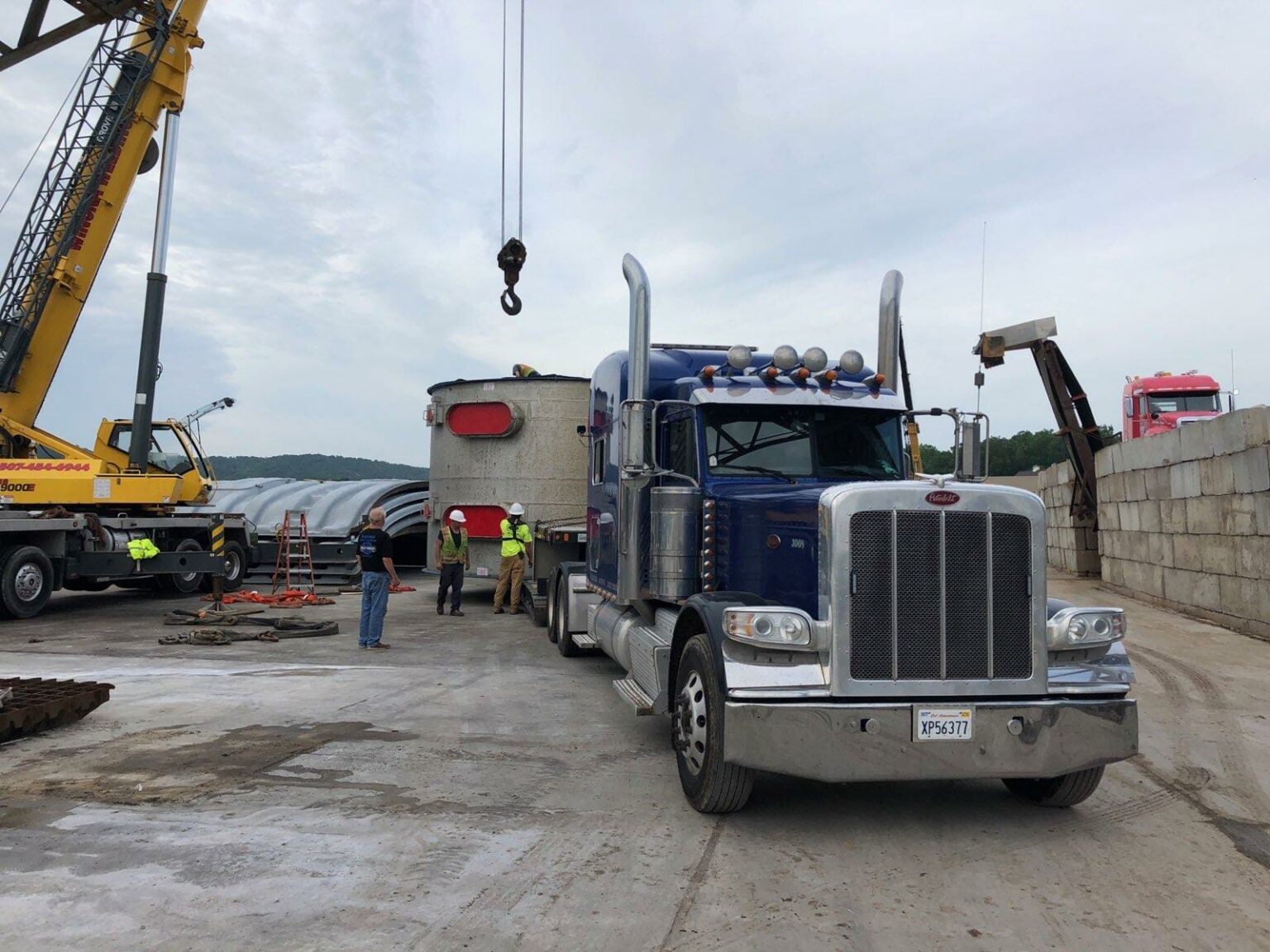
What project cargo logistics covers
Project cargo is freight that cannot move as a standard truckload or container: pieces over legal width, height, length or weight, or a set of components that has to arrive in a fixed sequence for a construction or drilling schedule. Each move is engineered around the piece, the route and the date the site needs it.
Total Connection has managed this work for oil and gas operators, drilling contractors and industrial plant owners since 1995, with oilfield support as our second specialty after liquid bulk chemicals. Our project team measures the cargo, selects the equipment, secures permits and escorts, books cranes and ocean space, and stays on the phone with the site until the last piece is set.
What we move
- Land drilling rig packages: substructures, masts, drawworks, mud pumps, generator houses
- Oilfield equipment: frac pumps, coiled tubing units, pipe and oversized reels
- Plant and process equipment: pressure vessels, heat exchangers, columns, reactors, modules
- Power equipment: transformers, generators, turbines
- Construction and mining machinery: excavators, crushers, mills, conveyors
- Steel structures, tanks and fabricated assemblies
Equipment and services matched to the piece
Heavy haul trailers
Flatbed, step deck, double drop, extendable, RGN and multi-axle trailers selected from the verified dimensions and weight of each piece. Recent programs used 33 flatbeds, 19 double drops, 17 extendable double drops, 5 six-axle step decks and an RGN extendable on a single plant expansion.
Permits, escorts and route surveys
State and provincial oversize and overweight permits, pilot cars and police escorts, and pre-trip route surveys that clear bridges, turns and utility lines before the first load rolls.
Cranes and rigging
Crane sourcing with certified operators for barge discharge, yard loadout and site offload, with engineered lift plans where the weight requires them.
Breakbulk, RoRo and flat rack ocean freight
Vessel bookings for out-of-gauge cargo as a licensed NVOCC, including stowage and lashing plans certified by marine surveyors. See breakbulk and OOG cargo and RoRo and LoLo cargo.
Rig mobilization and plant relocation
Measurement at rig-down, sequenced trucking so crews receive components in order, port and terminal coordination, and export documentation. See drilling rig mobilization and plant building and relocation logistics.
Site infrastructure for the project
For longer programs we source laydown yards and warehousing near the site, arrange dedicated trailers for daily throughput and set up mid-term equipment rentals so the project has its own capacity.
How a project cargo move runs with Total Connection
1. Measure and verify
Dimensions and weights are confirmed on site or from drawings for every piece, because permits and trailer assignments are only as good as the numbers behind them.
2. Engineer the plan
Trailer types, axle configurations, lift plans, route surveys and permit timelines are set against the site schedule, with contingency routes identified before they are needed.
3. Execute in sequence
Loads are dispatched in the order the site needs them, escorts and cranes are staged ahead of arrival, and weather or permit changes are handled the same day.
4. Report and close out
Live updates during the move and a proof pack at the end: permits, surveys, weight tickets, lashing certificates and delivery receipts.
Recent project cargo programs
- 1500 HP land rig, 68 breakbulk packages and 1,019 metric tons, Oklahoma to Houston to Salvador, Brazil
- 75 plant components, 1.9 million pounds, barge discharge at Winona to the Fairmont, MN site
- 25 oversized reels a day, up to 100,000 lb each, across Texas, Oklahoma and Louisiana
- Four rig components, 115.78 metric tons, Jacksonville to Brisbane with DAFF biosecurity compliance
Industries we serve with project cargo
Oil and gas
Rig moves, frac fleets, well site equipment and pipe programs for operators and drilling contractors, domestic and export.
Petrochemical and refining
Turnaround equipment, columns, exchangers and modules delivered into plant windows with crane and site coordination.
Power and utilities
Transformers, generators and switchgear with rail, barge and heavy haul legs planned together.
Agriculture and food processing
Plant expansions and process equipment, including barge and crane operations at inland terminals.
Mining and construction
Crushers, mills, conveyors and heavy machinery to remote sites and ports.
Project cargo logistics FAQ
What qualifies as project cargo?
Freight that exceeds legal dimensions or weight for a standard trailer or container, or a set of components that must arrive in a planned sequence for a construction, drilling or plant schedule. It requires engineering, permits and project management rather than a simple truck booking.
Do you handle oversize permits and escorts?
Yes. We secure state and provincial oversize and overweight permits, arrange pilot cars and police escorts, and run route surveys before dispatch.
Can you mobilize a drilling rig internationally?
Yes. We measure at rig-down, sequence trucking to the port, coordinate terminal loadout and marine surveys, book breakbulk or RoRo space as a licensed NVOCC and prepare export documentation. A recent move took a 1500 HP rig from Oklahoma to Salvador, Brazil in 68 packages.
How far ahead should a project cargo move be planned?
Permits, route surveys, crane bookings and vessel space usually need two to six weeks, longer for multi-state superloads or export moves. Send drawings and dates early and we build the timeline backward from the site date.
What insurance covers project cargo?
Total Connection carries $5 million in general liability. Carrier cargo coverage is verified for each load and higher limits or marine cargo insurance are arranged to match the value of the equipment.
Quote a project cargo move
Send drawings or dimensions, weights, origin, destination and the site date. A project coordinator replies with equipment, permits and a plan.
Tell us about your shipment.
Our team responds within minutes. One call, one contact, no handoffs.
732-817-0401
Available 24/7
quotes@totalconnection.com
We reply fast
Got it. A dispatcher will reach out from quotes@totalconnection.com or 732-817-0401 to get the shipment details and quote it. If the load is moving today, call us and mention you just sent the form.
The form did not go through. Email quotes@totalconnection.com or call 732-817-0401 and we will quote it by phone.