RoRo vs LoLo Cargo — Choosing the Right Ocean Freight Method for Your Project Equipment
Liquid Bulk Tanker Transport Solutions.
What is Liquid Bulk Tanker Transport?

RoRo (Roll-on/Roll-off) ocean freight is a method where cargo is driven or towed directly onto a vessel via a ramp — used for wheeled, tracked, or self-propelled equipment. LoLo (Lift-on/Lift-off) ocean freight is a method where cargo is lifted onto and off a vessel using cranes — used for fixed, non-wheeled cargo including heavy machinery, structural components, and equipment that cannot be driven. The choice between RoRo and LoLo depends on whether the cargo can roll under its own power or be towed, the weight and dimensions of the cargo, and the port infrastructure at origin and destination.

The fundamental question is simple: can your cargo roll?

If your equipment has wheels or tracks and can be driven or towed onto a vessel via a ramp — vehicles, mobile cranes, wheeled generators, trailers, self-propelled machinery — RoRo is usually the right answer. No crane required at origin or destination. Faster loading and discharge. Often more cost-effective for wheeled cargo.

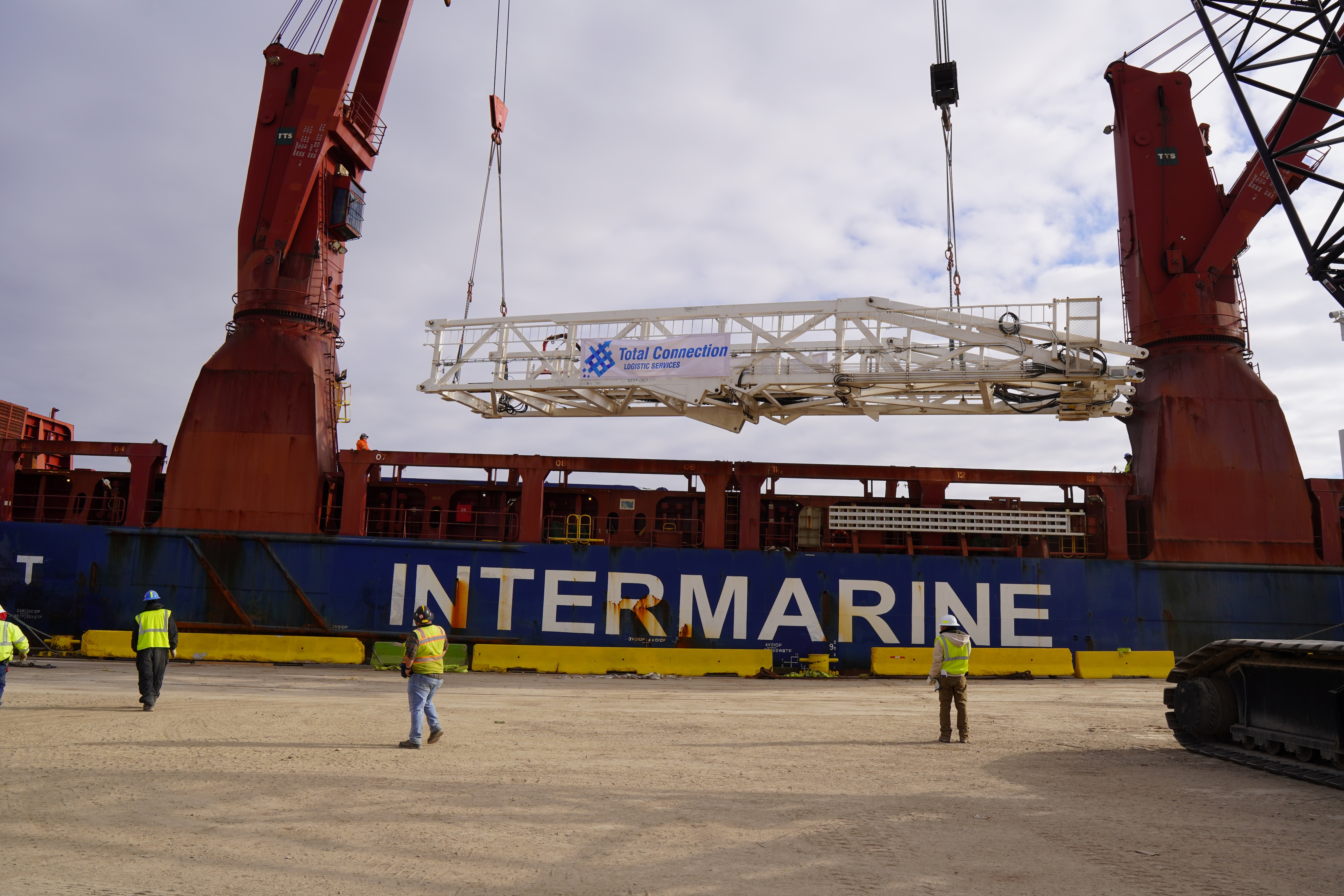
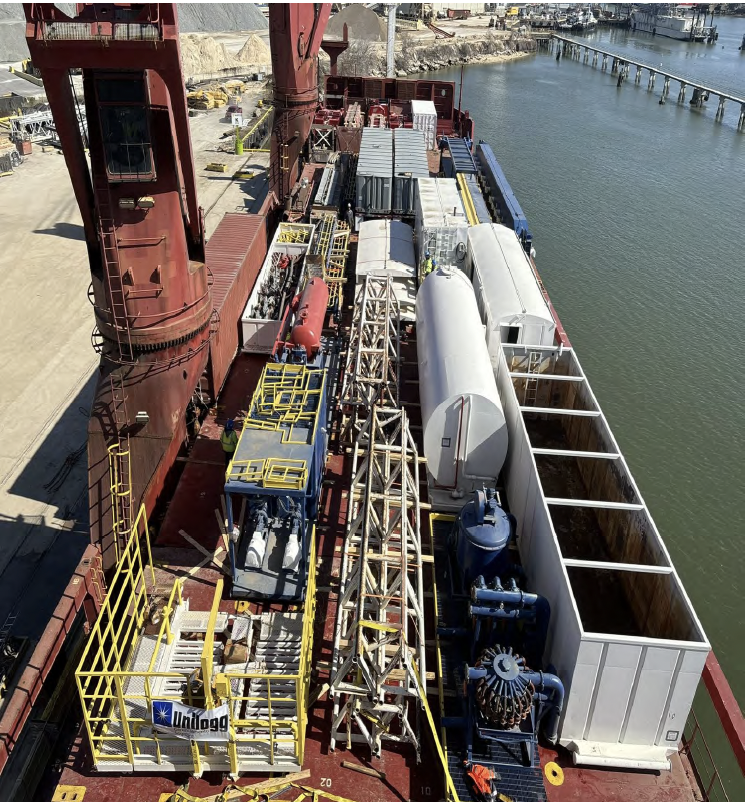
If your equipment is fixed, has no wheels, or is too heavy or awkwardly shaped for ramp loading — industrial machinery, reactor vessels, structural components, drilling equipment, fixed generators — LoLo is the method. A crane lifts the cargo onto the vessel at origin and lifts it off at destination. The crane capacity required determines which vessel types are suitable.

In practice many project cargo moves involve a combination — some components moving RoRo, others moving LoLo on the same or different vessels. Total Connection evaluates each component in the cargo inventory and determines the most cost-effective and operationally practical method for each piece.

RoRo shipping — how it works and when to use it

How RoRo works

RoRo vessels have ramps at the stern, bow, or side of the ship that allow wheeled cargo to be driven directly onto the vessel's car decks. The cargo is secured in place on the deck using chains, lashings, and wheel chocks. At the destination port the cargo is driven off the vessel via the same ramp system.

When RoRo is the right choice

Your cargo has wheels or tracks and can be driven or towed. Your cargo weight is within RoRo vessel deck capacity limits. The origin and destination ports have RoRo ramp facilities. You want to avoid crane lifts at both ends — which adds cost and introduces risk for sensitive or high-value equipment.

RoRo limitations

RoRo requires port facilities with RoRo ramp access — not all ports have them. Cargo height is limited by the vessel's deck-to-deck clearance — typically 4 to 6 meters depending on the vessel. Very heavy cargo may exceed RoRo deck loading capacity, requiring LoLo instead. Non-wheeled cargo cannot use RoRo regardless of other factors.

Common RoRo cargo types

Vehicles of all types. Mobile cranes and construction equipment. Wheeled generators and power units. Agricultural equipment. Mining vehicles. Trailers and semi-trailers. Self-propelled modular transporters.

LoLo shipping — how it works and when to use it

How LoLo works

LoLo vessels — also called multipurpose or heavy lift vessels — are equipped with onboard cranes that lift cargo from the dock onto the vessel's holds or deck, and lift it back off at the destination port. The cargo is prepared with lifting points, spreader bars where required, and rigging appropriate for the specific lift weight and configuration.

When LoLo is the right choice

Your cargo cannot roll or be driven — fixed machinery, pressure vessels, structural components, and non-wheeled industrial equipment. Your cargo exceeds the weight or height limits of available RoRo vessels. The destination port lacks RoRo facilities but has crane capacity. Your cargo requires very precise placement that crane lifts enable better than ramp-driven loading.

LoLo limitations

Crane capacity determines the maximum single lift weight — this varies significantly between vessels, from a few hundred tonnes for smaller multipurpose vessels to over a thousand tonnes for the largest heavy lift ships. LoLo requires crane availability at both origin and destination ports. Lift engineering — determining lift points, rigging configuration, and load distribution — adds planning time and cost compared to RoRo.

Common LoLo cargo types

Industrial machinery and manufacturing equipment. Pressure vessels and reactors. Drilling rig components. Power generation equipment — fixed turbines and generators. Structural steel components. Mining and minerals processing equipment.

How Total Connection helps you choose

We assess every project cargo inquiry against three criteria before recommending RoRo, LoLo, or a combination.

Can it roll? If the equipment has wheels or tracks and can be driven or towed safely, RoRo is evaluated first as typically the more cost-effective option.

What does it weigh and how big is it? Weight and dimensions determine vessel eligibility. Some cargo is simply too heavy for RoRo deck limits or too large for RoRo deck clearances, making LoLo the only option.

What are the ports? Origin and destination port infrastructure determines which methods are available. A port without RoRo ramp facilities requires LoLo regardless of cargo type. A port with limited crane capacity may restrict LoLo options for heavy lifts.

Once we've assessed these factors we recommend the most practical and cost-effective solution — and in some cases that means a combination of methods for different components in the same cargo program.

When the answer is both

Large project cargo programs often involve a mix of cargo types — some wheeled, some not. A plant relocation might involve wheeled mobile equipment moving RoRo and fixed process equipment moving LoLo on the same overall program. A rig mobilization might move the rig's wheeled surface equipment RoRo and the heavy mast sections and substructure on multipurpose LoLo vessels.

Managing a mixed RoRo and LoLo program requires coordination across different vessel types, different vessel schedules, and different port handling requirements — while keeping the overall delivery sequence aligned with the installation schedule at the destination. That's exactly the kind of multi-modal project cargo coordination Total Connection handles as a matter of course.

Not Sure Whether You Need RoRo or LoLo?
FAQS/

Frequently asked questions

What does RoRo stand for?

RoRo stands for Roll-on/Roll-off — referring to the method by which cargo is loaded and discharged by rolling onto and off the vessel via a ramp, rather than being lifted by a crane.

What does LoLo stand for?

LoLo stands for Lift-on/Lift-off — referring to the method by which cargo is loaded and discharged by crane lift rather than by rolling.

Is RoRo or LoLo cheaper for project cargo?

It depends on the cargo and the route. RoRo is generally less expensive for wheeled cargo because it eliminates crane costs at both ports and typically has faster loading and discharge times. LoLo becomes more cost-effective or necessary when the cargo can't roll, when it exceeds RoRo weight limits, or when port infrastructure at origin or destination doesn't support RoRo operations. The cheapest option is the one that's actually feasible for your cargo — and that determination requires a proper cargo assessment.

Can the same vessel handle both RoRo and LoLo cargo?

Some multipurpose vessels are designed to handle both — they have RoRo ramp capability for wheeled cargo and onboard cranes for LoLo lifts. These are called ConRo vessels or multipurpose heavy lift vessels with RoRo capability. For project cargo programs with a mix of wheeled and non-wheeled components, these vessels can sometimes accommodate the full cargo inventory on a single sailing, which simplifies coordination and potentially reduces cost.

What are the weight limits for RoRo vessels?

RoRo vessel deck loading capacity varies by vessel design and deck section. Standard RoRo car carriers have relatively low deck loading limits suitable for passenger vehicles and light commercial vehicles. Heavy-duty RoRo vessels designed for project cargo can typically handle individual units up to 500 to 800 tonnes depending on the vessel and deck section. For very heavy cargo LoLo heavy lift vessels with crane capacities of several hundred to over a thousand tonnes are required.

What is a ConRo vessel?

A ConRo vessel is a multipurpose ship that combines container capacity with RoRo capability — allowing containerized cargo, wheeled cargo, and in some cases LoLo cargo to be carried on the same vessel. ConRo vessels are commonly used on trade lanes with diverse cargo mixes where both containerized and project cargo volumes exist. For project cargo shippers ConRo vessels sometimes offer competitive rates on lanes where they provide regular service, though their RoRo and crane capacities are typically less than dedicated project cargo vessels.

How does RoRo vs LoLo affect my cargo insurance?

Both RoRo and LoLo cargo can be insured under marine cargo insurance policies, but the risk profile differs. RoRo cargo faces risks during the drive-on and drive-off process and from vessel movement during transit. LoLo cargo faces crane lift risks at origin and destination in addition to transit risks. Marine cargo insurers experienced in project cargo can structure coverage appropriate for either method. Total Connection works with cargo insurers familiar with both RoRo and LoLo risks for project cargo and recommends discussing insurance requirements at the time of move planning.

What happens if my destination port doesn't support RoRo operations?

If your preferred destination port lacks RoRo ramp facilities, LoLo becomes the required method — provided the port has adequate crane capacity for your cargo weight. If the destination port has neither RoRo facilities nor sufficient crane capacity, we assess alternative discharge ports with better infrastructure and develop an inland transportation plan from the alternative port to your final destination. Port infrastructure assessment is a standard part of our routing study for every international project cargo move.

Get A Quote Today - Cargo X Webflow Template