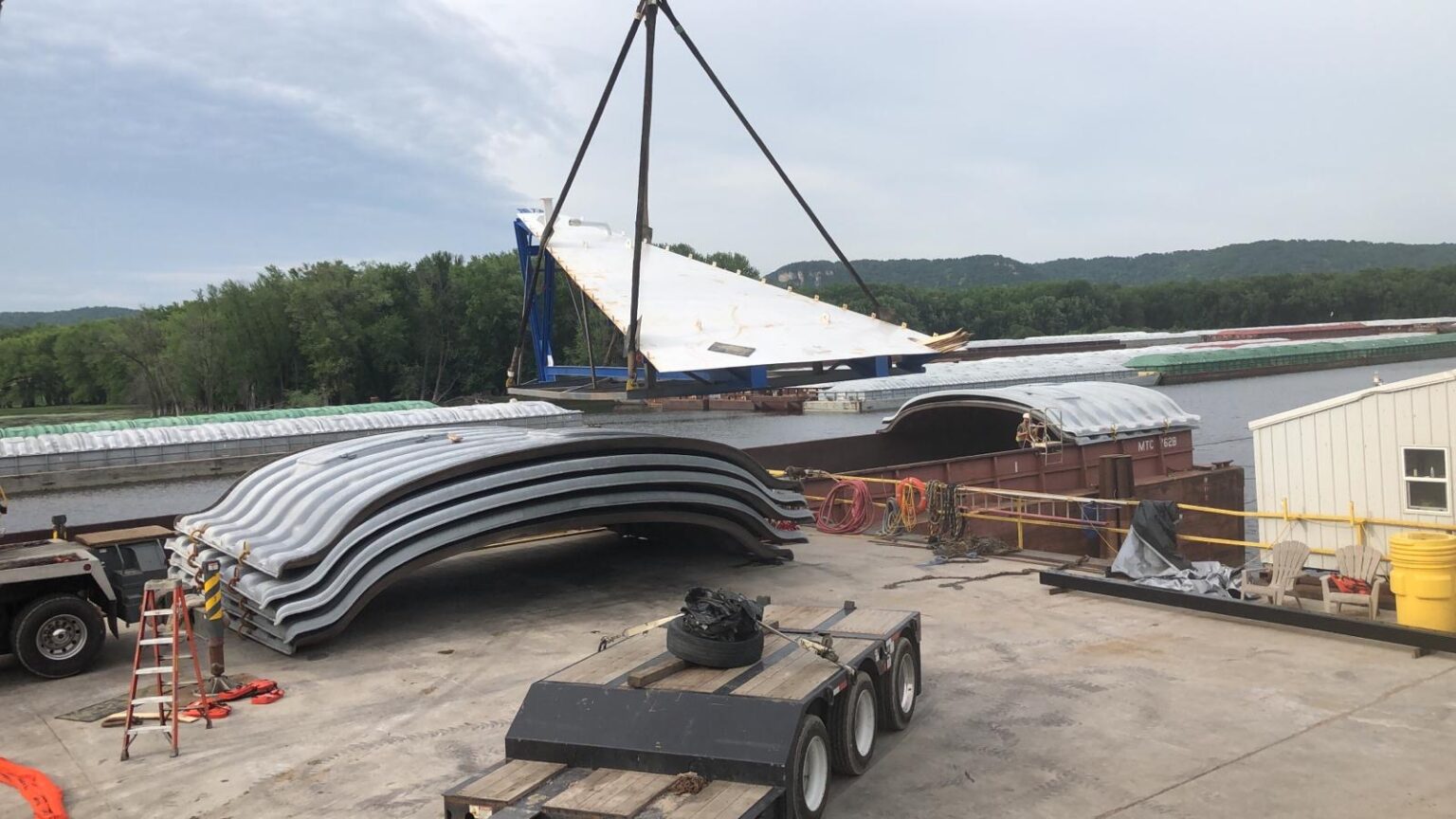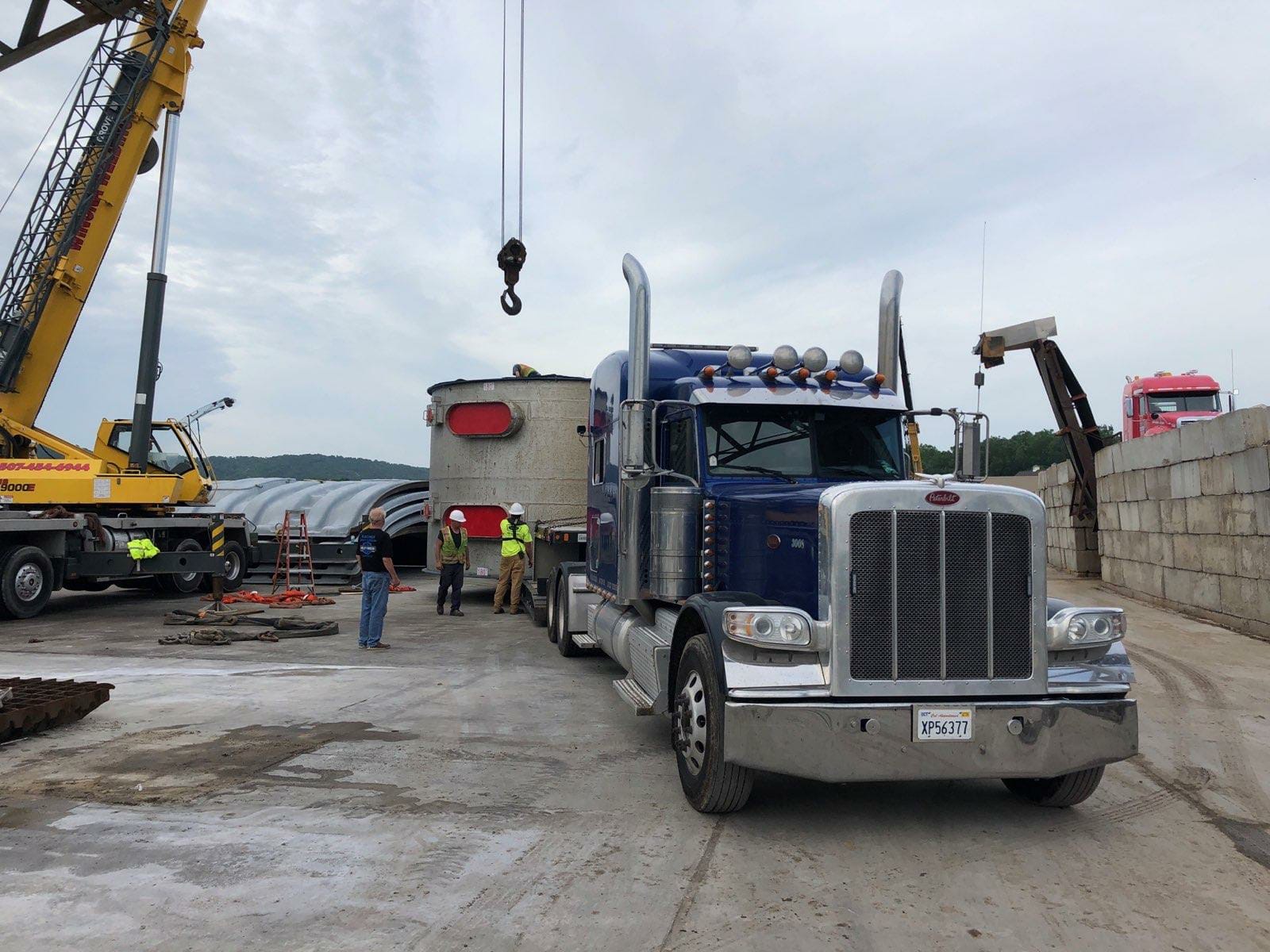

Heavy lift freight refers to the transportation of cargo that exceeds standard weight limits for conventional trucking or ocean freight equipment, requiring specialized lifting equipment, reinforced trailers, or heavy lift vessels. Out-of-gauge (OOG) cargo exceeds the standard dimensions of conventional transportation equipment — too wide, too tall, or too long for standard trailers or shipping containers. Both categories require engineering input, specialized equipment sourcing, permit coordination, and logistics expertise that standard freight operations don't provide.
Standard freight has standardized solutions. When your cargo doesn't fit those standards — in weight, in dimension, or in both — the entire logistics operation has to be built around it rather than the other way around.
That starts with the right equipment. Lowboy trailers for tall industrial machinery. Extendable flatbed trailers for long structural components. Multi-axle hydraulic platform trailers for extreme weights. Flat rack and open top ocean containers for OOG international cargo. Multipurpose heavy lift vessels when the cargo exceeds what any container can hold.
Then it requires the right permits. Every state has its own oversize and overweight permit requirements. Routes have to be surveyed for bridge weight restrictions, overhead clearances, road width limitations, and turn radius constraints. Escort vehicles have to be coordinated. In some cases utility lines have to be temporarily lifted.
And then it requires the right coordination between all of these moving pieces — on a timeline that aligns with your project schedule, not with what's convenient for the logistics provider.
Total Connection manages all of it. In-house, under one point of contact, from equipment sourcing through delivery confirmation.
Lowboy, extendable flatbed, multi-axle platform, and specialized trailer solutions for domestic oversized and overweight cargo. Full permit management, route survey, escort coordination, and utility clearance where required.
Flat rack containers, open top containers, RoRo vessel arrangements, and multipurpose heavy lift vessel solutions for international OOG cargo. Full port coordination, stowage engineering, and cargo securing documentation.
For cargo requiring crane lifts at origin, destination, or both — we coordinate crane sourcing, rigging engineering, lift plan preparation, and on-site lift supervision as part of the overall move management.
For extreme dimension or weight loads we conduct or commission route surveys that identify constraints along the planned route and develop solutions — alternative routing, temporary infrastructure modifications, or load configuration changes — before the move begins.
Many heavy lift and OOG projects involve multiple transportation modes — domestic trucking to a port, ocean freight on a specialized vessel, and in-country trucking at destination. We manage the full multi-modal sequence as an integrated logistics program, not as separate bookings handed off between providers.
For domestic heavy haul: Standard lowboy trailers for tall equipment up to legal width. Extendable lowboy and flatbed trailers for long loads. Multi-axle hydraulic platform trailers for extreme weights requiring distributed axle loading. Double drop trailers for tall cargo requiring lower deck height.
For international OOG ocean freight: 20-foot and 40-foot flat rack containers for cargo exceeding standard container width or height. Open top containers for cargo requiring crane loading. RoRo vessels for wheeled and self-propelled equipment. Multipurpose and heavy lift vessels for cargo exceeding flat rack capacity in weight or dimension.
The complexity isn't just in the cargo — it's in the coordination. A break bulk or OOG move requires simultaneous management of vessel scheduling, port authority approvals, stevedoring coordination, crane availability, inland transport to the port, cargo surveys, specialized documentation, and insurance coverage specific to heavy and project cargo risks.
Every one of these pieces has to come together at the right time. A crane that's unavailable at origin. A port authority that hasn't confirmed OOG acceptance. A vessel that changes its port call schedule. These are the disruptions that derail heavy lift and OOG shipments when managed by providers who don't do this regularly.
Our project cargo team manages heavy lift and OOG freight as a core competency. The coordination experience, the port relationships, and the specialized carrier network are already in place — you're not asking us to figure it out for the first time on your cargo.
OOG (out-of-gauge) cargo is any shipment that exceeds the internal dimensions of a standard 20-foot or 40-foot shipping container — specifically 5.9 meters in length, 2.35 meters in width, or 2.39 meters in height for a standard container. For domestic trucking, oversized cargo is anything exceeding standard legal dimensions — typically 8.5 feet wide, 13.5 to 14 feet tall, and 53 feet long depending on the state. Cargo exceeding these dimensions requires specialized equipment and permits.
Permit requirements vary by state and by load configuration. At minimum most oversized and overweight loads require a trip permit from each state the load travels through. Loads exceeding certain dimensions or weights may require superload permits with additional requirements including route surveys, engineering certifications, and advance notice to state transportation authorities. Some loads require escort vehicles — front, rear, or both — depending on load width and state requirements. Total Connection manages the complete permit process for every domestic heavy haul move.
Heavy lift and OOG rates are calculated based on cargo dimensions and weight, trailer type required, route distance and complexity, permit costs, escort vehicle requirements, and any specialized rigging or crane services needed. Unlike standard freight where rates follow a predictable per-mile or per-weight formula, heavy lift and OOG rates require a detailed cargo study and route assessment before accurate pricing can be provided. Total Connection provides all-in quotes that include every cost component.
A lowboy trailer has a dropped deck section that sits very close to the ground — typically 18 to 24 inches — allowing tall cargo to be transported while remaining within height clearance limits. Lowboys are used for tall industrial machinery, construction equipment, transformers, and other cargo that would exceed standard height limits on a conventional flatbed. For extreme heights a double drop lowboy provides an even lower deck section.
A hydraulic platform trailer — also called a self-propelled modular transporter (SPMT) or multi-axle platform trailer — is a specialized trailer system used for extremely heavy loads that exceed the capacity of conventional trailers. The load is spread across a large number of axles to distribute weight and stay within road loading limits. Hydraulic platform trailers are used for large industrial modules, reactor vessels, transformers, and other cargo weighing hundreds or thousands of tonnes. They are steerable in multiple configurations and can be combined in various arrangements to match the cargo footprint and weight distribution requirements.
Yes — and managing both legs under a single provider is significantly better than coordinating between separate domestic and international logistics vendors. When we manage the full scope the domestic heavy haul to the port is coordinated with the vessel sailing schedule, the port handling is arranged to accommodate the cargo's lifting requirements, and the international leg is planned with knowledge of the origin cargo configuration. Handoffs between separate providers are where project cargo moves most often go wrong. Keeping it under one team eliminates that risk.