
Hazmat liquid bulk transport is the regulated shipment of liquid hazardous materials by tanker truck or specialized container, governed by DOT Hazardous Materials Regulations under 49 CFR. It requires hazmat-certified carriers with properly endorsed CDL drivers, correct chemical classification and documentation, appropriate placarding, and verified equipment compatibility with the specific hazardous substance being transported.
We've been managing hazmat chemical freight since 1994. The regulatory framework has changed significantly over that time — classification requirements, documentation standards, carrier certification rules, international compliance codes. Our team has navigated every one of those changes. When we tell you a shipment is compliant, we mean it has been verified against current DOT requirements by people who do this every day, not people who looked it up.
The other thing we've learned over 30 years: most compliance failures in hazmat liquid bulk don't come from intentional shortcuts. They come from using a provider who doesn't know what they don't know. That's the gap we close.
The most common hazmat classification in liquid bulk chemical shipping. Flammable liquids have a flash point at or below 60°C (140°F) and include a huge range of industrial chemicals.
Common products: Acetone, methanol, ethanol, isopropyl alcohol, toluene, xylene, MEK, ethyl acetate, gasoline, diesel, and most petroleum distillates.
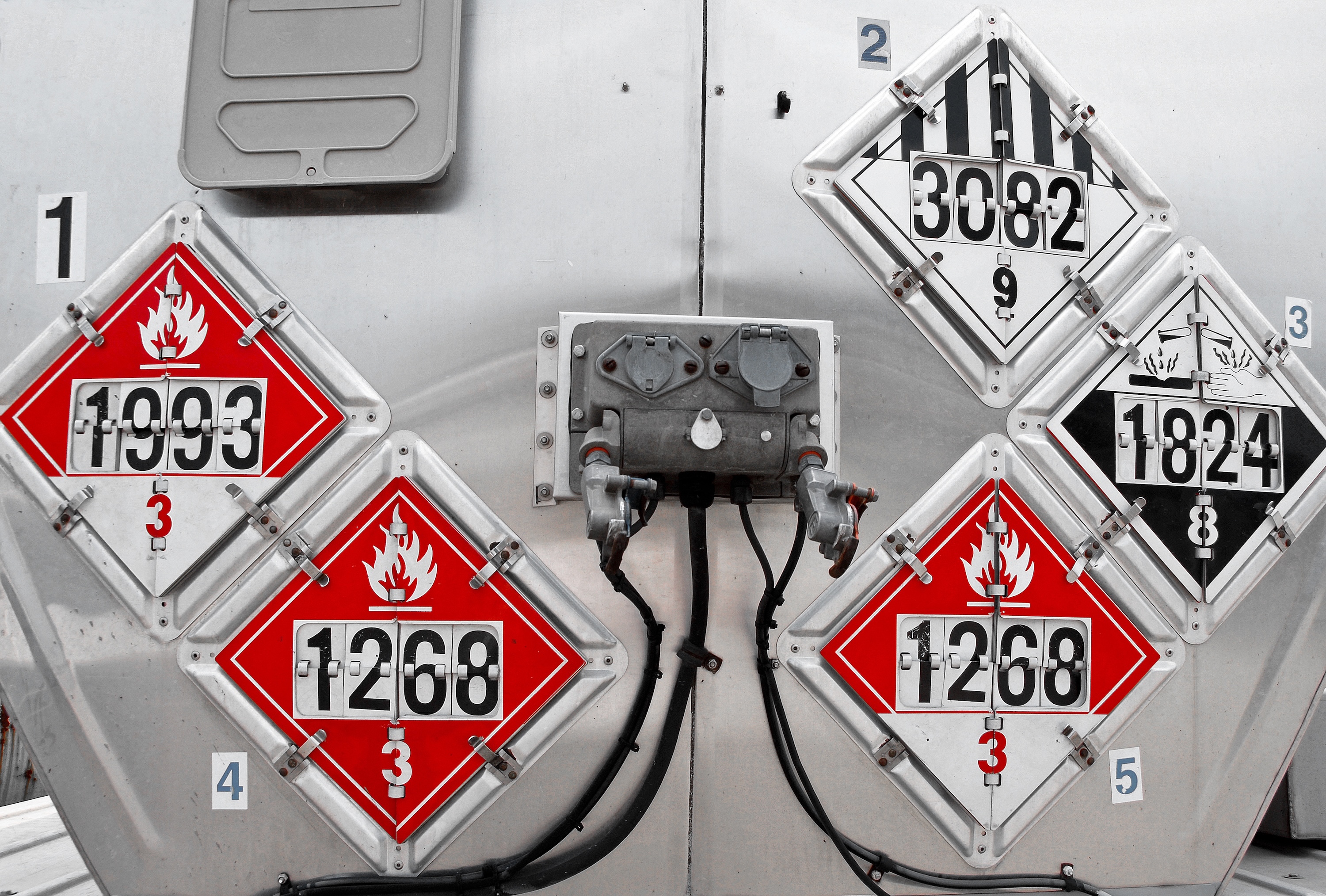
Requirements: Flammable placard on vehicle, UN number on shipping papers and bulk container, complete hazmat shipping paper with emergency response contact, HAZMAT-endorsed CDL driver.
Toxic liquids are substances with known toxicity to humans through inhalation, ingestion, or skin contact. Toxic Inhalation Hazard (TIH) materials within this class carry additional requirements due to their acute inhalation risk.
Common products: Aniline, chloroform, carbon disulfide, and various industrial chemicals classified as acutely toxic.
Requirements: Poison placard, TIH designation and additional provisions where applicable, emergency response information prominently on shipping papers.
Corrosives cause visible destruction to human tissue or have severe corrosion effects on steel or aluminum. This classification includes some of the most commonly shipped industrial chemicals — and some of the most consequential to get wrong.
Common products: Sulfuric acid, hydrochloric acid, nitric acid, phosphoric acid, sodium hydroxide, potassium hydroxide, acetic acid, formic acid.
Requirements: Corrosive placard, stainless steel or lined tanker mandatory for most products in this class, specific loading and unloading protocols for concentrated acids and bases.
A significant portion of industrial chemicals carry more than one hazmat classification — a toxic flammable liquid, a flammable corrosive, or a corrosive oxidizer, for example. These require primary and subsidiary risk labeling and more detailed shipping paper documentation. Our compliance team handles dual and multi-hazard shipments routinely — it's not an edge case for us.
We don't rely on carriers to manage compliance for our hazmat shipments. We verify it ourselves before a truck is ever dispatched.
We review the product SDS, chemical name, CAS number, and physical properties to confirm the correct hazmat class, UN number, packing group, and any special provisions. If there's any ambiguity, we resolve it before booking — not during transit.
For every hazmat liquid bulk shipment we verify: active DOT hazmat operating authority, driver HAZMAT CDL endorsement, appropriate tanker equipment for the specific chemical class, insurance meeting our hazmat coverage minimums, and current CSA safety scores. This is not a checkbox exercise. We check.
Hazmat shipping papers with all required fields, bill of lading with emergency response information, SDS on file, placard instructions communicated to the carrier, and any TIH or marine pollutant designations noted. Everything is in order before dispatch.
The carrier is briefed on facility-specific protocols, special handling requirements, emergency contact information, and any product-specific hazards beyond the standard classification. A driver who shows up informed is a driver who loads and delivers without incident.
Active monitoring throughout the shipment with proactive updates. Emergency escalation protocol in place — if something happens in transit, we're coordinating the response, not waiting for someone to call us.
Hazardous material transport is the most regulated segment of the freight industry — and liquid hazmat is the most complex subcategory within that. A single documentation error, an unqualified carrier, or a mismatch between product and container can result in fines, shipment delays, product loss, or a safety incident.
At Total Connection, hazmat liquid bulk is not a line item we occasionally handle — it's one of the primary services our team has been built around since 1994. We understand the DOT Hazardous Materials Regulations in detail, and we've designed our carrier vetting process, documentation workflows, and shipment management procedures specifically around the demands of regulated liquid freight.
Check Section 14 (Transport Information) of the product's Safety Data Sheet. It will identify the DOT hazard class, UN identification number, packing group, and proper shipping name if the product is regulated. If the SDS doesn't clearly address this or you're uncertain about the classification, our compliance team can review the product information and confirm the correct classification before your shipment moves.
Required documentation includes: hazmat shipping paper with proper shipping name, hazard class, UN number, packing group, and total quantity; emergency response telephone number on the shipping paper; Safety Data Sheet; bill of lading; and DOT placards on the vehicle. Total Connection prepares and verifies all required documentation before dispatch.
Civil penalties for hazmat violations can reach $84,425 per violation per day for standard violations, and up to $196,992 per violation for incidents resulting in death, serious injury, or significant property damage. Beyond the financial penalties, a non-compliant shipment can be placed out of service immediately — leaving your freight sitting and your production schedule disrupted. These are not theoretical risks.
Packing groups (I, II, or III) indicate the degree of danger a hazardous material presents — Group I is the greatest hazard, Group III the least. The packing group affects documentation requirements, quantity thresholds for certain exemptions, and in some cases carrier-specific requirements. Total Connection documents the correct packing group on all shipping papers and confirms it against the product SDS.
CHEMTREC (Chemical Transportation Emergency Center) provides 24-hour emergency response information to first responders during hazmat transportation incidents. DOT regulations require that a 24-hour emergency response telephone number — typically CHEMTREC — appear on all hazmat shipping papers. This is non-negotiable, and it appears on every hazmat shipment we manage.
Yes. Cross-border hazmat shipments to Canada require compliance with Transport Canada's Transportation of Dangerous Goods regulations in addition to US DOT requirements. Cross-border shipments to Mexico require SCT compliance. We manage the full documentation and compliance requirements for cross-border hazmat liquid bulk freight in both directions.