ISO Tank Shipping & Chemical Ocean Freight - International Chemical Logistics Done Right
Liquid Bulk Tanker Transport Solutions.
What is Liquid Bulk Tanker Transport?

Chemical ocean freight is the international transportation of chemical products by sea — including hazardous liquids, bulk chemicals, and specialty materials — using ISO tank containers, flexi-tanks, or specialized vessel arrangements. It is governed by the IMDG Code (International Maritime Dangerous Goods Code), which sets international standards for the classification, packaging, labeling, documentation, and stowage of hazardous materials transported by ocean. Chemical ocean freight requires carriers approved for hazmat cargo, IMDG-compliant documentation, and shippers or forwarders with genuine chemical logistics expertise.

Booking a container is a transaction. Moving liquid chemicals internationally is a logistics operation with a compliance framework that most freight forwarders aren't fully equipped to manage.

The IMDG Code is not the DOT Hazardous Materials Regulations translated into a maritime context — it's a separate, detailed international regulatory framework with its own classification system, packaging requirements, marking and labeling standards, documentation requirements, and vessel stowage rules. Getting it wrong doesn't just risk a fine. It risks carrier rejection, port authority intervention, and in the worst case, a maritime incident.

Total Connection brings 30 years of liquid bulk chemical logistics expertise to the international ocean freight context. We understand the IMDG Code in detail. We have established relationships with carriers approved for hazmat ocean cargo. And we manage chemical ocean freight the same way we manage domestic liquid bulk — with compliance verified before the shipment moves, not hoped for after it arrives.

ISO tank container shipping

ISO tank containers are the standard equipment for bulk liquid ocean freight — chemicals, food-grade liquids, petroleum products, and other liquid commodities that would otherwise require drums, totes, or other packaged formats.

What is an ISO tank container?

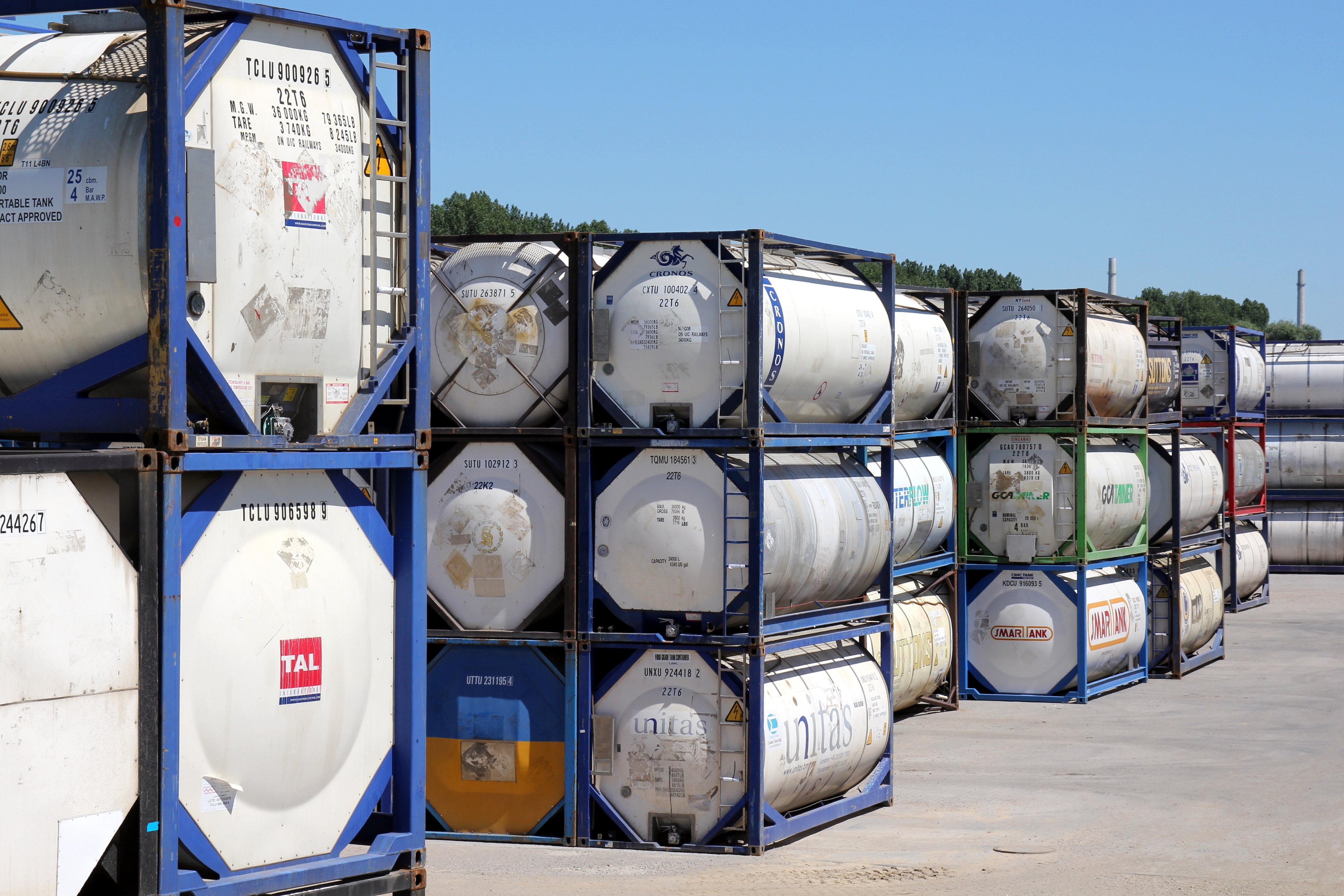
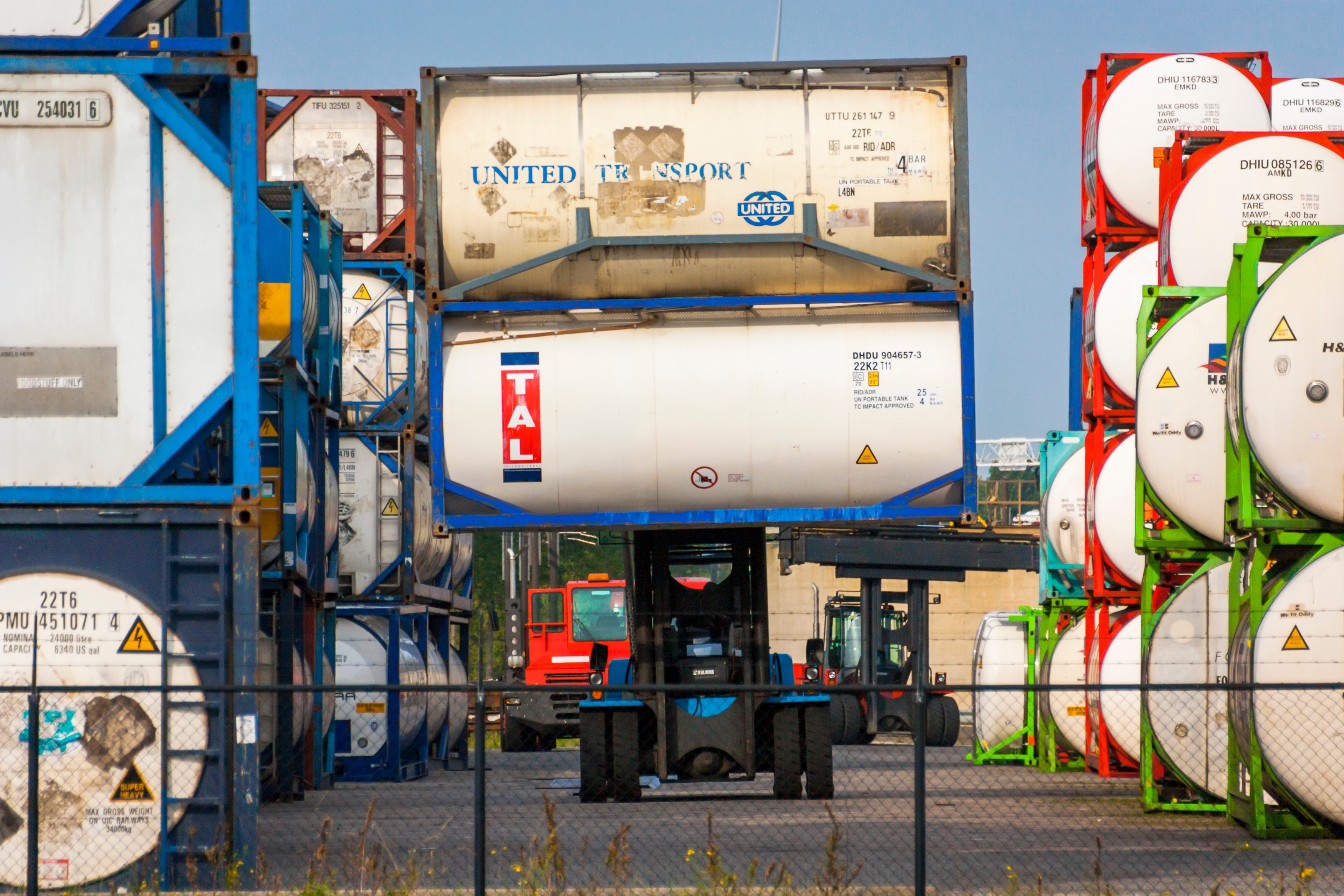
An ISO tank is a stainless steel pressure vessel mounted inside a standard intermodal frame — typically 20 feet — that fits on container ships, flatbed trucks, and rail cars. It holds between 17,000 and 26,000 liters of liquid cargo depending on the tank specification, and is designed for multiple trips over its service life unlike single-use drums or flexitanks.

ISO tank types we work with

T-coded tanks are classified by the UN under a T-code system that specifies the tank's pressure rating, material compatibility, and hazmat suitability. Common T-codes include T4 for non-hazardous liquids, T11 for a wide range of hazardous chemicals, and T14, T20, and T22 for highly corrosive and high-pressure products. We source the correct T-code for your specific chemical — matching tank specification to product is not optional.

ISO tank advantages over drums and flexitanks

Significantly lower cost per liter for large volumes. No single-use packaging waste. Product integrity maintained in a sealed, purpose-built vessel. Faster loading and unloading compared to drummed cargo. Reusable over a long service life with proper maintenance and cleaning.

IMDG compliance for chemical ocean freight

Every hazardous chemical ocean freight shipment we manage goes through a full IMDG compliance process before the cargo moves.

IMDG classification review

We confirm the correct IMDG class, UN number, packing group, and any special provisions applicable to your product under the current edition of the IMDG Code. If your product's domestic DOT classification differs from its IMDG classification — which happens — we identify the discrepancy and document the shipment correctly for the international context.

Dangerous goods declaration

The shipper's declaration for dangerous goods is one of the most important documents in chemical ocean freight. It must contain the correct UN number, proper shipping name, IMDG class, packing group, total quantity, and emergency contact information in the exact format required by the IMDG Code. We prepare and review this document for every hazmat ocean shipment.

Carrier approval

Not all ocean carriers accept all hazardous cargo. Carrier approval for dangerous goods depends on the specific commodity, the IMDG class, and the carrier's own hazmat acceptance policies. We manage carrier selection specifically around hazmat acceptance — so your cargo doesn't get rejected at the port after you've committed to a sailing.

Stowage and segregation

The IMDG Code specifies where on a vessel different hazmat classes must be stowed, and which classes must be segregated from each other. For LCL hazmat shipments IMDG segregation at the CFS must be verified before consolidation. We manage stowage and segregation compliance as part of our standard process.

Chemical products we move internationally

Bulk liquid chemicals in ISO tanks — acids, caustics, solvents, specialty chemicals. Hazardous packaged chemicals in FCL and LCL. Agrochemical active ingredients and formulated products. Pharmaceutical chemical intermediates and bulk APIs. Petroleum products and fuel additives. Food-grade bulk liquids in food-grade ISO tanks. Oilfield chemicals for international oil and gas operations. Industrial gases in specialized containers.

The difference experience makes in chemical ocean freight

A general freight forwarder who occasionally books chemical cargo and a logistics provider who has been moving liquid bulk chemicals for 30 years are not interchangeable. The difference shows up in the details — the IMDG classification that was caught and corrected before the dangerous goods declaration was submitted, the carrier who was switched because their hazmat acceptance policy changed, the T-code mismatch that was identified before the product loaded into the wrong tank.

These are not hypothetical scenarios. They're the situations our compliance team navigates routinely because chemical ocean freight is not a side service for us — it's a direct extension of what we've been doing on the domestic liquid bulk side since 1994.

Get an ISO Tank Shipping Quote
FAQS/

Frequently asked questions

What is the IMDG Code and why does it apply to my chemical shipment?

The IMDG Code (International Maritime Dangerous Goods Code) is the international regulatory framework governing the ocean transport of hazardous materials. Published by the International Maritime Organization (IMO) and updated biennially, it sets requirements for classification, packaging, marking, labeling, documentation, and vessel stowage of dangerous goods transported by sea. If your chemical is classified as a hazardous material under DOT regulations domestically, it almost certainly requires IMDG compliance for international ocean shipment.

What is the difference between IMDG and DOT hazmat classifications?

DOT hazardous materials regulations (49 CFR) govern domestic US transportation by road, rail, and air. The IMDG Code governs international ocean transportation. While both frameworks use similar hazard class structures there are differences in UN numbers for some substances, packing group assignments, special provisions, and documentation requirements. A chemical that is correctly documented for domestic DOT transport may require different documentation for IMDG compliance. Total Connection manages both frameworks and identifies any discrepancies before your shipment moves.

What is an ISO tank and when should I use one instead of drums?

An ISO tank is a reusable stainless steel pressure vessel in an intermodal frame used for bulk liquid ocean freight. It is preferable to drums when your volume is large enough to benefit from bulk transport economics — typically above 10,000 liters per shipment — and when your product is compatible with a standard ISO tank specification. ISO tanks significantly reduce per-liter cost compared to drummed cargo, eliminate single-use packaging waste, and maintain better product integrity through the ocean journey. For smaller volumes or products requiring specialized drum materials, packaged formats may be more appropriate.

Can you arrange chemical ocean freight to any destination?

We have active carrier relationships and routing options across all major international trade lanes — including trade lanes to countries with more complex freight handling requirements in the Middle East, Africa, Latin America, and Southeast Asia. Some destinations have specific import documentation requirements, port handling limitations for hazmat cargo, or commodity-specific restrictions. We assess destination-specific requirements at the time of quoting and advise on any constraints before you commit to a booking.

How do you handle tank cleaning between chemical loads for ISO tanks?

ISO tank cleaning between product loads is similar in principle to tanker truck tank wash — the previous product must be removed and the tank certified clean before the next cargo can load. Cleaning requirements vary by chemical and tank cleaning records are part of the documentation for every ISO tank shipment. We coordinate tank cleaning and certification as part of our ISO tank logistics service and verify cleaning records before any product loads.

What is a T-code and how do I know which one my chemical requires?

A T-code is a UN classification system for ISO tank containers that specifies the tank's pressure rating, shell material requirements, and suitability for specific hazmat classes. Common T-codes range from T1 for relatively non-hazardous liquids to T22 for highly hazardous or high-pressure products. The correct T-code for your chemical is determined by its UN number, hazmat classification, and physical properties. Total Connection reviews your product's SDS and IMDG classification to confirm the required T-code before sourcing a tank — using the wrong T-code for a hazardous product is a compliance violation and a safety risk.

How does chemical ocean freight pricing work?

Chemical ocean freight rates depend on the trade lane, product type and IMDG classification, ISO tank type required, current market capacity, vessel surcharges, and any special handling requirements at origin or destination ports. Hazmat surcharges apply to most dangerous goods ocean shipments and vary by carrier and commodity. Total Connection provides all-in quotes that include base ocean freight, hazmat surcharges, ISO tank positioning costs where applicable, and documentation fees — so you see the complete cost before committing to a booking.

Get A Quote Today - Cargo X Webflow Template