
.png)
A third party logistics company, 3PL, is an outsourced logistics provider that manages some or all of a company's supply chain operations. Instead of handling freight internally with your own trucks, warehouses, and logistics staff, you contract with a 3PL to manage transportation, warehousing, distribution, or the entire logistics chain on your behalf.
For chemical manufacturers and distributors, the right 3PL partner can transform your supply chain from an internal cost center into a competitive advantage. The wrong one can create compliance risks, service failures, and costs that exceed what you'd spend managing logistics yourself.
For shipper-led capacity and hazmat-fluent execution on this freight, see Total Connection's liquid bulk and chemical logistics service.
What a third party logistics company does
The scope of 3PL services ranges from basic transportation brokerage to full supply chain management. Understanding what each service level offers helps you identify what you actually need.
Freight brokerage and carrier management. At the foundational level, a 3PL finds and vets carriers for each shipment. This includes sourcing capacity, negotiating rates, verifying insurance and safety records, and managing carrier performance. For chemical freight, this also means confirming hazmat authority, equipment capability, and prior cargo compatibility.
Transportation management. Beyond individual shipments, 3PLs plan, execute, and optimize shipping across multiple modes (truckload, LTL, intermodal, rail). This includes load consolidation, route optimization, mode selection, and freight audit. For chemical companies shipping multiple products to multiple destinations, this layer of service reduces cost and improves efficiency.
Warehousing and distribution. Some 3PLs operate their own warehouse networks. Others coordinate third-party warehousing. Services include inventory management, order fulfillment, kitting, cross-docking, and distribution center operations. For chemical products, this requires facilities with proper storage permits, environmental controls, and hazmat handling capabilities.
Freight forwarding. International shipments require customs brokerage, export documentation, ocean or air freight booking, and compliance with both U.S. and destination country regulations. Chemical freight forwarding adds layers of complexity around IMDG codes, hazmat declarations, and country-specific chemical import requirements.
Technology and visibility. Modern 3PLs provide real-time tracking, automated status updates, reporting dashboards, and document management systems. This technology should integrate with your ERP or TMS, not operate as a standalone island. Data visibility is what allows you to manage performance and identify optimization opportunities.
Compliance management. For chemical freight, this is non-negotiable. DOT hazmat regulations, EPA requirements, OSHA standards, and FDA oversight (for food-grade chemicals) create a compliance framework that requires dedicated expertise. A specialized chemical 3PL manages regulatory documentation, carrier certification, equipment verification, and tank wash coordination as part of baseline service.
Not every 3PL offers every service. Some specialize in transportation only. Others offer end-to-end supply chain management including warehousing, distribution, and technology integration. The right scope depends on your company's needs and internal capabilities.
Types of 3PL providers
3PLs organize their operations in different ways, and understanding these models helps you evaluate which type fits your business.
Asset-based 3PLs own their own trucks, warehouses, and equipment. They operate as carriers first and brokers second. The advantage is direct control over capacity and service. The disadvantage is limited flexibility. When their equipment is full, you're competing for the same capacity as their other customers.
Non-asset 3PLs (freight brokers) don't own transportation assets. They operate as intermediaries between shippers and carriers, leveraging relationships and technology to source capacity across thousands of carriers. The advantage is flexibility and broad carrier access. The disadvantage is less direct control over individual loads.
Lead logistics providers (4PLs) manage your entire supply chain, often coordinating multiple 3PLs, carriers, and service providers on your behalf. This model works for large enterprises with complex multi-modal, multi-geography supply chains. For small to mid-size chemical companies, it's typically overkill.
For chemical freight, specialization matters more than asset model. A non-asset 3PL with deep chemical expertise and a vetted carrier network will outperform an asset-based generalist every time.
When to use a 3PL versus managing logistics in-house
Building an internal logistics operation requires significant fixed costs: hiring a logistics manager, building carrier relationships, implementing TMS technology, training staff on hazmat compliance, establishing warehouse operations, and maintaining institutional knowledge as people leave. For companies shipping less than 50 loads per week, these costs typically exceed what you'd pay a specialized 3PL.
You should consider a 3PL when your freight involves regulatory complexity (hazmat, international, temperature-controlled), volume fluctuates seasonally or unpredictably, you're entering new markets or geographies, internal logistics costs exceed market rates, or you lack specialized expertise (chemical compliance, customs, cold chain).
Keep logistics in-house when you have predictable, high-volume freight on established lanes, your products require proprietary handling or security protocols, you've already built the infrastructure and it's cost-competitive, or logistics operations provide strategic competitive advantage beyond cost efficiency.
Most chemical companies land somewhere in between. They manage high-volume, predictable lanes internally and use a 3PL for specialty freight, overflow capacity, and new lanes. This hybrid model captures the cost benefits of scale on core freight while maintaining flexibility and expertise on complex shipments.
Why chemical companies use 3PLs
Chemical logistics is not general freight. The products are regulated, the equipment is specialized, and the consequences of error range from expensive to catastrophic. Here's why chemical manufacturers and distributors choose to work with a specialized 3PL instead of managing logistics internally.
Specialized compliance management
Chemical logistics involves DOT hazmat regulations, EPA requirements, OSHA standards, and potentially FDA regulations for food-grade products. Managing compliance internally requires dedicated staff, ongoing training, and constant regulatory monitoring. A 3PL that specializes in chemical freight handles this as a core competency.
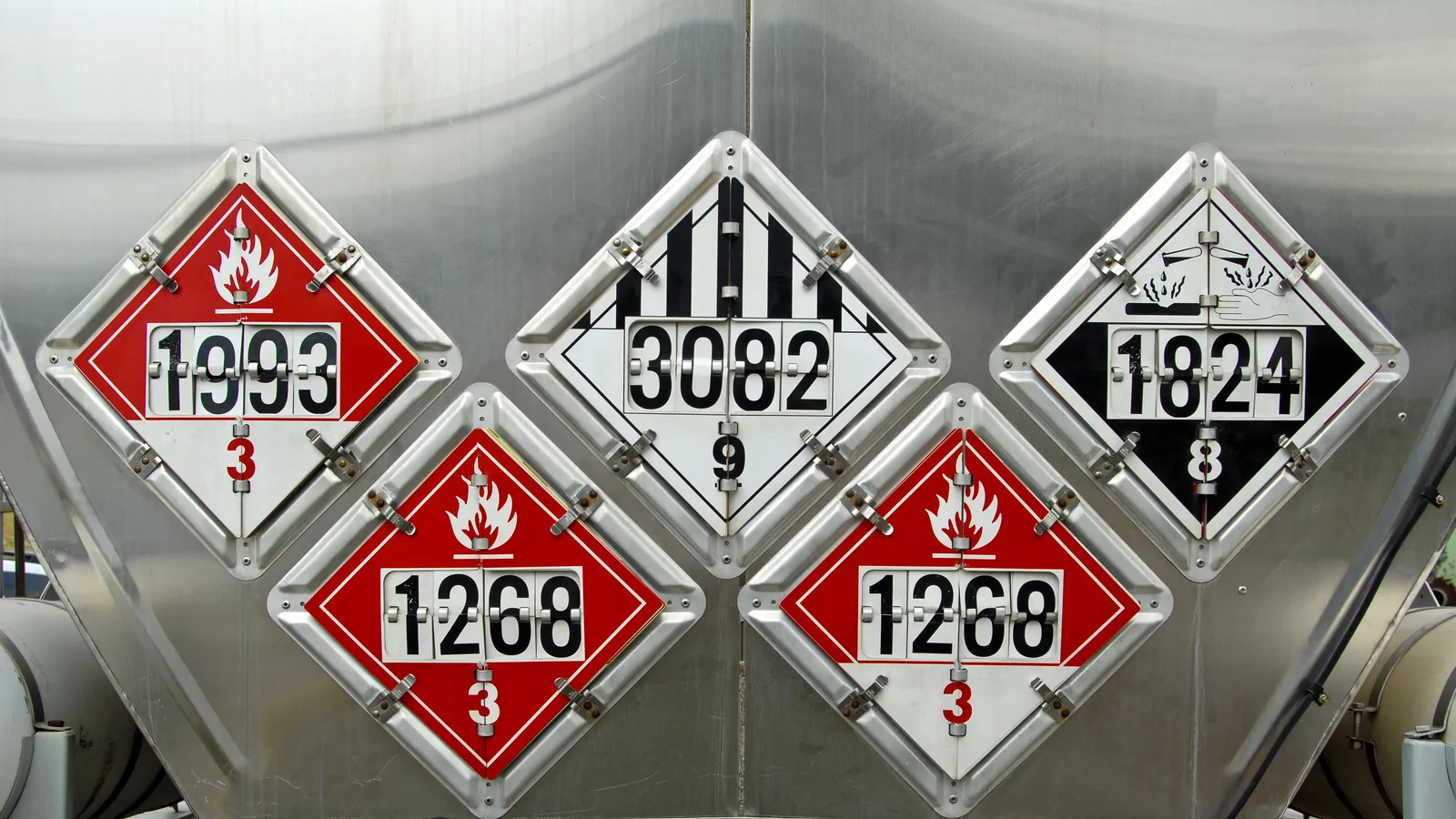
This means verifying that every carrier has active hazmat authority covering the specific hazard classes for your products. It means ensuring drivers hold valid CDL hazmat endorsements and current training certifications. It means generating DOT-compliant shipping papers with the correct proper shipping name, UN number, hazard class, packing group, and emergency response information. And it means coordinating tank wash procedures and prior cargo verification to prevent contamination.
A compliance failure on one shipment can trigger DOT audits, EPA enforcement actions, OSHA citations, and liability exposure that affects your entire operation. A specialized chemical 3PL prevents these failures as part of standard service.
Carrier network depth
A chemical 3PL maintains relationships with hundreds or thousands of qualified carriers, screened for hazmat authority, equipment capability, insurance coverage, and safety records. Building this network internally takes years and significant resources. Accessing it through a 3PL is immediate.
This network depth provides capacity during tight freight markets, backup carriers when primary options fail, equipment diversity (stainless steel tankers, lined tankers, heated trailers, pneumatic discharge), and geographic coverage across North America and internationally.
More importantly, a specialized chemical 3PL knows which carriers excel at specific freight types. Not every hazmat carrier can handle corrosives. Not every tanker fleet has heated equipment for temperature-sensitive products. Not every carrier will accept prior cargo restrictions on food-grade chemicals. A 3PL that specializes in chemical freight has this knowledge mapped and applied on every shipment.
Scalability
Chemical demand fluctuates. Seasonal products, market cycles, and project-based demand create volume swings that are expensive to staff internally. A 3PL scales capacity up and down without the fixed costs of internal logistics operations.
During peak season, you get access to hundreds of additional carriers without hiring temporary logistics staff or scrambling to find capacity on the spot market. During slow periods, you're not paying for trucks and staff that sit idle. This variable cost structure aligns logistics spend with revenue.
Cost optimization
3PLs see rate data across hundreds of shippers and thousands of lanes. This visibility allows them to identify cost-saving opportunities (mode optimization, lane consolidation, carrier negotiation, backhaul matching) that individual shippers can't access with their limited data set.
A specialized chemical 3PL also prevents costs that don't show up on freight invoices: rejected loads from contamination, detention charges from poor carrier selection, expedited freight from missed delivery windows, and compliance fines from documentation errors. The savings from avoiding these failures typically exceed the 3PL's margin.
How to choose a 3PL for your chemical business
Not all 3PLs are qualified to handle chemical freight. Here's how to separate specialized chemical logistics providers from generalists who claim chemical capability but lack the depth to execute safely and compliantly.
Verify chemical freight specialization
A 3PL that handles chemicals as one category among many won't have the depth of knowledge you need. Look for a provider where chemical and liquid bulk freight is a core business, not a sideline.
Ask what percentage of their freight volume is chemical. Ask how many years they've been handling hazmat. Ask whether they have dedicated chemical account managers or route all freight through the same team. The answers will tell you whether chemical logistics is a specialization or an add-on.
Evaluate their carrier screening process
Ask specifically how they vet carriers for chemical freight. What are their hazmat authority verification procedures? What insurance minimums do they require? What CSA score thresholds disqualify a carrier? How do they verify equipment inspection and maintenance records? What driver qualification standards do they enforce?
If the answers are vague or focus on generic freight criteria, they're not screening carriers for chemical-specific risk. A specialized chemical 3PL can walk you through their entire vetting process because it's central to how they operate.
Assess their compliance capabilities
Can they manage DOT hazmat documentation for Class 3, 6.1, 8, and 9 materials? Do they coordinate tank wash and verify prior cargo before loading? Do they understand EPA requirements under RCRA and TSCA? Can they handle FDA requirements for food-grade chemical transport?
Test their knowledge. Ask about a specific scenario: "How do you handle a shipment of Class 8 corrosive liquid with a subsidiary Class 6.1 hazard that requires a dedicated tanker with no prior food-grade cargo?" If they hesitate or generalize, they're not operating at the level of specificity chemical logistics requires.
Check their technology
Real-time tracking, automated status updates, reporting dashboards, and document management should be standard, not premium add-ons. Your team should be able to see where every load is, access shipping documents instantly, and pull performance reports without calling your account manager.
Ask for a demo. See how their system handles exceptions, how quickly status updates appear, and whether the platform integrates with your ERP or TMS. Technology doesn't replace expertise, but it's the infrastructure that makes expertise scalable.
Talk to their chemical shipper references
Ask about problem resolution, not just routine service. How does the 3PL handle a contamination claim? A dropped load? A compliance issue discovered mid-shipment? That's where the real quality shows.
Also ask about account management turnover. If your contact changes every six months, you lose the institutional knowledge that makes chemical logistics work smoothly. A stable account team is as important as carrier network depth.
Evaluate account management structure
Will you have a dedicated account manager or be routed through a call center? For chemical freight, a dedicated contact who knows your products, your facilities, and your requirements is essential.
Your account manager should know which of your products require dedicated equipment, which carriers you've approved or rejected in the past, which lanes have tight delivery windows, and which receiving facilities have strict check-in procedures. This knowledge prevents errors and speeds up execution. You can't get that from a rotating call center team.
3PL pricing models explained
3PLs charge for their services in several ways. Understanding these models helps you evaluate whether you're getting value or paying for unnecessary margin.
Cost-plus pricing. The 3PL shows you the carrier's line-haul rate and adds a fixed percentage or flat fee as their margin. This model provides transparency and aligns incentives (if they reduce the base cost, you both win). It's common for high-volume shippers with established lanes.
All-in pricing. The 3PL quotes a single rate that includes the carrier cost and their margin bundled together. You don't see the breakdown. This model is standard for spot market freight and low-volume shippers. The trade-off is less transparency for simpler billing.
Management fee. Some 3PLs charge a flat monthly or per-shipment management fee and pass carrier costs through at net. This model works for full-service relationships where the 3PL manages warehousing, distribution, and multi-modal transportation in addition to freight brokerage.
Hybrid models. Many 3PLs blend these approaches, using cost-plus for high-volume lanes and all-in pricing for spot freight. The key is making sure you understand how you're being charged and that the pricing structure incentivizes the behavior you want (cost reduction, service improvement, compliance rigor).
For chemical freight, the cheapest option is rarely the best option. The cost of a compliance failure, contaminated load, or service failure will exceed any savings from a low-cost 3PL that cuts corners on carrier vetting or account management.
Total Connection as your chemical logistics 3PL
Total Connection has operated as a specialized chemical freight 3PL since 1995. Our services include liquid bulk freight brokerage, hazmat compliance management, tank wash coordination, international ocean freight, air freight for time-sensitive chemical shipments, project cargo for oversized chemical equipment, and warehousing coordination.
Every customer gets a dedicated account manager, one person who knows your freight, your facilities, and your requirements. Our 30,000+ pre-approved carrier network covers every major chemical shipping lane in North America, and our international capabilities extend your reach globally through ocean freight, air freight, and customs brokerage.
We've built our business on chemical and liquid bulk freight. It's not a sideline. It's what we do.
Call 732-817-0401 or request a quote. We'll evaluate your chemical supply chain and recommend a logistics program that fits your products, your volume, and your service requirements.
Frequently Asked Questions
What is a 3PL?
A third party logistics company (3PL) is an outsourced logistics provider that manages some or all of a company's supply chain operations: transportation, warehousing, distribution, freight forwarding, and compliance management.
Why do chemical companies use 3PLs?
Chemical logistics involves complex regulatory compliance (DOT, EPA, OSHA, FDA), specialized equipment requirements, and carrier networks that take years to build. A 3PL that specializes in chemical freight provides immediate access to this infrastructure without the cost and time of building it internally.
What's the difference between a freight broker and a 3PL?
A freight broker arranges individual shipments between shippers and carriers. A 3PL provides broader supply chain management, which may include brokerage but also encompasses warehousing, distribution, technology, and strategic logistics planning. Some companies, like Total Connection, operate as both.
How much does a 3PL cost?
3PL fees are typically built into the shipping rate or charged as a management fee. The cost varies based on services provided, volume, and complexity. A good 3PL saves more than it costs through better carrier rates, avoided compliance issues, and prevented service failures.
When should a company use a 3PL instead of managing logistics internally?
Use a 3PL when your freight involves regulatory complexity (hazmat, international, cold chain), volume fluctuates seasonally, you're entering new markets, internal logistics costs exceed market rates, or you lack specialized expertise. Keep logistics in-house when you have predictable high-volume freight on established lanes and you've already built cost-competitive infrastructure.
What industries benefit most from 3PLs?
Industries with complex logistics requirements benefit most: chemical manufacturing, pharmaceuticals, food and beverage, automotive, retail, and e-commerce. Any industry where logistics is mission-critical but not a core competency gains from specialized 3PL partnerships.
How do I evaluate a 3PL provider?
Verify industry specialization, evaluate carrier screening and compliance processes, check technology capabilities, request references from similar shippers, assess account management structure, understand pricing models, and test their responsiveness during the sales process (it won't improve after you sign).
Is Total Connection a 3PL?
Yes. Total Connection operates as a specialized chemical freight 3PL offering liquid bulk brokerage, hazmat compliance, tank wash coordination, international freight, and warehousing coordination, all managed by dedicated account managers since 1995.