
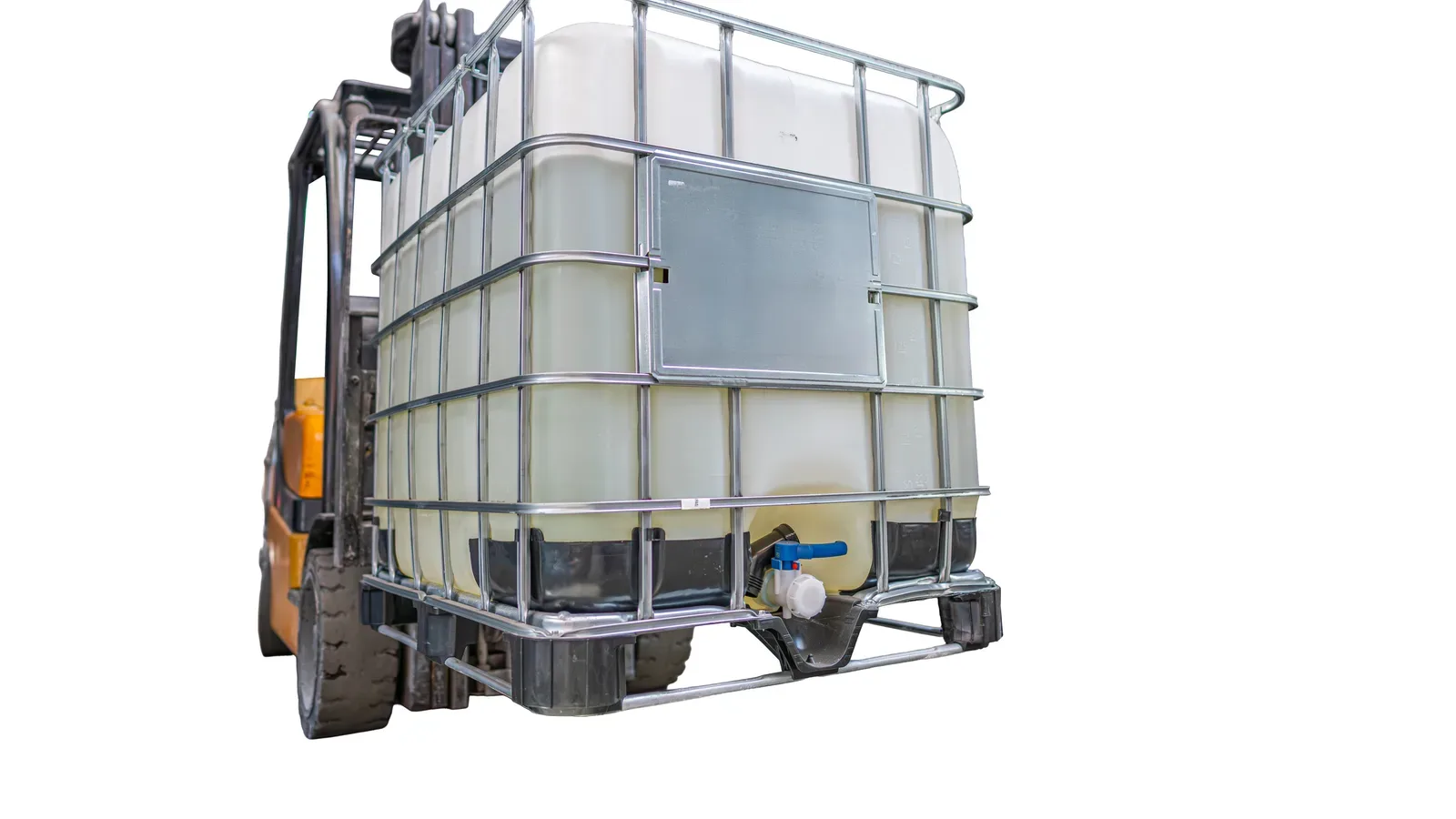
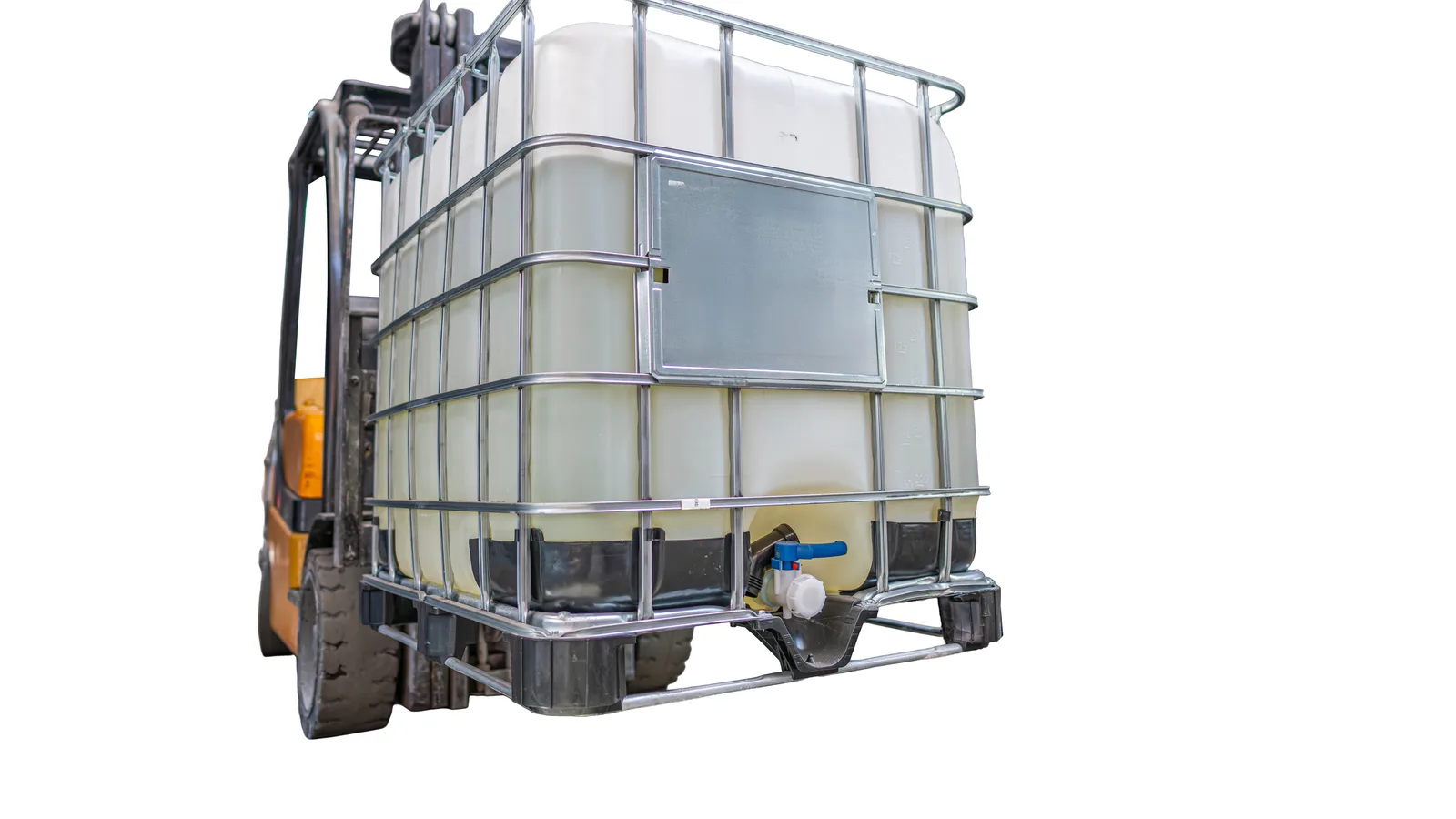
A hazmat IBC (intermediate bulk container) is a reusable packaging for dangerous goods, tested and marked under 49 CFR Part 178, sized between a 55-gallon drum and a full tanker load. The unit you see most often is the 1,000-liter (275 to 330 gallon) composite tote: a plastic bottle caged in steel on a pallet. To move regulated product, that tote needs a UN design-type marking showing it passed drop, stack, internal pressure and leakproofness testing for the packing group it carries. Ship a Class 8 corrosive or a Class 3 flammable in an unrated or expired IBC and the load is non-compliant before the truck leaves the dock.
This guide covers the UN rating codes, packing group rules, the Part 178 testing and retest schedule, the 2026 regulatory picture, and the mistakes that get IBC loads turned away at the dock.
What a Hazmat IBC Is and How It Differs From Drums and Tankers
An IBC sits in the middle of the bulk packaging range. A drum holds 55 gallons and moves on pallets in multiples once a shipment runs into the hundreds or thousands of gallons. A cargo tanker holds 6,000 gallons or more and dedicates the whole vehicle to one product. An IBC bridges the two: one 1,000-liter tote replaces roughly five drums, palletizes for forklift handling, and loads into a standard dry van without pumps, racks or a dedicated trailer.
For a shipper moving a few thousand gallons of a specialty chemical rather than a full tanker load, the IBC is usually the right call. It cuts handling steps compared with drums, avoids the minimum volume a tanker run requires, and lets one trailer serve several consignees. The tradeoff is compliance arithmetic: every tote on that load carries its own UN marking, its own packing group code and its own retest date, so a mixed shipment multiplies the checks rather than consolidating them into one vessel.
IBC Types and Which Products They Fit
Not every hazmat IBC is built the same way, and the construction has to match the chemistry, not just the volume.
Composite IBCs
A polyethylene bottle inside a steel cage on a pallet is the workhorse of the category and the most common rated hazmat tote on the road. It suits a wide range of liquids where the plastic bottle resists the product and the cage carries the structural load.
Rigid Plastic IBCs
A one-piece molded polyethylene body without a separate cage works for non-aggressive liquids where a single-shell design is preferred over a caged bottle, often at a lower tare weight.
Metal IBCs
Stainless or carbon steel construction handles flammable liquids, high-temperature product, or chemistries aggressive enough to degrade a plastic bottle over time. These cost more but hold up where a composite would not.
Food-Grade Composite IBCs
Composite totes with the right liner and a documented clean history move edible oils and other sensitive liquids where contamination control, not hazard class, drives the requirement.
Understanding UN Rating Codes on an IBC
Every hazmat IBC carries a UN design-type marking under 49 CFR 178.702 that encodes what the container is approved to hold. The string opens with the design-type code for the IBC family, then adds letters and digits for material and construction. A common composite liquid tote is marked 31HA1, where 31 designates a liquid IBC, H is composite plastic, A indicates a rigid outer casing, and 1 identifies the specific type within that design group. The rest of the marking carries the packing group letter, the date of manufacture, the maximum permitted specific gravity and the test pressure the design passed.
Read the marking before you fill or tender the container, because the string carries the approval details you need:
- The design-type code, such as 31HA1 for a composite liquid IBC, identifies the construction and whether the container is built for liquids or solids.
- The packing group letter, X, Y or Z, sets which hazard levels the tote is authorized to carry under 49 CFR 178.703.
- The maximum specific gravity and the test pressure the container passed must equal or exceed what your product requires, which is where dense or pressurizing liquids catch shippers out.
Packing Group Compatibility
The packing group on the IBC marking has to match or exceed the danger level of the product, since packing group reflects how hazardous the material is. Packing Group I is high danger, II is medium, and III is low. Under 49 CFR 178.703, an IBC marked X is tested to the strictest level and may carry Packing Group I, II, or III liquids. An IBC marked Y is limited to Packing Group II and III. An IBC marked Z is tested only for Packing Group III and cannot legally carry a Packing Group I or II product, no matter how the container looks or performs in practice.
Packing group mismatch is a routine cause of rejected IBC loads, and it tends to surface late, at the dock or on the road. Check these before filling any tote:
- Confirm the product's packing group from the SDS and the hazardous materials table in 49 CFR Part 172, then match it against the X, Y, or Z code on the tote.
- Verify the specific gravity on the marking covers your product, since a dense liquid can exceed a tote tested only for a lighter one.
- Confirm gasket and closure compatibility, because the right rated body with the wrong gasket material still leaks or fails on an aggressive chemical.
49 CFR Part 178 Testing, Marking, and Retest Intervals
IBCs are tested and marked under 49 CFR Part 178 Subpart N, and reusable IBCs must be periodically inspected and retested to keep their authorization. Metal, rigid plastic, and composite IBCs intended for liquids require a leakproofness test and an internal pressure test, plus a thorough external and internal examination, on the schedule set out in 49 CFR 180.352. Missing a required test voids the IBC for hazmat service even if the container looks fine.
The schedule that keeps an IBC legal:
| Requirement | Interval | What It Confirms |
|---|---|---|
| Initial design qualification | Before first use of the design type | Drop, stack, internal pressure and leakproofness performance |
| Periodic retest | Within 2.5 years of manufacture or the prior test | Leakproofness and internal pressure still hold |
| Periodic inspection | Within the same 2.5-year cycle | External and internal condition, fittings and closures serviceable |
The marked date of manufacture and the last test date both appear on the IBC, and a shipper or carrier should read them before tendering. An expired test is a paperwork failure that grounds the load, and a carrier or roadside inspector can catch it just by reading the dates stamped on the cage or body.
2026 Regulatory Notes for IBC Shippers
PHMSA continues to update the IBC provisions in the Hazardous Materials Regulations, and shippers should track rulemaking that touches IBC construction, reuse and harmonization with the UN Model Regulations. Changes in this area tend to tighten testing documentation, clarify who may recondition and re-mark a container, and align US requirements with international standards so an IBC can move by ocean or air without being re-marked at each border. None of that lands as a single dated switch, which is why a tote bought several years ago can quietly fall behind the current text while sitting in the same rack it always has.
The practical takeaways for 2026 planning:
- Confirm the IBC's marking and test records against the current 49 CFR text before each shipment, since an older tote may predate a tightened provision and still look perfectly serviceable.
- Keep reconditioning and reuse documentation on file, because the rules are specific about who may refurbish an IBC and how it gets re-marked afterward.
- Verify international compatibility when an IBC load will transfer to ocean or air, where IMDG and IATA requirements layer on top of the domestic 49 CFR marking.
- Build the retest date into your inventory records instead of the receiving dock's eyeball check, so a tote ages out on a calendar rather than at a roadside inspection.
Common Operational Mistakes With Hazmat IBCs
IBC rejections usually trace back to a handful of repeatable errors that have nothing to do with the chemistry. Shippers refill a single-trip tote that was built for one movement only. They fill a container whose test date expired months ago because it looked sound sitting in the yard. They swap in a gasket that does not match the product and find out at the first temperature swing or the first rough lane. They tender the load by total gallons when the carrier needs the IBC count, the weight per unit and the stacking plan to build the trailer.
One more shows up on export moves: a tote marked correctly for domestic highway service that nobody checked against IMDG requirements before the booking was cut, which turns into a re-marking exercise at the port instead of a loaded container.
The fixes are procedural, not technical. Read the marking before filling, log the test date against the planned ship date rather than the fill date, confirm gasket and closure compatibility against the SDS, and hand the carrier a tender that states IBC count, weight per unit and stacking. Each check takes two minutes and prevents a load sitting on a dock.
Choosing a Forwarder for IBC and Liquid Bulk Freight
This is where a forwarder earns its place. Total Connection moves liquid bulk and hazmat as our home turf, and we run every mode, so the same team that tenders your IBC load also handles the drum export, the bulk tanker, the warehousing and the customs entry on the rest of the shipment. We confirm the UN marking, packing group and test dates before the load is built, match the gasket and closure to the chemistry, and tender by IBC count and stacking so the carrier accepts it the first time.
For the equipment options behind an IBC decision, see our guide to liquid bulk transport equipment and tanker types, and for the broader compliance picture read hazmat trucking regulations. If your IBC load needs to change packaging mid-route, our piece on transloading in the chemical supply chain covers how that works, and our guide to shipping sulfuric acid walks through packing group and equipment matching on a specific corrosive. If you have an IBC shipment to move or are not sure your totes are still rated, bring it to our liquid bulk and chemical logistics team and start a liquid bulk quote.
What size is a standard hazmat IBC?
Most composite IBCs hold about 1,000 liters, or 275 to 330 gallons, sized between a 55-gallon drum and a bulk tanker. That volume makes them the standard choice for chemical shipments too large for drums but too small to justify a dedicated tanker.
How often must an IBC be retested for hazmat service?
Reusable IBCs need periodic retesting for leakproofness and internal pressure, plus a periodic inspection, on a 2.5-year interval under 49 CFR 180.352. Missing that interval voids the container's hazmat authorization regardless of its physical condition.
What does the UN code 31HA1 on an IBC mean?
The code breaks down by section: 31 designates a liquid IBC, H is composite plastic construction, A is a rigid outer casing, and 1 identifies the specific type within that design group. Reading the full string tells you the construction, the packing group authorization, and the tested specific gravity and pressure.
Can any IBC carry a Packing Group I chemical?
Only IBCs marked with the X code are tested to the strictest level and may carry Packing Group I, II, or III liquids. Y-coded and Z-coded IBCs are limited to lower hazard groups and cannot legally hold a Packing Group I product even if the container appears strong enough.
What happens if an IBC's retest date has expired?
An expired retest voids the IBC's hazmat authorization even if the container looks intact and has never leaked. The load can be grounded at the dock before it ships or flagged during a roadside inspection, either of which stalls delivery and creates a compliance record.
Are IBC rules changing in 2026?
PHMSA continues rulemaking on IBC construction, reuse, and harmonization with the UN Model Regulations, so the specifics shift over time rather than landing as one fixed change. Shippers should confirm that an older tote's marking and test records still match current 49 CFR requirements before relying on it for a new shipment.