
.png)
Transloading is the process of transferring freight from one mode of transportation to another, from a railcar to a truck, from an ocean container to a domestic trailer, from one tank size to another. It's the logistics connector that bridges the gaps between transportation modes that can't deliver directly to the final destination.
For chemical shippers, transloading is particularly important because liquid bulk chemicals often travel long distances by rail or ocean vessel before the last leg of delivery by tanker truck. The transload facility is where the product changes hands from one mode to another, and where a lot can go right or go very wrong depending on the operator.
For shipper-led capacity and hazmat-fluent execution on this freight, see Total Connection's liquid bulk and chemical logistics service.
Why transloading exists
Not every destination is accessible by every transportation mode. A chemical plant may receive raw materials by railcar, but its customers need smaller tanker truck deliveries. An international chemical shipment arrives at the port in an ISO tank or ocean container, but the receiving facility can only accept domestic tanker trucks. A production facility runs out of storage capacity and needs temporary overflow storage at a transload site.
Transloading solves all of these problems by providing a physical facility where product is transferred between transportation modes, with storage capacity to buffer timing differences between inbound and outbound shipments.
The economics drive it. Rail costs roughly $0.02 to $0.04 per ton-mile for long hauls. Truck costs $0.12 to $0.25 per ton-mile. For a 20,000-gallon chemical shipment moving 1,500 miles, rail to a regional transload facility followed by local truck delivery can save 40 to 60 percent on transportation costs compared to direct truck. That's why chemical manufacturers ship by rail to transload hubs near demand centers, then fan out by truck to customers.
How transloading works in chemical logistics
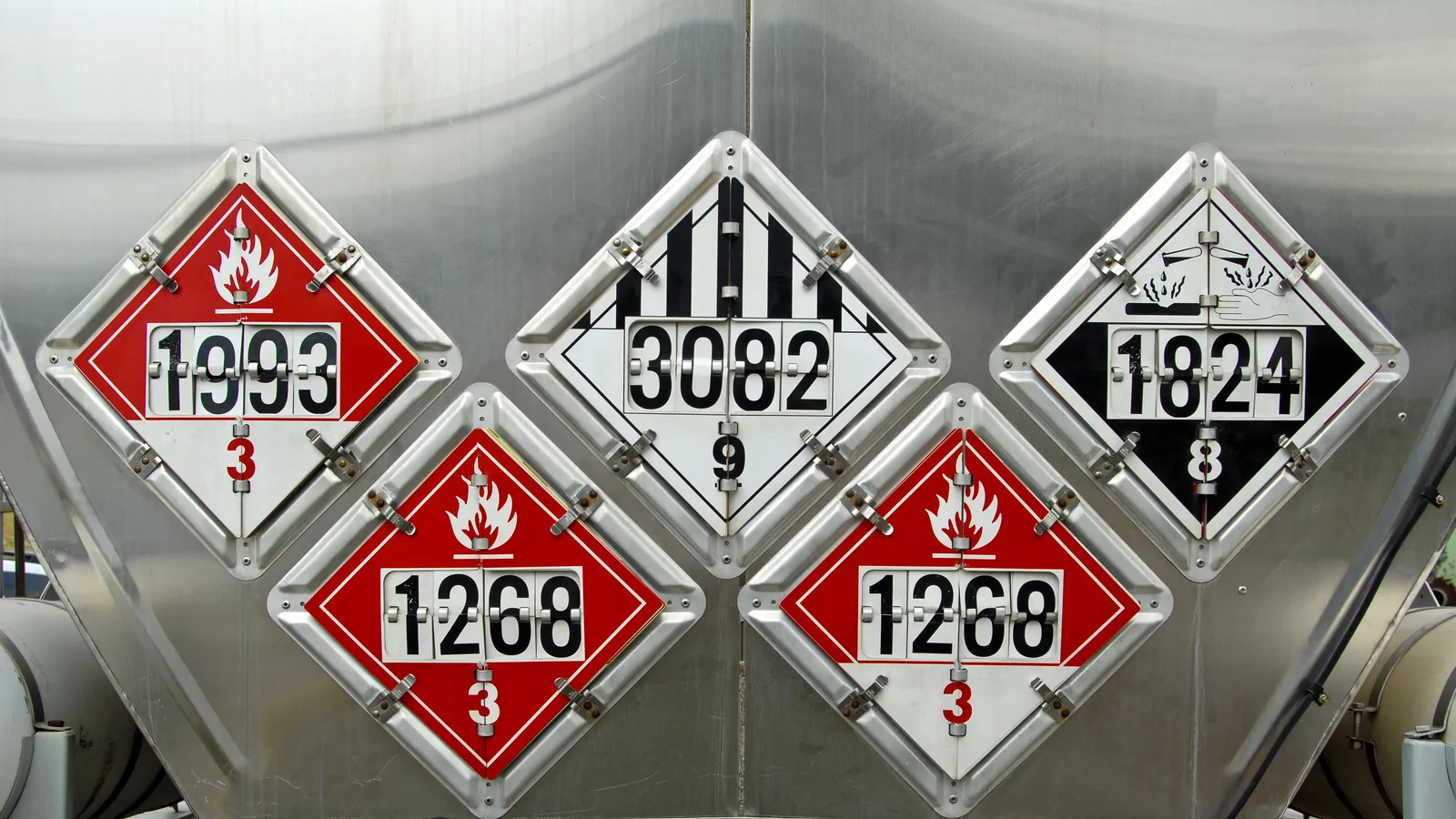
The transload process starts when inbound freight arrives at the facility by rail, ocean container, or truck. The facility operator verifies the shipment against the BOL and SDS, confirms hazard class and UN number match the manifest, and checks equipment integrity (no leaks, valve seals intact, placards correct).
Product is then pumped or gravity-fed from the inbound carrier to temporary storage tanks or directly into outbound equipment. For liquid bulk chemicals, this requires compatible hoses, gaskets, and fittings rated for the chemical's properties (corrosiveness, temperature, vapor pressure). Incompatible materials or cross-contamination can ruin product or create hazardous reactions.
Between inbound and outbound legs, the product may sit in facility storage for hours or weeks depending on the supply chain schedule. This buffering capability is critical for smoothing out timing mismatches between production cycles, shipping schedules, and customer delivery windows.
Outbound equipment is loaded, sealed, and documented. The BOL transfers custody from the transload facility to the outbound carrier. For hazmat shipments, this includes updating the hazmat manifest, verifying placard accuracy for the new equipment, confirming the driver holds the required hazmat endorsement and TWIC if drayage is involved, and providing updated emergency response information.
Types of transloading for liquid bulk chemicals
Rail-to-truck transloading
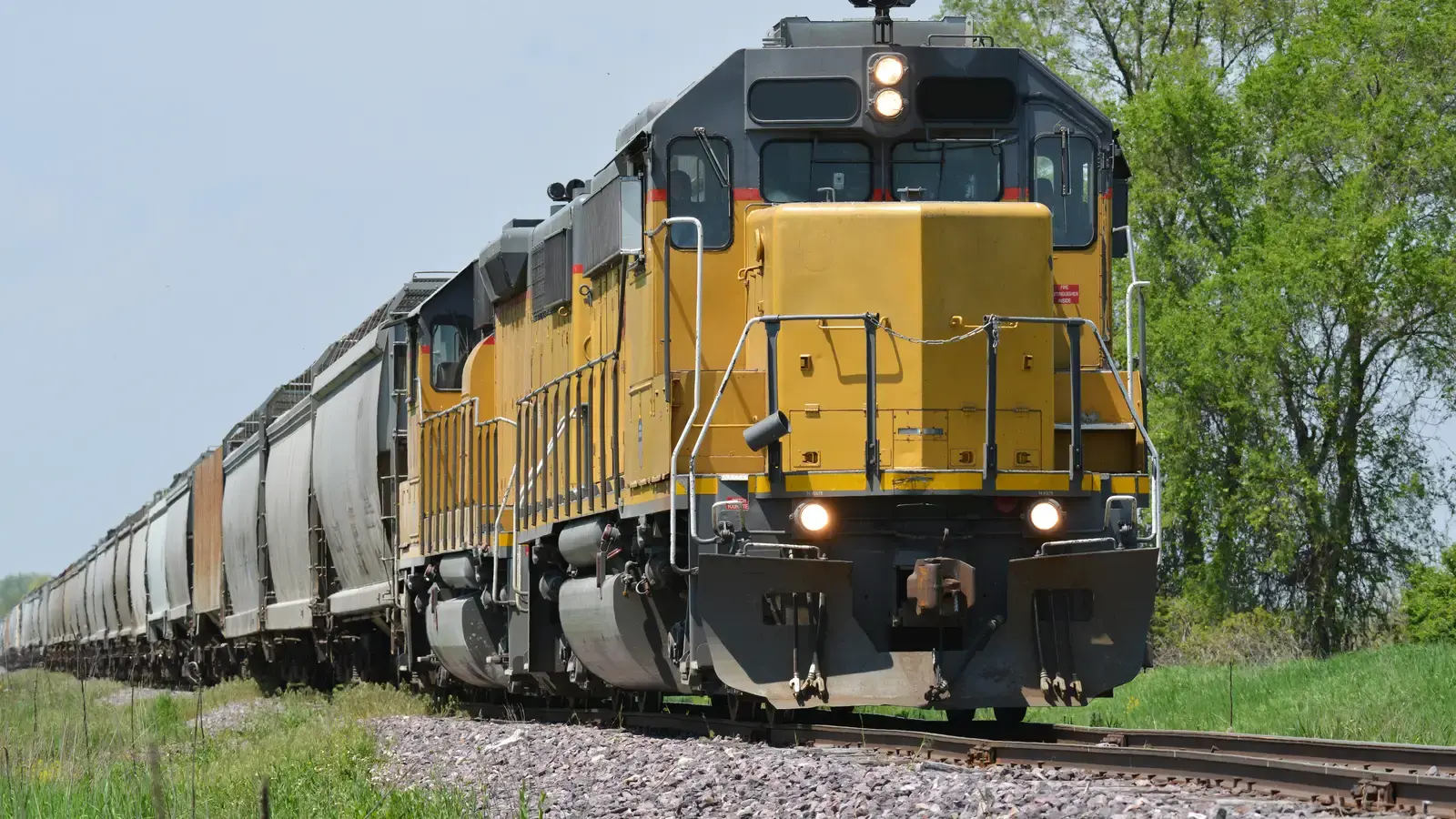
The most common type for domestic chemical logistics. Product arrives by railcar, which can carry 20,000 to 30,000 gallons depending on commodity density and hazard class. The railcar is spotted at the transload facility's rail siding, pumped into facility storage tanks or directly into waiting tanker trucks holding 6,000 to 7,000 gallons for final delivery. This allows chemical manufacturers to ship efficiently by rail to a transload facility near the end market, then distribute by truck to multiple customers.
Railcar types vary by commodity. DOT 111 cars handle non-hazardous and lower-hazard liquids. DOT 117 and DOT 117R cars are required for flammable liquids (Class 3) and certain toxic materials (Class 6.1) under current PHMSA tank car regulations. The facility must have rail access, compatible pumping infrastructure, and storage capacity to handle the full railcar volume while coordinating outbound truck deliveries.
Container-to-truck transloading
International chemical shipments arriving in ocean containers or ISO tanks at port are transferred to domestic tanker trucks for inland delivery. ISO tanks hold 5,000 to 6,000 gallons and are built to IMDG standards for ocean transport. Flexitanks (single-use bladders inside standard 20-foot containers) hold up to 24,000 liters (6,340 gallons) of non-hazardous liquids.
This is the drayage-to-transload chain. The container is drayed from the port to a transload facility, the product is pumped from the container into a domestic tanker, and the tanker delivers to the final destination. For overweight containers (common with dense chemicals), the transload facility splits the load across multiple domestic tankers to comply with federal bridge formula weight limits.
Truck-to-truck transloading
Product is transferred between tanker trucks, typically to change equipment types (from a larger tank to a smaller one, from stainless to aluminum, from a lined trailer to a food-grade kosher-certified unit) or to consolidate partial loads. Less common than rail-to-truck or container-to-truck, but necessary when equipment compatibility or customer specifications require a change mid-stream.
What makes a good transload facility for chemicals
Not all transload facilities can handle chemical freight. A chemical-capable transload facility needs proper secondary containment and spill prevention systems sized for the largest tank or transfer volume, hazmat-trained personnel certified under 49 CFR 172.704, compatible pumping equipment (stainless steel, Hastelloy, or PTFE-lined pumps depending on chemical properties), and tank storage capacity for buffering between inbound and outbound shipments.
Facilities also require wash and decontamination capabilities for equipment changeovers, environmental permits under state and federal regulations (RCRA for hazardous waste, SPCC for oil products, air permits for volatile organics), accurate metering systems to verify quantities transferred and detect losses, and documentation and chain-of-custody tracking to maintain regulatory compliance and customer audit trails.
Location matters. Transload facilities should be positioned near major rail hubs or ports to minimize drayage costs, close to end markets to keep outbound truck miles low, and compliant with local zoning for hazardous material handling.
Equipment and safety requirements for chemical transloading
Chemical transloading requires specialized equipment rated for hazmat handling. Pumps must be compatible with the chemical's corrosiveness, temperature, and viscosity. Hoses and fittings must resist chemical attack and maintain seal integrity under pressure. Grounding and bonding equipment prevents static discharge during product transfer (critical for flammable liquids under Class 3).
Vapor recovery systems are required for volatile organics to comply with EPA and state air quality regulations. Spill containment (dikes, sumps, absorbent materials) must be staged and ready. Fire suppression systems must match the hazard class (dry chemical for Class 3 flammables, water deluge for water-reactive chemicals is prohibited).
Personnel requirements include hazmat training under DOT 49 CFR 172 Subpart H, OSHA HAZWOPER certification for emergency response, and facility-specific SOPs for each chemical handled. Drivers picking up hazmat loads from the transload facility must hold a CDL with hazmat endorsement and pass TSA background checks for certain materials.
Cost considerations
Transloading adds cost but often delivers net savings by enabling lower-cost long-haul transportation modes. Typical transload fees range from $0.08 to $0.15 per gallon for liquid bulk, depending on commodity, volume, and facility capabilities. Rail-to-truck transloading for a 20,000-gallon railcar costs roughly $1,600 to $3,000 in facility fees.
Storage fees apply when product sits at the facility beyond a grace period (typically 3 to 5 days free, then $50 to $150 per day). Detention charges accrue if outbound trucks arrive late or if the facility can't pump at the scheduled rate. Equipment cleaning fees between loads range from $200 to $800 depending on product and cleaning requirements (kosher certification, product compatibility, residue removal).
The cost comparison favors transloading when rail or ocean freight savings exceed transload fees. For shipments over 500 miles, the math usually works. Under 300 miles, direct truck is often cheaper unless breaking bulk across multiple deliveries.
When to use transloading vs direct shipping
Transloading makes sense when the origin and destination use different transportation modes, when rail shipping is more economical for the long-haul leg but truck delivery is needed for the last mile, when international container shipments need to be transferred to domestic equipment, when you need to break bulk by splitting a large railcar shipment into multiple smaller truck deliveries, when you need temporary storage capacity between production and delivery, and when overweight containers from international shipments need to be split across multiple domestic trailers to meet bridge formula weight limits.
Direct shipping is better when origin and destination are both truck-accessible within a regional range (under 300 miles for most chemical shipments), when timing is tight and the transload delay would miss the delivery window, when the shipment is small enough that rail or ocean economies don't apply, and when the customer requires equipment to remain sealed from origin to destination for quality control or security.
The decision hinges on distance, volume, mode access, and timing. A 10,000-gallon chemical shipment moving 1,200 miles from a rail-served plant to a truck-only customer is a transload case. A 5,000-gallon load moving 250 miles between two truck-accessible sites is direct truck.
How Total Connection coordinates transloading
We coordinate transloading as part of our end-to-end liquid bulk logistics services. Whether your product is arriving by rail, ocean container, or oversized tanker, we manage the transload facility selection (vetted for chemical capability, location, and cost), scheduling coordination between inbound rail or drayage and outbound truck, pumping oversight to verify quantities and prevent cross-contamination, quality verification and documentation, and outbound truck delivery to your destination.
We built Total Connection on liquid bulk and hazmat logistics, where transloading is a regular part of the supply chain. We know which facilities can handle Class 8 corrosives, which operators run clean equipment changeovers, and how to coordinate rail detention windows with outbound truck appointments. For more on how we approach freight forwarding across every mode, see our guide on what a freight forwarder does.
Call 732-817-0401 or request a quote. Tell us where your product is and where it needs to go. If transloading is the right solution, we'll coordinate every step.
Frequently Asked Questions
What is transloading?
The transfer of freight from one transportation mode to another at a specialized facility. For liquid bulk chemicals, this typically means pumping product from a railcar into tanker trucks, from an ocean container into domestic tankers, or between different truck configurations.
When does transloading make sense for chemical shippers?
When the long-haul leg is more efficient by rail or ocean but the destination needs truck delivery. When breaking bulk from large railcar shipments into multiple smaller deliveries. When international container shipments need domestic equipment. When overweight containers need to be split for road weight compliance.
Can any transload facility handle chemicals?
No. Chemical transloading requires hazmat-trained personnel, compatible pumping equipment, spill containment and environmental permits, proper storage tanks, and documentation capabilities. Not every general freight transload facility has these capabilities.
Does Total Connection manage transloading?
Yes. We coordinate transloading as part of end-to-end chemical logistics, facility selection, scheduling, pumping, quality verification, and outbound delivery. This includes rail-to-truck, container-to-truck, and truck-to-truck transloading.