

Sulfuric acid ships under one of three UN numbers set by concentration: UN 1830 above 51%, UN 2796 for battery acid, and UN 1832 for spent acid, all Class 8, Packing Group II under 49 CFR 172.101. All three move in DOT 412 corrosives tankers at 5,500 to 6,000 gallons per load, under 49 CFR Parts 171 through 180. The concentration on the load, not the label on the tank, decides the UN number, the lining and the handling procedure. Get any one of those wrong and the failure shows up either at a roadside inspection or on the shell of a compromised tanker.
Sulfuric Acid Regulatory Profile: UN Numbers, Class 8, and Concentration Variants
Sulfuric acid does not have one UN number. It has three, and the concentration on the load decides which one belongs on the bill of lading. All three are Class 8 corrosive, Packing Group II under 49 CFR 172.101, but they are not interchangeable, and shipping one as another is a federal violation caught on the first roadside inspection.
| UN Number | Concentration | Class / PG | Notes |
|---|---|---|---|
| UN 1830 | Above 51% | Class 8, PG II | Most common industrial grade; specific gravity 1.84 at 98%. |
| UN 2796 | At or below 51% (battery acid) | Class 8, PG II | Dilute grade for battery and electrolyte use. |
| UN 1832 | Spent sulfuric acid | Class 8, PG II | Returned for regeneration; do not use for fresh acid. |
The physical properties explain the handling rules. Sulfuric acid is strongly corrosive to tissue and metals, reacts exothermically with water, and at 98% concentration carries a specific gravity of 1.84 and a boiling point near 337°C. It falls under Emergency Response Guidebook Guide 137, corrosive acid, with an initial isolation distance of 50 meters for a spill and 300 meters downwind for a large spill. Those numbers are the baseline a shipper and a carrier work from before the load is ever planned.
The Right Tanker for Sulfuric Acid: DOT 412 Lining Requirements by Concentration
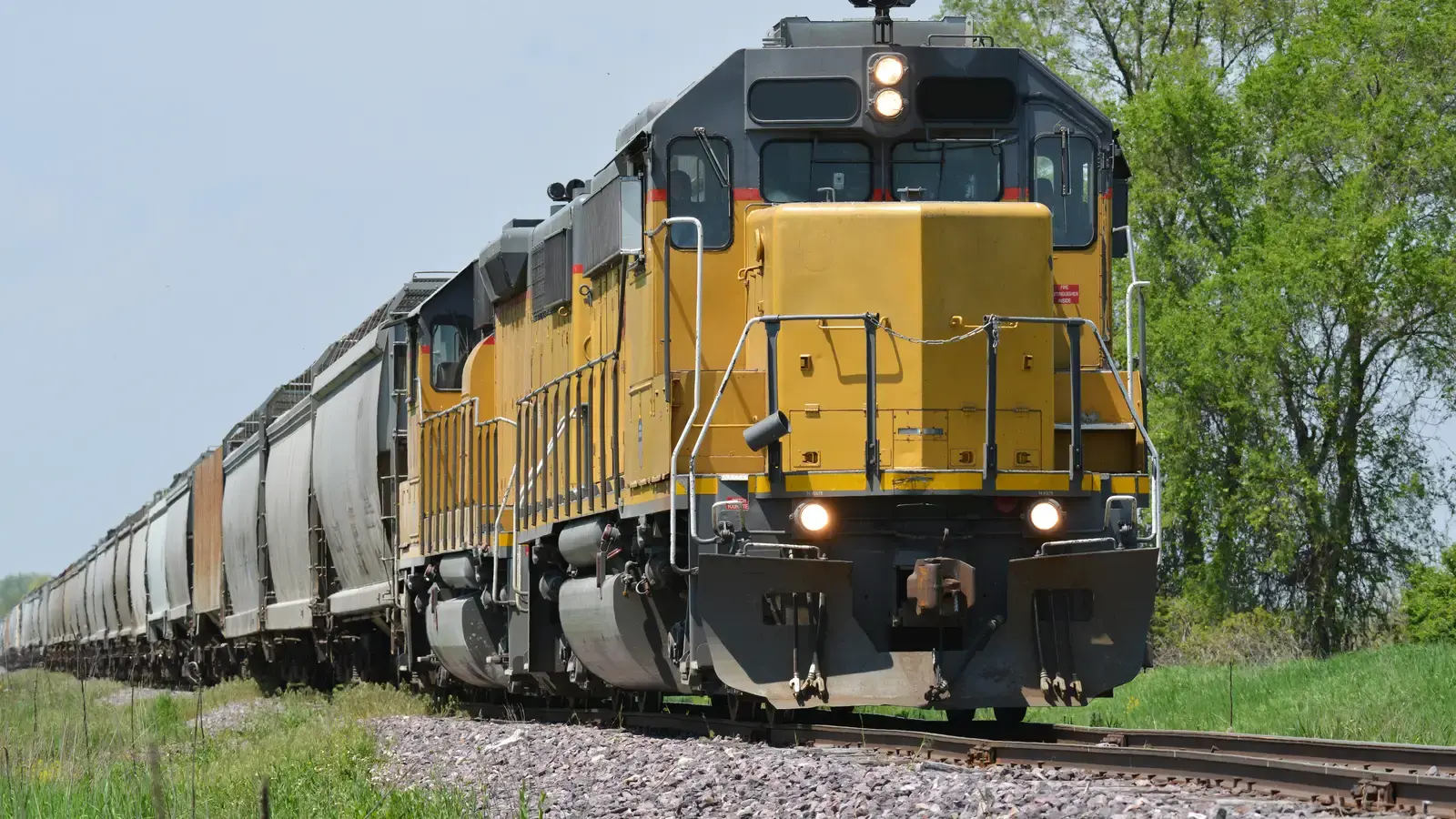
Sulfuric acid moves in a DOT 412 corrosives tanker, the spec built for Class 8 acids, at 5,500 to 6,000 gallons per load. The lining is where loads succeed or fail, because the correct lining is set by concentration and temperature, not by whichever trailer happens to be sitting in the yard. Stainless steel is not a fallback here: austenitic stainless is attacked above roughly 90% concentration, so carbon steel with a matched lining is the standard shell.
Concentrated acid above 93%
Natural rubber or Hypalon lining over a carbon steel shell is the standard for fresh concentrated acid service, and the most common configuration for domestic industrial-grade shipments moving under UN 1830.
Mid-range 51% to 93%
Fluoropolymer lining, PVDF or PTFE, is the choice in this range, particularly at elevated temperatures where rubber degrades faster than the load schedule allows.
Dilute battery acid at or below 51%
Rubber or HDPE lining handles UN 2796 battery acid service, where the lower concentration is easier on the lining but still corrosive enough to require a dedicated Class 8 tanker.
| Concentration Range | Lining Material | Shell Material | Notes |
|---|---|---|---|
| Concentrated (above 93%) | Natural rubber or Hypalon | Carbon steel | Standard for fresh concentrated acid service. |
| Mid-range (51% to 93%) | Fluoropolymer (PVDF or PTFE) | Carbon steel | Preferred at elevated temperatures. |
| Dilute battery acid (51% or below) | Rubber or HDPE | Carbon steel | UN 2796 service. |
Choosing the lining is the same equipment-selection discipline covered in our breakdown of liquid bulk transport equipment. On acid it decides whether a tanker runs for years or leaks through a compromised shell after months of mismatched service.
Loading Sulfuric Acid: Bottom-Load Protocols and Fume Control
Bottom-loading is standard for sulfuric acid because it eliminates the open-dome splash that throws corrosive product and limits fume release, a distinction covered in our comparison of bottom-loading versus top-loading tankers. Personnel wear a full face shield, an acid-resistant suit, and butyl rubber or neoprene gloves, and they stand upwind of the connection. OSHA 29 CFR 1910.151 requires a plumbed eyewash reachable within 10 seconds of the loading point for corrosive operations, and that is not a suggestion when the product on the hose strips skin on contact.
Fume control is the part that catches crews who treat acid like any other liquid. Concentrated and fuming sulfuric acid generates sulfur trioxide on contact with moisture in the air, so enclosed loading requires acid fume ventilation. Grounding and bonding still go on. Because sulfuric acid absorbs moisture exothermically and expands, crews leave outage for thermal expansion in transit. Four things a loading crew confirms before the connection is made:
- The UN number on the paperwork matches the concentration actually in the tank, not the concentration usually shipped on that lane.
- The tanker lining is rated for the concentration and the temperature, not just for corrosive service in general.
- The eyewash station is plumbed and reachable within 10 seconds of the loading connection, per OSHA 29 CFR 1910.151.
- Fume ventilation is running before the connection opens, particularly for concentrated or fuming grades.
The full discipline is laid out in our guide to liquid bulk loading and unloading protocols.
Unloading Sulfuric Acid at Destination
Concentrated acid pump-unloads at a controlled rate into storage tanks through a dip pipe or eductor to keep the stream from splashing. The receiving sequence is deliberate, and skipping a step is how a clean delivery turns into a corrosive incident:
- Confirm the receiving tank material and lining are compatible with the acid concentration before connecting any hose.
- Verify grounding and bonding are in place before the connection opens, to prevent static ignition of any entrained vapors.
- Pump at a controlled rate through a dip pipe or eductor rather than allowing free-fall discharge into the tank.
- Inspect the tanker interior after unloading for any sign of lining wear before the next load is scheduled.
Each of those steps protects either the next load or the people around it. A receiving site that treats unloading as a controlled procedure, not a quick transfer, is the one that never files an incident report.
Placarding, Shipping Papers, and Emergency Response for Class 8
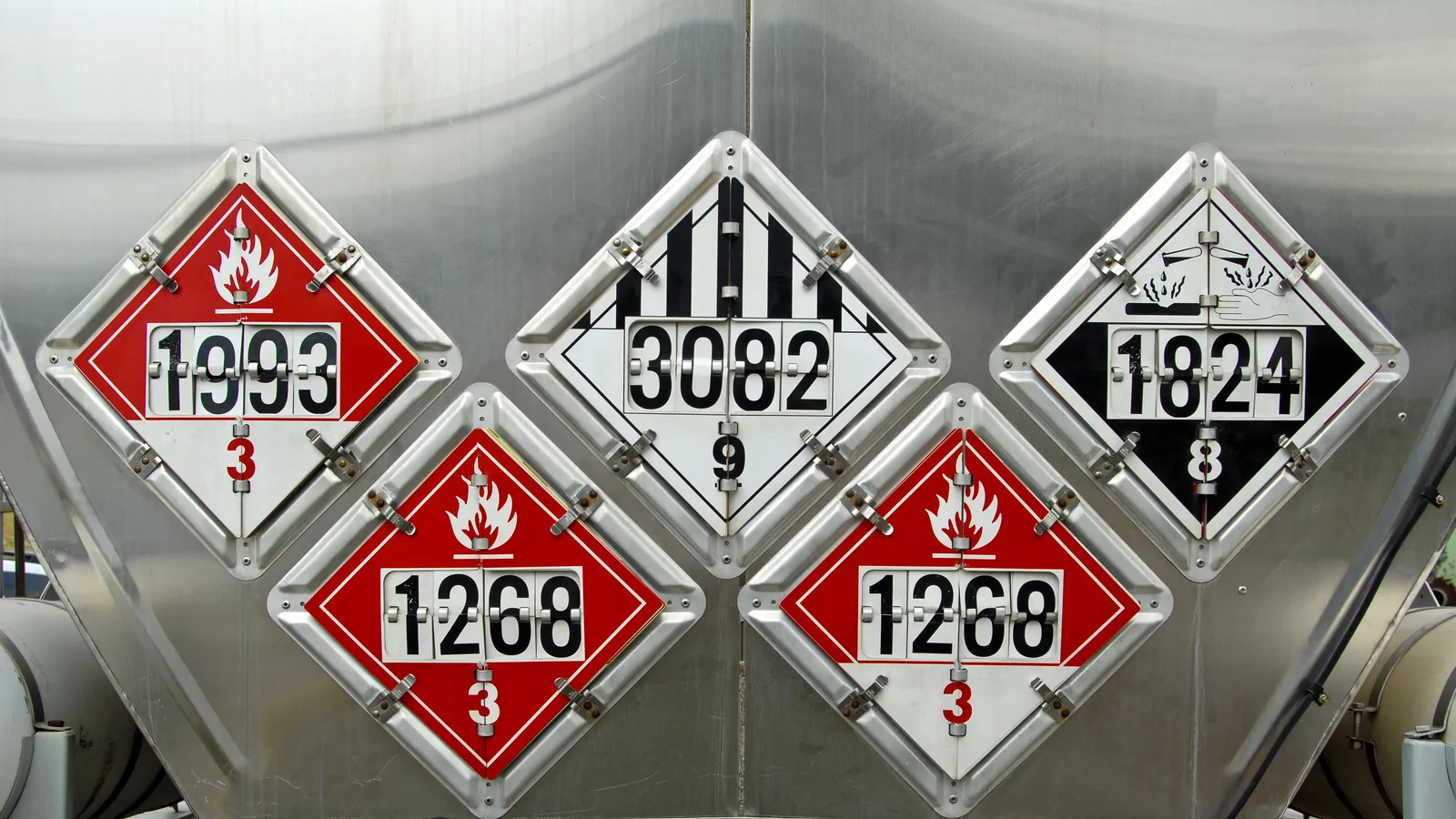
Sulfuric acid in bulk requires the CORROSIVE placard, a white diamond with the Class 8 designation, on all bulk quantities per 49 CFR 172.504. The shipping paper shows SULFURIC ACID, UN 1830 for concentrations above 51%, Class 8, PG II, in proper DOT format per 49 CFR 172.202. Emergency response runs under ERG Guide 137, with an initial isolation of 50 meters for a spill and 300 meters downwind for a large spill.
The credential requirements separate a compliant carrier from a risk. Drivers carry current hazmat training and a hazmat endorsement on the CDL. A carrier hauling bulk Class 8 corrosives must hold the MCS-90 endorsement and meet the $5M financial responsibility minimum under 49 CFR 387.9, and Total Connection carries $5M general liability against a $1M industry standard. The broader compliance framework for moves like this is laid out in our overview of hazmat trucking regulations, and on a Class 8 corrosive the financial responsibility piece is not a formality.
Common Sulfuric Acid Shipping Mistakes
The expensive sulfuric acid failures are predictable, and they cluster around concentration, lining and material compatibility. Nearly all of them are caught at the tender stage by someone who asks what is actually in the tank:
- Shipping under the wrong UN number for the concentration on the load. Spent acid tendered as UN 1830 instead of UN 1832 is a federal violation caught on the first inspection.
- Loading a rubber-lined tanker with hot concentrated acid that calls for fluoropolymer lining instead. The lining fails quietly, and the shell fails loudly.
- Specifying stainless steel above roughly 90% concentration, where austenitic stainless is attacked and the tank itself becomes the failure point.
- Running enclosed loading without fume ventilation on concentrated or fuming grades, which puts sulfur trioxide into the loading bay.
- Using brass or bronze fittings, which sulfuric acid attacks, instead of materials rated for the concentration.
- Failing to leave outage for thermal expansion, since sulfuric acid absorbs moisture exothermically and expands in transit.
Most of these are equipment and paperwork decisions made before the truck is ordered, which is why the concentration belongs on the tender rather than in a phone call after the driver is at the rack.
Sulfuric Acid in International and Ocean Freight
For ocean export, sulfuric acid ships in an ISO tank meeting IMDG Portable Tank Instruction T14 or above, lined to match the concentration, with rubber lining standard for concentrated grades. Under the IMDG Code, UN 1830 Class 8 carries Stowage Category A, meaning it may stow in the hold or on deck, away from foodstuffs. At sea it segregates away from Class 4.3 dangerous-when-wet materials, Class 1 explosives and food items per the IMDG segregation table.
The documentation is its own workstream. Electronic export information goes into AES where the filing threshold applies, and the ISO tank lets the acid move from plant to terminal to vessel without a product transfer, which is the safest way to handle a corrosive across modes. A shipper running export acid is managing a customs and segregation problem on top of a corrosive-handling problem, which is exactly the kind of multi-mode coordination a full forwarder should hold in one place rather than splitting across a tanker broker, a drayage vendor and a customs house.
How Total Connection Moves Sulfuric Acid
Total Connection built its business around the hardest, most regulated freight there is, and concentrated sulfuric acid is exactly that. We match the DOT 412 tanker, the lining and the carrier to your concentration and temperature profile, and we hold the FMC OTI license 026203NF, MC 280101 authority and the $5M general liability that bulk Class 8 work demands. The same team handles the tanker move, the ISO tank export, the drayage, the tank wash between loads and the customs entry, so one commodity does not become four vendors.
For the full picture, see our liquid bulk chemical logistics services, the complete guide to liquid bulk freight, the field protocols in liquid bulk loading and unloading, and how we get chemical freight covered faster. To price a specific sulfuric acid lane or concentration, request a quote with the concentration and the origin on it.
What UN number does sulfuric acid ship under?
Sulfuric acid ships under one of three UN numbers depending on concentration. UN 1830 covers concentrations above 51%, UN 2796 covers battery acid at or below 51%, and UN 1832 covers spent acid returned for regeneration, all Class 8, Packing Group II.
What tanker lining is required for concentrated sulfuric acid?
Concentrations above 93% typically use natural rubber or Hypalon lining over a carbon steel shell. The 51% to 93% mid-range calls for fluoropolymer lining, either PVDF or PTFE, particularly when the load runs at elevated temperature.
Can sulfuric acid be shipped in a stainless steel tanker?
Stainless steel is not reliable at high concentrations because austenitic stainless is attacked above roughly 90%. Lined carbon steel DOT 412 tankers, with the lining matched to concentration, are the standard equipment for sulfuric acid.
What placard does bulk sulfuric acid require?
Bulk sulfuric acid requires the CORROSIVE placard, a white diamond bearing the Class 8 designation, under 49 CFR 172.504. Shipping papers must show the correct UN number and proper shipping name formatted per 49 CFR 172.202.
How is sulfuric acid loaded to control fumes?
Sulfuric acid loads through a bottom connection with active fume ventilation, full PPE for personnel, and a plumbed eyewash reachable within 10 seconds of the loading point under OSHA 29 CFR 1910.151. Concentrated and fuming grades generate sulfur trioxide on contact with air moisture, so ventilation and PPE are part of the written loading procedure.
How does sulfuric acid ship internationally by ocean?
Sulfuric acid ships internationally in ISO tanks meeting IMDG Portable Tank Instruction T14 or above, lined to match the concentration. Under the IMDG Code it carries Stowage Category A and segregates away from dangerous-when-wet materials, explosives, and foodstuffs during the voyage.