
Loading and unloading are the most dangerous phases of any liquid bulk shipment. More spills, more contamination events, and more safety incidents occur at the loading rack and delivery dock than during transit. Understanding the process, and the common mistakes that cause problems, is essential for anyone involved in liquid bulk chemical logistics.
For shipper-led capacity and hazmat-fluent execution on this freight, see Total Connection's liquid bulk and chemical logistics service.
For more on liquid bulk freight, see our complete guide to liquid bulk freight.
Overview of liquid bulk tanker operations
Liquid bulk tanker operations move products from storage at the loading facility into the tanker truck, transport the product to the destination, and transfer the product from the tanker into receiving storage. Each transfer point is a critical control point where product integrity, safety, and regulatory compliance can succeed or fail.
The typical tanker truck holds 6,000 to 7,000 gallons depending on product density and legal weight limits. For more on tanker capacities, see our guide on how many gallons a tanker truck holds. Loading times range from 30 minutes to 2 hours depending on product viscosity, loading method, and facility flow rate. Unloading takes a similar amount of time depending on the method used.
The stakes are high. A single contaminated tanker load of specialty chemical can cost $30,000 to $100,000 in lost product. A loading or unloading spill can trigger EPA reporting requirements, facility shutdowns, and cleanup costs in the tens of thousands of dollars. A loading incident involving a flammable chemical can result in fire or explosion.
Pre-loading inspection and preparation
Every liquid bulk loading operation starts with verification. The driver presents the bill of lading and confirms the product to be loaded. The facility operator verifies the tanker has been properly washed and inspects the wash ticket (also called a wash certificate or wash-out ticket). The tank's prior cargo history is reviewed to confirm compatibility. Even after washing, some products leave trace residues that can react with or contaminate the next cargo.
A complete pre-load check covers six points before a single gallon moves:
- The bill of lading product matches what is actually being loaded.
- The tank wash ticket is present and the prior cargo is compatible with the new product.
- The DOT tank specification and tank material (DOT 407, DOT 412, stainless, lined) match the chemical.
- All valves, fittings, and hoses are leak-free and the facility hose matches the tanker connection.
- Grounding and bonding are connected, which is non-negotiable for Class 3 flammable liquids.
- Vapor recovery is in place where the product or the facility's air permit requires it.
The tank material and DOT specification are verified against the product requirements. A DOT 407 aluminum tanker is suitable for most non-corrosive chemicals. A DOT 412 corrosive tanker with stainless steel or specialized lining is required for acids and corrosive materials. The wrong tank specification can result in product contamination, tank damage, or a DOT violation.
All connections, valves, and fittings are inspected for leaks, damage, and proper operation. Hose compatibility is confirmed. The facility's loading hose fitting must match the tanker's connection, or an adapter must be available.
Grounding and bonding connections are made to prevent static electricity buildup, which is critical for flammable products. A static discharge during loading of a Class 3 flammable liquid can ignite vapors and cause an explosion. Grounding connects the tanker to earth ground. Bonding connects the tanker to the loading facility's equipment to equalize electrical potential.
This pre-loading verification catches problems before they become expensive. A contaminated tank caught at this stage costs nothing but a few minutes of delay. A contaminated tank discovered after loading costs the entire shipment, the tank wash to clean it, and potentially a customer relationship.
Loading procedures and safety protocols
Top loading
Top loading introduces product through the manhole dome at the top of the tank. The driver opens the dome, the loading hose is lowered into the tank, and product flows from the facility's storage into the tanker by gravity or pump pressure. Flow rates typically range from 100 to 300 gallons per minute depending on product viscosity and facility pumping capacity.
Top loading is the most common method for chemical tankers. It allows visual confirmation of the loading process (the operator can see product entering the tank and monitor foam, color, or other indicators). It's compatible with most products and facilities. It doesn't require bottom-loading equipment on the trailer, which reduces tanker cost and maintenance.
The disadvantage is vapor emission. The open dome allows fumes to escape during loading, which is a concern for volatile chemicals, products with strong odors, and environmentally regulated facilities. Some states and facilities require vapor recovery systems during top loading of volatile organic compounds to comply with EPA and state air quality regulations.
Safety protocols during top loading include positioning the hose to avoid splashing (which increases vapor emission and static buildup), monitoring fill level to prevent overfilling, and maintaining grounding and bonding throughout the loading process.
Bottom loading
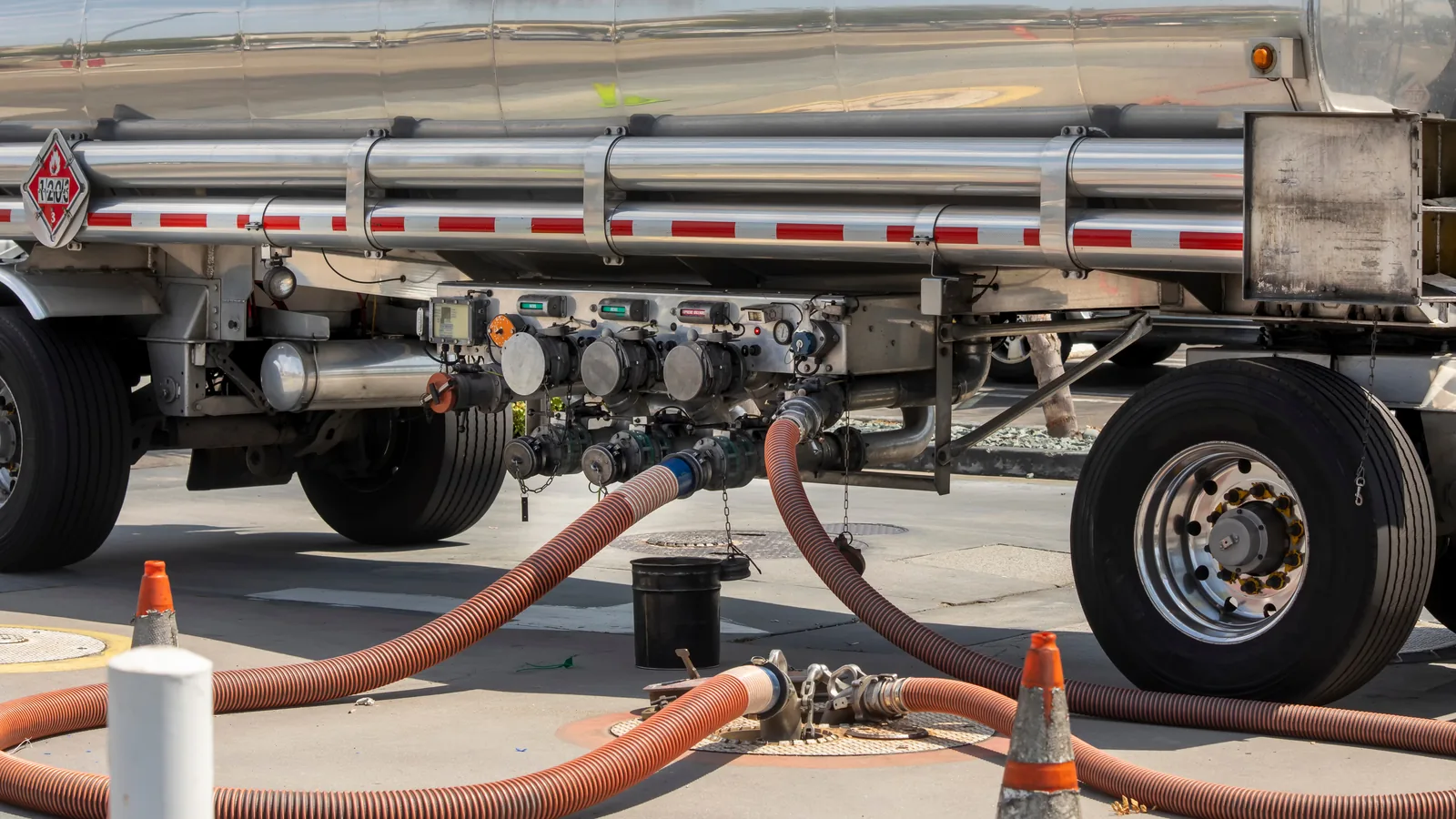
Bottom loading introduces product through a valve at the bottom of the tanker, connected to the facility's loading system through a sealed coupling. The tank dome remains closed throughout the process. Product flows into the tank from the bottom up, minimizing turbulence and vapor generation.
Bottom loading significantly reduces vapor emissions, making it the preferred or required method for volatile chemicals (gasoline, solvents, certain specialty chemicals), products with strong odors, and environmentally regulated facilities where air permits restrict vapor emissions. It also reduces the risk of spills during connection and disconnection because the sealed coupling contains any drips or leaks.
Bottom loading requires specialized equipment on both the tanker (bottom valves and piping) and the loading facility (bottom-loading racks with dry-disconnect couplings). This limits its use to facilities and tanker fleets that have made the capital investment.
Metering and documentation
Product quantity is measured during loading using flow meters or weigh scales. Flow meters measure volume (gallons). Weigh scales measure weight (pounds or tons). For products sold by weight, the tanker is weighed empty (tare weight), loaded, and weighed again (gross weight). The difference is the net product weight.
Metering accuracy is critical for custody transfer, the point where product ownership transfers from the shipper to the carrier or receiver. Discrepancies between loaded quantity and delivered quantity can indicate leaks, theft, metering errors, or temperature-related volume changes.
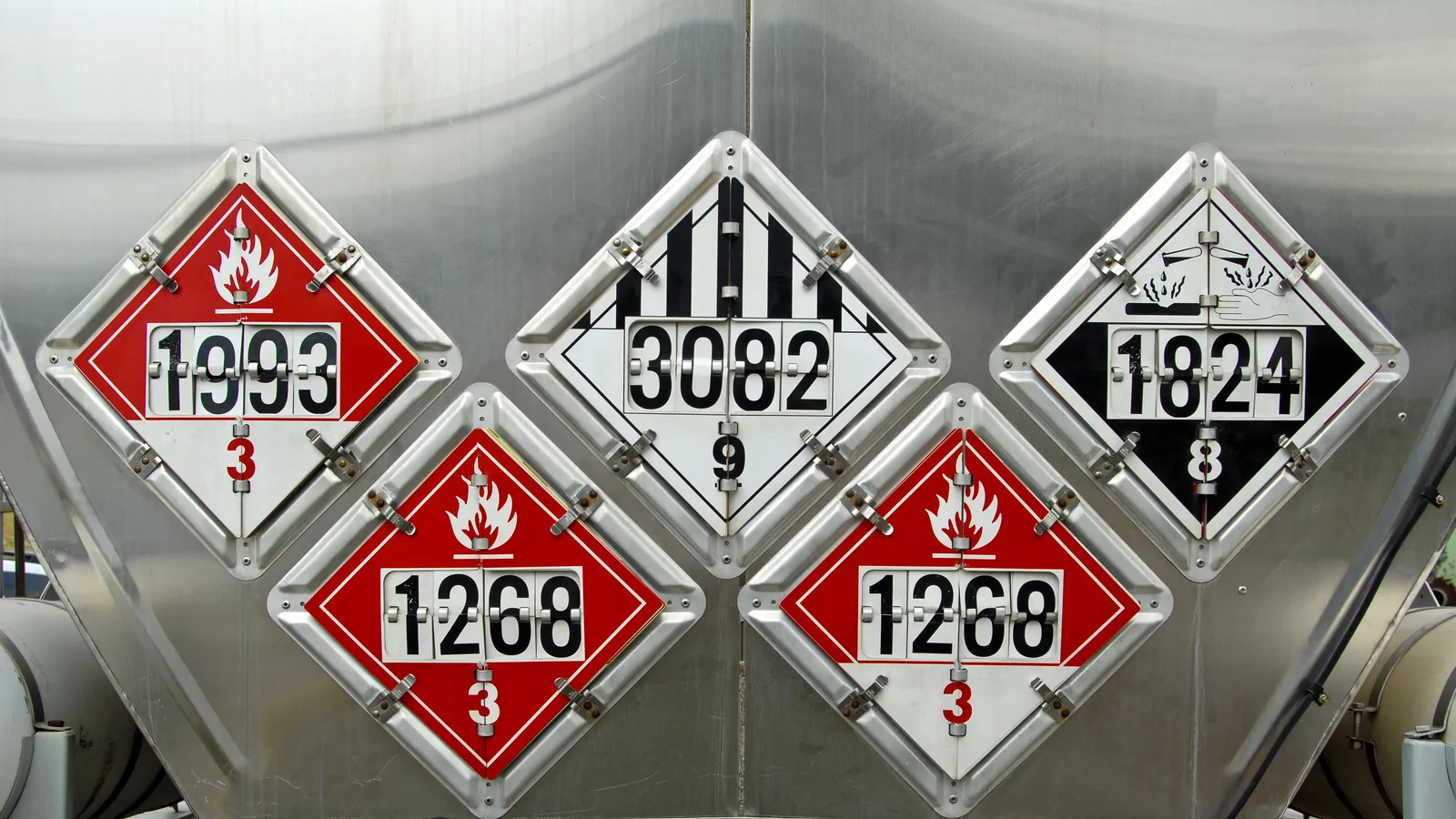
The bill of lading is completed during loading and includes product name, quantity loaded, date and time, shipper and consignee information, hazmat classification (if applicable), and any special handling instructions. For hazmat shipments, the BOL must include the proper shipping name, UN number, hazard class, and packing group per DOT 49 CFR 172.
Unloading procedures
Gravity unloading
The simplest method. Product flows out through the bottom valve by gravity into the receiving facility's storage tank. Works only when the delivery tank is lower in elevation than the tanker. Flow rate is limited by the height difference and product viscosity. Gravity unloading is suitable for low-viscosity products and facilities with below-grade storage tanks. It's not suitable for viscous products (which flow too slowly) or when the receiving tank is at grade level or elevated.
Pump-off unloading
An external pump moves product from the tanker to the receiving facility's storage. The pump can be mounted on the tanker (truck-mounted pump) or provided by the facility (facility pump or portable pump). Pump-off unloading provides controlled flow rates, works regardless of tank elevation, and can handle viscous products that won't gravity-flow.
The pump material must be compatible with the chemical being unloaded. Centrifugal pumps with stainless steel or composite impellers are common for most chemicals. Diaphragm or peristaltic pumps are used for abrasive or shear-sensitive products. Metal pumps are not suitable for corrosive chemicals (sulfuric acid, hydrochloric acid, caustic soda), which require pumps with corrosion-resistant construction (Hastelloy, PTFE-lined, or all-plastic).
Air-blown (pneumatic) unloading
Compressed air is introduced through the tanker's dome, pressurizing the tank and pushing product out through the bottom valve. Air pressure typically ranges from 5 to 15 psi depending on product viscosity and unloading distance. Air-blown unloading is effective for most non-flammable, non-reactive products. It doesn't require an external pump, which simplifies equipment and reduces cost.
Air-blown unloading is not suitable for flammable liquids due to static electricity risk. The turbulence of air flowing through the product can generate static charges that may ignite flammable vapors. It's also not suitable for products that react with air or moisture (certain isocyanates, water-reactive chemicals, oxygen-sensitive materials).
Unloading verification and documentation
Product quantity is verified at unloading using receiving facility meters or by weighing the tanker before and after unloading. Discrepancies between loaded quantity and delivered quantity are investigated. Small differences (0.5 to 1 percent) are normal due to temperature-related volume changes, product clinging to tank walls, and metering tolerances. Larger differences indicate potential problems (leaks, theft, metering error, or product left in the tank).
The driver obtains a signed delivery receipt from the receiving facility confirming quantity delivered, product condition (any quality issues, off-spec material, or contamination observed), and delivery date and time. This documentation closes the chain of custody and transfers liability from the carrier to the receiver.
Documentation and chain of custody
Liquid bulk shipments generate multiple documents that track the product from origin to destination. The bill of lading (BOL) is the primary shipping document, serving as a receipt for the product, a contract of carriage, and a document of title. For hazmat shipments, the BOL includes all required hazmat information per 49 CFR 172.202.
The tank wash certificate documents that the tanker has been cleaned to a specific standard before loading. This prevents contamination from prior cargo. Wash certificates typically include prior cargo information, wash method (hot water, steam, detergent, solvent), wash date, and the facility that performed the wash.
For regulated chemicals, additional documentation may be required including the Safety Data Sheet (SDS) carried in the cab, certificates of analysis (COA) for the product batch being shipped, and import/export documentation for international shipments (AES filing, commercial invoice, packing list).
Chain of custody documentation tracks who had possession of the product at each stage (shipper loading, carrier in transit, receiver unloading). This is critical for quality control, regulatory compliance, and liability determination if problems occur.
Common problems and how to avoid them
The most expensive loading and unloading mistakes are predictable, and avoidable:
- Skipping the pre-load inspection is the most expensive time-saver that isn't. Rushing past tank verification to save 15 minutes can result in a contaminated load worth tens of thousands of dollars. Proper inspection takes 10 to 20 minutes and catches 90 percent of contamination risks before loading begins.
- Wrong unloading method creates immediate safety hazards. Using compressed air on a flammable product generates static electricity that can ignite vapors. Using a metal pump on a corrosive chemical causes pump failure and potential spills. Matching the unloading method to the chemical's properties is non-negotiable.
- Incomplete unloading leaves liquid remaining in the tank after unloading (the heel). Heels ranging from 10 to 100 gallons are common depending on tank design, product viscosity, and unloading method. If not properly accounted for in the wash process, heel residue can contaminate the next load. Proper unloading technique (tilting the tanker, using compressed air to clear lines, pump-off to the last possible gallon) minimizes the heel.
- Hose and fitting incompatibility delays loading and can require the driver to make a trip to find compatible equipment. Different facilities use different hose fittings and connection sizes (Cam-lock, Acme thread, API adapter, dry-disconnect couplings). Verifying fitting compatibility before the truck arrives prevents delays.
- Ignoring weather conditions affects product handling. Loading and unloading in extreme cold can affect product viscosity and pumpability. Some chemicals crystallize or become too viscous to pump below certain temperatures, requiring heated transport or facility heating. Extreme heat increases vapor pressure and fume exposure risk, requiring additional vapor control and PPE.
Why Total Connection for liquid bulk tanker logistics
We coordinate loading and unloading logistics on every shipment. We confirm facility requirements before tendering, verify equipment compatibility (hose fittings, adapters, pump requirements, heating capability), schedule appointments to minimize detention, and communicate special procedures (bottom loading, vapor recovery, heated unloading, inert gas blanketing) to the carrier and driver before they arrive.
We work with tanker trucking companies that maintain their equipment, train their drivers on chemical handling, and understand the loading and unloading procedures that prevent spills and contamination. We coordinate tank wash verification, prior cargo documentation, and DOT specification matching as standard practice on every load.
We built Total Connection on liquid bulk and hazmat logistics, where loading and unloading procedures can make or break a shipment. We know which facilities require bottom loading, which products need pump-off instead of air-blown unloading, and how to coordinate heated deliveries in cold weather.
Call 732-817-0401 or request a quote for liquid bulk tanker logistics.
Frequently Asked Questions
What happens during a pre-load inspection?
The facility verifies the tanker's wash ticket, inspects prior cargo history for compatibility, confirms tank material and DOT specification match the product, checks all valves and fittings, and makes grounding connections for static prevention. This catches contamination problems before they become expensive.
What's the difference between top loading and bottom loading?
Top loading introduces product through the open dome at the top of the tank. Bottom loading introduces product through a sealed coupling at the bottom. Bottom loading reduces vapor emissions and is preferred or required for volatile and toxic chemicals.
Can compressed air be used to unload any chemical?
No. Air-blown unloading is not suitable for flammable liquids (static electricity risk) or products that react with air or moisture. Pump-off or gravity unloading should be used for these products.
What is a tanker heel and why does it matter?
The heel is liquid remaining in the tank after unloading. If not properly accounted for in the subsequent tank wash, heel residue can contaminate the next load. Proper unloading technique minimizes the heel, and proper wash protocols address any remaining residue.