
.png)
A standard tanker truck holds between 5,500 and 11,600 gallons depending on trailer type, commodity, and federal gross vehicle weight limits. That range is wide because "tanker truck" covers a lot of ground, petroleum trailers, chemical tankers, corrosive service units, food-grade stainless, and crude haulers all operate under different construction specs, pressure ratings, and DOT regulations that directly determine how many gallons you can legally and safely move in a single load.
If you are planning a bulk liquid shipment and trying to build a cost model, understand carrier availability, or figure out how many truckloads your product requires, tank capacity is the starting point. Get it wrong and you are either overpaying for unused capacity or underestimating truck count and blowing your delivery schedule.
For more on liquid bulk freight, see our complete guide to liquid bulk freight.
Standard Tanker Truck Capacity Ranges by Trailer Type
Tank trailer specifications are governed by DOT construction standards, and those standards exist for a reason. Each trailer type is built for a specific service class, the shell material, pressure rating, lining, and valve configuration all differ. Capacity ranges follow from those design constraints.
MC-306 / DOT-406 Petroleum Tankers
These are the trailers you see pulling into gas stations. MC-306 is the older spec; DOT-406 is the current construction standard. Both are aluminum, elliptical-shaped, atmospheric-pressure trailers designed primarily for flammable and combustible liquids, gasoline, diesel, aviation fuel, and similar petroleum products.
Typical capacity runs 9,000 to 9,500 gallons, though some configurations reach up to 11,500 gallons on larger units. These trailers are not designed for chemical service. If your product is a corrosive or a reactive, a DOT-406 is the wrong piece of equipment regardless of what it holds.
MC-307 / DOT-407 Chemical Tankers
The DOT-407 is the workhorse of the chemical trucking industry. It is built to handle a broad range of liquid chemicals including flammable liquids, combustible liquids, and certain corrosives that do not require the heavier DOT-412 spec. Shell material is typically carbon steel or stainless steel, with rubber or specialty linings depending on the commodity.
Capacity on a DOT-407 generally runs 6,000 to 7,000 gallons. The lower volume compared to a petroleum tanker reflects the heavier tank construction and the additional safety systems required for chemical service. Pressure ratings run up to 25 psig on these units, which matters for products that require vapor pressure management in transit.
MC-312 / DOT-412 Corrosive Liquid Tankers
These are purpose-built for aggressive corrosives, sulfuric acid, hydrochloric acid, sodium hydroxide, and similar hazmat commodities. The DOT-412 features a smaller diameter tank, thicker shell construction, and exterior protective housings over fittings and valves. That added weight and structural reinforcement reduces the volume you can carry.
Usable capacity typically runs 5,500 to 6,500 gallons. For dense corrosives like sulfuric acid (specific gravity around 1.84), the actual gallons you can load before hitting the 80,000-pound federal gross vehicle weight limit may be far below that physical tank capacity. More on that calculation in the next section.
Stainless Steel Food-Grade Tankers
Food-grade tankers are built to 3-A Sanitary Standards and typically run 304 or 316 stainless steel construction with polished interiors. They are used for edible oils, corn syrup, ethanol, juice concentrates, liquid sweeteners, and other food-contact or beverage-grade commodities.
Capacity on food-grade units runs 6,000 to 7,500 gallons. These trailers require documented cleaning and washout records before loading, a carrier that cannot produce a prior load certificate and recent wash ticket has no business backing up to your facility.
Large Crude and Petroleum Transport Tankers
At the top of the capacity range, large crude and bulk petroleum tankers can reach 11,500 gallons or slightly above. These units are typically found in pipeline terminal operations, crude gathering, and long-haul petroleum transport. Getting to that volume legally requires favorable product density and sometimes overweight permits depending on jurisdiction and route.
Tanker Truck Capacity at a Glance
| Trailer Type | DOT Spec | Typical Capacity (Gallons) | Common Commodities | Shell Material |
|---|---|---|---|---|
| Petroleum Tanker | MC-306 / DOT-406 | 9,000 to 11,500 | Gasoline, diesel, aviation fuel | Aluminum |
| Chemical Tanker | MC-307 / DOT-407 | 6,000 to 7,000 | Liquid chemicals, solvents, some corrosives | Carbon steel, stainless steel |
| Corrosive Tanker | MC-312 / DOT-412 | 5,500 to 6,500 | Sulfuric acid, HCl, caustic soda | Carbon steel with lining |
| Food-Grade Tanker | DOT-407 (Sanitary) | 6,000 to 7,500 | Edible oils, ethanol, corn syrup | 304 / 316 Stainless steel |
| Crude / Bulk Petroleum | DOT-406 (Large) | 10,000 to 11,600 | Crude oil, bulk petroleum | Aluminum / Carbon steel |
Why Gross Vehicle Weight Limits Often Matter More Than Tank Size
Federal law caps gross vehicle weight at 80,000 pounds on the interstate highway system under 23 CFR 658.17. That limit covers everything: tractor, trailer, fuel, driver, and product. On a standard 5-axle combination, tare weight for the tractor and trailer together typically runs 33,000 to 36,000 pounds. That leaves roughly 44,000 to 47,000 pounds of available payload.
When you divide that payload allowance by product weight per gallon, you get the real usable volume, and for dense liquids, that number can be significantly lower than the physical tank capacity.
How Specific Gravity Controls Your Load
Specific gravity is the ratio of a product's density to water. Water weighs 8.34 pounds per gallon at standard temperature. Heavier products eat through your payload allowance faster, leaving tank volume sitting empty even on a legal load. This is not a trucking problem you can negotiate away. Physics sets the limit.
For a shipper moving a corrosive acid or heavy industrial chemical, the density calculation is the first thing an experienced carrier or broker will run before quoting a load. Skipping that step creates overweight violations, fines, and potential loss of operating authority for the carrier.
Overweight Permits for Short Hauls
Some states allow overweight permits for loads exceeding 80,000 pounds when axle weights and routes meet state-specific requirements. These permits are available in most states but require advance planning, restrict the route, and add cost. They are more common in intrastate movements, a refinery to a distribution terminal 80 miles away, for example, than in long-haul chemical distribution.
Overweight operations are not a workaround for bad load planning. They are a specific tool for specific situations, and they require a carrier with both the permit authority and the equipment configured to handle the axle spread requirements.
Gallons Per Load: Practical Calculations for Bulk Liquid Shippers
Before you request a quote or build a delivery schedule, run the density math on your product. The formula is straightforward: divide available payload (in pounds) by product weight per gallon. That gives you the maximum gallons you can ship on a compliant load.
Using 45,000 pounds as a representative payload allowance, here is how common products work out:
- Water (8.34 lb/gal): 45,000 divided by 8.34 equals approximately 5,396 gallons. Even though the tank holds more, you hit the weight limit before you fill it, which is why water and water-based products are often moved in smaller-capacity trailers or with overweight permits on short hauls.
- Sulfuric acid at 93% concentration (~15.3 lb/gal): 45,000 divided by 15.3 equals approximately 2,941 gallons. A 6,000-gallon DOT-412 tanker carries less than half its physical capacity on a legal load. Shippers who do not account for this end up with overweight violations or carriers who refuse to load.
- Ethanol (6.59 lb/gal): 45,000 divided by 6.59 equals approximately 6,828 gallons. Ethanol is lighter than water, so a food-grade or chemical tanker in the 6,500 to 7,000-gallon range will typically load to physical capacity before hitting the weight limit.
- Edible oil, refined (~7.7 lb/gal): 45,000 divided by 7.7 equals approximately 5,844 gallons. A 7,000-gallon food-grade tanker will be weight-limited before it is full. Expect actual load sizes in the 5,500 to 6,000-gallon range depending on the specific oil and temperature.
These are planning estimates, not guarantees. Tare weights vary by carrier equipment, and product density changes with temperature. Always confirm actual load capacity with your carrier or liquid bulk logistics provider before finalizing a shipment plan.
Multi-Compartment Tankers and Split Loads
Not every tanker runs as a single-compartment unit. Multi-compartment trailers divide the tank into two, three, four, or more independent sections, each with its own manway, valves, and venting. The total trailer volume stays the same, a DOT-406 petroleum tanker is still approximately 9,000 gallons whether it has one compartment or five, but that volume is split across separate chambers.
Where Multi-Compartment Trailers Are Common
Petroleum distribution is the primary application. A fuel delivery truck serving multiple grade service stations will carry regular, midgrade, premium, and diesel in separate compartments, delivering each grade to the correct tank at each stop without cross-contamination. This is standard operating procedure for fleet fueling and retail petroleum operations.
Chemical distribution occasionally uses split-compartment units when a shipper or consignee needs two compatible products delivered in a single truck movement. Compatibility matters: you cannot load two products in adjacent compartments unless they are proven non-reactive with each other and with the shared trailer infrastructure.
Regulatory Requirements for Multi-Compartment Hazmat Loads
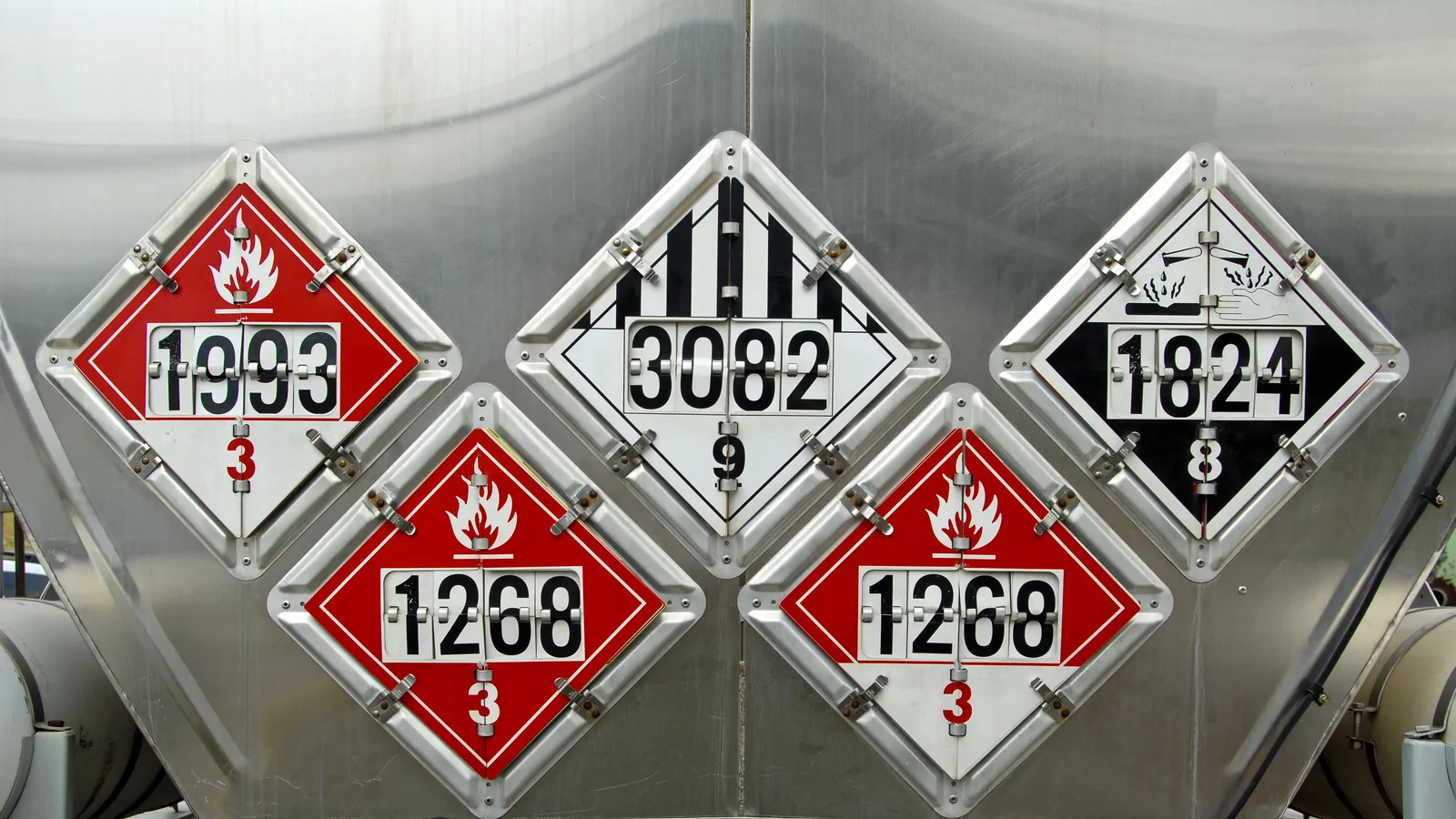
Under 49 CFR 177.834 and related hazmat transport regulations, each compartment carrying a hazardous material must comply with all applicable requirements for that material independently. Placarding, shipping papers, and emergency response information must reflect every hazardous commodity on board. A multi-compartment load with UN 1203 (gasoline, Hazard Class 3) in one compartment and UN 1993 (flammable liquid n.o.s., Class 3) in another requires documentation and placarding for both.
Carriers running multi-product hazmat loads need drivers with current hazmat endorsements and familiarity with the specific commodities being transported. This is not the load to assign to a driver who primarily runs dry freight.
How Tanker Capacity Affects Freight Cost Per Gallon
Freight cost per gallon is the number that actually matters to a bulk liquid shipper's P&L. And that number is directly controlled by how efficiently you fill the truck.
Most carriers quote liquid bulk moves as a flat rate per load, not per gallon. If the rate for a chemical tanker move from Houston to a New Jersey terminal is $4,200, your cost per gallon on a 6,500-gallon load is $0.646. On a 4,800-gallon load because your product is dense and weight-limited, your cost per gallon jumps to $0.875. Same truck. Same rate. Thirty-five percent higher unit cost because the load was not planned correctly.
Minimum Load Charges and Partial Loads
Chemical tanker carriers almost universally impose minimum load charges. If you are shipping less than a full truckload of liquid bulk product, you are paying a minimum charge that typically reflects 80 to 90 percent of the full load rate. Shipping 2,000 gallons in a 6,000-gallon tanker is expensive on a per-gallon basis, sometimes prohibitively so.
Options for shippers with partial load volumes include:
- Consolidating shipments: Holding product until you have enough volume to fill or near-fill a trailer reduces per-gallon cost significantly, though it requires sufficient storage capacity and supply chain flexibility.
- IBC or drum alternatives: For smaller volumes of specialty chemicals, intermediate bulk containers (IBCs) or drums moved via LTL or truckload can be more cost-effective than a dedicated tanker with a large minimum charge.
- Milk-run scheduling with a broker: A liquid bulk broker with carrier relationships can sometimes pair your partial load with another compatible shipper on the same lane, reducing per-unit cost for both parties. This requires careful compatibility review and is not always available on short notice.
- Tote or flexitank alternatives for export: For international shipments where ocean freight is involved, flexitanks fitting inside a standard 20-foot container hold approximately 4,500 to 5,000 gallons and can offer a cost-effective alternative to ISO tank containers for non-hazardous liquid cargoes.
Rate Efficiency and Lane Optimization
Carriers build their rates around miles, equipment type, and how well a given lane fits their network. A carrier with regular chemical loads returning from a terminal near your facility will quote sharper rates than a carrier deadheading into your market. Working with a broker who knows carrier networks on your specific lanes, not just who has a tank trailer available, is how you access competitive rates on a consistent basis rather than paying spot premiums every time you move product.
Working With a Liquid Bulk Broker to Optimize Load Planning
A freight broker who specializes in liquid bulk is not just finding you a truck. The job includes matching your commodity to the right trailer type, confirming the carrier's equipment is clean and certified for your product, running the density calculation to confirm the load is legal, and making sure the driver has the right hazmat endorsement and the carrier has current hazmat registration with PHMSA if your product requires it.
For regulated commodities, that last point matters more than most shippers realize. Under 49 CFR Part 107, Subpart G, carriers transporting certain categories of hazardous materials in commerce must hold current hazmat safety permits. Benzene, hydrogen fluoride, and other highly toxic materials fall into this category. A broker who does not verify carrier hazmat permit status before tendering those loads is cutting corners that can result in enforcement action and liability exposure for everyone in the supply chain.
At Total Connection, we have been moving liquid bulk freight for 30 years as a licensed NVOCC and domestic transportation broker. Our carrier base covers DOT-406, DOT-407, and DOT-412 service nationally, along with food-grade, asphalt, and specialty chemical equipment. We know which carriers run which lanes, which ones maintain their equipment, and which ones will give you problems on a complicated hazmat load.
If you are building a shipping program for a liquid commodity, need to understand capacity and cost before committing to a supply chain structure, or are looking for a broker who already knows the equipment your product requires, contact our team through the liquid bulk services page or request a quote directly. We will run the numbers with you before you commit to anything.
For more background on how bulk chemical freight moves domestically and internationally, our articles on chemical tanker trucking regulations and carrier requirements and ISO tank containers versus flexitanks for liquid cargo exports cover the equipment and regulatory details that affect every shipment decision.
Frequently Asked Questions
How many gallons does a tanker truck hold?
Most tanker trucks hold between 5,500 and 11,600 gallons depending on trailer type and construction spec. Petroleum tankers on the DOT-406 spec typically run 9,000 to 11,500 gallons, while chemical and corrosive service tankers under DOT-407 and DOT-412 specs run 5,500 to 7,000 gallons. The physical tank volume is only part of the answer, federal gross vehicle weight limits of 80,000 pounds often restrict actual load volume below tank capacity for dense liquid products.
What limits how many gallons a tanker truck can actually carry?
Federal law under 23 CFR 658.17 caps gross vehicle weight at 80,000 pounds on interstate highways, and that limit controls load volume for any product heavier than approximately 6.5 pounds per gallon. For dense materials like sulfuric acid, which weighs roughly 15 pounds per gallon at standard concentrations, a 6,000-gallon DOT-412 tanker may only carry 2,800 to 3,200 gallons on a fully legal load. Product density is the variable most shippers fail to account for when planning bulk liquid moves.
How many gallons of chemical can a DOT-407 tanker carry?
A DOT-407 chemical tanker typically holds 6,000 to 7,000 gallons of physical tank volume. Actual loaded gallons depend on the weight per gallon of the specific chemical, lighter solvents and alcohols will often allow full or near-full loads, while heavier acids and caustics will be weight-limited well before the tank is full. Confirming density and running the payload calculation before booking is standard practice for any experienced liquid bulk operator.
What is a multi-compartment tanker used for?
Multi-compartment tankers divide a single trailer into two or more independent chambers, each capable of carrying a different product or grade without cross-contamination. Petroleum distribution is the most common application, where a single truck delivers regular, premium, and diesel fuel to retail locations in a single run. Chemical applications exist but require careful compatibility review between adjacent compartments and full regulatory compliance for each hazardous material carried under 49 CFR 177.834.
How does tanker truck capacity affect freight cost per gallon?
Most liquid bulk carriers quote a flat rate per load rather than per gallon, which means your per-gallon freight cost drops as you fill the truck closer to its legal capacity limit. A shipper moving 4,500 gallons in a 6,500-gallon tanker pays the same base rate as one moving 6,200 gallons, making per-gallon cost significantly higher on the lighter load. Proper load planning around both tank volume and weight limits is one of the most direct ways to reduce unit freight cost on bulk liquid commodities.
Do I need a special carrier to ship hazardous liquids in a tanker truck?
Carriers transporting hazardous materials in bulk must hold appropriate DOT operating authority, employ drivers with current hazmat endorsements, and for certain high-hazard commodities, maintain a PHMSA hazmat safety permit under 49 CFR Part 107 Subpart G. The trailer itself must be the correct DOT spec for the commodity, a petroleum tanker is not an acceptable substitute for a certified chemical or corrosive tanker regardless of what it physically holds. Verifying carrier credentials before tendering a hazmat load is not optional.