
.png)
Chemical transportation services are the specialized movement of hazardous and non-hazardous chemical freight using mode-appropriate equipment, DOT-compliant documentation, vetted carriers, and active incident response protocols, none of which exist in standard freight brokerage.
If you ship chemicals and you are using a general freight broker, you are exposed. Not just to regulatory fines, but to contaminated product, rejected loads, carrier liability gaps, and the kind of incident that shuts down a facility. This guide covers what chemical logistics actually requires, how the regulations work, how to pick the right mode, and what it costs, with no filler.
What Chemical Transportation Services Actually Include
General freight brokerage means finding a truck and booking a load. Chemical transportation services mean something entirely different. The difference is not marketing language, it is operational scope.
A qualified chemical logistics provider does the following before a single load moves:
- Vets every carrier against RCRA, DOT, and EPA standards, not just FMCSA broker minimums.
- Reviews the Safety Data Sheet for each commodity to confirm classification, packaging, and emergency response data.
- Verifies that packaging meets the UN performance specification for the assigned packing group.
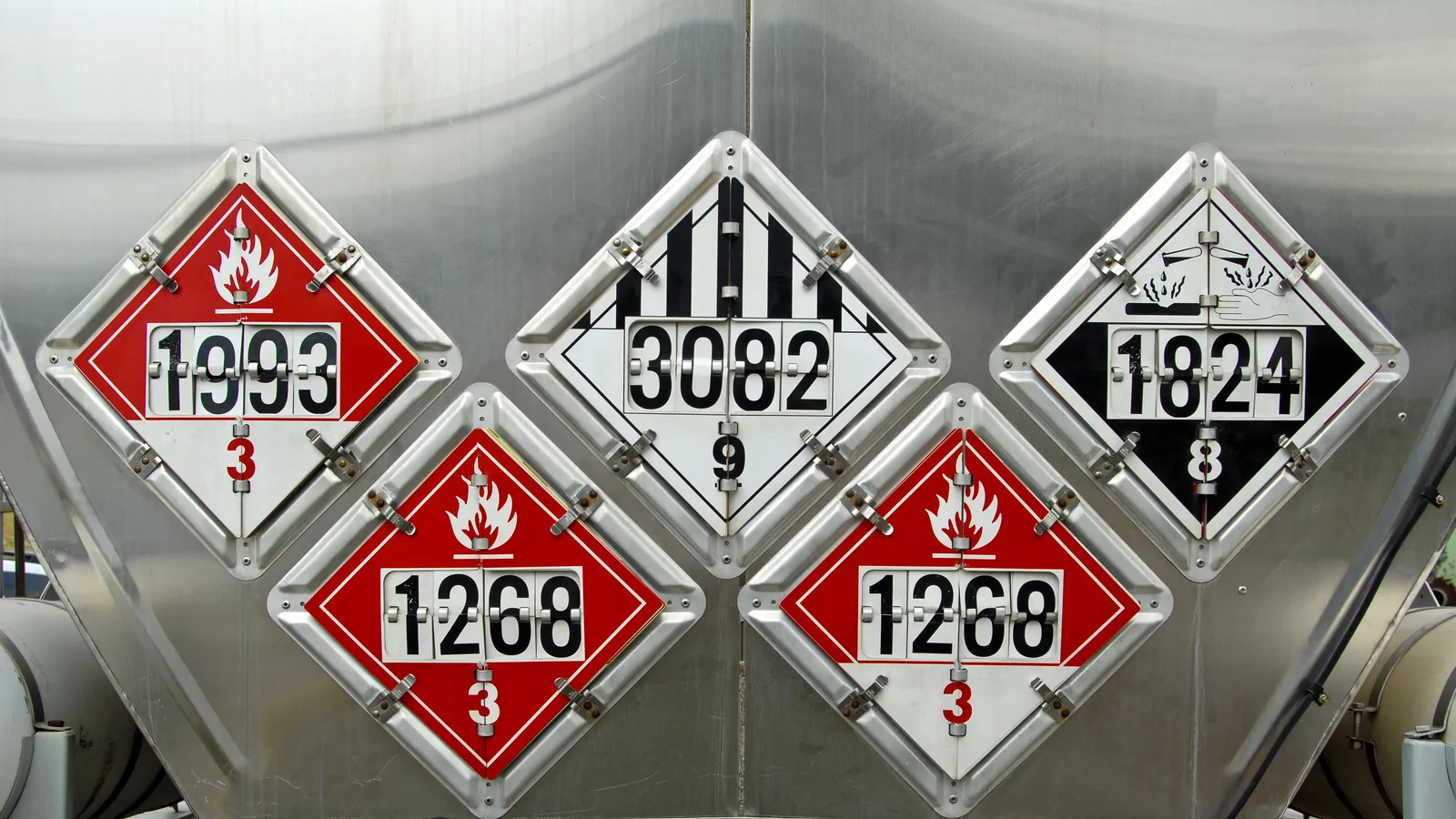
- Confirms placard, marking, and labeling requirements before the trailer leaves the dock.
- Coordinates 24-hour emergency response contacts and spill containment procedures with the assigned carrier.
None of that happens in a transactional freight brokerage relationship. If your current broker is not doing all of it, you are carrying risk they do not even know exists.
Learn more about how Total Connection's liquid bulk and chemical freight services handle these requirements across every mode.
DOT Hazmat Regulations That Govern Chemical Freight
49 CFR Parts 171 through 180 are the regulatory framework for hazardous materials transportation in the United States. Every chemical shipper needs to understand what these parts cover and how they interact with carrier selection and routing decisions.
The Core Parts and What They Control
Part 171 covers general information, regulations, and definitions. Part 172 is where most shippers spend time, it contains the Hazardous Materials Table, communication requirements (shipping papers, marking, labeling, placarding), and emergency response information. Part 173 covers shippers' general requirements for packaging and preparation. Parts 174 through 177 address specific modes: rail, aircraft, vessel, and highway. Parts 178 through 180 cover packaging specifications, tank specifications, and qualification and maintenance requirements for bulk tanks.
Proper Shipping Name, Hazard Class, and Packing Group
Every regulated chemical shipment requires four pieces of classification data on the shipping paper: the proper shipping name, hazard class or division, UN or NA identification number, and packing group. These are not optional fields.
Hazard classes run from Class 1 (explosives) through Class 9 (miscellaneous hazardous materials). Common chemical freight falls into:
- Class 3: Flammable liquids such as solvents, alcohols, and fuels.
- Class 5: Oxidizers and organic peroxides.
- Class 6: Toxic and infectious substances.
- Class 8: Corrosives, including acids and bases.
- Class 9: Miscellaneous hazardous materials such as lithium batteries and environmentally hazardous substances.
Packing Group I is the highest hazard, Packing Group III the lowest. Packing group assignment affects what packaging you can use, what quantity limits apply, and which carriers will accept the freight without surcharges or outright refusal.
How Regulations Affect Carrier Selection and Routing
Routing restrictions under 49 CFR Part 397 apply to highway route controlled quantities of radioactive materials and certain other extremely hazardous materials. Even for standard chemical freight, tunnel restrictions, bridge weight limits, and state-specific hazmat routing requirements can eliminate certain carriers or lanes entirely.
A chemical logistics broker needs to know these restrictions before assigning a carrier, not after the driver gets turned around at a tunnel approach.
For a closer look at how Total Connection approaches regulatory compliance across 30 years of chemical logistics, see our company background.
Choosing Between Truckload, LTL, and Intermodal for Chemical Shipments
Mode selection for chemical freight is not just a cost decision. It is a risk decision, a packaging decision, and sometimes a regulatory decision.
Truckload Chemical Freight
Truckload is the cleanest mode for chemical shipments. One shipper, one consignee, one carrier, no intermediate handling. For Class 3 flammable liquids in drums or totes, for corrosive products in IBC containers, and for any high-value or high-hazard chemical, truckload reduces exposure at every step.
Dry van truckload handles packaged goods in drums, bags, and totes. Flatbed moves bulk containers, isotanks, and oversized chemical equipment. Tanker truckload, covered under liquid bulk chemical transportation, is the mode for liquid chemicals in quantities above what IBC containers handle efficiently.
LTL Chemical Freight
LTL is where chemical shippers take on the most exposure per shipment. Your freight shares a trailer with other commodities from other shippers. Terminal handling multiplies contact points. And if the freight classification or documentation is off, a terminal supervisor can and will pull the freight from service mid-transit.
LTL chemical freight also carries co-load risk. Incompatible materials from another shipper can end up on the same trailer. Under 49 CFR Part 177.848, carriers are prohibited from loading certain hazard classes together. But in an LTL environment, enforcement depends on the terminal dock crew, not a guarantee.
That said, LTL is often the only economically viable option for small quantities of non-acute hazardous materials. When you use LTL for chemical freight, the documentation has to be airtight and the carrier has to be specifically qualified for hazmat LTL.
Intermodal Chemical Freight
Intermodal rail-truck moves chemical freight in ISO tank containers, dry containers, or well cars carrying trailers. The cost savings over long-haul truckload can be significant, but the trade-offs are real.
Transit times are longer. Intermodal is not a mode for time-sensitive chemicals or products with tight temperature requirements. Port and ramp dwell adds unpredictability. And not all chemical commodities are accepted by Class I railroads in intermodal service. HAZMAT acceptance policies vary by railroad and container type.
Mode Comparison at a Glance
Truckload (Dry Van). Best for packaged chemicals, drums, IBC totes, and full loads. Low risk exposure, single carrier, no terminal handling. Moderate to high cost. Fast, direct transit.
Tanker Truckload. Best for bulk liquid chemicals and large volumes. Low to moderate risk depending on product and tank type. High cost, tank wash adds expense. Fast, direct transit.
LTL. Best for small quantities of non-acute hazmat and packaged goods. High risk from terminal handling and co-load exposure. Low per-shipment cost. Moderate transit through multiple terminals.
Intermodal. Best for long lanes, ISO tank containers, and non-time-sensitive freight. Moderate risk from ramp dwell and railroad acceptance policies. Low to moderate cost. Slow to moderate transit.
Ocean / NVOCC. Best for export and import chemical freight in ISO tanks. Moderate risk from port handling, customs, and IMDG compliance. Low per-unit cost at volume. Slow transit governed by port schedules.
Carrier Qualification: What a Chemical Logistics Broker Should Be Doing on Your Behalf
In chemical freight, carrier qualification is not a checkbox exercise. It is the difference between a shipment that delivers clean and an incident that generates an EPA notice of violation.
SAFER Database and Operating Authority
Every carrier moving federally regulated freight has a USDOT number and a record in the FMCSA SAFER system. A chemical logistics broker should be pulling SAFER scores on every carrier before tender. That means looking at the Behavior Analysis and Safety Improvement Categories, known as BASICs, under the Compliance, Safety, Accountability program. Carriers with elevated scores in the Hazardous Materials BASIC or the Vehicle Maintenance BASIC do not touch chemical freight. That is not a preference. It is a qualification standard.
Hazmat Endorsements and Driver Qualification
Any driver operating a vehicle transporting a placardable quantity of hazardous materials must hold a Commercial Driver's License with a Hazardous Materials endorsement. That endorsement requires a TSA security threat assessment. A broker should verify this endorsement exists for the assigned driver, not just the carrier fleet in general.
Driver training under 49 CFR Part 172 Subpart H requires function-specific training, safety training, and security awareness training. Carriers should be able to produce training records. If they cannot, move on.
Insurance Requirements
The FMCSA minimum insurance for carriers transporting non-hazardous freight is $750,000. For carriers transporting hazardous materials in quantities that require placarding, the minimum jumps to $1,000,000. For certain commodities including oil and hazardous substances as defined under 49 CFR Part 172.101 Appendix B, the minimum is $5,000,000.
Total Connection carries $5 million in general liability. When we place chemical freight with a carrier, we verify their certificate of insurance before dispatch, not after a claim.
Spill Response Plans and Emergency Contact Verification
Carriers moving significant quantities of oil or hazardous substances may be required to maintain a Facility Response Plan or equivalent under EPA regulations. At minimum, every carrier on a chemical lane should have a documented spill response procedure and a 24-hour emergency contact. Your broker should have these on file, not be chasing them down after an incident.
Cost Drivers in Chemical Transportation
Chemical freight costs more than dry freight. That is a fact, not a negotiating position. Understanding where the cost comes from lets you manage it, and recognize when a quote is too low to be legitimate.
Hazmat Fees and Accessorial Stacking
Most carriers assess a hazmat fee on chemical shipments. For LTL, this typically runs $35 to $100 per shipment depending on the carrier and commodity. For truckload, expect a flat fee or a per-mile adder. These fees are on top of the base rate and on top of fuel surcharges. They are not negotiable in most cases, though volume commitments to specific carriers can reduce them over time.
Accessorial charges stack fast in chemical logistics:
- Tank wash fees on tanker loads, typically $250 to $600 per wash depending on the prior commodity.
- Detention and demurrage when loading or unloading exceeds free time.
- Placarding and hazmat documentation fees per shipment.
- Liftgate service for drum and tote deliveries to non-dock locations.
- Permit and escort fees on restricted hazmat routes.
- Driver assist and lumper fees at unloading points.
Mode and Lane Mismatch Costs
Shipping a 5,000-pound chemical load truckload because it feels safer than LTL is an expensive habit. Shipping a 44,000-pound liquid bulk load in IBC totes instead of a tanker because you do not have a liquid bulk broker is equally costly. Mode mismatches are one of the largest hidden cost drivers in chemical logistics.
How Chemical Shippers Can Reduce Freight Spend Without Sacrificing Compliance
Cutting chemical freight costs is achievable. It requires lane data, carrier relationships, and a realistic view of where you are over-spending. It does not require cutting corners on documentation or carrier qualification.
Lane Analysis and Freight Consolidation
Start with your top 20 lanes by spend. For each one, identify the average shipment size, frequency, and current mode. If you are moving LTL chemical freight weekly on the same lane in quantities that approach 10,000 to 15,000 pounds, consolidation into a truckload move likely saves money and reduces handling exposure. A qualified broker can model this comparison using actual carrier rates.
Pool distribution is another option for packaged chemical freight moving to multiple consignees in the same region. One truckload from your plant to a regional terminal, then local delivery distribution, beats multiple LTL moves on cost and transit consistency.
Contract vs. Spot Rate Strategy
Spot rates for chemical freight swing widely based on carrier availability, seasonal demand, and regional capacity. Shippers who run entirely on spot are exposed to the top of those swings. Shippers who commit 100% to contract rates during a soft market lock in rates that become uncompetitive when capacity tightens.
The practical approach is to put your consistent, predictable volume on contract with two to three qualified carriers per lane. Keep 15% to 20% of volume available for spot to maintain flexibility and market awareness. A chemical logistics broker with established carrier relationships can structure this split and manage both buckets.
Mode Optimization for Long Lanes
For chemical lanes over 1,000 miles, intermodal in ISO tank containers is worth serious evaluation. The savings over dry van truckload on a coast-to-coast lane can reach 20% to 30% depending on commodity, volume, and timing. The trade-off is transit time and railroad acceptance policies. Not every chemical moves intermodal, but many do.
For export chemical volume, working with an NVOCC licensed forwarder instead of a standard freight forwarder can generate significant savings on ocean freight through negotiated carrier rates and optimized container utilization. Total Connection holds NVOCC license MC 280101 and books chemical freight through major ports including Port Newark, Port of Houston, and Port of Los Angeles.
Read our analysis of liquid bulk trucking options for chemical shippers and our breakdown of how to vet hazmat carriers before tendering a load for deeper coverage of these topics.
What to Expect When Working With Total Connection
Total Connection has been moving chemical freight since 1995. We are a New Jersey-based NVOCC licensed logistics broker operating under MC 280101, with $5 million in general liability coverage and a carrier network of 650-plus vetted shippers across domestic and international modes.
We do not own trucks. We are asset-neutral, which means our only job is to find the right carrier for your freight at the right price. We do not push loads to carriers because we own the equipment. We push loads to carriers because they are qualified, their safety record is clean, and their rate is competitive for the lane.
How We Manage Chemical Accounts
Every chemical shipper at Total Connection gets a dedicated account manager who knows their commodities, their facilities, their carrier preferences, and their compliance requirements. This is not a call center model. You reach the same person who booked your last load, who knows what happened with your last carrier issue, and who can answer a classification question without transferring you to a compliance department.
Our SDS review process covers every new commodity before the first shipment moves. We confirm proper shipping name, hazard class, packing group, and packaging compliance. We verify emergency response contact information. We check the carrier's hazmat endorsement on the assigned driver before dispatch.
Domestic and International Chemical Freight
Total Connection manages chemical freight across all domestic modes: truckload, LTL, liquid bulk, and intermodal. On the international side, our NVOCC license covers ocean freight in ISO tank containers and dry containers through major U.S. ports. We handle IMDG documentation, dangerous goods declarations, and carrier booking for chemical export and import freight.
For shippers moving chemical freight both domestically and internationally, having a single qualified broker across both modes simplifies documentation, reduces carrier qualification overhead, and creates a single point of accountability when something goes wrong.
Explore the full scope of our chemical and liquid bulk transportation services or contact our team directly to discuss your freight program.
Request a Quote
If you are moving chemical freight and you are not confident your current logistics provider is doing everything outlined in this guide, talk to us. We will review your lanes, your carrier mix, your documentation practices, and your spend. Then we will tell you exactly what we can do and what it will cost.
Visit totalconnection.com/services to start the conversation.
What makes chemical transportation different from standard freight brokerage?
Chemical transportation requires carrier qualification to DOT and EPA standards, SDS review, UN number verification, hazmat endorsement confirmation, and emergency response coordination, none of which are part of a standard freight brokerage transaction. A general broker finds capacity. A chemical logistics broker qualifies that capacity against a regulatory framework before the truck ever arrives at your dock. The distinction matters most when something goes wrong.
What DOT regulations apply to chemical freight shipments?
49 CFR Parts 171 through 180 govern hazardous materials transportation by highway, rail, air, and vessel in the United States. Part 172 contains the Hazardous Materials Table and controls shipping papers, marking, labeling, and placarding. Part 173 covers shipper packaging requirements. Part 177 governs highway transport specifically. Shippers who misclassify a chemical or use incorrect packaging face civil penalties under 49 U.S.C. 5123, which can reach $84,425 per violation per day.
How much does it cost to ship hazardous chemicals by truck?
Hazmat chemical freight carries a base rate premium over standard dry freight, plus hazmat fees ranging from $35 to $100 per LTL shipment or flat fees on truckload, fuel surcharges, and accessorial charges including detention and tank wash. A 44,000-pound tanker load of a Class 3 flammable liquid on a 500-mile lane will cost more than the same weight of dry freight on the same lane, and the gap widens when tank wash fees and detention are factored in. The only accurate way to get pricing is to submit your commodity, origin, destination, and quantity to a qualified broker.
What insurance does a carrier need to transport hazardous materials?
FMCSA regulations require carriers transporting placardable quantities of hazardous materials to maintain a minimum of $1,000,000 in liability insurance. For certain hazardous substances and oil as defined under 49 CFR Part 172.101 Appendix B, that minimum increases to $5,000,000. Shippers should request and retain certificates of insurance from every carrier handling their chemical freight, and brokers should be doing the same verification on their behalf before dispatch.
Can hazardous chemicals ship via LTL?
Many hazardous chemicals can ship via LTL under 49 CFR regulations, provided the packaging meets the required specification, the shipping papers are complete and accurate, and the carrier holds the appropriate hazmat authority. The practical risks in LTL include co-load incompatibility under 49 CFR Part 177.848, terminal handling at multiple transfer points, and documentation errors that surface mid-transit. LTL is appropriate for smaller quantities of lower-hazard materials when documentation is airtight and the carrier is specifically qualified for hazmat LTL service.
How do I find a qualified chemical freight broker?
A qualified chemical freight broker holds active FMCSA broker authority, carries sufficient general liability coverage for the commodities they handle, employs staff with functional knowledge of 49 CFR Parts 171 through 180, and can demonstrate a carrier vetting process that includes SAFER score review, hazmat endorsement verification, and insurance confirmation. Experience in specific commodity types matters as much as general hazmat knowledge. A broker who handles industrial chemicals regularly is better positioned to manage your freight than one who occasionally books a hazmat load alongside standard dry freight volume.