
A liquid bulk freight broker is a licensed intermediary, typically holding FMCSA operating authority, who matches chemical shippers with tanker carriers vetted for equipment, hazmat endorsements and tank wash history. On a hazmat load that vetting runs against 49 CFR Parts 172 through 180, and the difference between a broker who does it every day and one who does it occasionally shows up on the first tender.
A general freight broker handles everything: dry vans, flatbeds, reefers, tankers, LTL, intermodal. Tanker freight is one line item in a portfolio built around dry goods. A liquid bulk freight broker builds the whole operation around tankers and chemical freight, which changes how carriers are qualified, how documentation gets checked and how fast a load moves when capacity is tight.
That specialization is the difference between a broker who finds you a truck and a broker who finds you the right truck, with the right tank, properly washed, with a hazmat-certified driver who knows how to handle your specific product. For a full overview of the mode, see our complete guide to liquid bulk freight.
What a liquid bulk freight broker does
The broker's job starts before a single load moves. A qualified liquid bulk broker maintains a database of tanker carriers with documented equipment certifications, safety records, hazmat permits and prior cargo history. When you request a shipment, the broker screens available carriers against your product's requirements: DOT spec requirements (DOT 407, DOT 412, MC 307), lining compatibility, prior cargo restrictions, tank wash requirements and hazmat endorsements.
- Carrier selection and vetting based on the product's chemical properties and hazard class.
- Equipment matching for tank type, lining and configuration, including heated, insulated or pressure-rated trailers.
- Compliance management covering DOT hazmat documentation, tank wash coordination and prior cargo verification.
- Rate negotiation, shipment tracking, delivery coordination and claims management when something goes wrong.
Those decisions carry consequences at the rack. Getting them wrong means product contamination, a regulatory violation or a safety incident at a customer dock, and the shipper absorbs the delay either way. A broker who places tanker loads as a fraction of a mixed portfolio rarely maintains the carrier data needed to make these calls reliably, load after load.
Why chemical freight needs a specialist broker
Chemical shippers face requirements that do not exist in standard freight. Equipment certifications must be current, prior-cargo restrictions follow the trailer rather than the load, and some products require temperature control, pressure monitoring or inert gas blankets that only certain carriers and tank configurations can provide. A generalist broker builds a workflow for the freight that carries none of this. Hand them a liquid chemical and you are asking them to manage the exception they did not build their business around.
Hazmat documentation under 49 CFR
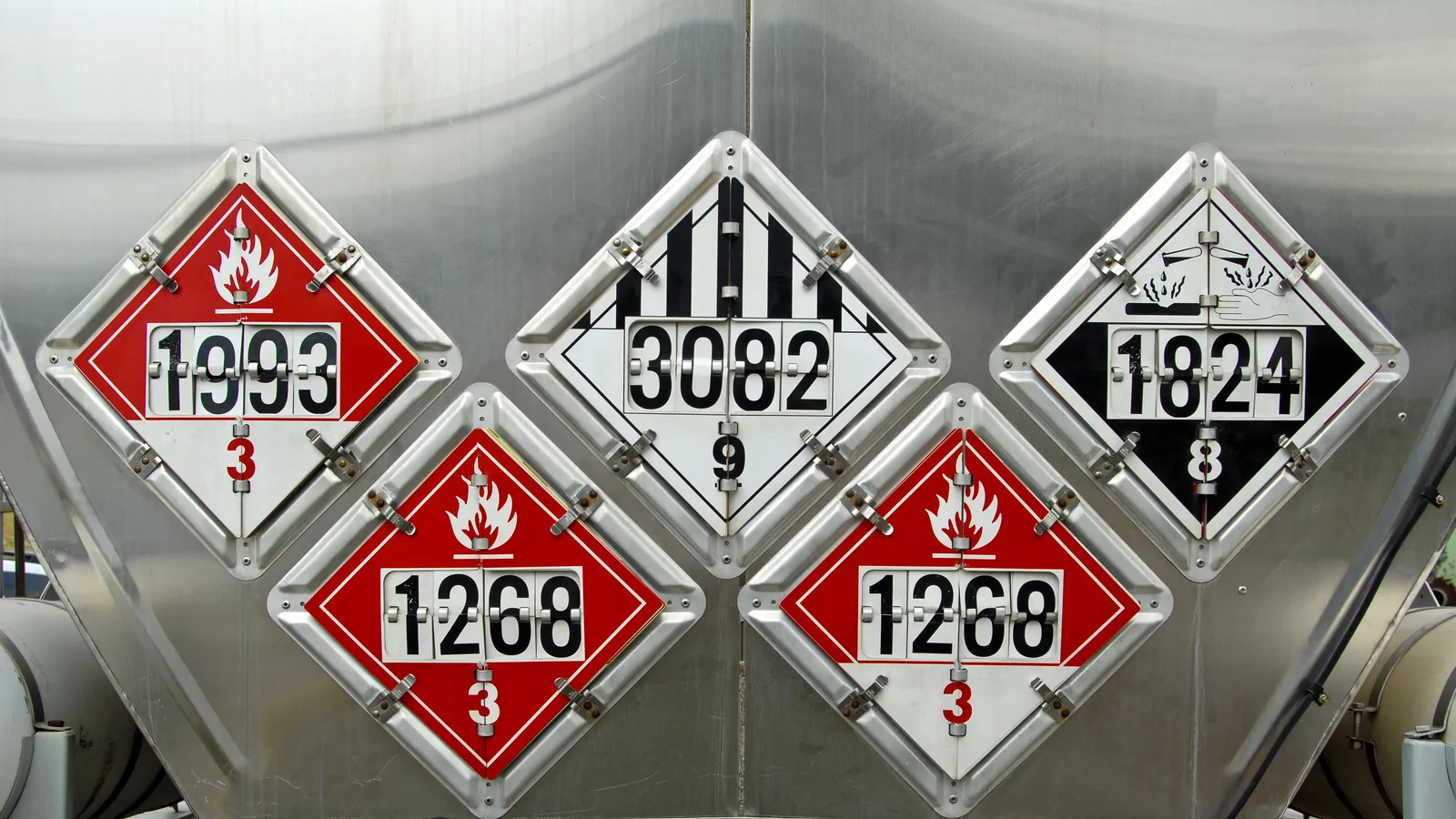
Hazmat shipments must be documented under 49 CFR Parts 172 through 180, which govern classification, marking, labeling and placarding. Paperwork that misstates a UN number, hazard class or packing group can get a shipment refused at origin or flagged roadside. A broker who handles hazmat daily builds the review step into every tender; a broker who handles it occasionally treats it as a formality.
Tank wash and prior-cargo restrictions
Tank wash certificates have to match the product's prior-cargo requirements before a tanker is cleared to load. A carrier's last three loads, the wash method used and the certificate on file all determine whether that trailer is even eligible for your product. Missing this step is how a food-grade or reactive chemical load ends up contaminated before it leaves the yard.
What to look for when choosing a chemical freight broker
Not every broker that says it handles chemical freight is set up to do it well. A few checks separate a specialist from a generalist wearing a specialist's language.
Carrier vetting and hazmat endorsements
Ask how the broker verifies hazmat endorsements and tank wash certificates before dispatch, not after a problem shows up. A specialist broker can describe the screening step in specific terms: DOT spec check, lining compatibility, prior cargo history, current hazmat endorsement on the driver's CDL. A vague answer means the check is not happening consistently.
Insurance floor and licensing
Confirm the broker's operating authority and liability coverage. The industry standard general liability floor is around $1M; a broker carrying more, backed by an active FMCSA broker authority and, for international moves, an FMC OTI/NVOCC license, has more at stake in getting the shipment right.
Named dispatcher versus call-center rotation
Ask whether you get the same dispatcher on your next shipment or a different voice from a call queue every time. Continuity matters on chemical freight because the dispatcher who already knows your product's prior-cargo restrictions and your receiving facility's dock hours moves faster than one starting from a blank file.
| What to check | Specialist broker | Generalist broker |
|---|---|---|
| Hazmat endorsement verification | Checked before every dispatch | Assumed, rarely confirmed |
| Tank wash and prior-cargo history | Reviewed per load | Left to the carrier |
| Liability coverage | Often above the $1M standard | At or near the standard |
| Dispatcher continuity | Named contact | Rotating desk |
How a liquid bulk broker saves you money
The most direct savings come from carrier access. A broker with a large qualified tanker carrier network gets your load in front of more eligible carriers, which means more competitive rates and better coverage when capacity is tight. See how to get your chemical freight covered faster for the operational side of this.
Beyond rate competition, a specialist broker prevents the expensive mistakes generalist handling tends to create:
- A contaminated batch that gets rejected on arrival because the tank's prior cargo was not checked.
- A DOT violation and associated fine from a documentation error under 49 CFR.
- Demurrage from paperwork that did not match the load at delivery.
- An emergency rebooking when a carrier turns out not to be qualified for the actual requirements.
Equipment matching does the same work on the front end. Pulling a DOT 407 when the product needs a lined DOT 412, or accepting a trailer whose last loads disqualify it, means a turned-away tanker at the rack and a same-day rebooking at whatever the spot market is paying that afternoon. Confirming the spec, the lining and the wash certificate before the load is tendered costs a phone call.
One contamination event can cost more than the margin on a long run of loads, which is the math that makes specialization worth paying for.
Total Connection: liquid bulk freight brokerage since 1995
Total Connection has operated as a licensed freight broker and forwarder since 1995 under FMCSA MC 280101 and FMC OTI/NVOCC license 026203NF, with $5M in general liability coverage, above the roughly $1M industry standard. Our business is chemical and liquid bulk freight first, backed by a network of more than 100,000 vetted carriers built across 650+ shippers served. Every account gets a named dispatcher, not a rotating desk.
The same team also handles the drayage, truckload, warehousing, ocean and air legs that move around a chemical shipment, so a tanker load and its inland or import connections run through one point of contact instead of several vendors. For our process on carrier selection and loading and unloading procedures, or for a broader look at vetting criteria, see how to choose a chemical hauling company and our notes on hazmat trucking regulations. Review our credentials and operating history on the about page.
Contact Total Connection through our liquid bulk chemical logistics service page or start a liquid bulk quote to discuss your chemical shipping requirements.
What is a liquid bulk freight broker?
A liquid bulk freight broker is a licensed intermediary specializing in tanker freight who matches chemical shippers to vetted carriers. The role includes managing hazmat documentation and coordinating equipment and tank wash requirements before a load is dispatched.
How is a chemical freight broker different from a general freight broker?
A general broker handles tankers as one line among dry vans, flatbeds and reefers, treating hazmat compliance as an exception. A chemical freight broker builds its entire carrier network and compliance workflow around tanker and hazmat freight, so the screening happens on every load rather than occasionally.
What should I look for when choosing a chemical freight broker?
Verify how the broker checks hazmat endorsements and tank wash certificates before dispatch, and confirm the liability coverage sits at or above the $1M industry standard. Also ask whether you get a named dispatcher who stays on your account rather than a rotating call center.
What documents does a hazmat tanker shipment require?
Hazmat tanker loads are documented under 49 CFR Parts 172 through 180, which govern classification, marking, labeling and placarding. In practice that means shipping papers carrying the correct UN number, hazard class and packing group, the SDS for the product, and a tank wash certificate that clears the trailer for that cargo. A specialist broker reviews all three before the carrier is dispatched.
How does a specialist broker save money on chemical freight?
Wider access to qualified tanker carriers improves rate competition and coverage when capacity tightens. Proper vetting also prevents the costlier problems: contaminated product, DOT violations and demurrage caused by documentation errors.
What DOT tank specifications apply to chemical tankers?
Common specifications include DOT 407, DOT 412 and MC 307, chosen based on the product's hazard class, pressure and lining requirements. A specialist broker matches the spec to the product before a carrier is ever offered the load.