
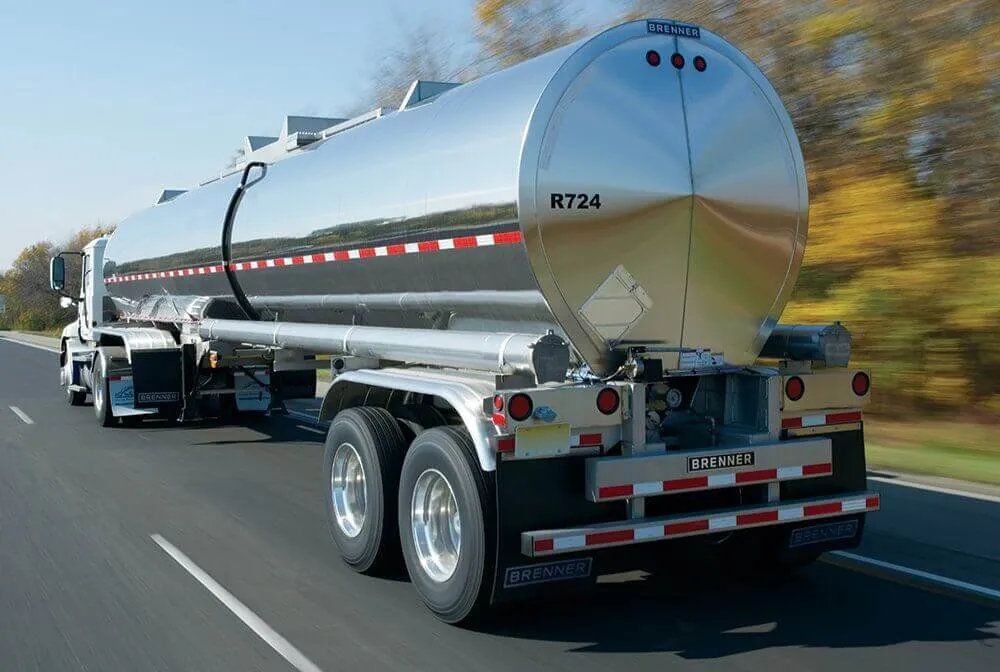
Ethanol tanker shipping is the bulk transport of ethanol by DOT 407 or MC 307 cargo tank trailer, regulated as a DOT Class 3 flammable liquid under UN1170 with a flash point near 55°F (13°C). A standard ethanol tanker load runs roughly 6,500 to 7,000 gallons, and every leg of that move is governed by 49 CFR Parts 172 through 180. Ethanol is one of the highest-volume hazmat commodities on U.S. roads because it serves three markets at once: it is the blending component in nearly all gasoline sold in the country (the E10 blend), an industrial solvent, and the base for beverage alcohol.
Moving it safely is an operational discipline, not a paperwork exercise. The flash point sits below summer pavement temperature, the product is hygroscopic and contaminates easily, and the loading rack is where most of the risk concentrates. This guide covers classification, equipment, loading safety, denatured versus undenatured handling, regulatory requirements, and the lane realities that decide whether a load arrives clean and on time.
Ethanol Hazmat Classification
Ethanol is classified as DOT Class 3, Flammable Liquid, with the identification number UN1170 and the proper shipping name "Ethanol" or "Ethyl alcohol." Pure ethanol carries Packing Group II, and ethanol solutions can fall into Packing Group II or III depending on alcohol concentration. The flash point of roughly 55°F means ethanol gives off ignitable vapor at ordinary ambient temperatures, which is why static control and grounding dominate the safety conversation.
That classification drives a fixed set of requirements on every shipment:
- A carrier with active FMCSA hazmat operating authority for Class 3 flammable liquids, verifiable against the carrier's safety profile before a load is tendered.
- A driver holding a CDL with the hazmat (H) endorsement and, where required, a TWIC card for port and terminal access.
- Shipping papers showing the proper shipping name, hazard class 3, UN1170, packing group, and total quantity, kept within the driver's reach in the cab.
- Class 3 flammable placards displayed on all four sides of the cargo tank, matching the UN number on the shipment.
Ethanol also moves under emergency response requirements: the shipper must provide a 24-hour emergency contact number on the shipping papers, and the driver must carry the relevant emergency response guidance. Total Connection screens every carrier's hazmat authority and endorsement status before the truck is dispatched, because a placarding or paperwork gap at a roadside inspection can shut a load down for hours.
Tanker Equipment Requirements
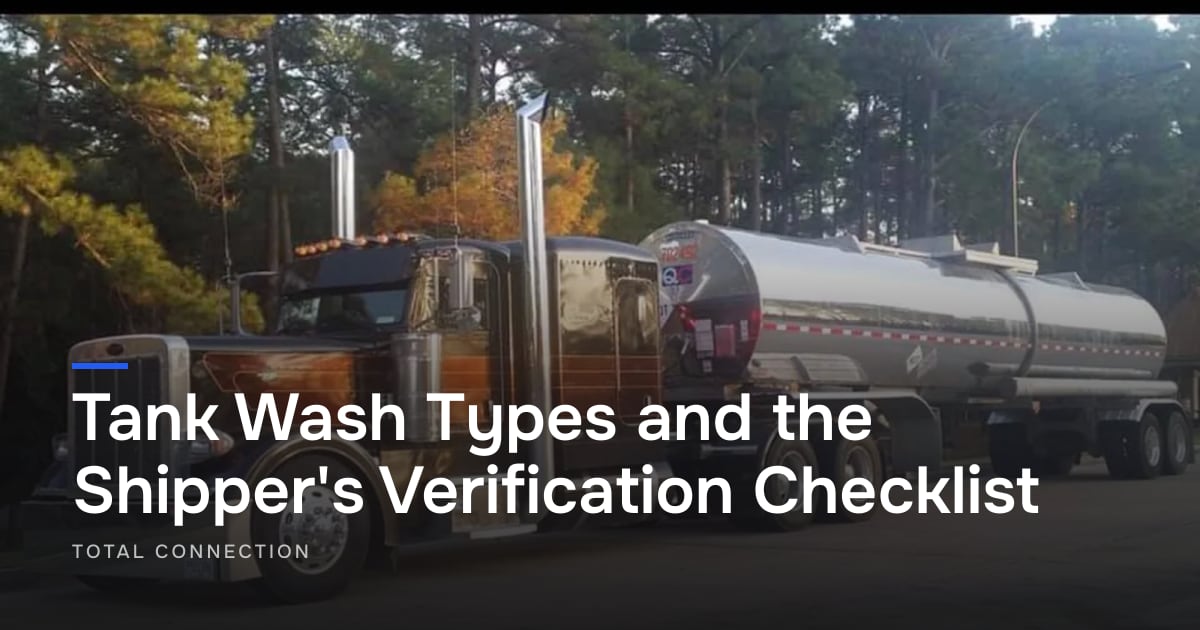
Ethanol ships in DOT 407 or MC 307 cargo tank trailers, built in stainless steel or aluminum. The DOT 407 is the current-spec pressure-rated tank for flammable and corrosive liquids; the MC 307 is its older equivalent still in legal service. Material compatibility is the first thing to check, because some elastomer gaskets and seals swell or degrade when exposed to ethanol and must be replaced with ethanol-compatible materials such as Viton or PTFE.
Cleanliness and Moisture Control
Ethanol is hygroscopic, meaning it pulls water out of the air. For fuel-grade ethanol, water contamination is a specification failure that can reject an entire load at the terminal. The tank must arrive dry, free of wash water, condensation, and any residue from the previous commodity. A current tank wash certificate is part of the documentation an operator should expect to see.
Loading and Vapor Handling
Bottom loading is preferred over top loading because it reduces vapor release and the static charge that free-falling product generates. The tank should be equipped for vapor recovery where the loading rack requires it, and all fittings, valves, and manways must be rated for flammable service. Choosing the wrong tank or a poorly maintained one does not just risk a delay; it risks contamination, a rejected load, and a safety incident at the rack. For a fuller breakdown of tank types and when each applies, see our guide to liquid bulk transport equipment and tanker types.
Loading and Unloading Safety
Loading and unloading are the most dangerous phases of any ethanol shipment, because that is when the product is exposed, vapor is present, and people are working close to it. The flash point near 55°F means a flammable atmosphere can form on a warm day, so ignition control is the entire game. Static electricity from product flow is the most common ignition source, which is why grounding and bonding are non-negotiable.
A disciplined loading sequence looks like this:
- Verify the tank is the correct, compatible, and dry equipment for the load, and confirm the previous commodity from the wash certificate.
- Connect grounding and bonding cables between the cargo tank and the loading rack before any hose is connected or any cap is opened.
- Confirm bottom-loading connections are secure and engage vapor recovery where the rack requires it.
- Load at the rack's approved flow rate, monitoring for overfill and keeping ignition sources away from the work area.
- Disconnect in reverse order, with grounding removed last, and confirm all valves and manways are closed and sealed before departure.
Drivers should never reopen a sealed tank in transit, and any leak or vapor smell is a stop-and-report event. These are the same disciplines that govern the broader category of liquid bulk work; the stakes scale with the flammability of the product.
Denatured vs Undenatured Ethanol
Most ethanol on the road is denatured, meaning a small amount of gasoline or other denaturant is added to make it undrinkable. Denaturing exempts the product from beverage alcohol taxes and keeps it firmly in the industrial and fuel supply chain. Denatured ethanol ships under DOT hazmat rules as a Class 3 flammable liquid and nothing more.
Undenatured ethanol, the beverage-grade product, carries a second layer of regulation from the Alcohol and Tobacco Tax and Trade Bureau (TTB). Moving it requires federal permits, bonding, and strict chain-of-custody documentation tracking the product from distillery to bonded destination. A missing or mismatched TTB document can hold a load at a bonded facility regardless of whether the DOT paperwork is clean.
| Factor | Denatured Ethanol | Undenatured Ethanol |
|---|---|---|
| Primary use | Fuel blending, industrial solvent | Beverage alcohol, pharmaceutical, food grade |
| DOT classification | Class 3, UN1170 | Class 3, UN1170 |
| Additional oversight | None beyond DOT hazmat | TTB permits, bonding, chain of custody |
| Documentation load | Standard hazmat shipping papers | Hazmat papers plus TTB transfer records |
Confusing the two at booking is a common and costly mistake. The right move is to confirm the grade and its tax status before the lane is quoted.
Common Ethanol Shipping Mistakes
Most ethanol problems trace back to a handful of avoidable errors, and they cost real money in rejected loads, demurrage, and re-cleaning fees. Operators who ship this product regularly build their process around preventing them.
- Tendering to a carrier without verified Class 3 hazmat authority, which surfaces only at a roadside inspection when it is too late to fix.
- Accepting a tank that is not confirmed dry, then losing a fuel-grade load to water contamination that fails the terminal spec.
- Skipping or rushing the grounding and bonding step at the rack, the single largest ignition risk in the entire move.
- Booking undenatured ethanol as if it were denatured and discovering the missing TTB documentation at the bonded gate.
- Using a tank with incompatible seals, which can degrade gaskets, cause leaks, and contaminate the product.
Each of these is a process failure, not bad luck. A forwarder who lives in this freight catches them at booking, not at the dock.
How Total Connection Ships Ethanol
Total Connection has moved hazardous liquid bulk since 1995, and ethanol is core freight, not an edge case. As an independent, non-asset forwarder, NVOCC, and licensed motor carrier broker (FMCSA MC 280101, NVOCC license 026203NF), we pick the right tank and the right carrier for the load rather than feeding a fleet we own. We carry $5M in general liability, five times the industry-standard $1M, which matters when the product is flammable.
We handle denatured and undenatured ethanol in bulk across North America, screen every carrier's hazmat authority and endorsements, confirm tank compatibility and cleanliness, and manage the TTB chain-of-custody paperwork when the load is beverage-grade. Ethanol is one mode of many we run; the same team that books your tanker can move your dry van, your drayage, your ocean container, and your warehousing. To go deeper on this category, read our complete guide to liquid bulk freight and our breakdown of hazmat trucking regulations, then see our liquid bulk and chemical logistics service. To move a load, call 732-817-0401 or request a quote on your lane.
Frequently Asked Questions
What hazmat class is ethanol?
Ethanol is DOT Class 3, Flammable Liquid, identified as UN1170 with a flash point near 55°F. Pure ethanol carries Packing Group II. The classification triggers placarding, hazmat-endorsed drivers, and Class 3 carrier authority on every shipment.
What tanker equipment is used for ethanol?
Ethanol ships in DOT 407 or MC 307 stainless steel or aluminum cargo tanks. The equipment must use ethanol-compatible seals (some rubber gaskets degrade), arrive dry to prevent moisture contamination of fuel-grade product, and be set up for static grounding and bonding at the rack.
What is the difference between denatured and undenatured ethanol shipping?
Denatured ethanol has a denaturant added to make it undrinkable and ships under DOT hazmat rules only. Undenatured beverage-grade ethanol requires both DOT compliance and TTB permits with bonding and chain-of-custody documentation. Confusing the two at booking can hold a load at a bonded facility.
Why is grounding required when loading ethanol?
Grounding and bonding drain the static charge that product flow generates, which is the most common ignition source for a flammable liquid. With ethanol's flash point near 55°F, a flammable vapor can form at ordinary temperatures. Cables are connected before any hose and removed last.
How many gallons does an ethanol tanker hold?
A standard ethanol cargo tank load runs roughly 6,500 to 7,000 gallons depending on the trailer and weight limits on the lane. Bottom loading is preferred to reduce vapor release and static buildup during filling.
Does Total Connection ship ethanol?
Total Connection ships both denatured and undenatured ethanol in bulk across North America. We screen carrier hazmat authority, confirm tank compatibility and cleanliness, and manage TTB chain-of-custody paperwork on beverage-grade loads. Call 732-817-0401 to book a lane.