
.png)
Formaldehyde is one of the most widely used industrial chemicals in the world, and one of the most hazardous to ship. It's a simple organic compound (CH₂O) that serves as a building block for resins, adhesives, textiles, and hundreds of other products. In its pure form, formaldehyde is a gas. For shipping and industrial use, it's typically dissolved in water as formalin, a 37% formaldehyde solution that ships as a liquid in bulk tanker trucks.
For shipper-led capacity and hazmat-fluent execution on this freight, see Total Connection's liquid bulk and chemical logistics service.
For more on liquid bulk freight, see our complete guide to liquid bulk freight.
What formaldehyde is used for
Formaldehyde's industrial importance is massive. It's a precursor to urea-formaldehyde and phenol-formaldehyde resins used in plywood, particleboard, and MDF. It's used in melamine resins for countertops and laminates. It's a raw material for polyoxymethylene (POM) engineering plastics. It's used in textile treatment for wrinkle resistance. It's a disinfectant and preservative in medical and laboratory applications. And it's a building block for specialty chemicals including pentaerythritol, hexamethylenetetramine, and MDI (a key polyurethane component).
The demand for formaldehyde remains strong across multiple industries. Wood products manufacturing accounts for approximately half of all formaldehyde consumption in North America. The automotive industry uses formaldehyde-based resins in interior components. The construction sector relies on it for insulation materials and adhesives. This widespread industrial use means consistent shipping volume year-round, with seasonal peaks tied to construction activity.
Formalin: the shipping form
Pure formaldehyde gas is impractical to ship in bulk. Instead, it's dissolved in water to create formalin, typically a 37% formaldehyde, 63% water solution, often with 10-15% methanol added as a stabilizer to prevent polymerization during storage and transport.
The methanol stabilizer is important for shipping logistics, without it, formaldehyde polymerizes into paraformaldehyde, a white solid that clogs tanks, valves, and pumps. But the methanol also affects the hazmat classification and flash point of the solution.
Hazmat classification and regulatory requirements
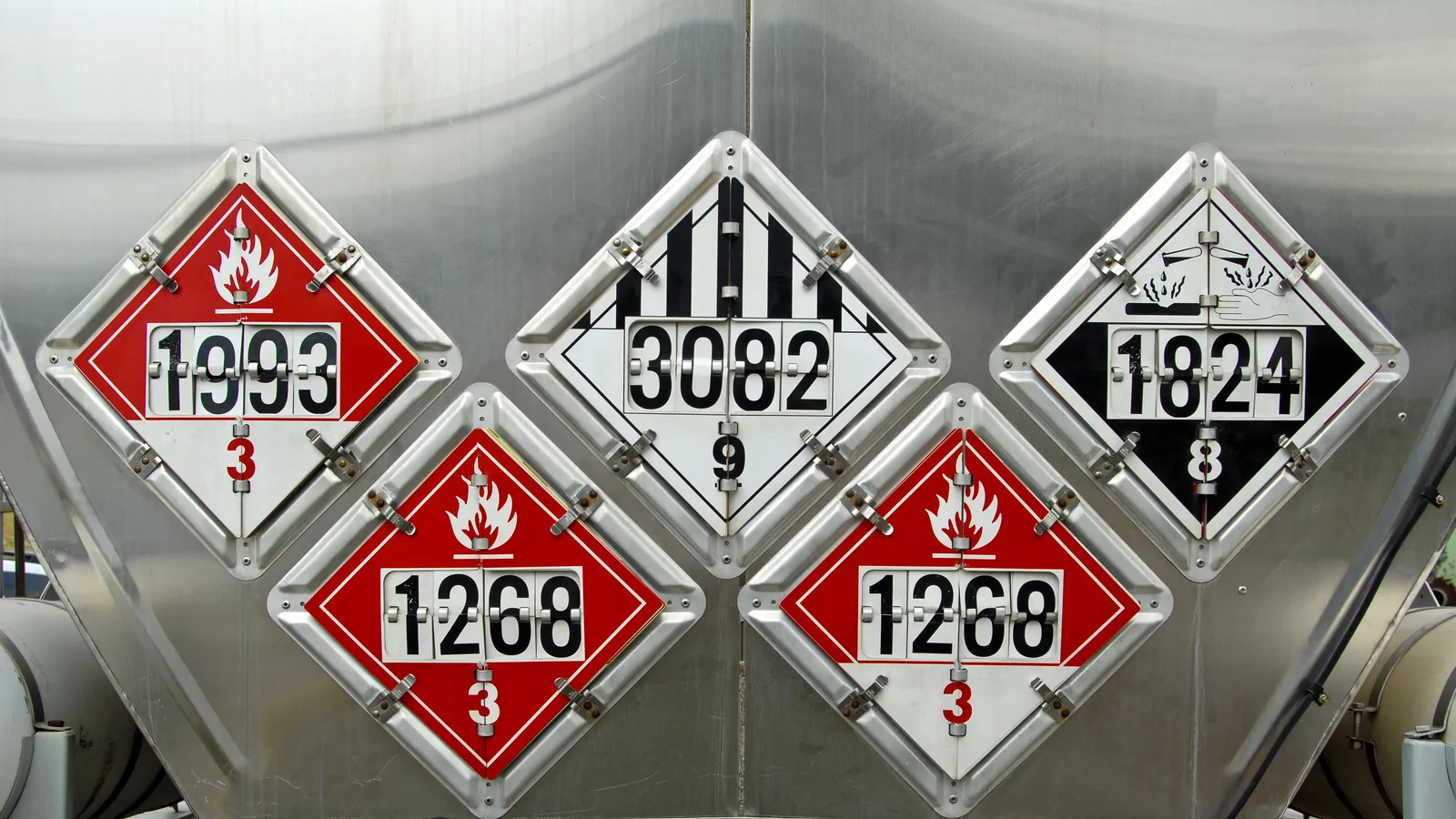
Formalin is classified as DOT Class 8 (corrosive) with a subsidiary hazard of Class 6.1 (toxic). Some formulations with higher methanol content may also carry Class 3 (flammable liquid) as an additional subsidiary hazard. This multi-class hazmat profile makes formalin one of the more compliance-intensive chemicals to ship.
Under DOT regulations in 49 CFR, formalin requires specific shipping documentation including proper shipping name, UN identification number (typically UN1198 for formaldehyde solutions with flash point above 73°F, or UN2209 for lower flash point formulations), hazard class and subsidiary classes, packing group (typically II for formalin solutions), and emergency response guide number (153 or 132 depending on formulation).
Shipping requirements include a carrier with FMCSA hazmat authority covering Class 8 and Class 6.1, a driver with CDL hazmat endorsement, DOT-compliant shipping papers with all applicable hazard classes listed, proper hazmat placards for corrosive and toxic hazards, and compatible tanker equipment (stainless steel or polyethylene-lined).
For more on hazmat shipping compliance, see our guide to hazmat trucking regulations.
Equipment and temperature considerations
Formalin ships in stainless steel or polyethylene-lined tanker trailers. The tank must be compatible with both formaldehyde and the methanol stabilizer. Carbon steel tanks are not suitable, formaldehyde corrodes carbon steel.
Tank equipment must include proper gaskets and seals compatible with formaldehyde. Buna-N (nitrile rubber) and Teflon are typically acceptable materials. Natural rubber and some other elastomers degrade when exposed to formaldehyde and should be avoided. All valves, pumps, and transfer equipment must also be constructed from compatible materials.
Temperature management is critical in both directions. In cold weather, formalin can begin to polymerize, forming paraformaldehyde that clogs the tank and makes the product unpumpable. In-transit heat or insulated equipment may be required for winter shipping. Most formalin solutions need to be maintained above 50°F (10°C) during transit. In warm weather, formaldehyde's vapor pressure increases, creating stronger fumes during loading and unloading that require proper ventilation and PPE.
Loading and unloading safety protocols
Loading and unloading formalin requires strict safety procedures due to its corrosive nature and carcinogenic vapor hazard. Facilities must have engineered ventilation systems to capture vapors at the source. Personnel must wear full PPE including chemical-resistant suits, gloves rated for formaldehyde exposure, face shields, and respiratory protection with organic vapor cartridges or supplied air systems for extended exposure.
Loading procedures must include vapor recovery systems where available, grounding and bonding equipment to prevent static discharge, closed transfer systems to minimize vapor release, and spill containment with secondary barriers around the loading area. All personnel involved in transfer operations must be trained in formaldehyde-specific hazards and emergency response procedures.
Before unloading, the receiving facility must verify tank compatibility, confirm proper PPE availability, review emergency procedures with the driver, and ensure that spill response equipment including neutralizing agents is readily accessible. The unloading area should be cordoned off to prevent unauthorized access during transfer operations.
Exposure limits and health hazards
Formaldehyde is classified as a known human carcinogen by the International Agency for Research on Cancer (IARC). Long-term exposure has been linked to nasopharyngeal cancer and leukemia. OSHA has established strict workplace exposure limits: a permissible exposure limit (PEL) of 0.75 parts per million (ppm) as an 8-hour time-weighted average, and a short-term exposure limit (STEL) of 2 ppm for 15-minute periods.
Acute exposure to formaldehyde vapors causes irritation of the eyes, nose, throat, and respiratory tract. Skin contact with formalin solutions causes burns and dermatitis. Ingestion can cause severe internal burns and systemic toxicity. These health hazards make proper PPE, ventilation, and handling procedures non-negotiable for anyone involved in formalin shipping and handling.
Drivers and loading personnel must receive specialized training on formaldehyde's health effects, proper use of respiratory protection, decontamination procedures if exposure occurs, and recognition of exposure symptoms requiring immediate medical attention.
Emergency response and spill management
Spill response for formalin must address both its corrosive and toxic properties. Small spills should be contained with absorbent materials, neutralized with dilute sodium bicarbonate solution, and disposed of as hazardous waste. Large spills require evacuation of the area, containment to prevent entry into waterways or storm drains, and coordination with hazmat response teams.
Drivers transporting formalin must carry emergency response information including the Emergency Response Guidebook (ERG) guide number, 24-hour emergency contact numbers (typically CHEMTREC at 800-424-9300), and facility-specific emergency procedures. Carriers should have established relationships with hazmat cleanup contractors along their regular lanes.
The corrosive nature of formalin means that spilled product can damage roads, loading docks, and other infrastructure. Quick containment and neutralization minimize both environmental impact and property damage.
Storage and handling at destination
Once delivered, formalin must be stored in compatible tanks with proper ventilation, temperature control, and secondary containment. Storage tanks should be constructed of stainless steel or lined with compatible materials. Venting systems must be designed to prevent polymerization while managing vapor emissions in compliance with air quality regulations.
Many facilities use bulk storage tanks with nitrogen blanketing to reduce formaldehyde vapor space and prevent oxidation. Temperature monitoring is essential to prevent cold-weather polymerization. Facilities in colder climates often install tank heating systems with temperature alarms.
How Total Connection handles formaldehyde shipping
We ship formalin to resin manufacturers, textile processors, and chemical distributors across North America. Our carrier network includes operators with the right equipment, hazmat certifications, and driver training for this demanding product.
Every formalin shipment gets multi-class hazmat documentation, equipment compatibility verification, temperature assessment for the lane and season, and a dedicated account manager who understands the product's unique requirements. We pre-qualify carriers for formaldehyde experience, verify their safety records, and ensure they have proper insurance coverage for corrosive and toxic materials.
Our approach includes pre-shipment equipment inspection to verify tank compatibility, seasonal route planning that accounts for temperature requirements, coordination with receiving facilities on unloading procedures and timing, and real-time tracking with temperature monitoring for critical lanes. Call 732-817-0401 or request a quote.
Frequently Asked Questions
What is the difference between formaldehyde and formalin?
Formaldehyde is a gas (CH₂O). Formalin is a liquid solution of formaldehyde dissolved in water, typically at 37% concentration with methanol added as a stabilizer. Formalin is the form used for bulk shipping and most industrial applications.
What hazmat class is formalin?
DOT Class 8 (corrosive) with subsidiary Class 6.1 (toxic). Some formulations with higher methanol content also carry Class 3 (flammable). This multi-class profile requires carriers certified for all applicable hazard classes.
Why does formalin need temperature control during shipping?
In cold temperatures, formaldehyde polymerizes into paraformaldehyde, a white solid that clogs tanks, valves, and pumps, making the product unpumpable. In-transit heat or insulated equipment prevents this during winter shipping.
Is formaldehyde dangerous to handle?
Yes. Formaldehyde is classified as a known human carcinogen by IARC. Exposure occurs primarily through vapor inhalation. Proper PPE including respiratory protection, adequate ventilation, and trained personnel are required during loading and unloading.
What type of tanker equipment is required for formalin shipping?
Formalin requires stainless steel or polyethylene-lined tanker trailers. Carbon steel is not suitable as formaldehyde corrodes it. All gaskets, seals, valves, and transfer equipment must be constructed from formaldehyde-compatible materials such as Buna-N or Teflon.