
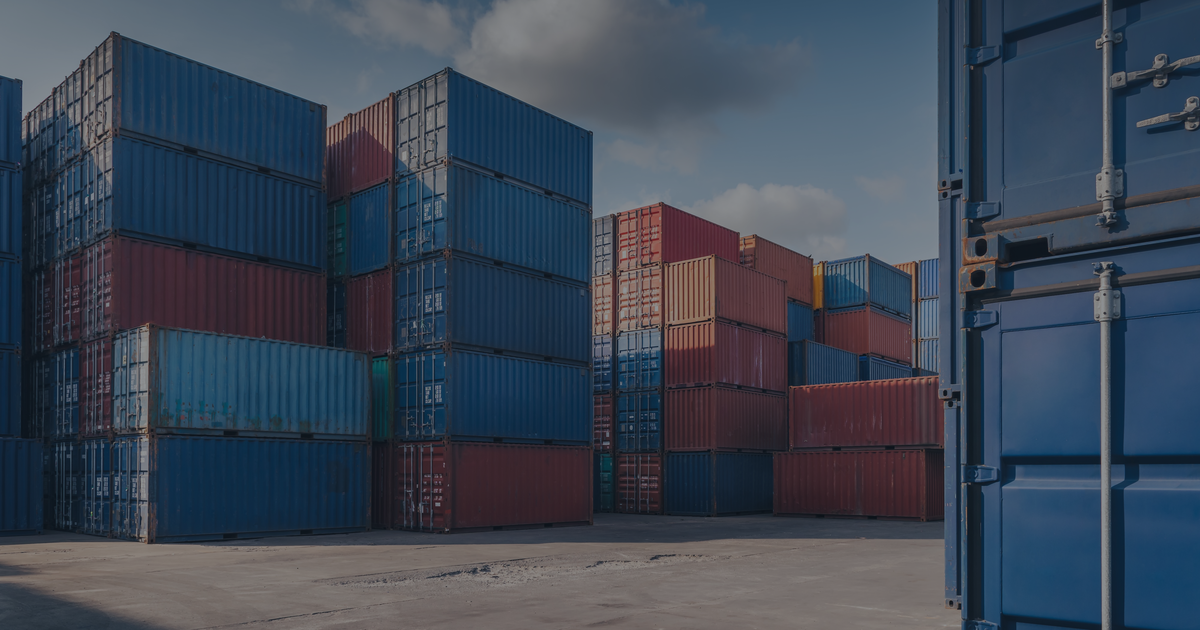
Demurrage charges are the silent budget killer in ocean freight. Your container arrives at the port. The ocean carrier gives you a free time window, typically 3-5 days, to pick it up from the terminal. If you don't pick it up within that window, demurrage charges start accruing at $150 to $300+ per day, per container. On a 10-container shipment that sits for a week past free time, you're looking at $10,000 to $20,000 in charges that didn't exist when you booked the freight.
The worst part: most demurrage charges are entirely preventable. They result from poor coordination, slow communication, and drayage providers who react to problems instead of preventing them.
What demurrage is and how it works
Demurrage is the charge assessed by the ocean carrier or marine terminal when a container remains at the port beyond the allotted free time after discharge from the vessel. It's essentially a storage fee, the terminal needs that space for the next vessel's containers, and demurrage incentivizes prompt pickup.
Free time varies by carrier, terminal, and trade lane. Most carriers offer 3-5 days of free time for standard containers. Some offer extended free time on certain trade lanes or for high-volume shippers. Your bill of lading or carrier tariff specifies the applicable free time for each shipment.
Once free time expires, demurrage accrues daily, and rates often escalate in tiers. Days 1-3 past free time might be $150/day. Days 4-7 might be $250/day. Beyond a week, rates can exceed $300/day. These charges add up fast and are difficult to dispute once they're assessed.
What triggers demurrage
Late customs clearance. If your customs broker hasn't cleared the container before free time expires, the container sits at the terminal accruing charges regardless of whether you're ready to pick it up.
Drayage scheduling delays. If your drayage provider doesn't schedule the terminal pickup promptly after the container is available, free time burns while you wait for a truck.
Chassis unavailability. The driver arrives at the terminal ready to pick up the container, but no chassis is available. The container stays at the terminal. Demurrage continues.
Terminal congestion. The terminal is backed up and won't release containers even though you've scheduled a pickup. The container is technically available but practically inaccessible.
Receiving facility delays. You pick up the container but the receiving facility can't accept it for days. The container sits on a chassis somewhere, and while this technically becomes a detention issue, the underlying cause was poor delivery coordination.
Proven strategies to avoid demurrage
1. Pre-clear customs before vessel arrival
Submit your customs entry and documentation to your customs broker before the vessel arrives at port. The goal is customs clearance within hours of container discharge, not days. Every day spent waiting for customs clearance is a day of free time burned.
2. Schedule drayage pickup as early as possible within free time
Don't wait until day 3 of a 5-day free time window to schedule your pickup. Book the drayage move as soon as you know the vessel discharge date. The earlier you schedule, the more carrier options your drayage provider has and the less likely you are to hit scheduling conflicts.
3. Confirm chassis availability before dispatch
Have your drayage provider confirm chassis availability at the terminal before sending a driver. A driver who arrives without a chassis wastes hours and still doesn't move your container.
4. Coordinate delivery appointments in advance
Make sure your receiving facility can accept the container before you pick it up from the terminal. A container sitting on a chassis outside a warehouse that isn't ready costs you detention charges and ties up equipment.
5. Monitor free time proactively
Track free time on every container from the moment it's discharged. Know exactly when charges will start and escalate. Your drayage provider should be monitoring this for you, not waiting for you to ask.
6. Negotiate extended free time for high-volume lanes
If you're shipping consistent volume on a trade lane, negotiate extended free time with your ocean carrier. Even 2 additional days of free time can prevent most demurrage exposure.
7. Use a drayage provider who manages the full process
The most effective demurrage prevention strategy is working with a drayage provider who manages the entire chain, customs coordination, terminal scheduling, chassis confirmation, and delivery appointment, as a single integrated process rather than a series of disconnected steps.
How Total Connection prevents demurrage
We monitor free time on every container from the moment it's discharged from the vessel. Our team schedules terminal pickups to maximize available free time, confirms chassis before dispatch, coordinates delivery appointments with receiving facilities, and escalates before charges start, not after.
Proactive management is the only reliable way to control demurrage. Call 732-817-0401 or request a quote for your container drayage.
Frequently Asked Questions
What is demurrage?
A charge assessed by the ocean carrier or terminal when a container remains at the port beyond the allotted free time after vessel discharge. It's essentially a storage fee that incentivizes prompt container pickup.
How much does demurrage cost?
Typically $150-$300+ per day per container, often escalating in tiers, higher rates for longer delays. On multi-container shipments, demurrage charges can reach thousands of dollars within a week.
What's the difference between demurrage and detention?
Demurrage accrues while the container is at the terminal (port storage). Detention accrues while the container or chassis is held outside the terminal, at a warehouse or delivery location, beyond its return deadline. Both are daily charges; both are preventable with proper management.
Can demurrage charges be disputed?
Sometimes, if you can demonstrate that terminal congestion or carrier delays prevented timely pickup despite your best efforts. But prevention is far more effective than disputing charges after the fact.
How does Total Connection help avoid demurrage?
We monitor free time from vessel discharge, schedule pickups early within the free time window, confirm chassis before dispatch, coordinate delivery appointments proactively, and escalate before charges start. Proactive management prevents the vast majority of demurrage exposure.