
NY/NJ port drayage is the truck move that carries an import container from a Port of New York and New Jersey marine terminal to a chemical receiver, transload facility, or warehouse within the region, typically covering 10 to 200 miles and completing within one to three business days of container availability.
The Port of New York and New Jersey is the largest container port on the East Coast and third-largest in the United States, handling approximately 9.5 million TEUs annually. For chemical importers, it is the primary East Coast gateway for ISO tanks, flexi-bags, and containerized drums and IBCs arriving from Europe, Asia, and South America. Understanding how drayage works at this specific port matters more than general drayage theory, because NY/NJ has its own terminal access rules, chassis pool dynamics, hazmat routing restrictions, and free-time structures that differ from Gulf Coast or West Coast operations.
For a foundational overview of how container drayage works across U.S. ports, see the Total Connection container drayage guide. For NY/NJ-specific drayage quotes or coordination support, the drayage service page is the starting point.
Port of NY/NJ Terminals: Where Your Container Actually Lands
Knowing which terminal your container arrives at is step one for any drayage plan. The Port of New York and New Jersey operates multiple marine container terminals across Newark Bay, each with different gate hours, chassis availability, and terminal access procedures. Your ocean carrier's bill of lading and booking confirmation will specify the discharging terminal.
| Terminal | Location | Primary Ocean Lines Served |
|---|---|---|
| APM Terminals (Port Newark) | Port Newark, NJ | Maersk, MSC, and alliance partners |
| Port Newark Container Terminal (PNCT) | Port Newark, NJ | CMA CGM, Evergreen, and others |
| Maher Terminals | Port Newark, NJ | ONE, Hapag-Lloyd, and alliance traffic |
| GCT Bayonne (Global Container Terminals) | Bayonne, NJ | Various lines; Neo-Panamax vessel capable since 2019 bridge raise |
| Red Hook Container Terminal | Brooklyn, NY | Smaller feeder vessels; limited ISO tank traffic |
GCT Bayonne gained significant capacity after the Bayonne Bridge was raised to 215 feet (65.5 meters) of air draft clearance, completed in 2019. That clearance accommodates neo-Panamax vessels carrying up to 14,000 TEUs, which previously had to call at APM or Maher. Chemical importers using carriers routing neo-Panamax vessels may now find their ISO tanks or containerized chemical shipments discharging at Bayonne when they previously arrived at Newark.
Each terminal has its own appointment system for truck gate access. APM, PNCT, and Maher all operate appointment-based truck gates; drivers arriving without a valid appointment slot will be turned away during peak hours. Your drayage carrier must book the appointment before the driver leaves for the terminal, which means real-time communication between the dispatcher, the driver, and the terminal portal.
Free Time, Demurrage, and Detention: The Three Clocks Every Chemical Importer Must Track
Free time is the grace period between when a container is grounded and available for pickup at the terminal and when the ocean carrier starts charging demurrage. At NY/NJ terminals, standard free time is typically 4 to 5 calendar days after the container is discharged and grounded, though the exact number is set by each ocean carrier's tariff, not by the Port Authority of New York and New Jersey.
Chemical importers consistently misjudge free time at NY/NJ for three reasons:
- Customs examination holds: CBP exam orders (CET exam, VACIS scan, or intensive physical exam) can hold a container from being grounded for pickup for 2 to 5 days after vessel discharge. Free-time clocks on most carrier tariffs start only after the container clears holds and is grounded. Confirm this with your specific carrier, because some tariffs start the clock at vessel discharge regardless of hold status.
- Import documentation delays: Chemical imports frequently require ISF 10+2 filing, EPA TSCA certification, and SDS submission before customs entry is released. A missing document delays customs release, compresses usable free time before demurrage starts, and can cascade into detention charges at the transload site.
- Weekend and holiday gate gaps: Terminal gate hours at NY/NJ do not always cover weekends. If a container becomes available on Thursday and the terminal has reduced Friday hours with no Saturday gate, two to three days of free time can disappear before a chassis and driver can access the container on Monday.
Detention is a separate charge from demurrage. Demurrage is charged by the ocean carrier for keeping the container inside the terminal beyond free time. Detention is charged for keeping the container outside the terminal (on a chassis at a warehouse or transload site) beyond the carrier's allowed free-use period, typically 3 to 5 days. For chemical ISO tanks and drummed hazmat where unloading may require pump transfers, receiver lab testing, or compliance holds, detention charges accumulate quickly. Know both clocks before you book the ocean freight.
Hazmat Container Drayage Requirements at NY/NJ
Chemical containers at NY/NJ carry additional requirements beyond standard dry cargo drayage. These come from federal DOT regulations, terminal-specific hazmat handling procedures, and state routing restrictions that are particular to the New York metropolitan area.
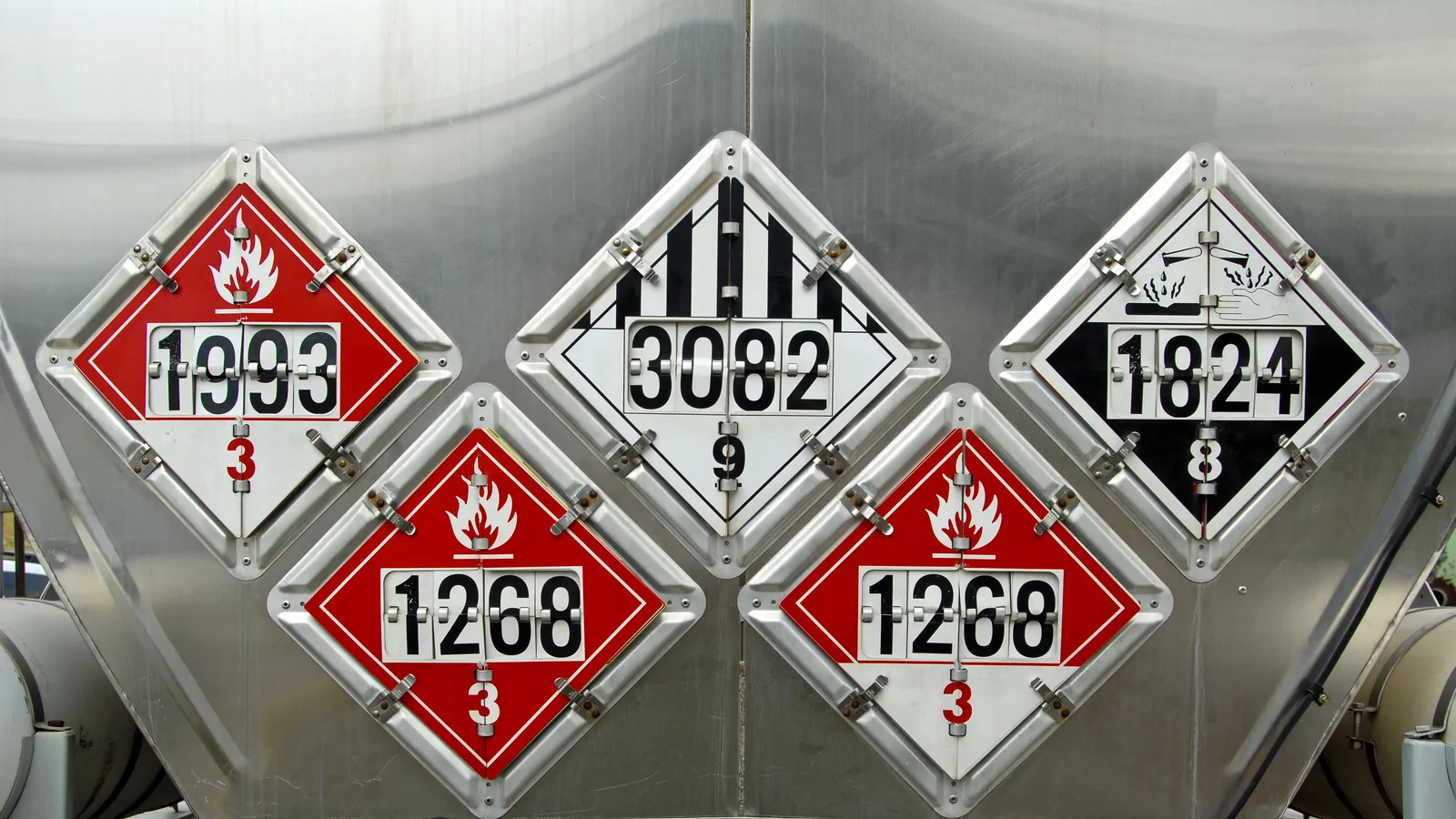
- DOT hazmat placards: Once a container is on a chassis and moving on public roads, 49 CFR hazmat regulations apply. ISO tanks and containerized hazmat require correct DOT placards on all four sides matching the cargo class and UN number, regardless of how the overseas shipper marked the container.
- CDL with H endorsement: Drivers moving placarded hazmat loads must hold a CDL with Hazardous Materials (H) endorsement under 49 CFR 383.93. Not all container drayage carriers maintain H endorsements across their full driver pool. Confirm this before tendering a hazmat ISO tank or drummed Class 8 or Class 3 container.
- TWIC card requirement: A Transportation Worker Identification Credential (TWIC) card is required for unescorted access to all NY/NJ marine terminal gates under the Maritime Transportation Security Act. Any driver pulling containers at APM, PNCT, Maher, or GCT Bayonne needs a current, valid TWIC. Standard TWIC processing takes 10 to 12 weeks; carriers with a TWIC-holding driver pool are a real operational advantage in this market.
- Tunnel routing restrictions: Class 3 flammable liquids and Class 8 corrosives cannot enter the Lincoln Tunnel or Holland Tunnel. Carriers must route via the George Washington Bridge, Goethals Bridge, or Bayonne Bridge. This adds 15 to 45 minutes to moves from Port Newark to Manhattan or Long Island chemical receivers, and must be planned before dispatch, not improvised by the driver.
- PHMSA incident reporting: Spills or releases above threshold quantities during drayage require PHMSA incident reports under 49 CFR 171.15 (immediate telephone report) and 49 CFR 171.16 (written report). Shippers should confirm carrier incident reporting procedures before moving high-risk chemical ISO tanks through the metropolitan area.
Chassis Availability and Drayage Timing at NY/NJ
Chassis availability is the variable that most often disrupts chemical container pickup timing at NY/NJ. The port operates under a pool chassis model after ocean carriers exited the chassis business. Three primary pools operate at NY/NJ: Direct ChassisLink Inc. (DCLI), TRAC Intermodal, and Flexi-Van Leasing. Pool availability fluctuates with vessel schedules, and during peak weeks (pre-holiday season imports, spring demand surges), chassis shortages can push first available pickup to two or three days after container availability.
ISO tank containers require a specific chassis type: an ISO tank chassis or a properly equipped flatbed with securing points, not a standard 20-foot or 40-foot container chassis. Not all drayage carriers at NY/NJ keep ISO tank chassis in regular inventory. Confirm chassis type availability before booking, especially for 20-foot ISO tanks, which are less common in the pool than 40-foot chassis.
For chemical importers running regular volume through NY/NJ, pre-positioning chassis or working with a drayage provider who has dedicated chassis relationships at specific terminals reduces this from a daily variable to a managed one. The difference between a carrier who has to hunt for an ISO chassis versus one who has confirmed inventory is often 24 to 48 hours of pickup delay, which can be the difference between clearing free time and paying demurrage.
Transload and Last-Mile Delivery Options from NY/NJ
Not every chemical import going through NY/NJ delivers direct to a production facility. Many importers use transload warehouses in northern New Jersey (Edison, Linden, Newark, and Elizabeth corridors) to break down ISO tanks into drums or IBCs, repackage product, or consolidate multiple containers for regional distribution. This is common for specialty chemicals, additives, and concentrates arriving in 20-foot ISO tanks that need redistribution to multiple customers throughout the Northeast.
Key considerations for NY/NJ chemical transload operations:
- Bonded warehouse proximity: For shipments not yet cleared at vessel discharge, bonded warehouses in Elizabeth and Newark allow container movement before duty payment or full customs clearance. This is useful when a receiver needs product quickly but final entry documentation is still processing through CBP.
- Hazmat storage certification: Not every warehouse near NY/NJ holds the permits required for Class 3 flammable liquids, Class 8 corrosives, or other hazmat categories. Confirm the facility holds the correct EPA, fire code, and local zoning permits before routing a hazmat ISO tank to a transload site. A single phone call before booking prevents a rejected delivery.
- Last-mile delivery reach: Major chemical consuming regions reachable within one drayage day from NY/NJ include all of New Jersey, New York City and Long Island, eastern Pennsylvania (Philadelphia corridor), Delaware, and Connecticut. Two-day reach extends to Maryland, Massachusetts, and upstate New York.
How Total Connection Handles NY/NJ Chemical Drayage
Total Connection's headquarters outside New York City in New Jersey puts the team inside the NY/NJ port market, not servicing it from a distance. The team knows which terminals run appointment backlogs on which days, which chassis pools run short during peak vessel arrivals, and which drayage carriers maintain active TWIC and H endorsements across their driver pools rather than only on paper for the RFP response.
For chemical importers using NY/NJ as an entry point, Total Connection coordinates the full import drayage sequence: terminal availability notification, chassis confirmation, driver dispatch with verified hazmat credentials, and final delivery confirmation. For ISO tank moves requiring special chassis, the team verifies equipment availability before the vessel arrives, not after the container is sitting in the terminal generating demurrage charges.
As an independent broker founded in 1995, Total Connection carries no carrier allegiance and no asset to protect. The goal is getting the chemical importer's container out of the terminal fast, with the right equipment, and to the right facility. With $5 million in general liability coverage and 30 years of chemical freight experience at this specific port, the team handles complex, time-sensitive moves that generic drayage brokers are not equipped for.
Questions about a specific NY/NJ chemical import lane, ISO tank drayage, or containerized hazmat move? Request a drayage quote from Total Connection.
Frequently Asked Questions
What is NY/NJ port drayage for chemical freight?
NY/NJ port drayage is the truck movement of containerized chemical freight between Port of New York and New Jersey marine terminals (Newark, Elizabeth, Bayonne) and chemical receivers, transload facilities, or warehouses across the Northeast region. The Port of NY/NJ is the third-busiest container port in the United States.
What terminals at NY/NJ handle chemical containers?
Major terminals include Port Newark Container Terminal (PNCT), Maher Terminals, APM Terminals Elizabeth, and GCT Bayonne. All terminals require TWIC credentials for access and follow strict hazmat container handling protocols. Chemical ISO tanks and hazmat-classified containers may face additional terminal clearance requirements.
What are the main challenges for NY/NJ chemical drayage?
Chassis shortages are persistent at NY/NJ, particularly for specialized ISO tank chassis. Traffic congestion on the New Jersey Turnpike and surrounding highways adds time to dray moves. Winter weather can delay terminal operations and road conditions. TWIC credential requirements and hazmat documentation reviews at terminal gates add processing time for chemical containers.
How long does NY/NJ chemical drayage take?
Local deliveries within northern New Jersey can be completed same-day when containers are available. Deliveries to the mid-Atlantic region (Pennsylvania, Maryland, Delaware) typically run 1-2 days. New England destinations may take 2-3 days depending on distance and receiver facility scheduling.
Does Total Connection handle NY/NJ port chemical drayage?
Yes. Total Connection coordinates containerized chemical drayage from all major NY/NJ terminals, including chassis sourcing for ISO tanks, hazmat-qualified carriers with TWIC-credentialed drivers, and coordination with chemical receiving facilities across the Northeast.
Frequently Asked Questions
How long does container drayage take from Port of NY/NJ?
Container availability at NY/NJ typically follows vessel discharge by 24 to 48 hours for grounding and terminal processing. Once a container is available for pickup, most drayage moves within the 150-mile radius deliver within one business day of pickup. Customs holds, chassis shortages, and terminal gate appointment backlogs are the most common causes of delay beyond that baseline, and each can add one to three days to the total timeline.
What is a TWIC card and is it required for NY/NJ port drayage?
A Transportation Worker Identification Credential (TWIC) is a biometric access card issued by TSA to workers requiring unescorted access to secure marine facilities under the Maritime Transportation Security Act (MTSA). TWIC is required for all drivers entering NY/NJ marine terminal gates, including APM, PNCT, Maher, and GCT Bayonne. Obtaining a TWIC takes 10 to 12 weeks through standard processing; shippers should confirm their drayage carrier's drivers hold active TWIC cards before booking a move.
What are standard free time terms at NY/NJ ports?
Standard free time at NY/NJ terminals is typically 4 to 5 calendar days after a container is grounded and available for pickup, but the exact terms are set by each ocean carrier's tariff, not by the Port Authority. Some carrier tariffs start the free-time clock at vessel discharge rather than at grounding, which reduces effective free time if processing is slow. Importers should request free-time terms directly from the ocean carrier's tariff before booking and confirm whether customs examination holds extend the period.
Does hazmat container drayage at NY/NJ require special permits?
Most hazmat container drayage at NY/NJ does not require special state or federal permits beyond standard DOT hazmat requirements: correct placarding, a CDL with H endorsement for the driver, and proper shipping papers in the cab. Oversize or overweight ISO tanks may require weight permits for New Jersey or New York state highway moves. Tunnel routing restrictions (no Class 3 flammable or Class 8 corrosive loads in Lincoln or Holland Tunnels) must be respected and cannot be overridden with a permit exception.
How do chemical importers avoid demurrage at NY/NJ?
The most effective approach is completing import documentation before the vessel arrives: customs entry, EPA TSCA certification if required, and ISF 10+2 filing (due 24 hours before foreign port loading). Early documentation allows customs release shortly after container grounding, preserving the full free-time period. Coordinating chassis availability and driver scheduling in advance of container availability also prevents the common scenario of a container ready for pickup but stranded due to equipment or driver shortages.
What chemical imports commonly arrive through NY/NJ?
NY/NJ handles large volumes of specialty chemicals, polymer additives, surfactants, aromatic solvents, agricultural chemical intermediates, and specialty coatings components imported from Europe and Asia. ISO tank imports of liquid chemicals are common at Port Newark and PNCT. Drummed and IBC-packaged hazmat arrives in 20-foot and 40-foot containers and routes to transload warehouses or direct to receivers throughout the Northeast and Mid-Atlantic corridor.