
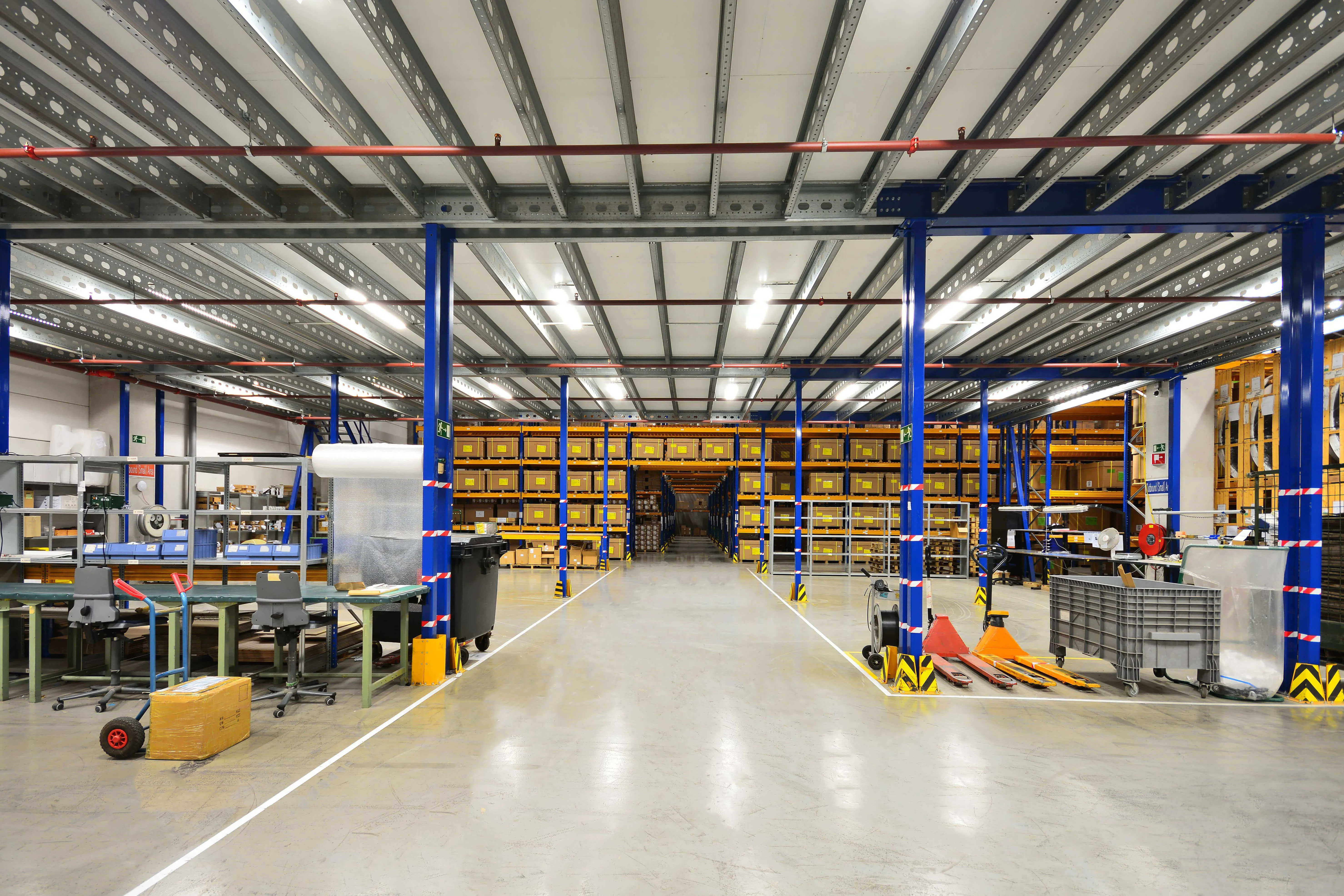
A bonded warehouse is a customs-authorized storage facility where imported goods are held without paying import duties or taxes until they are withdrawn for domestic use. The operator posts a bond with US Customs and Border Protection guaranteeing the duties will be paid when the goods leave, which is where the name comes from. Goods can stay in bond for up to 5 years.
For importers, a bonded warehouse is a cash-flow and compliance tool: import now, store in bond, and defer duty until you actually need the goods, or re-export them and never pay US duty at all. Total Connection coordinates bonded storage as part of its ocean freight and customs services.
How a bonded warehouse works
Normally, imported goods must clear customs and pay duty before they enter US commerce. A bonded warehouse breaks that link: the goods move from the port into the bonded facility under customs supervision, and duty is owed only when they are withdrawn. The in-bond process runs in five steps:
- Goods arrive at the US port and are entered for warehouse (in-bond), not for consumption.
- They move to the bonded facility under a customs bond and CBP supervision.
- They are stored duty-free for up to 5 years from the date of importation.
- While in bond, goods may be cleaned, repackaged, sorted, or relabeled, but not manufactured, which requires a Foreign Trade Zone.
- Duty and taxes are paid only on the portion withdrawn for domestic consumption; anything re-exported leaves duty-free.
If goods are re-exported, no US duty is ever paid. If they are destroyed or damaged in bond under CBP supervision, the duty owed can be reduced or eliminated. That flexibility is the entire value of bonded storage.
Types of bonded warehouses
US Customs recognizes several classes of bonded warehouse under 19 CFR 19.1. The ones that matter for most importers:
- Public bonded warehouse. Operated by a third party and open to any importer. You pay storage and handling fees with no long-term commitment. This is what most commercial importers use.
- Private bonded warehouse. Operated by a single importer for its own goods. More capital and compliance overhead, but full control of the facility.
- Specialized classes. Customs also defines classes for bulk grain storage and for cleaning or sorting specific commodities, each with its own bonding requirements.
- Foreign Trade Zone (FTZ). Not technically a bonded warehouse, but the closest alternative. An FTZ is treated as outside US customs territory, so goods can be manufactured or assembled there and the importer can elect the most favorable duty rate after processing.
Bonded warehouse vs Foreign Trade Zone: which to use
The most common question importers ask is whether to use a bonded warehouse or an FTZ. Both defer duty, but they are not interchangeable.
| Factor | Bonded warehouse | Foreign Trade Zone (FTZ) |
|---|---|---|
| Duty deferral | Yes, up to 5 years | Yes, indefinite while in the zone |
| Manufacturing or assembly | Not allowed (storage, sorting, repacking only) | Allowed |
| Duty-rate election after processing | No | Yes, component or finished rate |
| Re-export without US duty | Yes | Yes |
| Best for | Pure storage and duty deferral on finished imports | Importers who process, assemble, or kit before sale |
Rule of thumb: if you only need to store and defer, a bonded warehouse is simpler and cheaper. If you transform the goods before they enter US commerce, an FTZ usually wins.
Benefits for importers
- Cash-flow improvement. Deferring duty until goods are needed preserves working capital, which matters most on high-duty product categories.
- Duty avoidance on re-exports. Goods stored in bond and then exported to another country never incur US duty.
- Inventory positioning. Stage goods near your market without committing duty until demand materializes.
- Duty relief on damaged goods. Goods destroyed or damaged in bond can carry reduced or zero duty.
What can and cannot be stored in bond
Most commercial goods can be stored in a bonded warehouse, but there are limits:
- Allowed: general merchandise, finished goods, and many regulated commodities with the right facility certification.
- Restricted: firearms, ammunition, and explosives face additional CBP and ATF requirements.
- Conditional: perishables and hazardous materials require facilities with the appropriate cold-chain or hazmat storage certifications.
- Prohibited: goods barred from US import entirely cannot be bonded.
When importers use a bonded warehouse
Bonded warehousing pays off in a few recurring situations:
- High-duty imports, where deferring payment for months frees up meaningful working capital.
- Re-export and transshipment programs, where goods enter the US only to be shipped onward and should never carry US duty.
- Seasonal or demand-driven inventory you want positioned near the market before you commit duty.
- Goods awaiting a quota opening, an import license, or test results before they can legally enter commerce.
- Chemical and industrial imports staged for regional distribution, where bonded storage pairs with drayage and onward trucking.
Costs are typically a storage fee per pallet or square foot plus handling, usually well below the duty being deferred on high-value freight. The real savings come from the time value of the deferred duty and from never paying duty on the re-exported share, which on a high-duty container can reach five figures.
How Total Connection coordinates bonded warehousing
We coordinate bonded warehouse storage as part of our container ocean freight and distribution services. Whether you need short-term in-bond storage during customs processing or long-term bonded warehousing for duty deferral, we manage facility selection, the in-bond move, and the customs documentation. As a licensed customs house broker and NVOCC (OTI #026203NF), we also clear the goods from bond when you are ready for final importation and coordinate the onward container drayage to your facility.
Call 732-817-0401 or request a quote.
Frequently Asked Questions
What is a bonded warehouse?
A bonded warehouse is a customs-authorized facility that stores imported goods without paying duties or taxes until they are withdrawn for domestic use. Goods can remain in bond for up to 5 years, which lets importers defer duty, re-export without paying US duty, or repack and relabel products before final importation.
How does a bonded warehouse save money?
It defers duty and tax until goods are sold or released, which preserves working capital. It eliminates US duty entirely on goods that are re-exported, and it reduces or removes duty on goods damaged in bond. For high-duty inventory, the cash-flow benefit can be substantial.
How long can goods stay in a bonded warehouse?
Imported goods can remain in a US bonded warehouse for up to 5 years from the date of importation. After 5 years, the goods must be withdrawn for consumption with duty paid, exported, or destroyed under customs supervision.
What is the difference between a bonded warehouse and a Foreign Trade Zone?
Both defer duty, but a bonded warehouse is for storage only (sorting, repacking, relabeling), while a Foreign Trade Zone allows manufacturing and assembly and lets the importer elect the most favorable duty rate after processing. Use a bonded warehouse for pure storage and deferral; use an FTZ when you transform the goods before sale.
Does Total Connection coordinate bonded warehousing for importers?
Total Connection coordinates bonded warehouse storage for ocean freight imports through a network of customs-bonded facilities at major US ports. This includes duty deferral, FTZ warehousing, customs brokerage to release goods from bond, and drayage to final delivery.