
Plasticizers are one of the highest-volume chemical additives in industrial use. They're added to polymers, primarily PVC, to make rigid plastics flexible, durable, and workable. Without plasticizers, the vinyl flooring under your feet would crack, the medical tubing in a hospital would be stiff and unusable, and the dashboard of your car would be brittle.
Global plasticizer production exceeds 8 million metric tons annually. The vast majority of this volume ships in liquid bulk by tanker truck from manufacturers to compounders, formulators, and end-use manufacturers. Here's what you need to know about plasticizer chemistry, classifications, regulations, and shipping logistics.
For shipper-led capacity and hazmat-fluent execution on this freight, see Total Connection's liquid bulk and chemical logistics service.
What plasticizers do
Plasticizers work by embedding themselves between polymer chains, increasing the space between molecules and allowing the chains to slide past each other more easily. This converts a rigid polymer into a flexible material. The type and amount of plasticizer determines the final product's flexibility, durability, temperature resistance, and other physical properties.
The most common polymer that uses plasticizers is polyvinyl chloride (PVC). Unplasticized PVC is rigid, it's used in pipes and window frames. Add plasticizer and PVC becomes flexible enough for wire insulation, medical devices, flooring, automotive interiors, and hundreds of other applications.
Types of plasticizers
Phthalate plasticizers
Phthalates have historically been the most widely used plasticizer family. They include DEHP (di-2-ethylhexyl phthalate), DINP (diisononyl phthalate), DIDP (diisodecyl phthalate), DBP (dibutyl phthalate), and BBP (benzyl butyl phthalate). Phthalates are effective, economical, and well-understood, but some have come under regulatory scrutiny due to health concerns, particularly for applications involving food contact and children's products.
Non-phthalate plasticizers
Growing regulatory pressure and market demand have driven significant growth in non-phthalate alternatives. DOTP (dioctyl terephthalate) is the most common non-phthalate plasticizer and has largely replaced DEHP in many applications. Other alternatives include citrate esters for food-contact and medical applications, adipates for low-temperature flexibility, trimellitates for high-temperature applications, and bio-based plasticizers derived from renewable feedstocks like soybean oil and castor oil.
Specialty plasticizers
Epoxidized soybean oil (ESBO) serves dual function as both a plasticizer and a heat stabilizer for PVC. Polymeric plasticizers provide permanence, they resist migration and extraction better than monomeric plasticizers. Phosphate esters add flame retardancy in addition to plasticizing effect.
Industries that use plasticizers
Construction. Vinyl flooring, wall coverings, roofing membranes, cable insulation, and pipe fittings all use plasticized PVC. Construction is the largest end-use market for plasticizers.
Automotive. Dashboard skins, door panels, wire harness insulation, undercoating, and sealants all contain plasticizers.
Medical devices. IV bags, blood bags, tubing, oxygen masks, and other medical devices use plasticized PVC extensively, though non-phthalate plasticizers are increasingly required for medical applications.
Consumer products. Toys, footwear, garden hoses, shower curtains, and food packaging all use plasticizers. Regulatory requirements are strictest in this category, particularly for children's products and food contact.
Wire and cable. Plasticized PVC is the dominant insulation and jacketing material for electrical wire and cable globally.
Regulatory landscape
Plasticizer regulations vary by region and application. In the United States, the Consumer Product Safety Improvement Act (CPSIA) permanently bans three phthalates (DEHP, DBP, BBP) in children's toys and childcare articles at concentrations above 0.1%. DINP, DIDP, and DNOP face interim restrictions pending further review.
The EU's REACH regulation classifies several phthalates as Substances of Very High Concern (SVHC) and restricts their use in various applications. California's Proposition 65 lists several phthalates as reproductive toxicants.
These regulations are driving the global shift from phthalate to non-phthalate plasticizers, and creating logistics complexity as manufacturers need to segregate regulated and non-regulated products throughout their supply chains.
Shipping plasticizers by liquid bulk tanker
Most plasticizers are shipped as liquids in bulk by tanker truck. Key logistics considerations include:
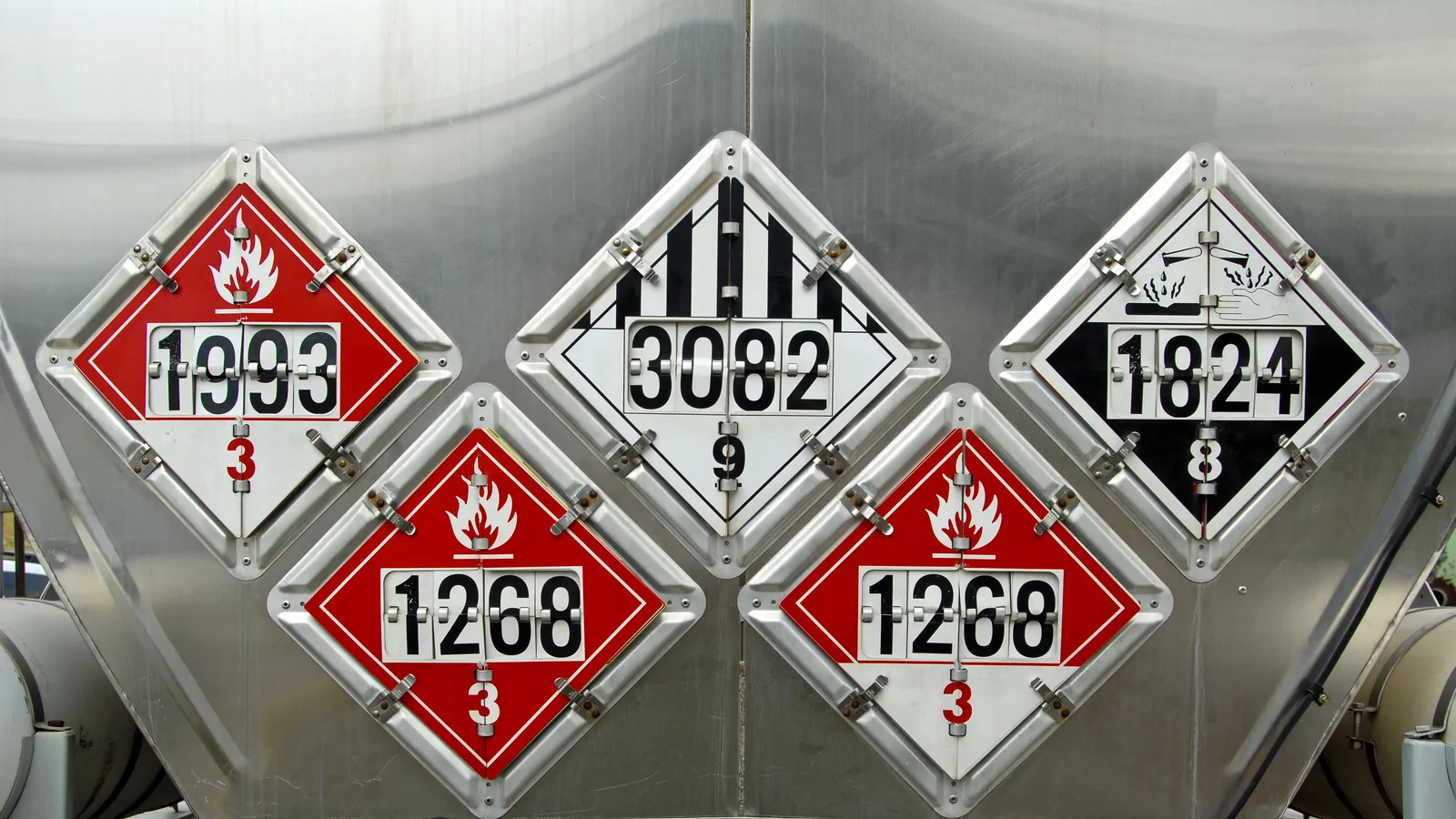
Hazmat classification. Many plasticizers are non-hazardous for shipping. However, some specialty formulations and certain phthalate esters may carry DOT classifications depending on their specific chemistry. Always verify with the product SDS.
Tank cleanliness. Plasticizer contamination is a critical quality concern. Even trace amounts of an incompatible prior cargo can affect the plasticizer's performance in the final product and potentially introduce regulated substances into a non-regulated product stream. Tank wash verification and prior cargo documentation are essential.
Temperature management. Some plasticizers increase in viscosity at low temperatures and may require heated or insulated tanker equipment during winter months to maintain pumpability at delivery.
Product segregation. With the regulatory divide between phthalate and non-phthalate plasticizers, supply chain segregation is critical. A non-phthalate plasticizer contaminated with even trace phthalate residue from a prior cargo can render the entire shipment non-compliant for its intended application.
How Total Connection handles plasticizer shipping
We ship plasticizers to compounders, formulators, and manufacturers across North America. Our team understands the product segregation requirements between phthalate and non-phthalate products, the tank cleanliness standards that plasticizer manufacturers demand, and the temperature considerations for winter shipping.
Every plasticizer shipment gets carrier screening, equipment matching, tank wash verification with prior cargo documentation, and a dedicated account manager. Call 732-817-0401 or request a quote.
Frequently Asked Questions
What is a plasticizer?
A plasticizer is a chemical additive that increases the flexibility, workability, and durability of polymers, primarily PVC. It works by embedding between polymer chains and increasing molecular spacing, converting rigid plastic into flexible material.
Are plasticizers hazardous materials?
Many plasticizers are non-hazardous for shipping purposes. Some specialty formulations may carry DOT hazmat classifications. The regulatory concern with certain phthalate plasticizers relates to their use in consumer products, not necessarily their shipping classification. Always verify with the product SDS.
What's the difference between phthalate and non-phthalate plasticizers?
Phthalate plasticizers (DEHP, DINP, DIDP) are derived from phthalic acid and have been the industry standard for decades. Non-phthalate plasticizers (DOTP, citrates, adipates) are alternatives developed in response to regulatory restrictions on certain phthalates in children's products, food contact, and medical applications.
Why is product segregation important for plasticizer shipping?
Regulatory differences between phthalate and non-phthalate plasticizers mean that cross-contamination during shipping can render a non-phthalate product non-compliant for its intended application. Tank wash verification and prior cargo documentation are essential to maintain product integrity and regulatory compliance.
Does Total Connection ship both phthalate and non-phthalate plasticizers?
Yes. We handle both product categories with the segregation protocols, tank cleanliness standards, and prior cargo verification that the plasticizer industry requires.