
.png)
Liquid hardeners and concrete curing compounds are essential chemicals in construction, flooring, and composite manufacturing. Hardeners initiate or accelerate the curing process in epoxies, polyurethanes, and other thermosetting systems. Curing compounds are applied to freshly placed concrete to retain moisture and ensure proper hydration, the chemical process that gives concrete its strength.
Both product categories ship in liquid bulk by tanker truck from chemical manufacturers to construction sites, flooring contractors, precast concrete plants, and composite manufacturers. Understanding the logistics requirements, from hazmat classifications to moisture sensitivity, is critical for anyone moving these products at scale.
For shipper-led capacity and hazmat-fluent execution on this freight, see Total Connection's liquid bulk and chemical logistics service.
Liquid hardeners: types and applications
Epoxy hardeners
Epoxy systems are two-component, a resin and a hardener. The hardener (also called a curing agent) reacts with the resin to create a cross-linked thermoset polymer. Common epoxy hardeners include amines (aliphatic, cycloaliphatic, aromatic), amides, anhydrides, and phenolic compounds.
Aliphatic amines cure at room temperature and provide fast cure times, making them ideal for industrial coatings and flooring systems. Cycloaliphatic amines offer better chemical resistance and are used in high-performance applications like marine coatings and chemical storage tanks. Aromatic amines require heat to cure but provide superior temperature resistance for applications like aerospace composites and electrical laminates.
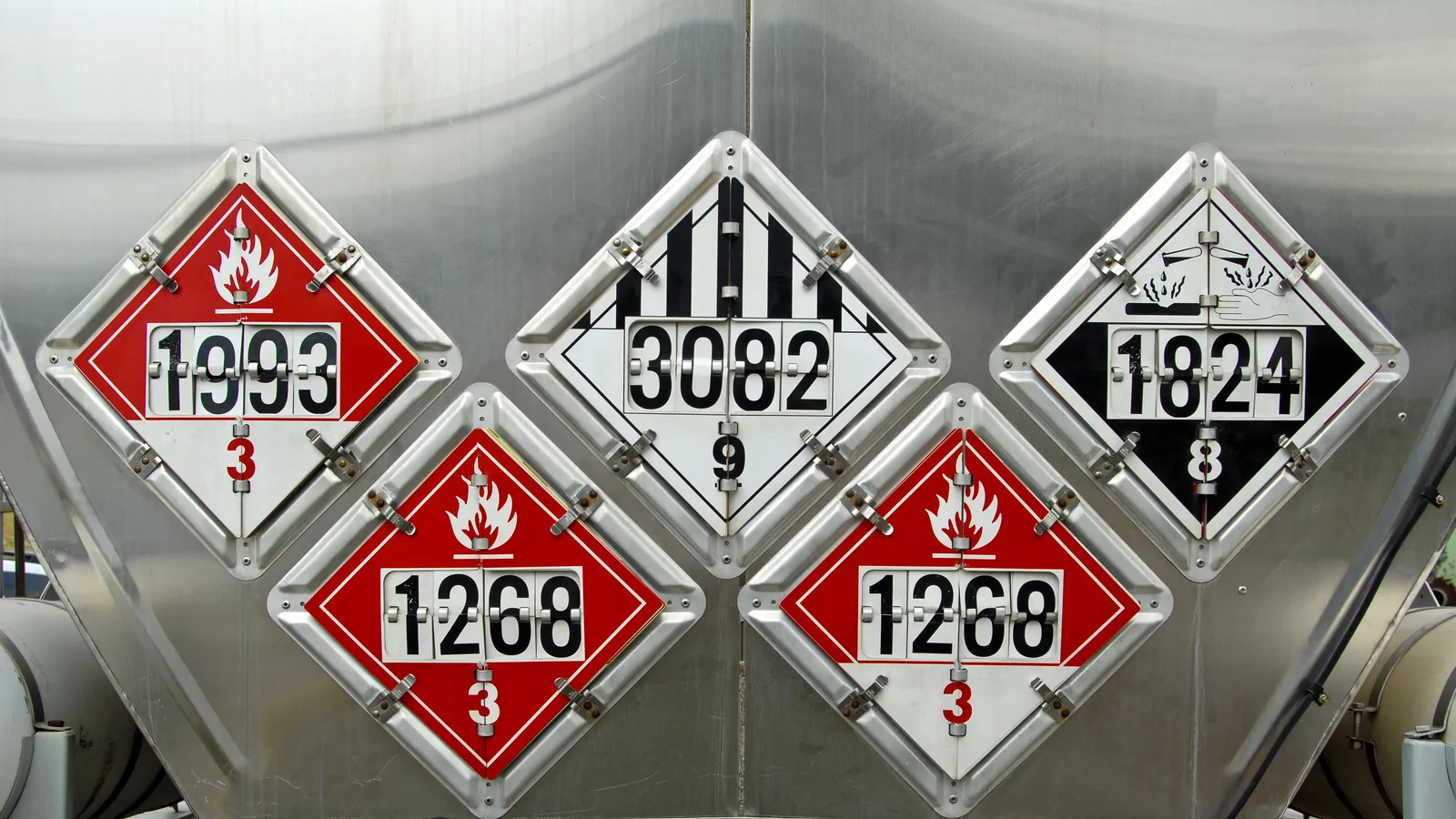
Many amine hardeners are DOT Class 8 (corrosive) due to their alkaline nature. Some aromatic amines are Class 6.1 (toxic). This means shipping requires hazmat-certified carriers, proper documentation, and corrosion-resistant tanker equipment.
Polyurethane hardeners (isocyanates)
In polyurethane systems, the hardener is an isocyanate, MDI (methylene diphenyl diisocyanate) or TDI (toluene diisocyanate) being the most common. Isocyanates are DOT Class 6.1 (toxic) and are extremely moisture-sensitive. They must ship in sealed, dry tanker equipment. Moisture contamination causes isocyanates to react prematurely, ruining the product and potentially creating pressure buildup in the tank.
MDI is less volatile than TDI and is used in spray foam insulation, rigid foams, and elastomers. TDI is more reactive and finds use in flexible foams, coatings, and adhesives. Both require specialized handling during transport, including nitrogen blanketing in some cases to prevent moisture ingress.
Concrete hardeners
Liquid hardeners for concrete, typically sodium or lithium silicate solutions, penetrate the concrete surface and react with calcium hydroxide to form additional calcium silicate hydrate, densifying and hardening the surface. These are generally non-hazardous and ship in standard tanker equipment.
Lithium silicate hardeners are preferred for modern polished concrete applications because they don't leave a white residue like sodium silicates can. They're used extensively in warehouse floors, retail spaces, and commercial buildings where durability and aesthetics matter.
Concrete curing compounds
Curing compounds are liquid membranes sprayed or rolled onto freshly placed concrete to prevent premature moisture loss. Proper curing is critical, concrete that dries too quickly develops surface cracks, reduced strength, and poor durability.
Types include water-based acrylic curing compounds (non-hazardous, low VOC), solvent-based curing compounds (may be DOT Class 3 flammable), wax-based curing compounds, and resin-based curing compounds. Water-based acrylics have become the industry standard for most applications due to environmental regulations and worker safety considerations.
Solvent-based compounds still find use in cold-weather applications where freeze-thaw resistance is critical, and in situations where a harder, more durable film is required. Wax-based compounds are primarily used for curing slabs that will receive floor coverings, as the wax film can be removed more easily than resin-based alternatives.
Curing compounds ship in bulk to ready-mix concrete producers, precast plants, and large construction projects that consume high volumes during paving, floor, and structural work. For related construction chemical logistics, see our guide to shipping protective coatings and chemical raw materials.
Application industries
Construction and infrastructure. Liquid hardeners and curing compounds are essential for highway construction, bridge decks, parking structures, and commercial buildings. Curing compounds ensure proper concrete strength development in horizontal applications where water ponding isn't practical. Surface hardeners create durable, dust-free floors in warehouses and industrial facilities.
Flooring and coatings. Epoxy hardeners are the backbone of industrial floor coating systems, from manufacturing plants to food processing facilities. These systems provide chemical resistance, impact resistance, and easy-clean surfaces that withstand decades of heavy use. The flooring industry consumes hardeners in bulk, with large contractors using tanker-truck quantities for major projects.
Composite manufacturing. Aerospace, automotive, and wind energy industries use epoxy and polyurethane hardeners in composite production. Wind turbine blades alone consume massive volumes of epoxy systems, with each blade requiring thousands of pounds of resin and hardener. These applications demand high-purity hardeners shipped in clean, dedicated equipment.
Precast concrete. Precast plants producing architectural panels, structural beams, and utility components use both hardeners (for surface densification) and curing compounds (for proper hydration) in their manufacturing processes. These facilities operate on tight production schedules, making reliable delivery of chemical supplies critical.
Storage and handling requirements
Proper storage is as important as proper shipping for liquid hardeners and curing compounds. Most amine hardeners must be stored in tightly sealed containers to prevent moisture absorption and carbon dioxide reaction, which can cause crystallization and reduced reactivity. Storage temperatures typically range from 50°F to 90°F, with some products having narrower windows.
Isocyanate hardeners require the most stringent storage conditions. They must be kept in sealed containers under dry nitrogen or compressed air blanketing, stored away from moisture and heat sources, and used within specified shelf-life periods (typically 6-12 months). Temperature control is critical, storage above 100°F can cause polymerization and container pressure buildup.
Curing compounds are generally more forgiving but still require attention to storage conditions. Water-based products must be protected from freezing, which can cause permanent separation and loss of effectiveness. Solvent-based products require flammable liquid storage protocols, including proper ventilation, grounding, and separation from ignition sources.
For facilities receiving bulk shipments, storage tank compatibility is essential. Stainless steel or properly lined carbon steel tanks work for most hardeners. Aluminum tanks are incompatible with some amine hardeners. Concrete curing compounds can typically be stored in standard chemical storage tanks, but compatibility should always be verified against the product's technical data sheet.
Shipping logistics and compliance
Hazmat classifications vary widely. Amine hardeners are often corrosive. Isocyanates are toxic. Solvent-based curing compounds may be flammable. Concrete silicate hardeners are typically non-hazardous. Each product requires verification against its SDS before tendering to a carrier.
Moisture sensitivity. Isocyanate hardeners are extremely moisture-sensitive. Tanker equipment must be verified dry, any residual water from tank washing can cause premature reaction. This requires specialized wash and dry procedures, often including nitrogen purging to remove all moisture before loading.
Temperature management. Some hardeners and curing compounds are temperature-sensitive, they can thicken, crystallize, or in the case of reactive products, begin curing prematurely at elevated temperatures. Winter shipping may require insulated equipment; summer shipping may require temperature monitoring to prevent heat-related degradation.
Tank wash protocols. Prior cargo verification is critical for hardener shipments. A tank that previously carried an incompatible chemical can contaminate the entire load. Many hardener manufacturers require dedicated equipment or specific wash certifications before they'll allow loading. For more on chemical shipping logistics, see our overview of choosing a 3PL for chemical freight.
Shelf life considerations. Many hardeners and curing compounds have limited shelf life. Logistics timing matters, product that sits in transit or storage too long may arrive out of spec. This is particularly important for isocyanates, which can begin to deteriorate within months if not stored properly.
How Total Connection handles hardener and curing compound logistics
We ship liquid hardeners and curing compounds to construction projects, manufacturers, and distributors across North America. Our team understands the hazmat diversity, moisture sensitivity, and temperature requirements across these product categories.
Every shipment gets carrier verification for the specific hazmat class, equipment compatibility confirmation, tank wash and prior cargo review, temperature management where required, and coordination with your production or project schedule.
Call 732-817-0401 or request a quote for your hardener and curing compound logistics.
Frequently Asked Questions
Are liquid hardeners hazardous materials?
Many are. Amine-based epoxy hardeners are often DOT Class 8 (corrosive). Isocyanate hardeners are Class 6.1 (toxic). Concrete silicate hardeners are typically non-hazardous. Each product requires SDS verification.
Why are isocyanate hardeners moisture-sensitive?
Isocyanates react with water, causing premature curing and potential pressure buildup. Tanker equipment must be verified dry after washing, any residual moisture can ruin the product.
What is a concrete curing compound?
A liquid membrane applied to fresh concrete to prevent premature moisture loss. Proper curing gives concrete its design strength, surface durability, and crack resistance. Curing compounds can be water-based, solvent-based, wax-based, or resin-based.
Does Total Connection ship to construction sites?
Yes. We deliver liquid hardeners and curing compounds to construction projects, precast plants, ready-mix producers, and manufacturers across North America.