
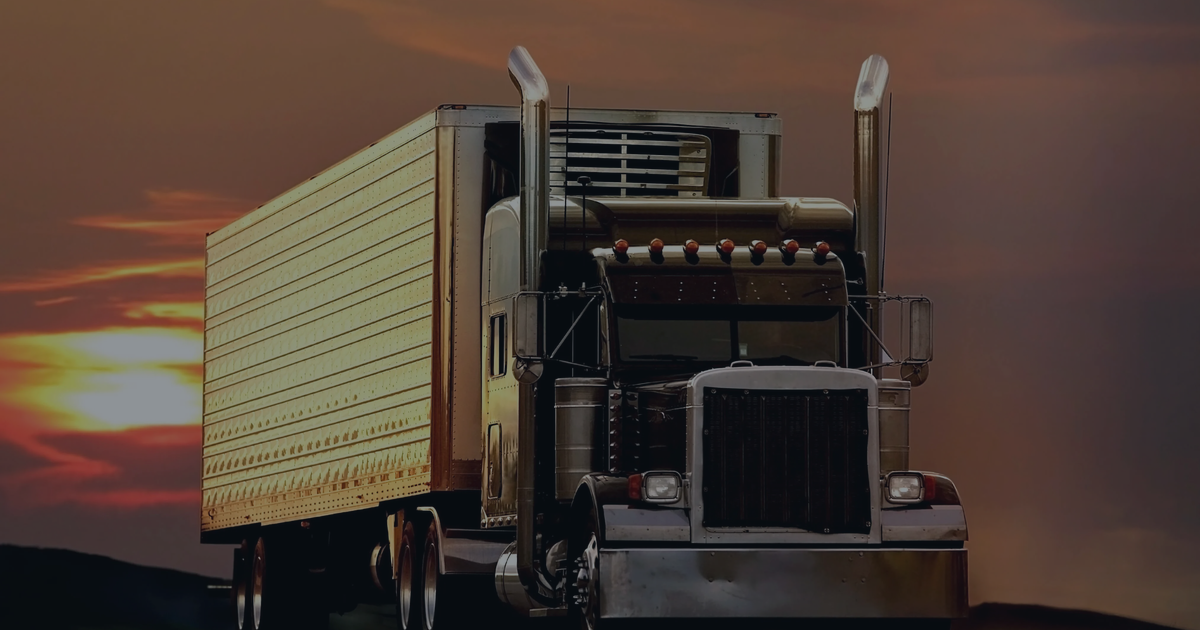
Dedicated trucking is the commitment of a truck and driver, or a fleet of trucks and drivers, to your business on an ongoing basis. Instead of booking individual loads on the spot market or through contract rates, a dedicated truck runs your routes, on your schedule, with a driver who knows your facilities, your freight, and your requirements.
It's the most predictable and controllable form of ground transportation, and for the right shipping profile, it's also the most cost-effective. Dedicated carriers operate under the same FMCSA hours-of-service rules (11-hour driving limit, 14-hour on-duty window) as any motor carrier under 49 CFR Part 395, but the schedule is built around your freight rather than the spot market.
How dedicated trucking works
You contract with a carrier or broker to provide one or more trucks exclusively for your freight. The truck is assigned to your routes, the driver learns your facilities, and the operation runs on your schedule. You're not competing for capacity on the spot market. You're not hoping your contract carrier has a truck available. The truck is yours.
10 reasons to consider dedicated trucking
1. Guaranteed daily capacity
No more searching for trucks. No more capacity crunches during peak season. Your dedicated truck is available every day, regardless of market conditions.
2. Consistent driver who knows your freight
The same driver handles your freight every day. They know your loading procedures, your receiving facilities, your products, and your expectations. No more explaining your requirements to a different driver every shipment.
3. Predictable costs
Dedicated trucking is typically priced as a weekly or monthly fee, giving you fixed transportation costs regardless of fuel surcharges, market rate swings, or capacity fluctuations. This makes budgeting straightforward.
4. Priority scheduling
Your truck runs on your schedule. First pickup at 6am? No problem. Saturday delivery? Built into the program. You control the timing, not the carrier's dispatch board.
5. Reduced damage
A dedicated driver who handles your freight daily knows how to load, secure, and handle it properly. Damage rates on dedicated programs are consistently lower than spot or LTL because the driver has product-specific experience.
6. Better customer service
Your customers see the same truck, the same driver, and the same level of service on every delivery. This consistency builds trust and strengthens your customer relationships.
7. Flexibility for route optimization
With a dedicated truck, you can adjust routes, add stops, and modify schedules without renegotiating individual load rates. The truck is yours to deploy as your business needs change.
8. Simplified logistics management
One truck, one driver, one point of contact. Instead of managing dozens of carrier relationships, rate negotiations, and load bookings, you manage one dedicated program.
9. Compliance and safety control
You can specify driver qualifications, equipment standards, maintenance schedules, and safety protocols that apply to your dedicated program. This is particularly valuable for hazmat and food-grade freight where compliance requirements are strict.
10. Total cost advantage at the right volume
For shippers with consistent daily or multi-weekly shipping volume on predictable routes, dedicated trucking often costs less per load than booking individual FTL shipments, because the carrier can optimize the truck's utilization across your routes without deadhead or downtime.
How dedicated pricing typically works
Dedicated contracts are priced on a fixed monthly fee plus a per-mile or per-load variable component. The fixed fee covers the truck, the driver's base pay, insurance, and a baseline number of operating days. The variable charges cover fuel (often as a separate fuel surcharge program tied to the DOE diesel index), additional miles beyond a baseline, accessorial services, and overtime hours.
A typical structure for a single dedicated tractor-trailer in chemical or industrial service:
- Fixed monthly fee: $14,000-$22,000 depending on equipment (dry van vs. tanker vs. specialty), driver qualifications (hazmat-endorsed, TWIC, tanker endorsement), and operating territory.
- Per-mile rate: $1.85-$3.50 above the monthly baseline, again varying by equipment and lane.
- Fuel surcharge: Indexed to weekly DOE diesel pricing, typically resetting Monday.
- Accessorials: Detention beyond two hours at pickup or delivery, after-hours service, tank washes, scale tickets.
Multi-truck dedicated fleets get volume pricing improvements but follow the same structure.
Volume thresholds when dedicated makes economic sense
Dedicated needs utilization. A truck that runs 20 hours a week costs the same as one that runs 50 hours a week. The break-even varies by lane, but operator rules of thumb:
- Four or more loads per week on the same lane. At this volume, dedicated typically beats spot or contract FTL on cost per load while delivering better service.
- 2,500-3,500 miles per week of utilization. Below this, the truck isn't earning enough to justify the fixed cost.
- Predictable demand patterns. Highly seasonal demand makes dedicated risky, you pay for the truck during slow periods. Steady year-round demand is the ideal fit.
- Specialized equipment that's hard to find on spot. Stainless tankers for food-grade, hazmat-endorsed drivers, lined trailers for specialty chemicals. When the spot market routinely takes 48-72 hours to find your equipment, dedicated pays for itself in capacity reliability alone.
Dedicated vs. spot vs. contract FTL
| Model | Capacity | Cost predictability | Driver familiarity | Best for |
|---|---|---|---|---|
| Spot | Variable, market-dependent | Lowest, swings with market | None | One-off loads, market arbitrage, low-volume shippers |
| Contract FTL | Improved over spot but not guaranteed | Better, but subject to capacity | Limited | Predictable lanes with moderate volume, 20-100 loads/year per lane |
| Dedicated | Guaranteed | Fixed | High, same driver every load | Daily/weekly volume, specialized freight, hazmat, customer-facing delivery |
Dedicated for liquid bulk and hazmat operations
Dedicated programs are common in liquid bulk and hazmat for reasons that don't apply to general freight. The truck and trailer often have to meet specific cargo compatibility requirements: dedicated stainless for food-grade, dedicated aluminum for petroleum, dedicated lined trailers for specific corrosive chemistries. The cost of switching trailer service (caustic wash, kosher wash, lab-tested cleanout) often exceeds $300-$1,500 per cleanout, which means swapping equipment between cargo types kills the per-load economics fast.
For hazmat lanes specifically, dedicated also solves the driver-qualification problem. A hazmat-endorsed CDL with tanker endorsement and TWIC clearance is a specialized credential, and spot-market drivers with full hazmat capability are routinely unavailable on short notice. Dedicated locks in a qualified driver before you need one.
Common dedicated trucking mistakes
Dedicated programs fail most often for predictable reasons. Three to watch for: locking in volume commitments you can't sustain through demand swings (the truck still bills monthly when your shipping drops), assuming the spot market price as the comparison benchmark (dedicated should be compared against the all-in cost of capacity plus damage plus service failures, not the headline rate per load), and skipping the carrier qualification step on specialty equipment (a dedicated truck means nothing if the carrier can't maintain a hazmat-endorsed driver or keep stainless equipment certified). The right dedicated program is built around your specific shipping pattern, not bolted onto a generic carrier template.
When dedicated trucking makes sense
Dedicated works best when you ship daily or multiple times per week on consistent routes, when your freight requires specialized equipment or handling, when driver familiarity with your facilities improves efficiency, when capacity reliability is more important than finding the absolute lowest rate on every load, and when you want fixed, predictable transportation costs.
How Total Connection sets up dedicated programs
We design dedicated trucking programs based on your routes, volume, equipment needs, and service requirements. Whether you need one dedicated truck or a fleet, we match the right carrier, the right equipment, and the right driver to your program. For hazmat and liquid bulk operations, we coordinate dedicated programs with carriers carrying the right endorsements, equipment specifications, and safety record for chemical freight.
Our related coverage: truckload and LTL services for shippers not yet at dedicated volume, the FTL vs LTL explainer for understanding when each mode applies, and how to find chemical tanker trucks for the specialized capacity question that often drives shippers toward dedicated.
Call 732-817-0401 or request a quote.
Frequently Asked Questions
What is dedicated trucking?
The commitment of a truck and driver to your business on an ongoing basis. The truck runs your routes, on your schedule, exclusively for your freight, not shared with other shippers.
How is dedicated different from FTL?
FTL books individual loads as needed. Dedicated commits a truck to your business ongoing. Dedicated provides guaranteed capacity, a consistent driver, and predictable costs that FTL can't match.
When does dedicated trucking make financial sense?
When you ship daily or multiple times per week on consistent routes. The truck needs enough utilization to justify the fixed cost. For sporadic or highly variable shipping, FTL or spot market is more appropriate.
Can Total Connection set up dedicated programs for hazmat?
Total Connection designs dedicated programs for hazmat shippers. We pair hazmat-certified carriers and endorsed drivers with compliance management for FMCSA, PHMSA, and 49 CFR Part 172-180 requirements specific to chemical freight.