
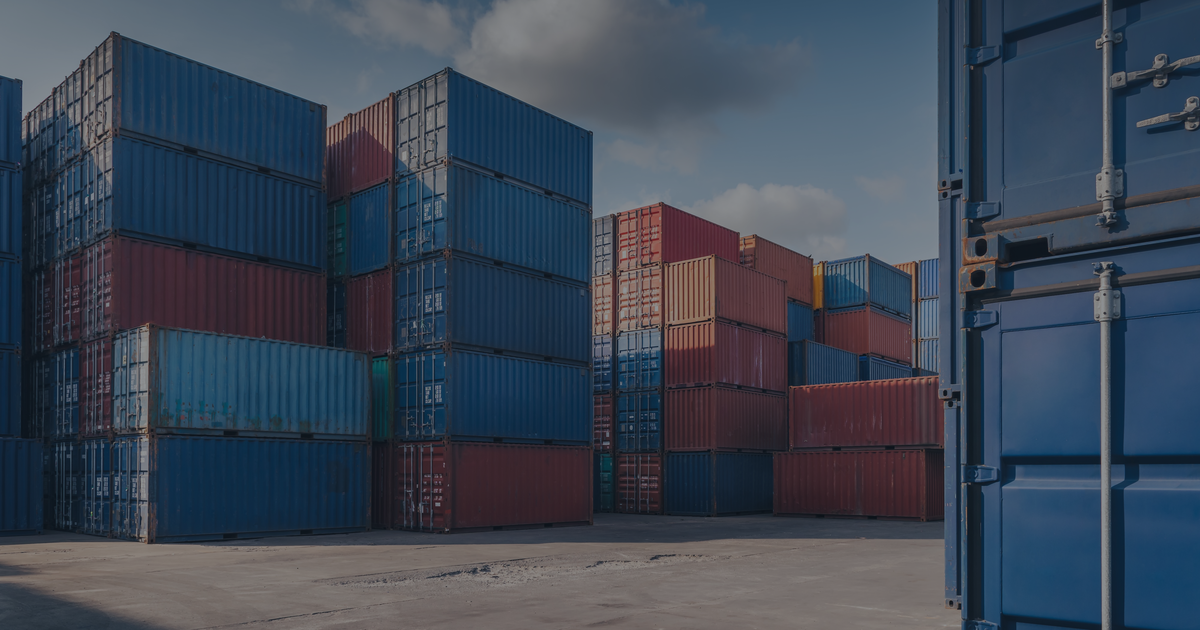
A high cube shipping container is a standard intermodal container that's one foot taller than a standard container. That extra foot of height, 9'6" instead of 8'6", adds approximately 344 cubic feet of cargo space to a 40-foot container. It sounds like a small difference, but for volume-sensitive freight, that extra space can mean fewer containers, fewer shipments, and lower total logistics cost.
High cube container dimensions
A standard 40-foot high cube container measures 40 feet long by 8 feet wide by 9 feet 6 inches tall (exterior). Internal dimensions are approximately 39'5" x 7'8" x 8'10", providing roughly 2,700 cubic feet of cargo space compared to 2,350 cubic feet in a standard 40-foot container.
High cube containers are also available in 20-foot and 45-foot lengths, though the 40-foot high cube (40HC) is by far the most common. Most ocean carriers' 40-foot container fleets are now predominantly high cube, standard-height 40-foot containers are becoming less common.
Weight capacity
The maximum gross weight of a high cube container is the same as a standard container, approximately 67,200 lbs (30,480 kg). Since the high cube container itself weighs slightly more due to the additional material, the net payload capacity is marginally lower, typically around 58,000-59,000 lbs versus 59,000-60,000 lbs for a standard container.
For volume-sensitive freight (light, bulky products), this weight difference is negligible because you'll fill the container's volume long before reaching the weight limit. For dense, heavy freight, the standard container's slightly higher payload capacity may matter.
When to use a high cube container
Volume-sensitive cargo. If your freight fills a standard container's volume before reaching its weight limit, a high cube gives you 15% more space per container. This can mean fewer containers per shipment and lower per-unit shipping costs.
Tall or stackable cargo. Products that are tall or can be stacked higher benefit directly from the extra foot of headroom. This includes palletized goods where an additional layer of cartons fits within the high cube height.
Household goods and personal effects. Moving containers almost always use high cube for the maximum volume per container.
When not to use a high cube
Dense, heavy cargo. If your freight reaches the weight limit before filling the volume, the extra cubic feet in a high cube container go unused and you're paying for space you can't use.
Road height restrictions. A high cube container on a standard chassis sits approximately 9 inches taller than a standard container. This total height, typically 13'6", can exceed clearance on some routes, bridges, and tunnels. Your drayage provider needs to verify route clearance for high cube containers.
Rail intermodal restrictions. Some rail intermodal routes have height restrictions that limit high cube container acceptance. Verify with your rail carrier before booking high cube containers for rail transport.
Drayage considerations for high cube containers
High cube containers require the same drayage equipment and processes as standard containers with one critical addition: height clearance verification. The extra foot of height puts the loaded container-on-chassis close to or at the maximum legal road height in most jurisdictions. Your drayage provider should verify route clearance before dispatch, especially for deliveries to facilities with low overhead structures, urban routes with bridge clearances, and areas with height-restricted overpasses.
Overweight high cube containers, those exceeding 80,000 lbs gross vehicle weight on the road, are a common issue in chemical and industrial imports. The combination of container weight, chassis weight, tractor weight, and cargo weight can easily exceed road limits even when the container is within its rated capacity. Total Connection assesses container weights before dispatch and coordinates transload when containers exceed road weight limits.
How Total Connection handles high cube container drayage
We manage high cube container drayage at every major US port with route clearance verification, weight assessment, and overweight management as standard parts of every move.
Call 732-817-0401 or request a quote.
Frequently Asked Questions
How much taller is a high cube container?
One foot taller than standard, 9'6" versus 8'6" exterior height. This adds approximately 344 cubic feet to a 40-foot container, a 15% volume increase.
Can a high cube container carry more weight?
No. The maximum gross weight is the same as a standard container (approximately 67,200 lbs). The high cube container itself weighs slightly more, so the net payload is marginally lower. High cube containers benefit volume-limited freight, not weight-limited freight.
Are there road height restrictions for high cube containers?
Yes. A high cube on a standard chassis sits approximately 13'6" tall, which approaches or reaches maximum legal road height. Route clearance must be verified, especially for routes with low bridges, tunnels, or overhead structures.
Are 40-foot high cube containers standard now?
Effectively yes. Most ocean carriers' 40-foot fleets are predominantly high cube. Standard-height 40-foot containers are becoming less common. 20-foot containers remain standard height.