
.png)
Methanol (UN 1230) is a Class 3 flammable liquid, Packing Group II, with a flash point of 11°C (52°F) that moves in DOT 407 stainless steel tankers at 6,500 to 7,000 gallons per load under 49 CFR Parts 172 and 173. It carries a subsidiary 6.1 toxic hazard, so a bulk load needs both a FLAMMABLE placard and a TOXIC placard, not just the red diamond most shippers expect. Methanol is produced at Gulf Coast plants in Texas and Louisiana and runs by tanker to the Midwest for formaldehyde and resin production, fuel blending, and biodiesel. Its low flash point, high vapor pressure, and water solubility change the equipment, the loading protocol, and the carrier vetting in ways that separate a clean methanol move from a generic flammable-liquid move.
Methanol Regulatory Profile: UN 1230, Class 3, and Packing Group II
Methanol ships under proper shipping name METHANOL or METHYL ALCOHOL, UN 1230, hazard class 3 (flammable liquid), with a subsidiary hazard of 6.1 (toxic). Its packing group is II, the moderate-to-high tier that covers most industrial solvents. The controlling reference is the entry in 49 CFR 172.101, and the physical numbers drive every downstream decision:
- UN number and class: UN 1230, Class 3 flammable liquid, subsidiary hazard 6.1 toxic, Packing Group II.
- Flash point: 11°C (52°F), which sits below ambient temperature on virtually every loading dock in North America for most of the year.
- Boiling point and vapor pressure: 64.7°C (148.5°F) boiling point with a vapor pressure of 128 mmHg at 20°C, both of which make vapor control a requirement rather than a preference.
- Exposure and response: ACGIH TLV-TWA of 200 ppm and ERG Guide 131 (flammable toxic liquid), reflecting the combined flammable and toxic profile.
The toxic subsidiary is where shippers get caught. That 6.1 hazard is what assigns methanol ERG Guide 131, flammable toxic liquid, rather than the plain Guide 127 used for ordinary flammable liquids, and it carries straight through to the placards and paperwork. The proper shipping name on the paper must read METHANOL, not "methyl alcohol solution" or a trade name. Getting the proper shipping name, UN number, class, packing group, and subsidiary hazard right on the Bill of Lading is the first thing a DOT inspector checks at a roadside stop.
Equipment Requirements: Why Methanol Needs a Stainless Steel DOT 407
Methanol moves in a DOT 407 tanker, the atmospheric-pressure spec built for bulk Class 3 liquids, at 6,500 to 7,000 gallons per load under 49 CFR 173.242. For dedicated methanol service, 316L stainless steel is the construction standard. Aluminum is common in flammable-liquid fleets, but methanol's behavior in long-term dedicated aluminum service raises contamination concerns for buyers who hold tight purity specs, so stainless is the safer call when the same trailer runs methanol load after load.
Vapor handling is the other defining requirement. With a flash point of 11°C, any ambient loading rack in summer is well above the point where methanol gives off ignitable vapor, so vapor recovery equipment is standard and many EPA-regulated racks require it. Some operators run a nitrogen blanket to suppress oxidation in the vapor space during loading. Insulation and heat are not a factor for North American moves, since methanol freezes at -98°C and stays liquid in any climate the lower 48 will throw at it. Choosing the wrong material or skipping vapor recovery is covered in more depth in our guide to tanker types and selection, and the team that books the load should confirm the trailer's prior-load history before it shows up at your rack.
Loading and Unloading Methanol Safely
Loading is the most dangerous phase of any liquid bulk move, and methanol concentrates that risk. Bottom-loading is preferred for Class 3 because it eliminates the open-dome fill that releases vapor and invites a static spark. A closed-loop system with a vapor recovery unit captures displaced vapor and is mandatory at many EPA-regulated loading racks. Before a hose ever connects, grounding and bonding cables go on, with cable resistance verified under 10 ohms to prevent a static discharge from igniting the vapor space.
Personnel protection is straightforward and non-negotiable: a face shield, chemical-resistant gloves in nitrile or butyl rubber, an apron, and crews positioned upwind of the fill point. Methanol is fully water-soluble and spreads fast, so spill response means immediate containment with a non-combustible absorbent and keeping the product away from storm drains, where it travels and disperses before anyone can recover it. Unloading is typically a pump or pressure transfer; in enclosed receiving buildings, watch for pressure buildup. The same discipline that governs every bulk move applies here, and the step-by-step protocols in our piece on liquid bulk loading and unloading safety map directly onto a methanol rack. Driver hazmat training under 49 CFR 177.816 is the floor, not the ceiling, for who should be on the dock.
Methanol Placarding and Shipping Paper Requirements
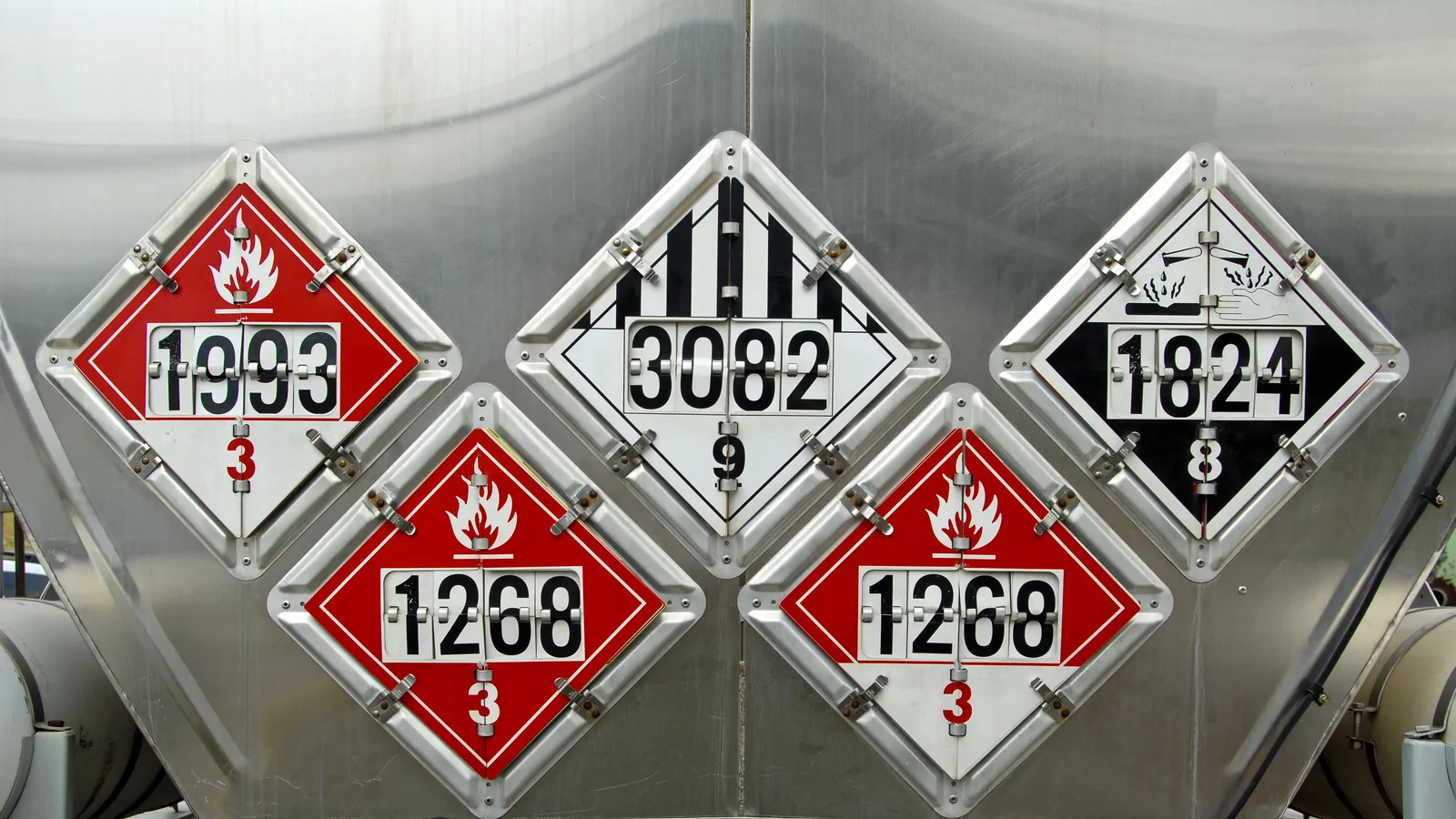
The primary placard is FLAMMABLE, the red Class 3 diamond. The mistake that draws fines is stopping there. Bulk methanol also requires a POISON or TOXIC placard for the subsidiary Class 6.1 hazard under 49 CFR 172.505, and a load running only the flammable placard is out of compliance the moment it leaves the gate. The shipping paper must show UN 1230, METHANOL, 3, PG II, 6.1 in proper DOT sequence per 49 CFR 172.202, with the hazmat certification language required by 49 CFR 172.204.
Emergency response information rides with the load. Methanol falls under ERG Guide 131, flammable toxic liquid, with an initial isolation distance of 60 meters for a spill and 330 meters in all directions for a fire. Those numbers belong in the driver's hands, not just in a file. Methanol is one of the most frequently moved Class 3 commodities in the country, which means inspectors see it constantly and know exactly what a correct methanol BOL should say. The broad framework for compliant ground moves is laid out in our overview of hazmat trucking regulations, and methanol is a textbook case for why the subsidiary hazard cannot be an afterthought.
Key Lanes and Typical Markets for Methanol
Primary methanol production runs along the Gulf Coast, concentrated in Beaumont and Freeport in Texas and Geismar and Plaquemine in Louisiana. From there the freight fans out: to the Midwest for formaldehyde and resin production through the St. Louis and Chicago corridors, to the Texas Gulf Coast for MTBE and fuel blending, and to the West Coast for biodiesel and fuel-grade methanol. The Gulf-to-Midwest corridor tightens hard during formaldehyde plant turnarounds, when a 2 to 3 week booking lead time is the difference between covering a load and chasing spot capacity at a premium.
Demand is seasonal in a predictable way. Biodiesel methanol peaks in spring and fall, while MTBE blending tracks gasoline blending margins through the driving season. For long-haul volume that does not justify a fleet of tankers, rail tank car is the workhorse, and ISO tanks handle ocean export through Gulf and East Coast ports. The point for a shipper is that methanol rarely moves in one mode forever; the same commodity often needs a tanker for the regional pull, a rail car for the long haul, and an ISO tank for the export leg, which is exactly the kind of multi-mode coverage a full forwarder should hold under one roof.
Common Methanol Shipping Mistakes
Most methanol problems are paperwork and equipment discipline, not exotic chemistry. The recurring failures show up on nearly every audit:
- Dropping the Class 6.1 subsidiary placard and BOL notation. This is among the most common PHMSA paper errors on methanol moves, and it is a citable violation on the first inspection regardless of intent.
- Skipping vapor recovery at the loading rack. EPA and many state air-quality rules require vapor capture for Class 3 loading, and a methanol flash point of 11°C makes the requirement a safety issue, not just a permit line item.
- Using a carrier with no methanol-specific experience. A driver who does not respect the 11°C flash point and how fast methanol vapor spreads is the person creating the avoidable loading incident.
- Ignoring the tanker's prior load. Aromatic solvent residue from the last haul contaminates methanol purity and can fail a formaldehyde or biodiesel producer's spec, turning a delivered load into a rejected one.
- Not distinguishing fuel-grade from chemical-grade on the BOL. Destination specifications differ, and a grade mismatch on paper leads to a costly rejection at the receiving terminal.
International and Intermodal Methanol Shipping
For ocean export, methanol moves in a 20-foot ISO tank at roughly 5,500 to 6,340 gallons, built to meet IMDG Class 3 requirements for UN 1230. Under the IMDG Code it carries Class 3, PG II, subsidiary 6.1, and Stowage Category B, meaning it stows away from living quarters. The intermodal advantage is that an ISO tank moves from plant to port to vessel to overseas consignee without transferring the product, which protects purity and cuts handling risk.
Air freight is largely off the table for commercial volume. Under IATA Dangerous Goods Regulations, methanol is forbidden on passenger aircraft because of the combined Class 3 and Class 6.1 PG II designation, and cargo aircraft moves are limited to small quantities with operator approval. Export documentation is its own discipline: an NRA tariff filing, an AES filing in AES Direct, and a customs entry at destination. The HS code for anhydrous methanol is 2905.11.20. A shipper moving methanol abroad is really managing a customs and documentation problem on top of a hazmat problem, which is why coordinating the tanker, the rail leg, the ISO tank, and the export paper through one team beats stitching four vendors together.
How Total Connection Moves Methanol
Total Connection has built its business around the freight most forwarders will not touch, and methanol is squarely in that lane. We are an independent, non-asset forwarder, so we pick the right DOT 407, the right 316L stainless trailer, and the carrier with real methanol experience for your specific load rather than whatever is sitting in a yard. The same team handles the regional tanker pull, the rail tank car, the ISO tank export, and the customs entry, so you are not managing four vendors for one commodity. For the full scope of equipment, compliance, and lane coverage, see our liquid bulk chemical logistics services, our breakdown of tanker types and selection, the field-tested protocols in our guide to liquid bulk loading and unloading safety, and the compliance framework in our overview of hazmat trucking regulations. To price a specific methanol lane or commodity, request a quote and we will route it end to end.
Frequently Asked Questions
What UN number and hazard class is methanol?
Methanol ships under UN 1230, Class 3 flammable liquid with a subsidiary hazard of Class 6.1 toxic, Packing Group II. The flash point is 11°C (52°F) and it carries ERG Guide 131 (flammable toxic liquid). Both the FLAMMABLE and POISON/TOXIC placards are required for bulk shipments under 49 CFR 172.505.
What type of tanker is required for methanol shipping?
Methanol moves in a DOT 407 atmospheric-pressure tanker at 6,500 to 7,000 gallons per load. For dedicated methanol service, 316L stainless steel construction is the industry standard. Aluminum tankers are common in flammable-liquid fleets but can raise contamination concerns in long-term dedicated methanol service due to purity specifications for chemical-grade applications.
Why does methanol require both flammable and toxic placards?
Methanol carries a primary Class 3 flammable liquid classification and a subsidiary Class 6.1 toxic hazard. Bulk methanol shipments must display both the red FLAMMABLE placard and the white POISON/TOXIC placard. Shipping with only the flammable placard is a citable DOT violation caught on the first roadside inspection. The subsidiary hazard also changes the ERG guide from 127 (ordinary flammable) to 131 (flammable toxic).
What are the most common methanol shipping mistakes?
The most frequent compliance failures include dropping the Class 6.1 subsidiary placard and BOL notation (a common PHMSA violation), skipping vapor recovery at loading racks despite EPA requirements, using carriers without methanol-specific experience, ignoring prior-load contamination that fails chemical-grade purity specs, and failing to distinguish fuel-grade from chemical-grade on shipping papers.
Can methanol be shipped in ISO tanks for ocean export?
Methanol ships in 20-foot ISO tanks at approximately 5,500 to 6,340 gallons for ocean export under IMDG Class 3, PG II, subsidiary 6.1, Stowage Category B. ISO tanks allow methanol to move from plant to port to vessel to overseas consignee without product transfer, protecting purity and reducing handling risk. Air freight is prohibited on passenger aircraft under IATA Dangerous Goods Regulations.
Frequently Asked Questions
What hazard class is methanol for shipping?
Methanol is classified as UN 1230, Hazard Class 3 (Flammable Liquid) with a subsidiary hazard of 6.1 (Toxic) under DOT 49 CFR Part 172. Its packing group is II, reflecting a moderate-to-high flammable hazard with a flash point of 11°C (52°F). Bulk shipments require both the FLAMMABLE placard and a POISON or TOXIC placard under 49 CFR 172.505.
What tanker equipment is used for methanol?
Methanol moves in DOT 407 stainless steel tankers at 6,500 to 7,000 gallons per load under atmospheric pressure. Stainless steel 316L is the construction standard for dedicated methanol service because of methanol's chemical compatibility profile. Vapor recovery equipment is standard at loading racks given methanol's flash point of 11°C (52°F), which sits below ambient temperature across most North American lanes year-round.
What placards are required for methanol?
Methanol requires the FLAMMABLE placard (red diamond, Class 3) as the primary placard and a POISON or TOXIC placard for the subsidiary Class 6.1 hazard under 49 CFR 172.505 for bulk shipments. The shipping paper must include UN 1230, METHANOL, 3, PG II, 6.1 in proper DOT format. The applicable emergency response guide is ERG 131 for flammable toxic liquids, with an initial isolation distance of 60 meters for spills.
What are the main methanol shipping lanes in the US?
Primary methanol production runs along the Gulf Coast (Beaumont and Freeport in Texas; Geismar and Plaquemine in Louisiana), with distribution lanes to the Midwest for formaldehyde and resin production and to the Texas Gulf Coast for MTBE blending. The Gulf-to-Midwest corridor tightens during formaldehyde plant turnarounds, making a 2 to 3 week advance booking advisable at peak. ISO tanks move methanol for ocean export through Gulf and East Coast ports.
Can methanol be shipped by air?
Methanol is forbidden on passenger aircraft under IATA Dangerous Goods Regulations because of its combined Class 3 (flammable) and Class 6.1 (toxic) designation at Packing Group II. Cargo aircraft transport is limited to specific quantity thresholds and requires operator approval. For commercial volumes, DOT 407 tanker truck, rail tank car, or ISO container by ocean are the practical modes for methanol moves.