
.png)
Nucleating agents and polymer clarifiers are specialty additives that control the crystallization process in semi-crystalline polymers, primarily polypropylene (PP) and polyethylene (PE). By providing nucleation sites for crystal formation during the cooling phase of polymer processing, they improve the physical and optical properties of the finished plastic product in ways that directly affect manufacturing efficiency, product performance, and end-use applications.
These additives work at very low concentrations, typically 0.1 to 0.3% by weight, but their impact on polymer properties is dramatic. A polypropylene resin without nucleating agents produces large, irregular crystal structures that scatter light and limit mechanical performance. Add the right nucleating agent and the same resin becomes stiffer, cycles faster in the mold, and achieves better dimensional stability. Add a clarifier and it becomes transparent enough to compete with polycarbonate at a fraction of the cost.
What nucleating agents do
When a semi-crystalline polymer cools from its melt state, crystals form around natural nucleation sites: impurities, catalyst residues, or other heterogeneities in the polymer. This natural crystallization is slow, uncontrolled, and produces large spherulitic crystal structures that scatter light and limit the material's mechanical properties.
Nucleating agents provide thousands of additional nucleation sites distributed uniformly throughout the polymer melt. This changes the crystallization process fundamentally. Instead of a few large crystals, you get many small ones. The result is faster crystallization, higher crystallization temperature (which means faster cycle times in injection molding and extrusion), more uniform crystal structure, improved stiffness without sacrificing impact resistance, better dimensional stability and lower warpage, and higher heat deflection temperature.
The most common nucleating agents for polypropylene include sodium benzoate, dibenzylidene sorbitol (DBS) derivatives, phosphate esters, and carboxylic acid salts. Each type produces a different crystal structure and property profile. Selecting the right nucleating agent depends on the specific application requirements and processing conditions.
What polymer clarifiers do
Clarifiers are a specialized subset of nucleating agents that produce extremely small crystals, so small (typically less than 0.4 microns) that they don't scatter visible light. The result is a transparent or near-transparent plastic that would otherwise be translucent or opaque.
Clarified polypropylene has transformed packaging, medical devices, and consumer products over the past two decades. Before clarifiers, achieving transparency in rigid packaging meant using polycarbonate, PET, or polystyrene, all more expensive than PP and each with processing or performance limitations. Clarified PP delivers transparency at commodity resin cost with excellent stiffness, chemical resistance, and steam sterilization compatibility.
The most widely used clarifiers are derivatives of dibenzylidene sorbitol (DBS), including dimethyl dibenzylidene sorbitol (DMDBS) and bis(3,4-dimethylbenzylidene) sorbitol (DMDBS). These compounds are effective at very low concentrations and compatible with most polypropylene grades and processing conditions.
Manufacturing processes for nucleated and clarified polymers
Nucleating agents and clarifiers are typically added during polymer compounding, where they're mixed into the base resin along with other additives like stabilizers, colorants, and processing aids. The compounding process must ensure uniform dispersion of the nucleating agent throughout the polymer matrix, as uneven distribution creates inconsistent properties in the finished product.
Masterbatch is the most common delivery format. The nucleating agent is pre-dispersed at high concentration (typically 10-20%) in a carrier resin, then let down at the appropriate ratio during final compounding or processing. This improves dispersion quality and makes dosing more accurate and repeatable.
Some processors add nucleating agents directly at the extruder or injection molding machine using liquid injection systems or dry blending. This reduces inventory complexity but requires more sophisticated equipment and process control to maintain consistent concentration and dispersion.
Industry applications and use cases
Packaging. Clarified polypropylene dominates transparent food containers, microwavable cups and bowls, storage products, and blister packaging. The combination of clarity, stiffness, microwave safety, and cost makes it the preferred material for rigid food packaging where transparency matters. Nucleated (non-clarified) PP is used in opaque packaging applications where improved stiffness allows downgauging and material cost reduction.
Automotive. Nucleated polypropylene is standard in automotive interior components (instrument panels, door panels, console components), under-hood parts where higher heat deflection temperature is required, and bumper systems where the stiffness-to-impact balance matters. Faster crystallization also means faster cycle times, which directly reduces the cost per part in high-volume automotive production.
Medical devices and packaging. Clarified PP is extensively used in medical applications that require transparency and autoclave sterilization compatibility. IV fluid containers, diagnostic test devices, syringe barrels, and medical packaging all use clarified PP formulations. The combination of clarity, chemical resistance, and steam sterilization capability makes it ideal for single-use medical devices. For more on shipping medical-grade polymer additives, see our guide to polymer additive shipping in liquid bulk.
Consumer products and housewares. Transparent storage containers, food prep tools, small appliance components, and consumer electronics housings use clarified PP where transparency, durability, and dishwasher safety are required at consumer price points.
Fibers and films. Nucleating agents improve the clarity, strength, and processing efficiency of polypropylene films used in packaging, labels, and industrial applications. In fiber applications, they improve tenacity and processing speed in carpet, nonwovens, and textile fibers.
Storage and handling requirements
Nucleating agents and clarifiers are moisture-sensitive specialty chemicals. Liquid formulations must be stored in sealed containers at controlled temperatures to prevent crystallization, precipitation, or degradation. Most products have recommended storage temperature ranges, typically 60-80°F, outside of which they may solidify, separate, or lose effectiveness.
Exposure to moisture can cause hydrolysis in some nucleating agent chemistries, particularly phosphate esters and certain carboxylic acid derivatives. Tanks and transfer equipment must be verified dry before loading, and product should be kept sealed during storage to minimize moisture exposure.
Many nucleating agent concentrates have limited shelf life, typically 6-12 months under proper storage conditions. After that period, the active ingredient may degrade or the dispersion may destabilize, affecting nucleation efficiency in the finished polymer product. Inventory rotation and first-in-first-out (FIFO) practices are essential for maintaining product quality.
Shipping nucleating agents and clarifiers by liquid bulk tanker
Liquid nucleating agents and clarifier concentrates ship by tanker truck from specialty chemical manufacturers to polymer compounders and masterbatch producers. These are high-value, low-volume specialty chemicals with demanding logistics requirements that go beyond standard liquid bulk freight handling.
Purity is critical. Nucleating agents work at very low concentrations, typically 0.1-0.3% by weight in the final polymer product. At these concentrations, even trace contamination from prior cargo can affect nucleation efficiency, crystal size distribution, and optical clarity in the finished product. A tanker that previously carried a plasticizer, surfactant, or other polymer additive may leave residues that interfere with nucleation or introduce color or odor into what should be a crystal-clear, odor-free clarified PP product. Tank wash verification and documented prior cargo records are mandatory on every load. For more on managing cross-contamination risks with other polymer additives, see our article on plasticizers and shipping logistics.
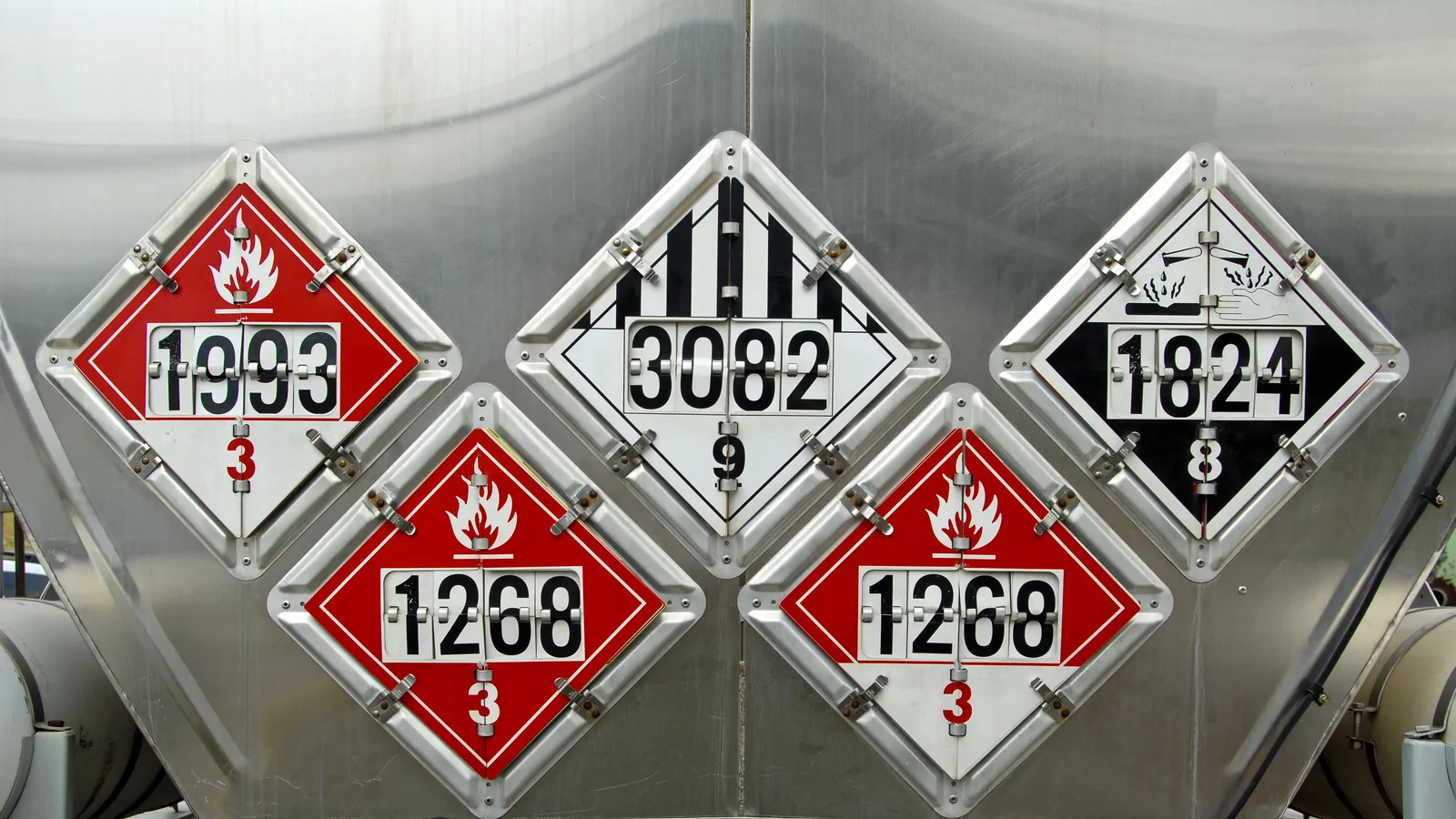
Hazmat classification. Most nucleating agents and clarifiers are non-hazardous for shipping purposes, though some formulations with organic solvents or specific reactive chemistries may carry DOT classifications. Each product must be verified against its Safety Data Sheet (SDS) for applicable hazmat classes and shipping requirements. When hazmat classifications apply, carriers must hold appropriate DOT authority and drivers must have current CDL hazmat endorsements. For guidance on managing hazmat compliance across chemical logistics, see our overview of hazmat trucking regulations.
Temperature management. Many nucleating agent formulations are temperature-sensitive. Some products crystallize or precipitate at low temperatures and require heated or insulated tanker equipment during winter months to maintain pumpability at delivery. Others may degrade at elevated temperatures and should not be exposed to prolonged heat during transport. Carrier selection must account for the specific temperature requirements of each product, and real-time temperature monitoring during transit is recommended for high-value or temperature-critical shipments.
Equipment compatibility. Stainless steel tanks are standard for nucleating agents and clarifiers. Some products with acidic or alkaline formulations may require specific liner materials or passivated stainless steel to prevent reactivity during transport. Equipment compatibility should be verified before dispatch to prevent product contamination or tank corrosion.
How Total Connection handles nucleating agent and clarifier logistics
We ship specialty polymer additives including nucleating agents, clarifiers, and related performance additives with the purity standards, temperature control, and equipment cleanliness that these precision chemicals demand. Our carrier network includes operators who specialize in high-purity specialty chemical transport with documented tank wash protocols, prior cargo verification, and temperature-managed equipment.
Every nucleating agent shipment gets dedicated account management, equipment matching based on product specifications, verified tank cleanliness with prior cargo documentation, temperature monitoring where required, and delivery coordination with your production schedule.
Call 732-817-0401 or request a quote for your nucleating agent and clarifier logistics.
Frequently Asked Questions
What's the difference between a nucleating agent and a clarifier?
Both control crystallization, but clarifiers produce extremely small crystals that don't scatter visible light, making the plastic transparent. Standard nucleating agents improve mechanical properties without necessarily achieving transparency.
Are nucleating agents hazardous materials?
Most are non-hazardous. Some formulations with organic solvents may carry DOT classifications. Verify with the product SDS.
Why are purity requirements so strict?
Nucleating agents work at very low concentrations (0.1-0.3% by weight). Contamination at even trace levels can disrupt nucleation efficiency and affect the finished product's mechanical and optical properties.