
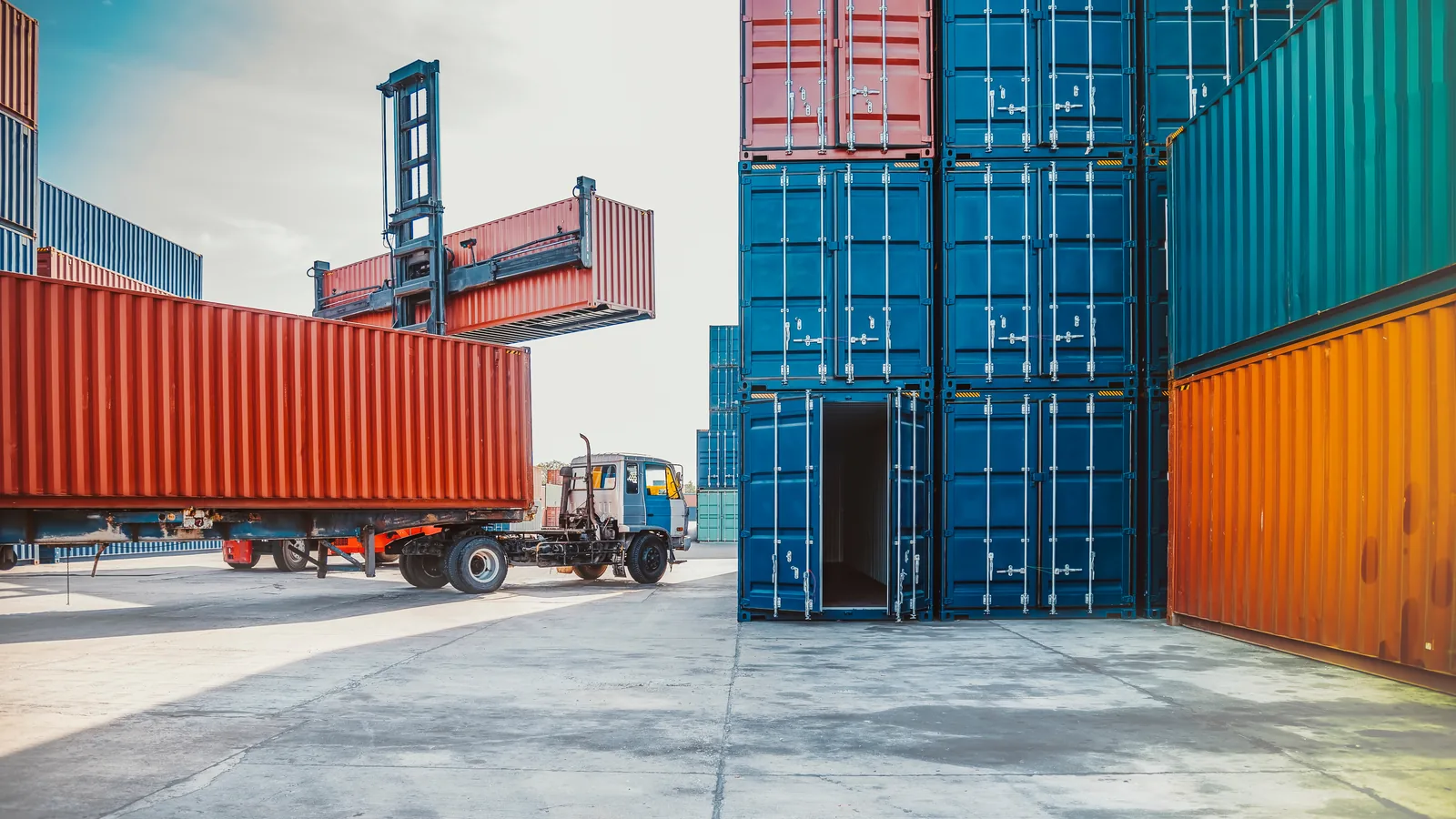
A shipping container yard, often abbreviated CY, is a designated area where shipping containers are stored, staged, inspected, and managed between transportation legs. Container yards are the staging areas that keep the global container shipping system moving. Without them, ports would overflow, containers would have nowhere to go between discharge and delivery, and the entire intermodal system would gridlock.
For shippers who manage international container freight, understanding how container yards work is essential for managing drayage costs, avoiding storage charges, and keeping your supply chain flowing. Whether you're coordinating imports through the Port of NY/NJ, Houston, or LA/Long Beach, every container move involves at least one yard interaction.
Types of container yards
On-dock container yards
Located within the marine terminal itself. Containers are stacked here after being discharged from the vessel and before being picked up by drayage trucks. On-dock yards are managed by the terminal operator and are where demurrage charges accrue if containers aren't picked up within the allotted free time.
On-dock yards operate under strict security protocols. All drivers must have valid TWIC credentials to enter the terminal, and appointment systems control the flow of trucks to prevent congestion. During peak periods, on-dock yards can stack containers six high, making retrieval dependent on yard management and equipment availability.
Off-dock container yards
Located near but outside the port terminal. These facilities provide overflow storage when on-dock yards are congested, pre-staging for export containers before they're gated into the terminal, and temporary storage for import containers that have been picked up from the terminal but aren't ready for final delivery. Off-dock yards charge their own storage fees, but these are typically lower than terminal demurrage rates.
Off-dock yards offer more flexible appointment scheduling and are often the staging point for container freight stations (CFS) operations where LCL shipments are consolidated or deconsolidated.
Inland container depots (ICDs)
Container yards located inland, away from the port. ICDs serve as regional container staging points, often co-located with rail intermodal facilities. Containers can be drayed from the port to an ICD for storage, customs clearance, or distribution to final destinations in the surrounding region.
Inland depots are particularly valuable for shippers in markets 200+ miles from the port. Rather than paying for multiple days of chassis rental and risking detention charges, containers can be moved via rail to an ICD, then drayed short distances to final delivery points.
Empty container yards
Dedicated yards for storing empty containers awaiting repositioning or reuse. Ocean carriers maintain empty container yards near major ports to stage empties for export loading. Returning empty containers to the correct yard is part of the drayage process, and returning to the wrong yard can incur redirect charges.
Empty yards also serve as equipment pools where shippers can pick up containers for export stuffing. Most carriers allow 3-5 days of free time to pick up an empty, move it to your facility, load it, and return it to the terminal for export.
How shipping container yard operations work
Container yard operations are managed through terminal operating systems (TOS) that track every container's location, status, and movement history. When a vessel discharges containers, they're offloaded to the on-dock yard and stacked in designated blocks based on size, type, and destination.
Yard planning determines container placement. High-priority containers destined for immediate pickup are placed in accessible positions. Containers with longer dwell times are stacked deeper in the yard. When a drayage truck arrives to pick up a container, the yard's reach stackers or top handlers retrieve it from the stack and place it on the truck's chassis.
Export operations work in reverse. Containers arrive at the yard via drayage, are inspected for damage and proper sealing, then staged in the yard until the vessel is ready to load. Yard planners coordinate with vessel stow plans to ensure containers are positioned for efficient loading sequences.
Container yard storage fees and charges breakdown
Most container yards charge daily storage fees after an initial free time period. Understanding the fee structure is essential for cost control.
On-dock demurrage charges
On-dock yards charge demurrage, which is assessed by the ocean carrier or terminal. Standard free time for imports is typically 4-6 days, but this varies by carrier, port, and service contract. After free time expires, demurrage charges escalate on a tiered schedule:
- Days 1-3: $150-$200 per container per day
- Days 4-6: $250-$350 per container per day
- Days 7+: $400+ per container per day
During periods of port congestion, carriers may extend free time, but this is not guaranteed. Demurrage charges continue to accrue until the container is picked up from the terminal, even if it's moved to an off-dock yard after the initial free time has expired.
Off-dock storage rates
Off-dock yards charge their own storage rates, which vary by facility and location but are typically $25-$75 per day per container, lower than terminal demurrage but still significant over multiple days. Some off-dock facilities offer per-diem rates that include basic handling, while others charge separately for each gate move, lift, or inspection.
Chassis and equipment fees
If you pick up a container on a terminal-provided chassis, you'll also incur chassis usage fees (also called per-diem charges). These run $15-$35 per day and accrue separately from container demurrage. Returning the chassis within the free time period (typically 3-5 days) avoids these charges.
The most effective way to minimize container yard storage charges is proactive drayage management: scheduling pickups and deliveries to minimize the time containers spend in yards, and returning empties promptly to avoid per-diem charges.
How container yards fit into drayage operations
Every drayage move touches a container yard at some point. Import containers are picked up from the terminal's on-dock yard. Export containers are staged at an off-dock yard before being gated into the terminal. Empty containers are returned to designated empty yards after the freight is unloaded.
Understanding which yard your container is at, what the storage charges are, and what the operational hours and appointment requirements are is essential for managing drayage costs. Your drayage provider should be tracking this for you and optimizing the timing of pickups and returns to minimize storage exposure.
Yard-related delays are one of the most common sources of drayage inefficiency. Long truck queues at on-dock yards during peak hours, appointment availability constraints, and yard equipment breakdowns can all add hours to what should be a straightforward container pickup. Experienced drayage providers use real-time yard data and historical patterns to schedule moves during off-peak windows and avoid the worst congestion.
Container yard best practices for shippers
Successful container yard management requires proactive communication and planning. Always confirm which yard your container will be at before scheduling pickups. Verify that your drayage carrier has the correct yard location, operating hours, and any special appointment requirements. Many terminals now require advance appointments 24-48 hours before pickup, and showing up without an appointment can result in a truck being turned away at the gate.
Monitor your containers' free time status closely. Set internal alerts for 2-3 days before free time expires so you have buffer time to arrange pickups even if your primary delivery window falls through. For high-value shipments or temperature-controlled cargo, consider pre-arranging off-dock storage as a contingency plan to avoid terminal demurrage escalation.
Maintain clear documentation of all yard-related charges. Demurrage invoices, off-dock storage receipts, and chassis per-diem charges should be reconciled against your shipment records to catch billing errors. Incorrect yard assignments, miscalculated free time, or charges for containers that were picked up on time are common disputes that require documentation to resolve.
How Total Connection manages container yard logistics
We track container locations, storage charges, and free time windows across all yards involved in your drayage moves. Our team schedules pickups, deliveries, and empty returns to minimize your yard storage exposure and avoid unnecessary charges.
Our systems integrate with terminal operating platforms to monitor container availability in real time, coordinate appointments during optimal time windows, and flag containers approaching free time expiration. We also maintain relationships with off-dock yards near every major port we serve, giving us flexibility to stage containers when on-dock congestion would otherwise trigger costly delays.
When disruptions occur—whether from terminal equipment breakdowns, chassis shortages, or unexpected customs holds—we have contingency protocols and alternate yard options ready to deploy. Our operations team monitors yard conditions throughout the day and proactively adjusts pickup schedules to avoid peak-hour congestion and maximize productivity for every container move.
Call 732-817-0401 or request a quote.
Frequently Asked Questions
What is a container yard?
A facility where shipping containers are stored, staged, inspected, and managed between transportation legs. Container yards can be on-dock (within the terminal), off-dock (near the port), inland depots, or empty container staging areas.
What's the difference between on-dock and off-dock container yards?
On-dock yards are within the marine terminal, managed by the terminal operator, and subject to demurrage charges. Off-dock yards are separate facilities near the port that provide overflow storage, pre-staging, and temporary storage at typically lower rates.
How much do container yard storage charges cost?
On-dock demurrage is $150-$300+ per day and escalates after initial free time expires. Off-dock storage typically runs $25-$75 per day per container. Chassis per-diem charges add $15-$35 per day. All charges accrue after initial free time periods expire.
How long is free time at a shipping container yard?
Free time for import containers at on-dock yards is typically 4-6 days, though this varies by carrier, port, and service contract. Export containers usually have 3-5 days of free time to pick up an empty, load it, and return it to the yard. Off-dock yards set their own free time policies.
How does Total Connection minimize container yard charges?
We track container locations and free time across all yards, schedule pickups and deliveries to minimize storage duration, coordinate appointments during optimal time windows, and return empties promptly to avoid per-diem charges. Our systems flag containers approaching free time expiration so we can act before charges begin accruing.