
.png)
Agricultural chemicals keep the global food supply running. Pesticides, herbicides, fungicides, liquid fertilizers, without them, crop yields collapse. But shipping agrochemicals is not the same as shipping standard freight. Most agricultural chemicals are classified as hazardous materials, which means DOT-regulated carriers, specific documentation, proper placarding, and equipment that's been properly washed and certified for each product.
Add the seasonal pressure (farmers need their chemicals before planting season, not after) and agrochemical logistics becomes a timing and compliance challenge that general freight brokers routinely fumble.
For shipper-led capacity and hazmat-fluent execution on this freight, see Total Connection's liquid bulk and chemical logistics service.
Why agricultural chemical shipping requires specialists
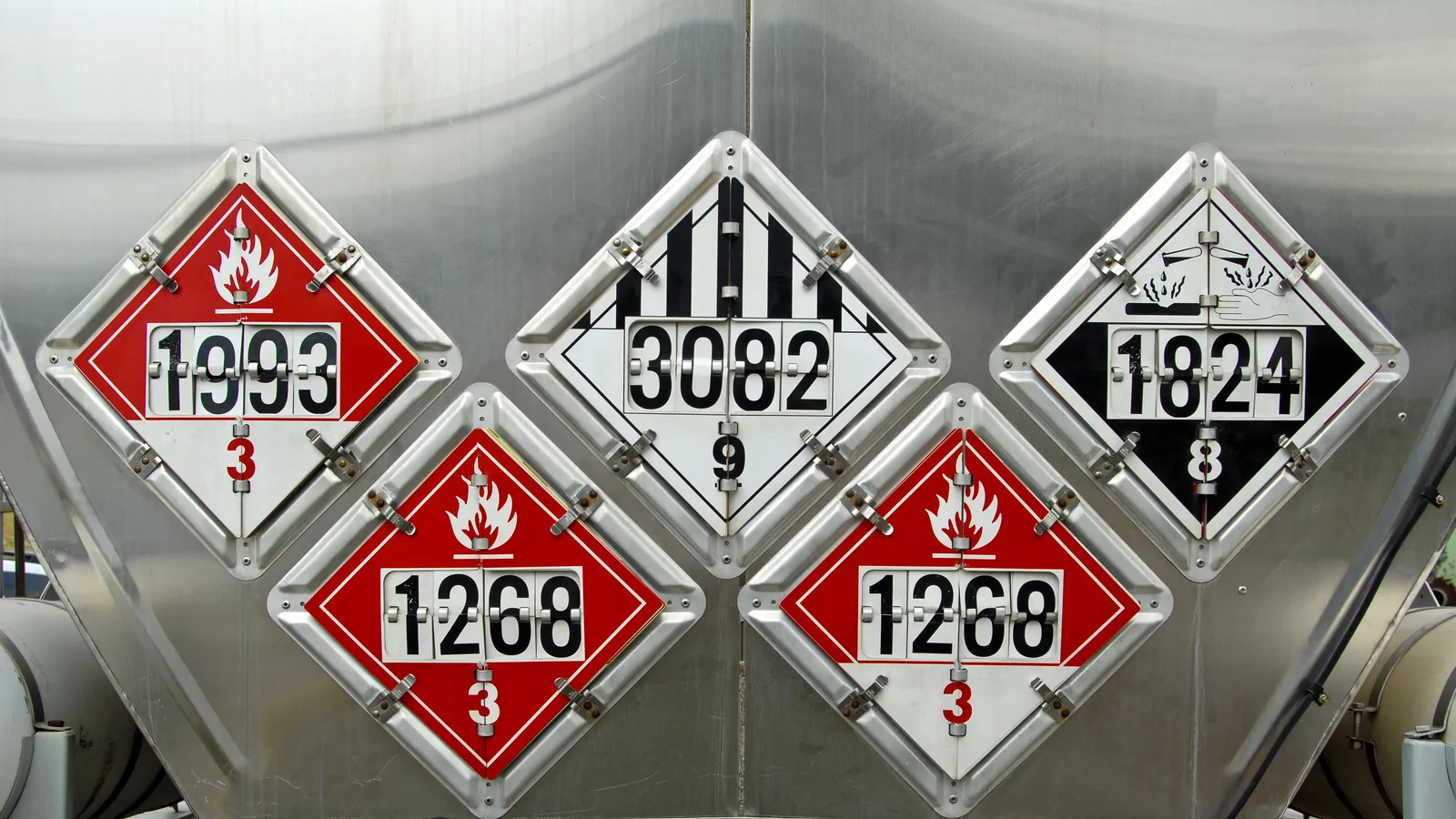
The DOT classifies hazardous materials into nine classes, and agricultural chemicals commonly fall into Class 3 (flammable liquids), Class 6 (toxic substances), and Class 8 (corrosives). This means every shipment requires hazmat-certified carriers with proper FMCSA authority, drivers with CDL hazmat endorsements, DOT-compliant shipping papers and documentation, proper hazmat placarding on the equipment, and tanker equipment that's been washed and certified compatible with the specific agrochemical.
Beyond basic hazmat compliance, agricultural chemical shipping demands product-specific knowledge. Each chemical family, organophosphates, pyrethroids, neonicotinoids, triazines, phenoxy herbicides, has unique handling characteristics. Some products degrade when exposed to heat. Others crystallize at low temperatures. Many react violently with incompatible materials. Your carrier needs to know these details before the truck leaves the yard.
Tank contamination is another major concern. A tanker that previously carried an incompatible chemical, even after washing, can contaminate an entire load of agrochemicals. The result is product rejection at delivery, expensive disposal costs, and potential liability if the contaminated product reaches the field. Proper tank wash protocols and prior cargo verification aren't optional extras, they're essential to protecting product integrity.
Major agricultural chemical categories and their shipping requirements
Herbicides
Herbicides control weeds that compete with crops for nutrients, water, and sunlight. The major chemical families include glyphosate (non-selective), atrazine and other triazines (pre-emergence corn and sorghum), 2,4-D and dicamba (broadleaf control), and acetochlor (grass control in corn and soybeans). Most concentrated herbicide formulations are classified as Class 6.1 toxic materials or Class 3 flammable liquids depending on the carrier solvent. Temperature sensitivity varies, some products thicken or crystallize below 40°F and require heated transport in winter months.
Pesticides and insecticides
Insecticides kill or repel insects that damage crops. The main categories are organophosphates (older chemistry, highly toxic, declining use due to regulatory pressure), pyrethroids (synthetic versions of natural pyrethrum, widely used in row crops), neonicotinoids (systemic insecticides, subject to increasing restrictions), and carbamates (moderate toxicity, used in vegetables and fruits). Nearly all concentrated insecticides are DOT Class 6.1 toxic materials. Many also carry environmental hazard classifications. Shipping requires strict containment protocols and emergency response planning for spills.
Fungicides
Fungicides prevent and treat fungal diseases in crops. Common active ingredients include azoles (broad-spectrum, used in cereals and specialty crops), strobilurins (preventative, widely used in corn and soybeans), and chlorothalonil (protective, used in vegetables and turf). Fungicide hazmat classifications range from non-hazardous to Class 6.1 or Class 9 depending on formulation. Many fungicides are formulated as emulsifiable concentrates or suspension concentrates, which affects pumping requirements and equipment compatibility.
Liquid fertilizers
Liquid fertilizers deliver nitrogen, phosphorus, and potassium directly to crops. The main types include UAN solutions (urea-ammonium-nitrate, 28% or 32% nitrogen), anhydrous ammonia (82% nitrogen, shipped under pressure as a liquefied gas), ammonium polyphosphate (10-34-0 and other APP formulations), and potassium-based liquids. UAN is typically non-hazardous but corrosive to certain metals. Anhydrous ammonia is DOT Class 2.3 (poisonous gas) and requires specialized pressure equipment and carrier certifications. Phosphoric acid used in some liquid fertilizer blends is Class 8 corrosive.
Seasonal patterns in agricultural chemical shipping
Agricultural chemical demand follows the planting and growing calendar, creating predictable seasonal peaks that strain tanker capacity every year. Understanding these patterns and planning ahead is critical to securing reliable transport at reasonable rates.
Pre-plant herbicide surge (February through May). The largest capacity crunch of the year. Farmers need pre-emergence herbicides applied before or immediately after planting corn, soybeans, cotton, and other row crops. Shipping volumes can triple during this window compared to off-season. Tanker rates increase 20-40% above baseline. Shippers who book capacity in January and early February secure the best rates and most reliable coverage.
In-season insecticide and fungicide demand (May through August). Pest and disease pressure drives in-season chemical applications. Demand is less concentrated than pre-plant herbicides but still well above baseline. Weather events, unexpected pest outbreaks, disease pressure, can create sudden spikes in shipping demand that are difficult to cover on short notice.
Post-harvest and off-season (October through January). The quietest period for agrochemical shipping. Manufacturers use this window to build inventory, move product to regional distribution centers, and prepare for the next season. Tanker capacity is abundant and rates are at their lowest. Smart shippers use this period to pre-position inventory close to end users.
Carrier selection criteria for agricultural chemicals
Not every tanker carrier can handle agrochemical freight safely and compliantly. When evaluating carriers for your agricultural chemical shipments, verify these qualifications:
Active hazmat authority. Confirm the carrier holds FMCSA operating authority with hazmat endorsement covering all applicable chemical classes. Many carriers claim to handle hazmat but lack proper authority or insurance. Your broker should screen this before tendering the load.
Driver hazmat endorsement. Every driver must hold a valid CDL with hazmat endorsement. No exceptions. Some carriers try to substitute non-endorsed drivers for "low-hazard" products. This violates DOT regulations and creates liability for both the carrier and the shipper.
Equipment compatibility. The tanker must be constructed of materials compatible with the specific agrochemical being shipped. Stainless steel is standard for most products. Some corrosive chemicals require specialized linings or coatings. The carrier should provide written confirmation of equipment compatibility before loading.
Tank wash capability. The carrier must have access to approved tank wash facilities and follow documented wash protocols between loads. Ask for prior cargo records and wash certifications. A carrier who can't provide this documentation should not be loading your chemicals.
Safety record. Check the carrier's DOT safety rating and CSA scores, particularly in the hazmat compliance BASIC. Carriers with poor safety records create risk for your products, your customers, and your brand. A low-cost carrier with a bad safety record is not a bargain.
Agricultural delivery experience. Delivering to farm co-ops, distribution centers, and on-farm storage requires different skills than delivering to industrial facilities. The carrier should have documented experience with agricultural delivery sites, including remote locations, unpaved roads, and limited unloading equipment.
Regulatory compliance beyond DOT hazmat regulations
Shipping agricultural chemicals involves more than DOT hazmat rules. EPA regulates pesticide transport under FIFRA (Federal Insecticide, Fungicide, and Rodenticide Act). This adds labeling requirements, container standards, and record-keeping obligations that your logistics partner must understand and comply with.
State regulations also apply. Some states require additional permits, notifications, or manifests for certain agricultural chemicals moving through their borders. California, Florida, and several Midwest agricultural states have particularly strict requirements. Your carrier and broker need to know these rules and ensure compliance on every shipment.
How Total Connection handles agricultural chemical shipping
We've been shipping agricultural chemicals since 1995, through every planting season, every capacity crunch, and every regulatory change. Our approach includes carrier pre-screening for hazmat authority and agrochemical experience, equipment matching to the specific product, DOT and EPA-compliant documentation preparation, tank wash coordination with prior cargo verification, delivery scheduling aligned to the agricultural calendar, and 24/7 shipment monitoring.
Every customer gets a dedicated account manager who knows your products, your delivery sites, and your seasonal timing requirements. We don't route agrochemical shipments through a call center. You work with the same person every time, someone who understands that a delayed herbicide shipment in April isn't just late freight, it's a missed growing season.
Call 732-817-0401 before your next season starts. Planning early is the single best thing you can do for your agrochemical supply chain. Request a quote and we'll evaluate your shipping program, identify capacity risks, and build a seasonal plan that keeps your chemicals moving when you need them.
Frequently Asked Questions
Are agricultural chemicals considered hazardous materials?
Many are. The DOT classifies agricultural chemicals commonly into Class 3 (flammable liquids), Class 6 (toxic substances), and Class 8 (corrosives). The specific classification depends on the product's composition and concentration.
What equipment is needed to ship agricultural chemicals?
Most liquid agrochemicals ship in stainless steel or lined chemical tanker trailers. All tankers must be properly washed and certified free of incompatible prior cargo. Some products require heated or insulated equipment.
How do I plan for seasonal agricultural chemical shipping?
Book capacity 4-8 weeks before peak application season. Demand spikes in spring and early summer, and tanker capacity tightens significantly. Shippers who plan ahead secure better rates and more reliable coverage.
Does Total Connection ship all types of agricultural chemicals?
Yes, herbicides, pesticides, insecticides, fungicides, liquid fertilizers, surfactants, crop oil concentrates, and specialty agricultural formulations across every major agricultural region.