
.png)
Liquid bulk fertilizer transport carries more regulatory complexity than most shippers expect. Many liquid fertilizers contain hazardous materials classified under DOT 49 CFR, which means hazmat-certified carriers, specific documentation, proper placarding, and compliant tank equipment are required on every shipment.
If you're a fertilizer manufacturer, distributor, or agricultural co-op, the regulatory burden alone can overwhelm your internal logistics team. This guide covers everything from hazmat classifications to the step-by-step process of shipping liquid fertilizer safely and compliantly.
For shipper-led capacity and hazmat-fluent execution on this freight, see Total Connection's liquid bulk and chemical logistics service.
The challenge of shipping liquid bulk fertilizers
Plants need about 17 essential nutrients for healthy growth, and many of these are delivered through liquid fertilizers. Nitrogen solutions, phosphoric acid, potassium-based liquids, and blended liquid fertilizers are all shipped in bulk by tanker truck, railcar, or vessel. The challenge is that many of these products are hazardous materials (oxidizers, corrosives, or reactive), and the DOT regulates their transport accordingly.
Unlike dry fertilizers that ship in bags or bulk totes, liquid fertilizers require specialized tanker equipment, tank wash verification between loads, product compatibility checks, and temperature control for certain formulations. The margin for error is minimal. A contaminated tank can ruin an entire load. Improper placarding can shut down your shipment at a DOT inspection. Choosing a carrier without the right hazmat certifications puts you out of compliance before the truck even rolls.
Common liquid fertilizer types and their shipping requirements
Different liquid fertilizers have different transport profiles. Here's what matters for the most common products:
UAN Solutions (28-0-0, 32-0-0): Urea-ammonium nitrate solutions are the most widely shipped liquid nitrogen fertilizers in North America. UAN-28 contains 28% nitrogen, UAN-32 contains 32%. Both are classified as UN 2672, Class 5.1 oxidizers. They're corrosive to certain metals, so carriers use stainless steel or specially coated carbon steel tanks. UAN can freeze in cold weather, so winter shipments may require heated tankers or insulated equipment.
10-34-0 (Ammonium Polyphosphate): This high-phosphorus liquid fertilizer is popular for starter applications and fertigation systems. It's classified as UN 1805, Class 8 corrosive. Because it's acidic (pH around 6), it requires corrosion-resistant tanks and careful handling. It's also temperature-sensitive and can crystallize below 32°F, requiring heated transport in colder months.
Anhydrous Ammonia (82-0-0): The most concentrated nitrogen source available. Anhydrous ammonia is stored and shipped under pressure as a liquefied gas. It's classified as UN 1005, Class 2.2 non-flammable gas, but it's extremely corrosive and toxic. Transport requires DOT-spec nurse tanks or MC-331 cargo tanks, specialized valves, and drivers trained in anhydrous handling. For more on chemical logistics complexity, see our guide on how to ship agricultural chemicals.
Liquid NPK Blends: Custom blends of nitrogen, phosphorus, and potassium are formulated for specific crops and soil conditions. Hazmat classification depends on the formulation. High-nitrogen blends may fall under Class 5.1. Acidic phosphorus-heavy blends may be Class 8. Your SDS will define the classification, and your carrier needs to match it exactly.
Hazmat classifications for liquid fertilizers
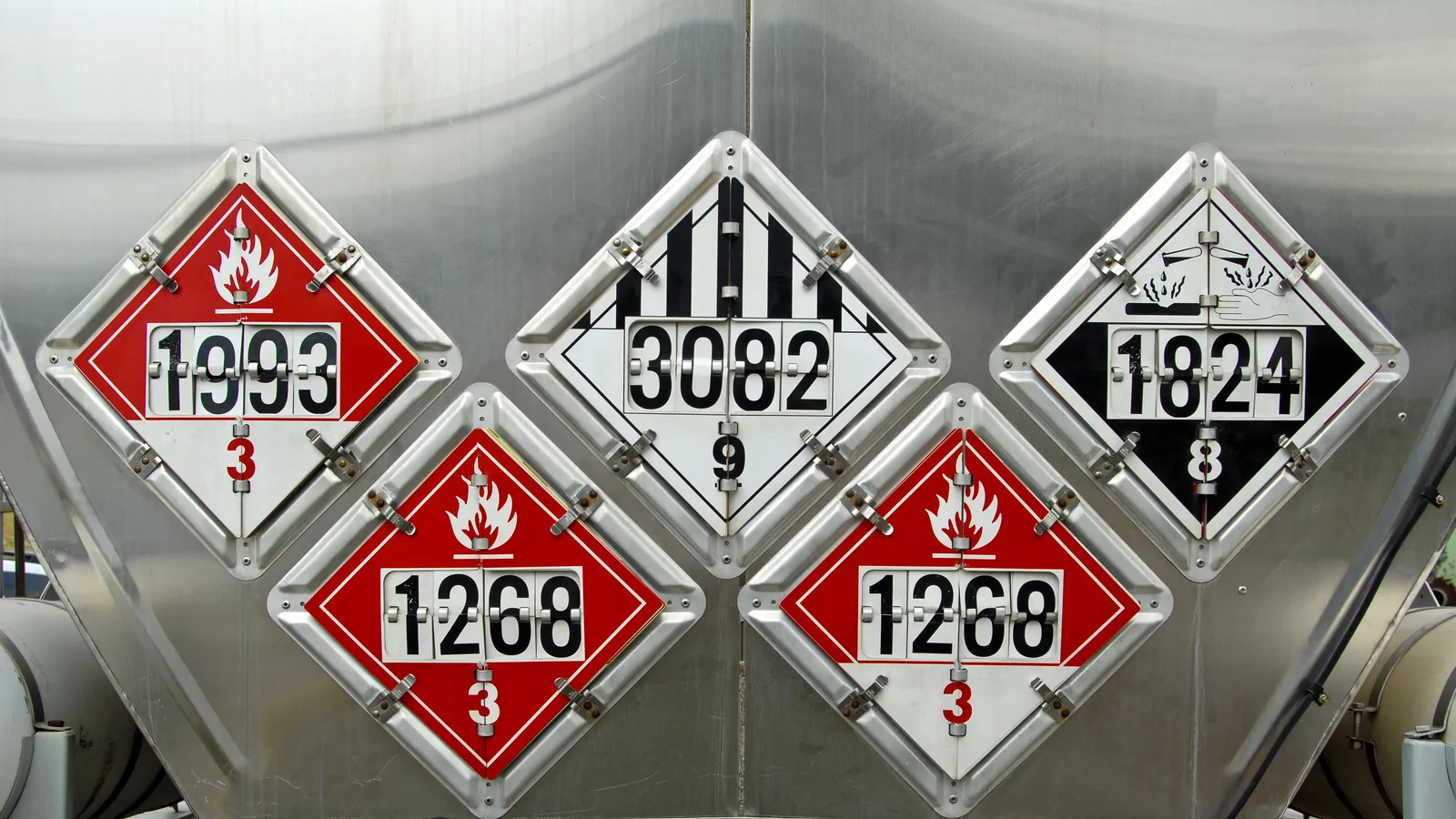
Liquid fertilizers can fall under several DOT hazmat classes depending on their composition. Class 5.1 (oxidizers) covers ammonium nitrate solutions like UAN. Class 8 (corrosive) covers phosphoric acid and products like 10-34-0. Class 2.2 (non-flammable gas) may apply to anhydrous ammonia under certain conditions. Class 9 (miscellaneous) covers some specialty formulations. Your product's SDS sheet identifies the applicable classification and drives every downstream shipping requirement.
The classification isn't academic. It determines which carriers can legally haul your product, what placards are required, what tank specifications apply, and what emergency response information must accompany the load. Get it wrong and your shipment gets red-tagged at the first DOT inspection. For a broader view of hazmat freight rules, see our hazmat trucking regulations guide.
Equipment requirements for liquid fertilizer transport
Not all tankers are created equal. Liquid fertilizer transport requires specific equipment based on the product's properties:
Tank material: Stainless steel for UAN and most nitrogen solutions. Corrosion-resistant coatings or stainless for phosphoric acid and acidic blends. Pressure-rated spec tanks (MC-331) for anhydrous ammonia.
Heating and insulation: Many liquid fertilizers crystallize or thicken in cold temperatures. UAN can freeze. 10-34-0 can crystallize. If you're shipping during winter months or to cold climates, you need heated tankers or insulated equipment with trace heating systems.
Tank wash certification: Before loading, the tank must be washed and verified clean. Residue from a previous chemical load can contaminate fertilizer product or cause a dangerous reaction. Carriers should provide tank wash tickets confirming the tank is clean and compatible with your specific fertilizer.
Valves and fittings: Bottom-loading valves, vapor recovery systems, and emergency shut-off valves are standard on compliant fertilizer tankers. For anhydrous ammonia, specialized high-pressure valves and fittings are mandatory.
Compartmentalization: Some tankers have multiple compartments, allowing partial loads or blended shipments. Make sure your carrier understands whether you need a dedicated full-tank load or can share compartments with compatible products.
For general liquid bulk shipping principles, see our complete liquid bulk freight guide.
What you need for compliant fertilizer transport
Every liquid fertilizer shipment requires:
- A carrier with active FMCSA hazmat authority for the applicable hazmat class
- A driver with CDL hazmat endorsement and current hazmat training certification
- DOT-compliant shipping papers including the proper shipping name, hazard class, UN number, and packing group
- Proper hazmat placards on the tanker equipment matching the product classification
- A tanker that's been washed and certified compatible with the specific fertilizer product
- Emergency response information (ERG guide number and 24-hour emergency contact) accessible in the cab
- SDS (Safety Data Sheet) for the product being shipped
If any of these elements is missing or incorrect, your shipment is out of compliance. Most violations are discovered at roadside DOT inspections, which can result in fines, out-of-service orders, and delayed deliveries.
Timing matters: the agricultural calendar and seasonal demand
Fertilizer shipping demand is not evenly distributed. It peaks hard in late winter through spring as farmers prepare for planting season. In the northern U.S. and Canada, this typically means February through May. In southern regions, demand may start earlier and extend into summer for second-crop applications.
Tanker capacity tightens considerably during this window. Carriers prioritize their largest, most reliable customers. Spot rates climb. Equipment that was readily available in December becomes impossible to find in March. Shippers who book 6-8 weeks ahead of their delivery window secure better rates, more reliable carriers, and contingency time if something changes. Shippers who wait until peak season pay premium rates and take what's available.
Fall application logistics: Many operations also apply fertilizer in the fall, particularly anhydrous ammonia for corn. Fall demand is significant but less intense than spring. It's still wise to book early, but capacity constraints are less severe.
Product-specific timing: UAN is typically applied pre-plant or as a side-dress during the growing season. 10-34-0 is often used as a starter fertilizer at planting. Anhydrous ammonia is applied in fall or early spring before planting. Your timing strategy should align with your customers' application windows and account for the logistics lead time required to get product where it needs to be.
Regional harvest schedules, weather patterns, and soil conditions all influence demand. A wet spring delays field work and compresses the fertilizer application window, which further strains logistics capacity. An experienced freight partner tracks these variables and helps you plan around them.
How Total Connection handles liquid fertilizer transport
We manage the full logistics chain: carrier selection with the right hazmat certifications and equipment, DOT-compliant documentation and shipping paper preparation, tank wash coordination and verification, delivery scheduling aligned to your agricultural calendar and customer needs, seasonal capacity planning to avoid peak-season bottlenecks, and 24/7 shipment monitoring with proactive exception management.
One account manager handles your shipment from quote to delivery. We speak both agriculture and hazmat, so you're not translating between your operations team and a logistics provider who doesn't understand the product. If you're shipping herbicides, pesticides, or other agricultural chemicals alongside fertilizers, we handle those too, see our herbicide shipping logistics guide for more on that freight.
Call 732-817-0401 or request a quote to get started.
Frequently Asked Questions
Are liquid fertilizers hazardous materials?
Many are. Fertilizers containing ammonium nitrate, anhydrous ammonia, or other reactive compounds are classified as hazmat under DOT 49 CFR. The specific classification depends on composition and concentration.
What DOT class do liquid fertilizers fall under?
Depending on composition: Class 5.1 (oxidizers), Class 8 (corrosive), Class 2.2 (non-flammable gas), or Class 9 (miscellaneous). Your SDS identifies the applicable class.
What tanker type is needed for liquid fertilizer?
Depends on the product. Nitrogen solutions typically ship in carbon steel or stainless steel. Phosphoric acid requires corrosion-resistant tanks. Some specialty fertilizers require heated or insulated equipment.
When should I book liquid fertilizer transport?
Six to eight weeks before your delivery window. Demand peaks late winter through spring, and capacity tightens significantly during this period.
Can UAN freeze during transport?
Yes. UAN solutions can freeze in cold weather, typically below 0°F for UAN-32. Winter shipments may require heated or insulated tankers to prevent product crystallization and maintain pumpability at destination.