
.png)
Herbicides are seasonal. Your farm, or your customers' farms, need them before the weeds take over, not after. Which means herbicide shipping has two non-negotiable requirements: the shipment has to comply with DOT hazmat regulations, and it has to arrive on time.
Most concentrated liquid herbicides are classified as hazardous materials, which adds documentation, carrier certification, and equipment requirements to every shipment. A logistics company that doesn't specialize in agrochemical freight will struggle with both the compliance and the timing.
The complexity doesn't end with classification. Herbicide shipments require temperature-controlled handling in many cases, especially for formulations sensitive to freezing or heat degradation. Carriers need proper containment systems, spill kits, and emergency response protocols specific to the chemical class they're hauling. A carrier who normally hauls non-hazmat liquid bulk freight can't just add herbicides to their roster without significant equipment upgrades and DOT certification.
For shipper-led capacity and hazmat-fluent execution on this freight, see Total Connection's liquid bulk and chemical logistics service.
Herbicide hazmat classifications
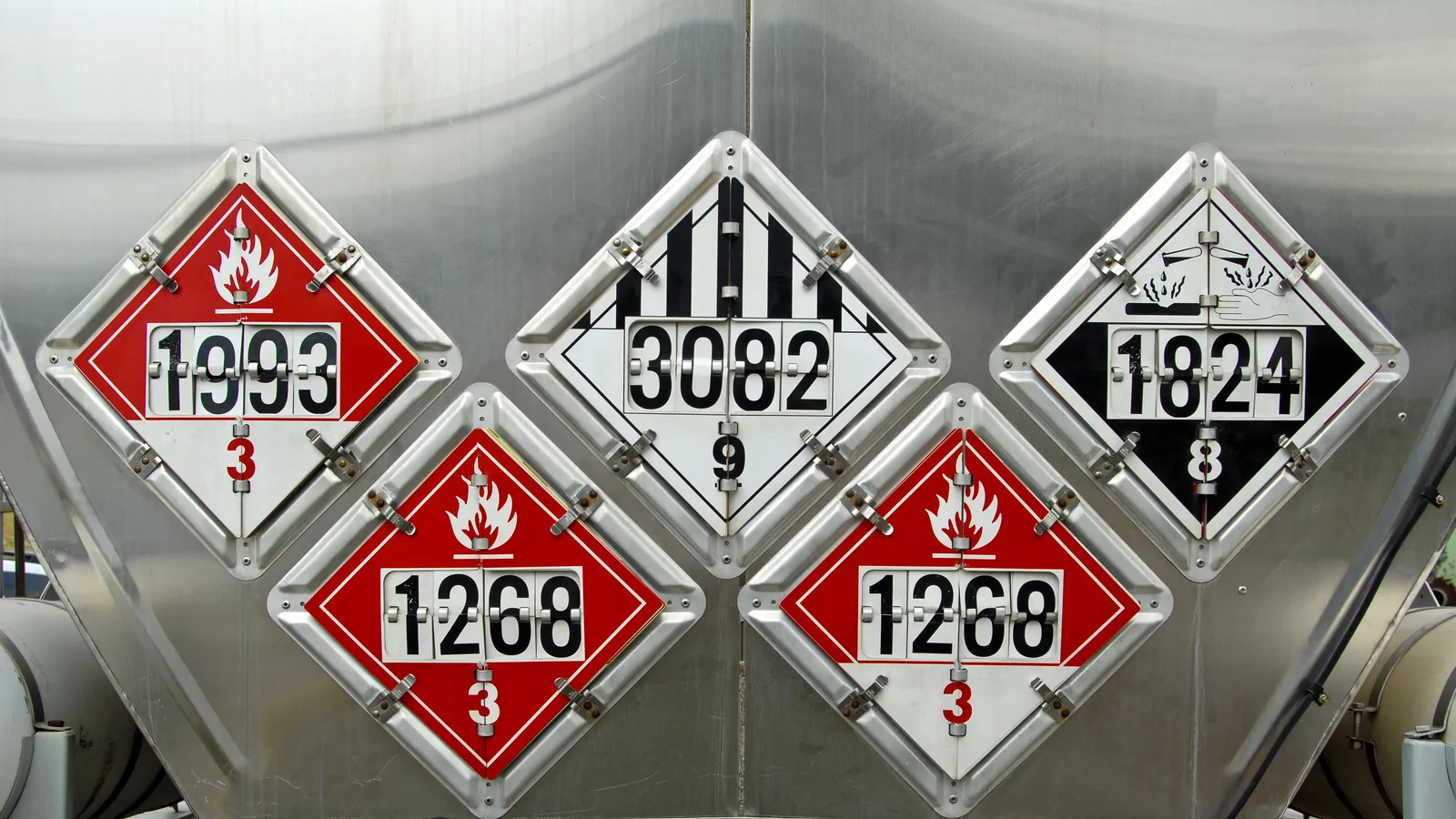
Most concentrated liquid herbicides fall under DOT Class 3 (flammable liquids) or Class 6.1 (toxic substances), depending on the active ingredients and formulation. Your product's SDS identifies the applicable classification, which drives every downstream requirement: carrier authority, driver endorsements, documentation, placarding, and emergency response procedures.
Glyphosate-based herbicides typically fall under Class 6.1 when concentrated, while many oil-based formulations land in Class 3 due to petroleum distillates or other flammable carriers. Some herbicides carry multiple hazmat classifications depending on concentration and formulation additives. A carrier might be certified for Class 3 but not Class 6.1, which means you can't assume every tanker operator can handle your specific product.
The packing group (I, II, or III) determines the level of danger within the hazmat class. Most commercial herbicides fall into Packing Group II or III, which affects everything from placarding requirements to driver training hours. Your freight forwarder needs to verify both the hazmat class and packing group before tendering the load to ensure the carrier has the right endorsements and equipment. For a deeper breakdown of how these classifications affect carrier selection and route planning, see our guide on hazmat trucking regulations.
Selective vs. non-selective herbicides: same shipping requirements
Whether you're shipping selective herbicides that target specific weeds while leaving crops intact, or non-selective herbicides that clear all vegetation, the shipping requirements are determined by the chemical composition and hazmat classification, not the application method. Both require the same carrier certifications, documentation, and equipment standards.
This distinction matters for marketing and application, but from a logistics standpoint, a selective pre-emergent herbicide and a non-selective post-emergent product with the same active ingredient and concentration ship under identical regulations. The DOT doesn't care what the herbicide kills, only what hazards it presents in transit.
Common herbicide types shipped
The most frequently shipped herbicide categories include glyphosate-based formulations (Roundup and generics), 2,4-D products for broadleaf control, atrazine for corn and sorghum, dicamba formulations, and pre-emergent herbicides like pendimethalin and metolachlor. Each has distinct handling characteristics and hazmat profiles.
Glyphosate concentrates typically ship as Class 6.1 liquids, while 2,4-D ester formulations often qualify as Class 3 flammables due to petroleum-based carriers. Dicamba products can fall into either class depending on formulation. Pre-emergent herbicides vary widely, some are emulsifiable concentrates (ECs) that require Class 3 handling, while others are water-based suspensions with lower hazmat risk but stricter temperature requirements to prevent freezing or settling.
Understanding these differences matters when booking capacity. A carrier set up for flammable liquids might not be equipped for toxic substances, and vice versa. If you're shipping multiple herbicide products, you may need separate carriers or multiple certifications on the same truck. For broader context on shipping various agrochemical types, see our overview of how to ship agricultural chemicals.
Packaging requirements for herbicide shipments
Herbicides ship in bulk tankers, totes (IBC containers), drums, or smaller containers depending on volume and customer requirements. Bulk shipments in dedicated tanker trucks are the most efficient for large volumes (5,000+ gallons), but they require carrier certification for the specific hazmat class and regular equipment inspection schedules.
Intermediate bulk containers (IBCs or totes) are common for 250-330 gallon shipments. They must meet UN/DOT specifications for the hazmat class, with proper gaskets, venting, and securement. Totes simplify handling at destination but add weight and cube to the shipment, which affects freight class and rate.
Drums (55 gallons) and smaller containers require palletization, proper placarding on the pallet or container, and compatibility verification between the herbicide formulation and container material. Some herbicides degrade certain plastics or corrode metal drums over time. Using the wrong container material can result in leaks, contamination, or product degradation before arrival. Your freight forwarder should verify packaging compliance before pickup, not after the driver arrives and refuses the load.
Documentation checklist for herbicide shipments
Every herbicide shipment requires a completed Bill of Lading with the proper shipping name, hazmat class, UN number, packing group, and emergency contact information. The BOL must include the 24-hour emergency response number (typically your chemical emergency response provider like CHEMTREC or INFOTRAC) and any special handling instructions.
Additional required documents include the Safety Data Sheet (SDS) for the product, carrier hazmat certification (verify before tendering), and state-specific permits if crossing certain state lines. Some states require advance notification for hazmat shipments above certain quantities, particularly for Class 6.1 toxic substances.
If shipping internationally or across certain borders, you'll also need a pesticide registration number verification and potentially an EPA establishment number. Canada requires PMRA registration for herbicides entering the country. Mexico has its own set of COFEPRIS requirements for agrochemical imports. Missing any of these documents means delays at the border, sometimes weeks while you sort out the paperwork retroactively.
The timing challenge
Herbicide demand spikes before spring planting season. If your herbicide shipment arrives late, your customers miss their pre-emergence application window. There's no rescheduling a planting season. Shippers who book tanker capacity 2-4 weeks ahead of peak season secure reliable coverage. During peak season, same-week bookings are possible but come at premium rates with limited carrier options.
The timing crunch isn't just about availability, it's about carrier prioritization. During March and April, every agrochemical shipper is competing for the same pool of hazmat-certified tanker capacity. Carriers prioritize shippers with consistent volume, advance bookings, and clean loading/unloading track records. If you're a new customer calling in during peak season, expect longer lead times and higher rates.
Weather compounds the problem. Late-season freezes delay fieldwork, which compresses the application window and creates spot demand surges. A shipper who booked capacity expecting delivery by April 15 might suddenly need it by April 8 because the weather window moved up. Freight forwarders with deep carrier networks can sometimes accommodate these shifts, but it requires relationships and volume leverage that most shippers don't have on their own. The strategies that work for shipping liquid fertilizer during peak season apply here as well: book early, communicate changes immediately, and build carrier relationships before you need them.
Why Total Connection for herbicide shipping
We've been shipping agrochemicals (herbicides, pesticides, insecticides, and liquid fertilizers) since 1995. We know the agricultural calendar, the DOT requirements, and which carriers have the right equipment and certifications for your product. Our carrier network includes operators who specialize in agrochemical freight across every major agricultural region.
We pre-qualify carriers for hazmat class, equipment type, insurance coverage, and safety records before they enter our network. When you call with a herbicide shipment, we're not scrambling to find a carrier who might be able to handle it, we're selecting from a vetted pool of operators we've worked with for years. That means faster quotes, fewer pickup delays, and no surprises about equipment compatibility when the truck arrives.
Our team monitors shipments in transit and coordinates with drivers on delivery appointments, especially during peak season when timing is critical. If there's a delay, weather, inspection, equipment issue, you'll know about it before it becomes a problem, and we'll already be working on the solution.
Call 732-817-0401 or request a quote for your next herbicide shipment. We respond within minutes.
Frequently Asked Questions
Are herbicides hazardous materials for shipping?
Most concentrated liquid herbicides are classified as hazmat under DOT regulations, typically Class 3 (flammable) or Class 6.1 (toxic). Your product's SDS identifies the applicable classification.
How quickly can Total Connection arrange herbicide transport?
For standard lanes, typically within hours. During peak agricultural season, booking 2-4 weeks ahead is recommended for best rates and availability. For urgent needs, our 24/7 team can expedite.
What tanker equipment is needed for herbicide shipping?
Liquid herbicides typically ship in stainless steel or lined chemical tanker trailers, properly washed and certified free of incompatible prior cargo. Some formulations have specific temperature or equipment requirements.
Is there a difference in shipping selective vs. non-selective herbicides?
Shipping requirements are based on chemical composition and DOT hazmat classification, not application type. Both selective and non-selective herbicides require the same carrier certifications, documentation, and equipment standards.