
.png)
Flame retardants are chemical additives that reduce the flammability of materials, primarily polymers and textiles. They're added during manufacturing to slow ignition, reduce flame spread, and in some cases, create self-extinguishing behavior. Without flame retardants, plastic housings on electronics would burn readily, building insulation would be a fire hazard, and automotive interiors would be significantly more dangerous in crash fires.
The flame retardant market is driven by fire safety regulations that mandate minimum flammability standards for building materials, electronics, transportation components, furniture, and textiles. As these regulations have expanded globally, demand for flame retardant chemicals has grown, along with the logistics complexity of shipping them.
For shipper-led capacity and hazmat-fluent execution on this freight, see Total Connection's liquid bulk and chemical logistics service.
What are flame retardants
Flame retardants are chemical substances added to combustible materials to inhibit, suppress, or delay the production of flames. They're incorporated into polymers, coatings, textiles, and composite materials at concentrations typically ranging from 5 to 30 percent by weight depending on the material, fire safety standard, and flame retardant chemistry.
The global flame retardant market is worth over $8 billion annually and growing at 4 to 5 percent per year, driven by expanding fire safety regulations in building codes, electronics standards, and transportation requirements. Electrical fires alone cause an estimated $1.3 billion in property damage annually in the US, and flame retardants in wire insulation, circuit boards, and electrical housings significantly reduce that toll.
Flame retardancy is measured against specific standards. UL 94 tests plastics for flammability and assigns ratings from HB (horizontal burn) to V-0 (self-extinguishing, no dripping). FMVSS 302 tests automotive interior materials for burn rate. Building codes reference ASTM E84 for surface burning characteristics. Each application requires flame retardant selection and loading to meet the relevant standard.
How flame retardants work
Flame retardants operate through several mechanisms depending on their chemistry. Gas-phase inhibition is used by halogenated flame retardants that release halogen radicals (bromine, chlorine) during combustion. These radicals react with and neutralize the hydrogen and hydroxyl radicals that sustain the combustion chain reaction, effectively quenching the fire at the molecular level.
Char formation is promoted by phosphorus-based flame retardants that catalyze the formation of a carbonaceous char layer on the material surface. This char insulates the underlying material from heat and oxygen, preventing further combustion. Phosphorus flame retardants are particularly effective in oxygen-containing polymers like polyesters and polyurethanes.
Endothermic cooling occurs with mineral flame retardants (aluminum hydroxide, magnesium hydroxide) that decompose when heated, releasing water vapor. This absorbs significant energy (heat of vaporization) and cools the combustion zone below the temperature needed to sustain burning. Mineral flame retardants are used at high loadings (40 to 65 percent by weight) because the mechanism is less efficient per unit mass than gas-phase or char-forming types.
Barrier formation happens with intumescent systems that expand when heated, forming a protective foam layer that insulates the material from fire. Intumescent flame retardants are common in coatings for structural steel and in cable insulation.
Types of flame retardants: brominated, phosphorus-based, inorganic
Halogenated flame retardants (brominated and chlorinated)
Brominated and chlorinated compounds have been the most widely used flame retardants historically. They're highly effective at low concentrations (5 to 15 percent loading) and work across a broad range of polymer types including polystyrene, ABS, polyolefins, and epoxy resins. Common brominated flame retardants include TBBPA (tetrabromobisphenol A), decaBDE (decabromodiphenyl ether), and HBCD (hexabromocyclododecane).
However, some halogenated flame retardants have come under regulatory restriction due to environmental persistence, bioaccumulation, and potential health effects. HBCD is being phased out globally under the Stockholm Convention. Certain PBDEs (polybrominated diphenyl ethers) are restricted under EU REACH and US EPA TSCA. Other brominated types remain commercially available and widely used where performance and cost considerations outweigh regulatory concerns.
Phosphorus-based flame retardants
Phosphate esters, phosphonates, and organophosphorus compounds are growing as alternatives to halogenated types. They work primarily through char formation mechanisms and offer the advantage of being halogen-free, which is increasingly important for electronics and building materials where halogenated combustion byproducts are a concern.
Many liquid phosphorus flame retardants ship in bulk by tanker truck. Examples include triphenyl phosphate (TPP), resorcinol bis(diphenyl phosphate) (RDP), and alkyl phosphate esters. Some carry DOT hazmat classifications, particularly organophosphate esters that may be classified as Class 6.1 (toxic) or Class 9 (miscellaneous hazardous material).
Phosphorus-based flame retardants are particularly effective in polyurethane foams, polyesters, epoxy resins, and engineering plastics. They're the dominant chemistry in flexible polyurethane foam for furniture and bedding, where halogen-free performance is mandated by fire safety standards like California TB 117-2013.
Mineral flame retardants (inorganic)
Aluminum trihydrate (ATH) and magnesium hydroxide are the highest-volume flame retardants globally by weight. They work through endothermic decomposition, releasing water when heated to temperatures above 200°C (ATH) or 300°C (magnesium hydroxide). These are typically non-hazardous and ship as slurries or suspensions in liquid bulk for direct addition to polymer compounds or as dry powders in bulk bags.
Mineral flame retardants are used in wire and cable insulation, carpet backing, roofing membranes, and composite materials. They require high loadings (40 to 65 percent) which can affect mechanical properties, but they're cost-effective, non-toxic, and produce low smoke during combustion.
Intumescent systems
Intumescent flame retardants are combinations of acid sources (ammonium polyphosphate), carbon sources (pentaerythritol), and blowing agents (melamine) that work together to form a protective foam layer when exposed to heat. Used in coatings, sealants, and as polymer additives. Components may ship separately in liquid bulk for blending at the manufacturer's facility or as pre-formulated intumescent packages.
Industries using flame retardants: electronics, construction, textiles
Electronics manufacturing uses flame retardants in printed circuit boards (epoxy laminates with halogenated or phosphorus flame retardants), plastic housings and enclosures (PC/ABS, HIPS, polycarbonate with brominated or phosphorus types), wire and cable insulation (PVC, polyethylene, crosslinked polyethylene with mineral or halogenated types), and connectors and switches where UL 94 V-0 ratings are standard requirements.
Building and construction applications include electrical wiring insulation (PVC with phthalate plasticizers and antimony-halogen synergistic systems), rigid and flexible polyurethane foam insulation (phosphorus or halogen-free types under green building standards), structural steel coatings (intumescent water-based or solvent-based systems rated for 1 to 4 hours fire protection), roofing membranes and geomembranes (mineral flame retardants for outdoor durability), and carpet backing and textile treatments (phosphorus or mineral types).
Transportation uses flame retardants in automotive interiors (seats, door panels, dashboards) meeting FMVSS 302, aircraft cabin materials meeting FAR 25.853 and OSU heat release testing, rail and mass transit interiors meeting EN 45545 or NFPA 130, and ship interior materials meeting IMO fire safety codes.
Textiles rely on flame retardants for protective clothing, contract upholstery meeting fire codes, curtains and draperies in commercial buildings, and mattresses and bedding meeting federal and state flammability standards.
Regulatory landscape: EPA, EU restrictions, fire safety codes
Flame retardant regulations operate on two levels. Fire safety regulations require flame retardancy in products. Chemical regulations restrict certain flame retardant substances.
Fire safety standards like UL 94 (plastics), FMVSS 302 (automotive interiors), California TB 117-2013 (furniture), ASTM E84 (building materials), and building codes (IBC, NFPA) create demand for flame retardants. These standards specify maximum burn rates, ignition resistance, heat release rates, and smoke production limits that can only be met with flame retardant additives in most polymer systems.
Chemical regulations like EU REACH (restricts or bans specific flame retardant substances including certain PBDEs and HBCD), the Stockholm Convention on Persistent Organic Pollutants (global phase-out of certain brominated types), US EPA TSCA (regulates production and use of certain flame retardants), and US state laws (Maine, Washington, California have banned or restricted certain brominated flame retardants in specific product categories) limit or ban specific flame retardant substances.
This creates a regulatory tension that drives reformulation and the shift from restricted to non-restricted flame retardant types. Electronics manufacturers are moving from halogenated to phosphorus-based or mineral types. Building product manufacturers are shifting to halogen-free formulations to meet green building standards. Furniture manufacturers switched from PBDEs to organophosphates after the TB 117 revision.
Hazmat shipping requirements for flame retardant chemicals
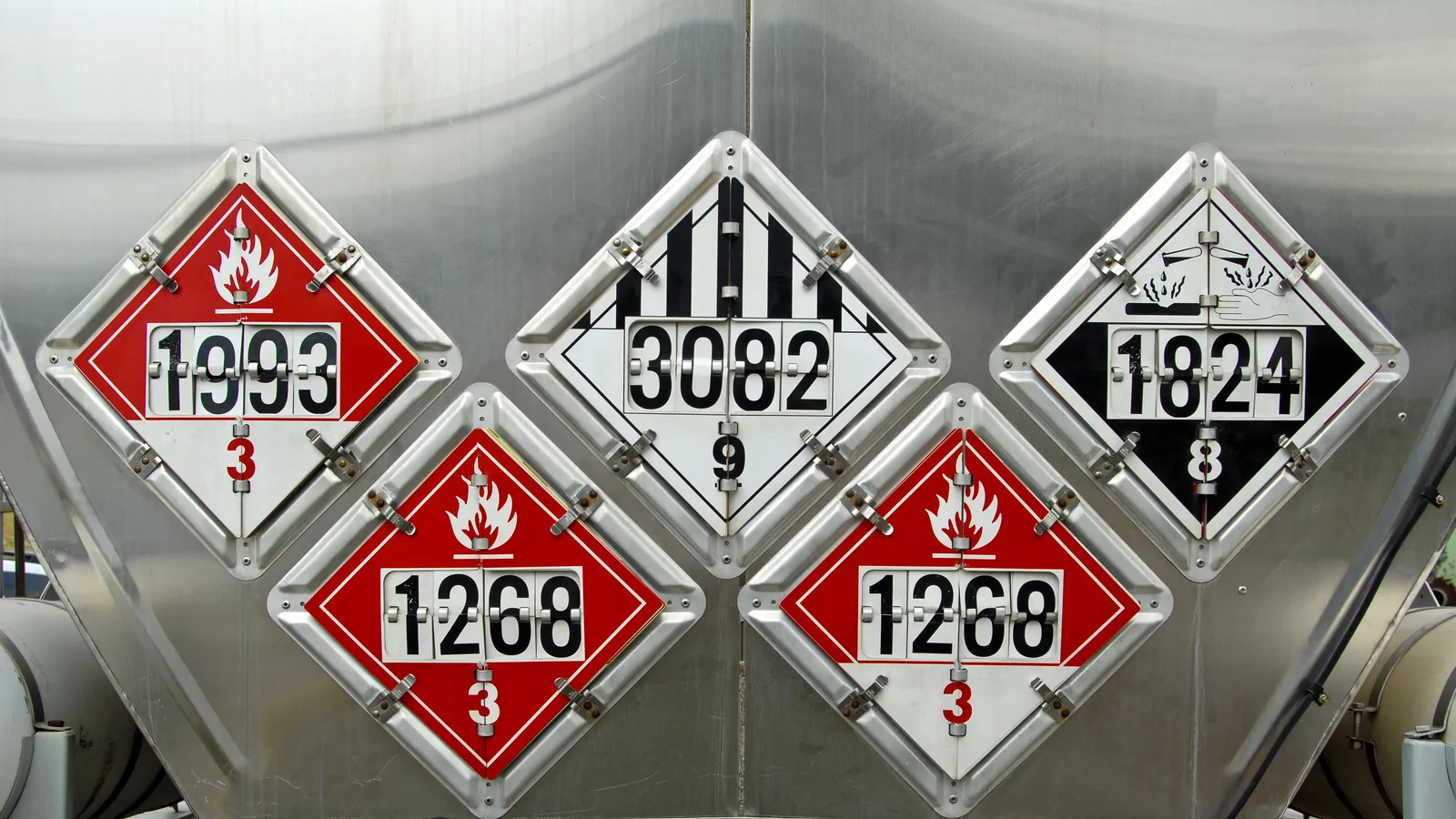
Liquid flame retardants and their precursors ship by tanker truck to polymer compounders and manufacturers. Hazmat classifications vary by chemistry. Mineral flame retardants (ATH, magnesium hydroxide slurries) are non-hazardous. Phosphate ester flame retardants may be DOT Class 6.1 (toxic) or Class 9 (miscellaneous). Brominated flame retardants range from non-hazardous to Class 9. Certain reactive phosphorus compounds may be Class 8 (corrosive).
Every flame retardant shipment requires SDS review to verify classification, proper shipping name, UN number, packing group, placarding requirements, and emergency response information. Carriers must verify their driver certifications, equipment, and insurance match the cargo hazmat class.
Product segregation between regulated and non-regulated flame retardant types is increasingly important, mirroring the phthalate/non-phthalate divide in plasticizers. A customer receiving halogen-free phosphorus flame retardant cannot accept contamination from prior halogenated cargo, even at trace levels, because it would compromise their halogen-free product claims.
Equipment and handling for flame retardant shipping
Tank cleanliness and prior cargo verification are essential. Flame retardant performance specifications are precise, and contamination affects both the additive's effectiveness and the finished product's compliance with fire safety standards. Many flame retardant manufacturers require tank wash certificates, prior cargo documentation, or dedicated tanker fleets.
Temperature management may be required for certain phosphorus flame retardants that increase viscosity or crystallize at low temperatures. Heated transport or insulated tanks with temperature monitoring prevent unloading problems.
Some flame retardant formulations are moisture-sensitive and require sealed transport with nitrogen blanketing or dry air purging. Moisture pickup can cause hydrolysis, viscosity increase, or performance degradation.
Why Total Connection for flame retardant chemical shipping
We ship flame retardant chemicals to polymer compounders and manufacturers across North America. Our team understands the product segregation requirements between halogenated and halogen-free types, the hazmat classifications across different flame retardant chemistries, and the purity standards that fire safety compliance demands. For more on how we handle other polymer additives, see our specialty chemical logistics guides and hazmat trucking regulations overview.
We handle hazmat compliance (SDS review, classification verification, placarding, emergency response documentation), product segregation (halogenated vs. halogen-free, regulated vs. non-regulated chemistries), tank cleanliness verification (wash certificates, prior cargo tracking, dedicated fleets when required), temperature management for viscosity-sensitive or crystallization-prone products, and regulatory awareness of the evolving flame retardant landscape.
We built Total Connection on specialty chemical logistics, where flame retardants and polymer additives are a regular part of the freight mix. We know which carriers maintain segregated fleets, which operators can handle Class 6.1 phosphate esters, and how to coordinate just-in-time deliveries to keep polymer compounding schedules on track.
Call 732-817-0401 or request a quote for your flame retardant chemical logistics.
Frequently Asked Questions
How do flame retardants work?
Through several mechanisms depending on chemistry: halogenated types interrupt combustion chain reactions, phosphorus types promote protective char formation, mineral types absorb heat through endothermic water release, and intumescent systems form insulating foam barriers. Many commercial products combine multiple mechanisms.
Are flame retardant chemicals hazardous materials?
Some are. Classifications range from non-hazardous (mineral types) to DOT Class 6.1 (toxic), Class 8 (corrosive), Class 9 (miscellaneous), or Class 3 (flammable) depending on specific chemistry. Each product must be verified against its SDS.
Why are some flame retardants being restricted?
Certain halogenated flame retardants have been found to persist in the environment and accumulate in biological systems. Regulations like EU REACH and the Stockholm Convention restrict or ban specific substances, driving the shift to alternative chemistries like phosphorus-based and mineral flame retardants.
Does Total Connection ship all types of flame retardant chemicals?
Yes, halogenated, phosphorus-based, mineral, and intumescent system components. We manage the product segregation, hazmat compliance, and purity requirements across all flame retardant chemistries.