
.png)
Paint and coatings manufacturing consumes dozens of specialty chemical additives, each one serving a specific function in the formulation. Rheology modifiers control flow and leveling. Dispersants keep pigments suspended. Defoamers eliminate air bubbles. Biocides prevent microbial growth. Solvents provide the liquid medium. And the base resins, acrylics, alkyds, epoxies, polyurethanes, form the actual film that protects and decorates the surface.
All of these components ship in liquid bulk from specialty chemical manufacturers to paint and coatings producers. The logistics are complex because a single paint formulation can contain 15-20 different chemical components, each with different handling, hazmat, and equipment requirements.
For shipper-led capacity and hazmat-fluent execution on this freight, see Total Connection's liquid bulk and chemical logistics service.
Major categories of paint additives
Rheology modifiers and thickeners
Control the paint's viscosity, flow characteristics, and application properties. Include cellulose ethers, associative thickeners, and organoclay thickeners. Some formulations also incorporate plasticizers to fine-tune film flexibility. Most rheology modifiers are non-hazardous but require clean equipment to prevent formulation changes.
Dispersants and wetting agents
Keep pigments and fillers uniformly distributed throughout the paint. Without proper dispersion, pigments settle, color varies, and film quality suffers. Many are surfactant-based and share the contamination sensitivity of industrial surfactants.
Defoamers and air release agents
Eliminate foam during manufacturing and air bubbles during application. Silicone-based, mineral oil-based, and polymer-based defoamers each have different compatibility profiles with different paint systems. Contamination between defoamer types can cause surface defects in the finished coating.
Biocides and preservatives
Prevent bacterial and fungal growth in water-based paints during storage. Many are DOT Class 6.1 (toxic) and require strict hazmat compliance. In-can preservatives protect the paint in the container; film preservatives protect the dried coating from mold and mildew.
Solvents and coalescents
Solvents provide the liquid medium for solvent-based paints. Coalescents help latex particles fuse during film formation in water-based paints. Most solvents are DOT Class 3 (flammable liquid) and represent the highest-volume hazmat component in coatings manufacturing.
Base resins
Acrylic emulsions, alkyd resins, epoxy resins, and polyurethane components form the backbone of the coating. These are typically the highest-volume raw materials and ship in the largest bulk quantities. Hazmat classifications vary, acrylic emulsions are typically non-hazardous, while solvent-borne alkyds and epoxies may be Class 3 flammable. For industrial corrosion-protection coatings specifically, see our protective coatings shipping guide.
Flammability classifications and fire safety concerns
Flammability is the dominant hazmat concern in coatings chemical logistics. The flash point, the temperature at which a liquid gives off enough vapor to ignite, determines the DOT classification and shipping requirements.
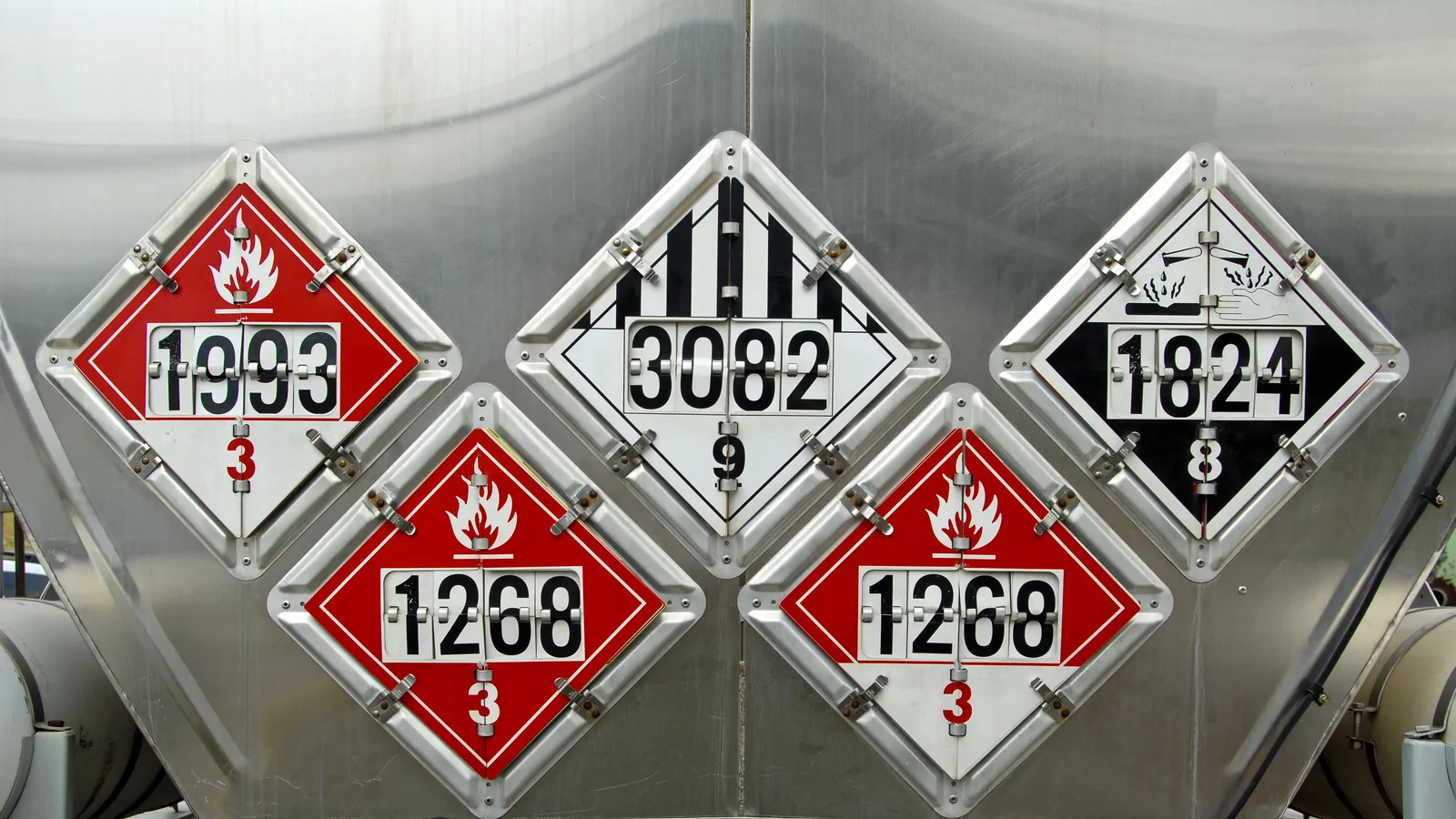
DOT Class 3 flammable liquids. This includes most paint solvents, thinners, and solvent-borne resins. Common examples include mineral spirits (flash point 100-140°F), xylene (flash point 63°F), acetone (flash point 0°F), and toluene (flash point 40°F). These products require placarding, proper DOT shipping papers, and drivers with hazmat endorsements.
Combustible liquids. Materials with flash points between 100°F and 200°F fall into combustible categories. While not classified as DOT Class 3 in all quantity thresholds, they still present fire risk and require proper handling. Many alkyd resins and high-flash solvents fall into this category.
Equipment grounding and bonding. Static electricity can ignite flammable vapors during loading and unloading operations. A single spark from an ungrounded hose or tank connection can ignite solvent vapors, causing flash fires or explosions. Proper grounding and bonding of tanker equipment is mandatory when transferring Class 3 materials. The carrier's grounding cable must establish electrical continuity between the tank truck, transfer hose, and receiving vessel before any product flows. Carriers handling coatings chemicals must maintain compliant grounding systems and verify continuity before each transfer.
Emergency response planning. Facilities receiving flammable coatings chemicals need fire suppression systems rated for Class B fires (flammable liquids). Spill containment, fire extinguishers, and emergency shower/eyewash stations must meet OSHA and NFPA standards. Carriers must carry emergency response information (ERI) and know how to access CHEMTREC assistance for spills or accidents.
Vapor space management. Partially loaded tanks containing flammable solvents or resins create vapor space. This vapor, when mixed with air in the right proportion, becomes explosive. The flammable range for most paint solvents sits between 1% and 10% vapor concentration in air. Within this range, any ignition source triggers an explosion. Nitrogen blanketing systems or vapor recovery equipment may be required for certain high-hazard materials. For additional context on managing vapor-prone freight, see our guide on shipping methanol, another highly flammable chemical requiring similar controls.
Temperature sensitivity in paint chemical shipping
Temperature damage is permanent and costly. Unlike many industrial chemicals that recover from temperature excursions, paint raw materials often undergo irreversible changes that render them unusable.
Freeze damage in latex emulsions. Water-based acrylic emulsions, the backbone of modern architectural paints, freeze at approximately 32°F. Freezing breaks the emulsion structure. The polymer particles coagulate, and the product separates into solids and liquid. This damage is permanent. The material cannot be re-emulsified and must be disposed of as waste. For a manufacturer, a frozen tanker load represents complete product loss, typically $15,000 to $40,000 per load.
Cold-weather shipping protocols. From November through March in northern regions, insulated tankers or temperature-controlled equipment become mandatory for freeze-sensitive materials. Carriers must monitor ambient temperatures along the route and add heating capability when forecasts predict temps below 35°F. Some shippers require transit temperature logging with data recorders to verify that the product stayed within specification throughout the journey.
Crystallization in resins. Certain resins crystallize or increase in viscosity at low temperatures. While not always permanent damage, crystallized material may not pump properly and can require extended warming time before unloading. Polyurethane prepolymers, some epoxy resins, and high-solids alkyds are particularly prone to cold-thickening.
Heat-sensitive additives. On the other end of the spectrum, some specialty additives degrade at elevated temperatures. Biocides, UV stabilizers, and certain catalysts can lose effectiveness if exposed to sustained heat above their rated storage temperature. Summer transport in hot climates may require insulated equipment to prevent thermal damage.
Storage and staging considerations. Temperature management extends beyond the truck. Product staged outdoors at distribution centers or manufacturing facilities can freeze or overheat while waiting to unload. Coordinated scheduling, indoor staging areas, and quick turnaround help minimize exposure to temperature extremes.
Shipping considerations for paint chemicals
Formulation precision. Paint manufacturing is precise chemistry. Every additive is dosed at specific concentrations. Contamination from prior cargo, even at trace levels, can affect color, gloss, viscosity, adhesion, dry time, and durability of the finished paint. Tank wash verification is non-negotiable.
Hazmat diversity. A single paint manufacturer may receive shipments spanning non-hazardous, Class 3, Class 6.1, Class 8, and Class 9 classifications in a single week. Your logistics partner needs to manage this hazmat diversity seamlessly.
Temperature sensitivity. Latex emulsions freeze and are permanently damaged below 32°F. Some resins crystallize at low temperatures. Certain additives are heat-sensitive. Temperature management during shipping prevents quality loss.
Volume variation. Base resins and solvents ship in full tanker loads. Specialty additives may ship in smaller volumes. Your logistics partner needs to handle both ends of the volume spectrum efficiently.
Carrier qualifications. Not every tanker carrier can handle coatings chemicals competently. The carrier must hold current hazmat certifications for the specific DOT classes being shipped, maintain equipment clean enough to meet paint-grade purity standards, provide temperature-controlled or insulated equipment for freeze-sensitive materials, and demonstrate consistent on-time performance to prevent staging delays and temperature exposure.
How Total Connection ships paint and coatings chemicals
We handle the full range of paint and coatings raw materials, resins, solvents, pigment dispersions, and the complete spectrum of specialty additives. Our carrier network includes operators with the equipment, hazmat certifications, and cleanliness standards that coatings manufacturers demand.
Call 732-817-0401 or request a quote.
Frequently Asked Questions
What chemicals go into paint manufacturing?
Base resins (acrylics, alkyds, epoxies, polyurethanes), solvents and coalescents, pigment dispersions, rheology modifiers, dispersants, defoamers, biocides, UV stabilizers, and various specialty additives. A single formulation can contain 15-20 different chemical components.
Are paint chemicals hazardous materials?
Many are. Solvents are typically DOT Class 3 (flammable). Biocides are often Class 6.1 (toxic). Some resins carry Class 3 or Class 9 classifications. Water-based emulsions and many additives are non-hazardous. Each product requires SDS verification.
Why is tank cleanliness so important for paint chemicals?
Paint formulations are precise. Contamination at trace levels can affect color, gloss, viscosity, adhesion, dry time, and durability. Even cross-contamination between different grades of the same chemical type can cause quality problems.
Can latex emulsions recover from freezing during transport?
No. Freezing breaks the emulsion structure permanently. The polymer particles coagulate, the product separates, and cannot be re-emulsified. A frozen tanker load becomes total loss, requiring disposal as waste.
Does Total Connection ship all types of paint raw materials?
Yes, base resins, solvents, pigment dispersions, and the full range of specialty additives. We manage the hazmat diversity, temperature sensitivity, and purity requirements across the entire coatings chemical portfolio.