

A bulk liquid transport company moves industrial chemicals, food-grade liquids and petroleum products in tankers, ISO tanks or flexitanks, matching tank material and configuration to each product under DOT hazardous materials rules in 49 CFR Parts 172 through 180. The company you choose determines whether that freight arrives on spec or triggers a contamination event, a compliance violation or a shutdown at your receiving dock.
Unlike dry freight, where a missed delivery or a damaged pallet is an inconvenience, failures in liquid bulk transport are expensive and fast. A contaminated tanker load of specialty chemical can destroy an entire production batch. An improperly washed tank can cause a dangerous chemical reaction. A carrier without the hazmat authority for your specific hazard class can trigger a DOT enforcement action against a load you already tendered. For shipper-led capacity and hazmat-fluent execution on this freight, see Total Connection's liquid bulk and chemical logistics service.
What bulk liquid transport companies do
Equipment selection
Every liquid product has specific equipment requirements. Tank material (stainless steel, aluminum, rubber-lined, fiberglass reinforced plastic) has to be compatible with the chemical being shipped, and so does configuration: insulated or non-insulated, single or multi-compartment, heated or ambient, center or rear unload, pump-off or air-blown. A competent bulk liquid transport company confirms the spec with the carrier before dispatch instead of discovering a mismatch when the truck arrives at your dock.
Loading and unloading
Loading is where the most expensive mistakes happen. Shipper and carrier both need qualified people on site to verify the right product is going into the right tank, that the tank has been properly washed, and that all connections and fittings are secure and compatible. Contamination events and spills often start with a skipped step here.
Tank washing
Whatever moved in that tank previously has to be removed and the tank certified clean. The wash varies by chemical: a simple rinse for some, steam cleaning, caustic wash or third-party certification for others. Improper tank washing is the most common cause of product contamination in liquid bulk shipping.
Hazmat compliance
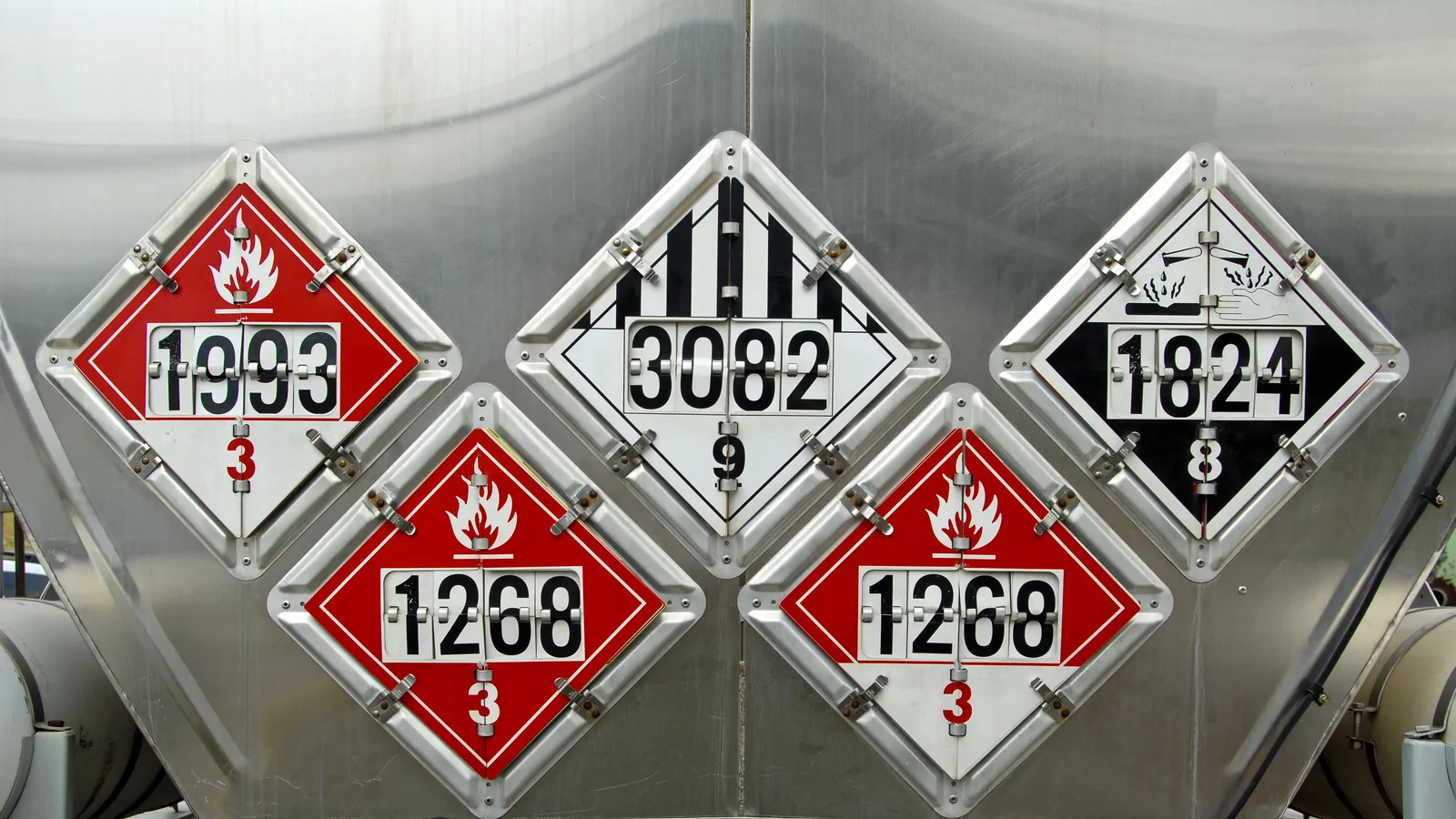
Most industrial chemicals shipped in liquid bulk fall under 49 CFR Parts 172 through 180, which govern classification, packaging, marking, placarding and documentation. One documentation error can produce a DOT violation, an out-of-service order or a roadside delay that cascades into a missed delivery. The carrier must hold authority for the specific hazard classes you ship, not a generic hazmat endorsement.
Quality maintenance in transit
Temperature swings cause solidification, separation or degradation. Road vibration causes foaming. A qualified transport company specifies insulated or heated equipment for temperature-sensitive products, nitrogen blanketing for oxygen-sensitive ones, and the tank material that keeps the product on spec.
What goes wrong when you choose the wrong carrier
The failure modes in liquid bulk are not minor. Each of the following is a routine consequence of picking a provider on price alone.
- Product contamination. A tanker that was not properly washed carries residue from a prior load that reacts with or contaminates your product. In the best case the load is rejected at delivery; in the worst case, contamination is not detected until your customer uses the product, destroying their batch and your business relationship.
- Equipment failures. A leaking valve bleeds product across the haul. A failed heating system can solidify a temperature-sensitive chemical inside the tank. Worn hose fittings can fail during unloading and trigger a hazmat response.
- Compliance violations. A carrier hauling hazmat without proper authority, documentation or placarding is a liability for both carrier and shipper. DOT enforcement can include fines and out-of-service orders.
- Delivery failures. Late deliveries in chemical manufacturing shut down production lines. A carrier that misses a narrow hazmat unloading window can push your truck to the next available slot a day later, and a load sitting in detention accrues charges while your plant waits on raw material.
Broker vs. asset carrier: which should you use
Bulk liquid transport splits into two models. An asset carrier owns the trucks and runs its own lanes with its own drivers and its own tank fleet. A broker works for the shipper, matching equipment and carrier to each load from a vetted network. For a fuller explanation of that model, see what a liquid bulk freight broker actually does.
For shippers with predictable, single-lane volume that fits one carrier's footprint and one tank spec, an asset carrier can work well: the same equipment, the same drivers, a rate you can budget against. The model strains when the product mix changes. A fleet running rubber-lined trailers may have nothing food-grade available in the week you need it, and a shipper moving Class 8 corrosives one month and a food-grade load the next is asking one fleet to be two fleets. For shippers who move varied products across changing lanes, or who need capacity when a primary carrier falls through, a broker built for this freight covers more ground and removes single points of failure.
| Consideration | Asset carrier | Broker |
|---|---|---|
| Equipment options | Limited to its own fleet | Matches any spec from a vetted network |
| Lane coverage | Its own lanes | National, multi-modal |
| Backup capacity | One tier | Replacement carrier on standby |
| Whose interest | Keeps its trucks full | Works for the shipper |
How to choose the right bulk liquid transport company
- Verify specialization. The company should specialize in liquid bulk and chemical freight, not handle tankers as a sideline alongside dry van and flatbed operations. For background on what separates a specialist, see our guide to choosing a chemical hauling company.
- Check safety records. Review CSA scores, FMCSA safety ratings and inspection history for liquid bulk freight specifically.
- Evaluate carrier screening. If working with a broker, ask how they screen carriers: insurance minimums, hazmat authority verification, equipment condition and tank wash records. For a deeper look at how tanker equipment varies by product, see our complete guide to liquid bulk transport equipment.
- Confirm 24/7 availability. Chemical freight moves around the clock. Your provider needs to be reachable at all hours, not just during business hours in one time zone.
- Ask how problems get handled. Ask about a specific delay, rejection or spill scenario rather than routine on-time percentages. How a company responds when a load goes wrong tells you more than any brochure.
Insurance and credentials to verify
Credentials separate a compliant chemical transport provider from a liability. Before you tender a load, confirm the following.
FMCSA and OTI authority
Verify active FMCSA operating authority and the specific hazmat classes the carrier or broker is authorized for on SAFER, FMCSA's public safety and fitness records system. For international moves, confirm the provider holds OTI/NVOCC authority. Total Connection holds FMC OTI/NVOCC license 026203NF and FMCSA authority under MC 280101.
Insurance minimums
The industry standard is $1 million in general liability coverage. Total Connection carries $5 million, five times that standard, which matters when the freight moving is a full tanker load of a high-value or hazardous chemical.
Hazmat class authorization
A broker or carrier's authority needs to match the actual hazard class you ship, not a general hazmat endorsement. Sulfuric acid under UN 1830, for example, moves in a DOT 412 cargo tank rated for corrosives, while most non-pressure chemicals move under a DOT 407 spec. Ask for the tank wash records and prior-cargo documentation for the specific equipment assigned to your load.
Why chemical shippers choose Total Connection
Total Connection has operated as a liquid bulk freight broker since 1995, working with more than 650 shippers across 30-plus years and vetting a network of more than 100,000 carriers against a compliance checklist that covers insurance, hazmat authority and equipment condition. Every shipment gets a dedicated account manager: one person, one phone number, the same person next year. See our complete guide to liquid bulk freight for how the full mode fits together.
The same team also coordinates tank wash programs, handles IBC and drum backhauls, and runs dedicated trailer campaigns and mid- to long-term equipment and storage rentals for shippers with recurring liquid bulk volume. Beyond liquid bulk, the same account manager arranges the drayage, the inland truckload, the warehousing, the customs entry and the export ocean leg, so one provider owns the whole move rather than handing it off between vendors. For carrier-side comparisons across the tanker market, see our guide to tanker trucking companies.
Get your bulk liquid shipment moving
Choosing a bulk liquid transport company comes down to equipment matched to your product, verified tank washes, hazmat authority that fits your hazard class, and credentials you can check before you tender. Total Connection covers the United States, Canada and Mexico with the licensing, insurance and dedicated account team built for this freight. Request a quote at totalconnection.com/quote?mode=liquid-bulk or call 732-817-0401.
What is a bulk liquid transport company?
A bulk liquid transport company is a carrier or broker that moves liquid products in tankers, ISO tanks or flexitanks, matching equipment to the chemistry of the product being shipped. It operates under DOT hazardous materials rules in 49 CFR Parts 172 through 180 and confirms tank compatibility and cleanliness before every load.
How do I verify a bulk liquid carrier's hazmat authority?
Check the carrier or broker's active FMCSA operating authority and specific hazmat class endorsement on SAFER, FMCSA's public safety and fitness records system, before tendering the load. Confirm insurance minimums and ask for tank wash documentation on the specific equipment assigned to your shipment.
Should I use a broker or an asset-based tanker carrier?
An asset carrier fits shippers with predictable, single-lane volume that matches one carrier's own equipment and footprint. A broker built for liquid bulk covers varied products and changing lanes with backup capacity drawn from a vetted network, which matters when a primary carrier falls through.
What insurance should a bulk liquid transport company carry?
The industry standard is $1 million in general liability coverage. Total Connection carries $5 million, five times that standard, which is worth asking any provider you are evaluating to match or explain.
What causes most contamination incidents in liquid bulk shipping?
Improper or unverified tank washing between loads is the leading cause of contamination in liquid bulk shipping. Equipment mismatched to the product's chemistry, such as the wrong tank material or a missing nitrogen blanket, is the second most common cause.
What tanker specification is used for corrosive chemicals like sulfuric acid?
Sulfuric acid, classified under UN 1830, moves in a DOT 412 cargo tank built for corrosives at higher pressure ratings. Most non-pressure industrial chemicals move under the DOT 407 specification instead.