
What Is Dry Bulk Trucking
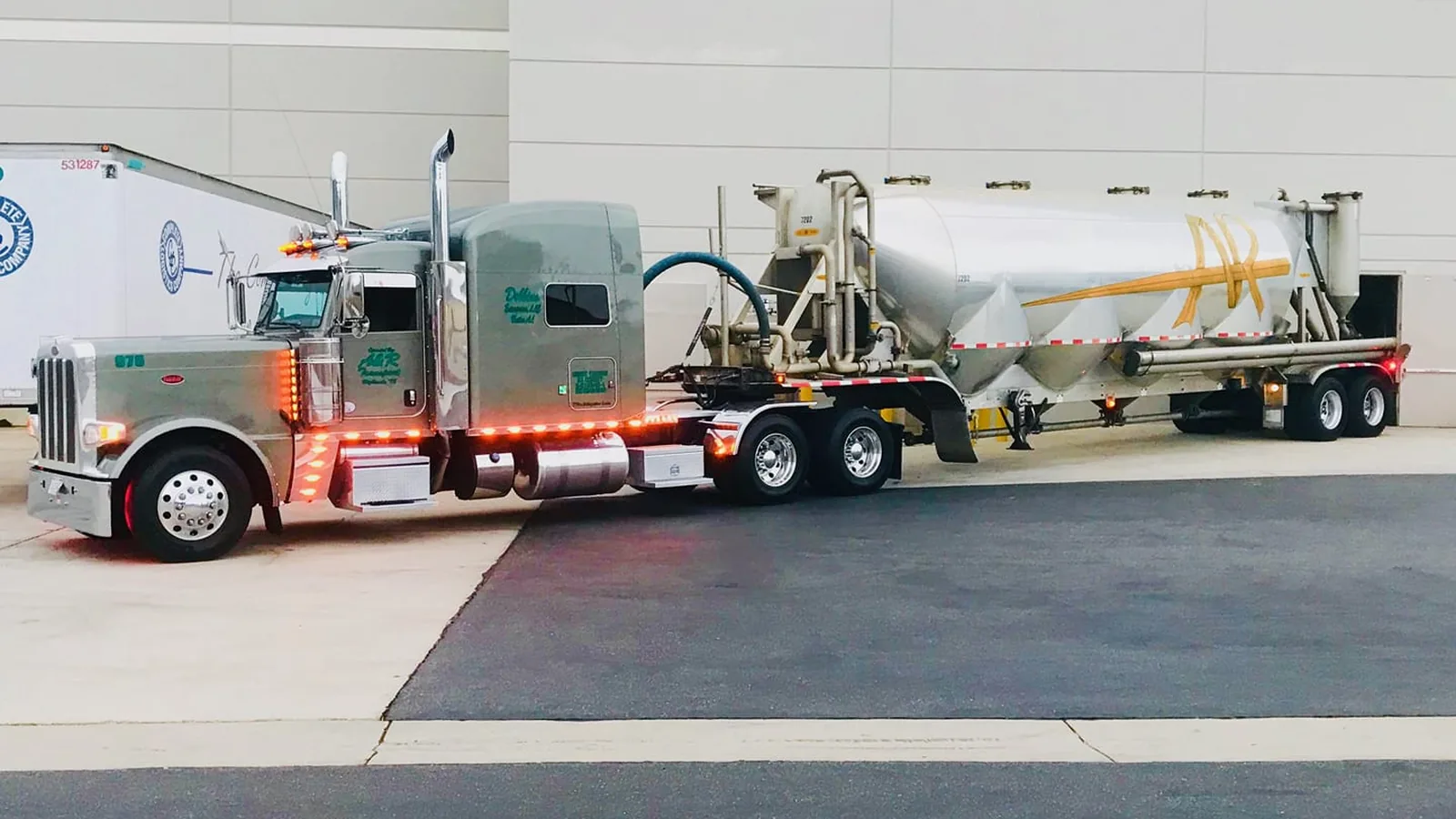
Dry bulk trucking is the truckload transportation of unpackaged solid materials (pellets, powders, granules, and aggregates) in pneumatic dry bulk trailers of 1,000 to 1,600 cubic feet with 40,000 to 48,000 lb payloads, or in hopper, end-dump, and frac sand trailers. Common loads include plastic resin pellets, cement, fly ash, dry chemicals, food-grade flour, sugar, and frac sand. The defining feature is the discharge method: a driver-operated PTO blower pushes the commodity through a 4-inch hose at 75 to 80 PSI into a receiving silo, or gravity dumps it through a hopper bottom.
Dry bulk is not a dry van moving super sacks, and it is not break-bulk. The trailer, the driver training, the receiving infrastructure, and the regulatory framework all sit in a separate category from general freight. Industries that depend on dry bulk include plastics manufacturing, construction (cement, lime, fly ash), energy (frac sand and proppants), agriculture (flour, sugar, animal feed), and industrial chemicals (soda ash, sodium bicarbonate, salt).
If you treat a dry bulk load like a standard truckload move, the trailer arrives at destination and cannot unload. The receiving silo sits empty, the plant downstream stops, and you eat the deadhead back plus demurrage at origin.
Dry Bulk vs Liquid Bulk: 6 Key Differences
Both modes move commodities in bulk under shipper-friendly capacity models, but the equipment, regulatory profile, and operational mechanics are different. The table below sets the comparison side by side.
| Attribute | Dry Bulk | Liquid Bulk |
|---|---|---|
| Equipment | Pneumatic dry bulk trailer, hopper, end-dump, frac sand, walking-floor | DOT 407 chemical tanker, DOT 412 corrosives tanker, MC 331 pressure tanker, ISO tank |
| Capacity unit | Cubic feet (1,000 to 1,600 cu ft) | Gallons (5,500 to 7,000 gal) |
| Discharge method | Pneumatic blower at 75 to 80 PSI through 4-inch hose, or gravity | Pump unload at 4 to 6 GPM, or pressure unload |
| Washout | Dry sweep, blow-out, and (when needed) wet wash with full drying cycle | Wet wash with detergent, rinse, and certification by NTTC wash code |
| Common hazmat class fit | Class 4.1, 4.2, 4.3, 5.1, and dry Class 8 | Class 3, 6.1, 8, and 5.2 |
| Regulatory framework | 49 CFR Part 173 bulk solid packaging | 49 CFR Part 173 liquid hazmat packaging, plus DOT 407/412 build specs |
The single rule shippers miss most: a liquid bulk tanker cannot carry resin pellets, and a pneumatic dry bulk trailer cannot carry sulfuric acid. The equipment is purpose-built and the mismatch ruins the load. For the parallel breakdown on liquid equipment, see our liquid bulk tanker equipment guide.
Types of Dry Bulk Equipment
Picking the right trailer is the first operational decision in any dry bulk move. Each design serves a specific commodity profile and a specific receiving setup.
- Pneumatic dry bulk trailer. The most common dry bulk asset on U.S. lanes. Capacity 1,000 to 1,600 cu ft. PTO-driven blower discharges through a 4-inch hose at 75 to 80 PSI. Handles plastic resin pellets, cement, fly ash, flour, sugar, soda ash, and most fine powders or granules.
- Hopper trailer. Gravity-discharge bottom-dump for free-flowing granules and aggregates. Common for grain, sand, and certain low-density chemicals. Cheaper to operate than pneumatic, but the receiver needs a below-grade hopper or pit.
- End-dump trailer. Aggregate, sand, gravel, and construction materials. The trailer hydraulically tilts to dump the load. Used in road construction, mining transfer, and large aggregate moves.
- Frac sand trailer. Purpose-built for the energy market with reinforced shells, higher payload tolerance, and pneumatic discharge into wellsite silos. Typical loads 47,000 to 48,000 lb of proppant sand.
- Walking-floor trailer. Conveyor-floor design for low-density solids that resist gravity flow, such as wood chips, biomass, or recycled material. Used where pneumatic discharge would damage the commodity.
Commodities Commonly Moved in Dry Bulk
Density drives equipment selection more than weight does. Light commodities maximize the trailer's cubic capacity; heavy commodities hit legal weight long before the trailer is full.
- Plastics. Polyethylene (PE), polypropylene (PP), and PVC compounds in pellet form. Typical density 35 to 40 lb/cu ft. A pneumatic trailer at 1,500 cu ft cubes out around 55,000 lb gross, well under legal weight on most lanes.
- Construction materials. Cement (94 lb/cu ft), fly ash (60 to 90 lb/cu ft), and lime. These commodities weight out before they cube out, capping payload around 47,000 lb.
- Industrial chemicals. Soda ash (Na2CO3, ~60 lb/cu ft), sodium bicarbonate, salt, and dry caustic flakes.
- Food-grade. Flour, sugar, starch, and dry milk products. Requires food-grade certified washout and dedicated equipment where possible.
- Energy. Frac sand and proppants. Typical density 90 to 100 lb/cu ft. Loaded to legal weight, not cube.
How Dry Bulk Loading and Unloading Actually Works
Loading happens at the producing plant under a silo or storage hopper. Gravity drops the product through a top hatch into the trailer, or in some plants a vacuum loader pulls the commodity up from the storage vessel. The driver seals the hatches, checks the load weight against tare and gross, and runs.
Unloading is where dry bulk diverges from every other freight mode. The driver couples a 4-inch discharge hose from the trailer to the receiving silo inlet, engages the PTO blower off the truck's transmission, and pressurizes the trailer to roughly 15 PSI internal while the blower pushes air through the product line at 75 to 80 PSI. The commodity moves as a fluidized stream into the silo. A typical 1,500 cu ft load discharges in 90 to 120 minutes.
The receiving facility must have a silo or hopper with a properly sized vent and a dust collection system rated for the commodity. A generic dry van carrier cannot unload because the tractor has no PTO blower, the trailer has no pressure rating, and the carrier has no discharge fittings. This is the single most common reason a load fails at destination.
Hazmat Considerations for Dry Bulk
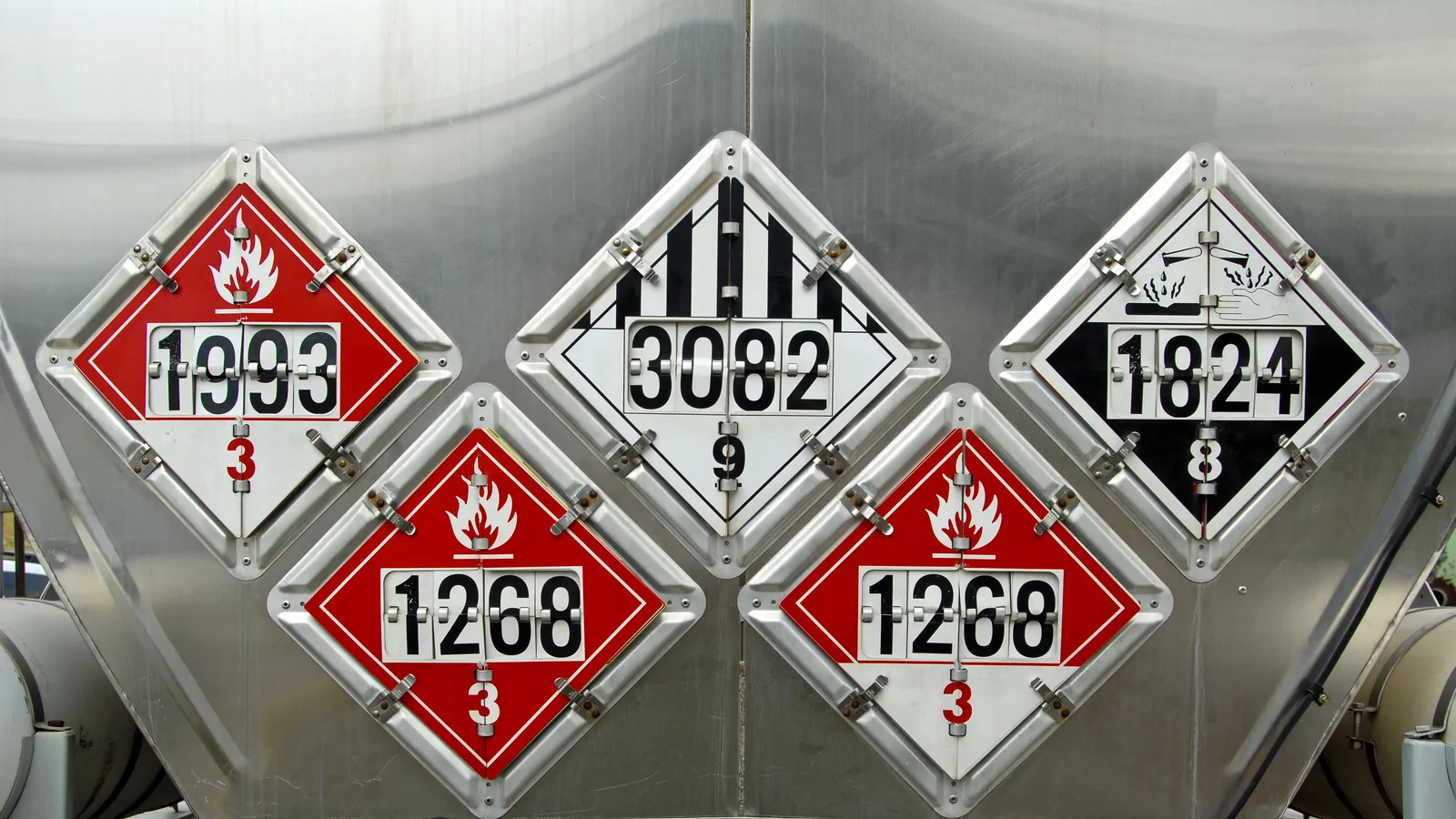
Dry bulk hazmat is a smaller universe than liquid bulk hazmat but the consequences of mishandling are the same. Five hazard classes dominate the dry side, each governed by 49 CFR Part 172 placarding rules and Part 173 packaging rules.
- Class 4.1, flammable solids. Sulfur (UN 1350), nitrocellulose (UN 2555), and similar. Placarded FLAMMABLE SOLID. Requires the carrier's hazmat registration and driver H endorsement.
- Class 4.2, spontaneously combustible. Charcoal briquettes (UN 1361), white phosphorus, and certain metal powders. Placarded SPONTANEOUSLY COMBUSTIBLE.
- Class 4.3, dangerous when wet. Calcium carbide (UN 1402), sodium metal (UN 1428). Cannot share equipment with prior water-based washes without full drying.
- Class 5.1, oxidizers. Ammonium nitrate (UN 1942), sodium chlorate (UN 1495), calcium hypochlorite. Placarded OXIDIZER. Cannot ride with flammables or organics.
- Class 8, dry corrosives. Sodium hydroxide flakes (UN 1823), potassium hydroxide. Same hazard class as liquid acids and caustics but in dry form.
Each placarded load triggers the full hazmat documentation chain: shipping paper, emergency response information per the DOT Emergency Response Guide, and driver hazmat training records under 49 CFR Part 172.704 recertified every three years. For the full ground-transport regulatory picture, see our coverage of hazmat trucking regulations.
How to Choose a Dry Bulk Carrier
The single most important decision is equipment match. A pneumatic load goes on a pneumatic trailer with a driver trained to operate the blower and seat the discharge hose. A hopper load goes on a hopper. A frac sand load goes on a frac sand trailer rated for the wellsite. Mismatch is the number-one cause of failed loads at destination.
Beyond equipment, the criteria that separate a qualified dry bulk carrier from a generic motor carrier:
- Commodity history on the trailer. Last three loads documented. A trailer that hauled cement yesterday is not your trailer for PE pellets today.
- Pneumatic discharge training. The driver runs the blower, monitors pressure, and walks the hose. Untrained drivers blow out hoses and rupture seals.
- Insurance. $1M general liability is the federal minimum. Chemical-grade and hazmat-rated dry bulk should carry $5M.
- Lane density. A carrier with three trucks on your lane covers surge. A single-asset carrier cannot.
- Surge capacity. Single-truck owner-operators cannot flex when your demand spikes. A non-asset broker matches the right trailer from a vetted carrier base instead of forcing your load onto whatever asset is sitting empty.
For shippers who need both dry bulk and liquid bulk under one point of contact, a hazmat-fluent broker is the working model. We discuss the broader truckload picture in FTL vs LTL freight, and the full broker case in our truckload freight services. Need pneumatic capacity on a specific lane? Request a capacity check and tell us the commodity, origin, and receiving setup.
Frequently Asked Questions
What is dry bulk trucking?
Dry bulk trucking is the truckload transport of unpackaged solid materials in pneumatic, hopper, or end-dump trailers. Common loads include plastic resin pellets, cement, fly ash, frac sand, dry chemicals, and food-grade flour. Pneumatic dry bulk trailers run 1,000 to 1,600 cubic feet of capacity and discharge through a 4-inch hose at 75 to 80 PSI.
What is the difference between dry bulk and liquid bulk?
Dry bulk moves unpackaged solids in pneumatic or hopper trailers measured in cubic feet. Liquid bulk moves liquids in DOT 407 or DOT 412 tankers measured in gallons. The equipment, discharge method, hazmat class profile, and washout protocol are all different. A liquid bulk tanker cannot carry resin pellets, and a pneumatic dry bulk trailer cannot carry sulfuric acid.
What commodities are shipped in pneumatic dry bulk trailers?
Pneumatic dry bulk trailers carry plastic resin pellets (PE, PP, PVC), cement, fly ash, lime, soda ash, sodium bicarbonate, salt, sugar, flour, animal feed, and frac sand. The trailer is selected based on density. Light commodities like fly ash maximize cubic capacity, while heavy commodities like frac sand maximize legal weight at lower volume.
Is dry bulk trucking regulated as hazmat?
Dry bulk trucking is regulated as hazmat when the commodity is classified under DOT 49 CFR Part 172, which covers Class 4.1 flammable solids, Class 4.2 spontaneously combustible, Class 4.3 dangerous when wet, Class 5.1 oxidizers, and certain Class 8 dry corrosives. Non-hazmat dry bulk loads like plastic pellets, cement, and food-grade flour still require pneumatic-trained drivers but skip placarding.
How do I choose a dry bulk carrier?
Match the equipment type to the commodity (pneumatic for fine powders and pellets, hopper for free-flowing granules, end-dump for aggregates). Verify the last three loads on the trailer to rule out cross-contamination risk. Confirm $5M general liability for hazmat dry bulk and ask whether the carrier has pneumatic-trained drivers on the specific lane you need.
What size payload can a pneumatic dry bulk trailer carry?
A standard pneumatic dry bulk trailer holds 1,000 to 1,600 cubic feet of cargo space and a 40,000 to 48,000 lb legal payload. Light commodities like fly ash cube out before they weight out; heavy commodities like frac sand or cement weight out before they cube out. Density (lb/cu ft) is the deciding variable.