
.png)
Drilling without chemicals is impossible. Every stage of oil and gas extraction, from the initial drilling to years of ongoing production, depends on a steady supply of specialty oilfield chemicals delivered to the well site on time and in spec. When those chemicals arrive late, arrive contaminated, or don't arrive at all, the costs escalate fast, a drilling rig sitting idle costs $25,000 to $100,000 per day depending on the operation.
This guide covers the major categories of oilfield chemicals, their shipping requirements, and how to manage the logistics of getting them where they need to be.
For shipper-led capacity and hazmat-fluent execution on this freight, see Total Connection's liquid bulk and chemical logistics service.
Categories of Oilfield Chemicals
Drilling fluids (drilling mud)
Drilling fluids serve multiple functions simultaneously: they cool and lubricate the drill bit, carry rock cuttings to the surface, maintain hydrostatic pressure to prevent blowouts, and stabilize the wellbore wall. Drilling fluids can be water-based, oil-based, or synthetic-based, each with different chemical compositions and handling requirements. Many drilling fluid components are classified as hazardous materials. For a deeper look at the equipment and compliance requirements, see our guide to shipping drilling fluids and additives.
Water-based drilling muds typically contain bentonite clay, barite for weight, polymers for viscosity control, and pH modifiers. Oil-based muds use diesel or mineral oil as the base fluid with emulsifiers, organophilic clays, and lime. Each formulation has different shipping requirements based on hazmat classification, flash point, and environmental regulations.
Completion chemicals
After drilling, the well must be prepared for production. Completion chemicals include acids for matrix stimulation, breakers for dissolving fracturing fluid residue, and specialized fluids for perforating and gravel packing. Many completion chemicals are highly corrosive or reactive and require strict hazmat handling.
Hydrochloric acid and hydrofluoric acid blends are common completion fluids that demand specialized tank linings and rigorous safety protocols. Breaker chemicals, which dissolve gel systems after fracturing, are often oxidizers that require segregated shipping and careful temperature control during transport.
Stimulation and fracturing chemicals
Hydraulic fracturing uses massive volumes of water mixed with chemical additives, friction reducers to decrease pumping pressure, gelling agents to carry proppant into fractures, acids to dissolve rock, biocides to prevent bacterial growth, and scale inhibitors to prevent mineral buildup. Surfactants used in oilfield applications, including enhanced oil recovery, also ship on tight frac-job timelines because operations run continuously once they start.
The logistics challenge with frac chemicals is volume and timing. A single frac stage can require 50,000 to 100,000 gallons of mixed chemicals, with multi-stage horizontal wells consuming millions of gallons total. This means dozens of tanker loads must arrive in precise sequence over 24-72 hour periods, with no gaps that would halt operations.
Production chemicals
Once a well is producing, ongoing chemical treatment prevents corrosion, scale, paraffin wax buildup, emulsion problems, and bacterial contamination. Production chemicals ship on recurring schedules for the life of the well, which can be decades. Corrosion inhibitors protect pipe and equipment. Scale inhibitors prevent mineral deposits. Demulsifiers separate oil and water. Pour point depressants keep crude flowing in cold conditions. Biocides control sulfate-reducing bacteria that cause souring.
Production chemical logistics differ from drilling and completion chemicals because they operate on predictable, recurring schedules rather than project-based campaigns. This allows for route optimization and standing carrier relationships, though delivery reliability remains critical since production downtime is expensive.
Hazmat Requirements for Shipping Oilfield Chemicals
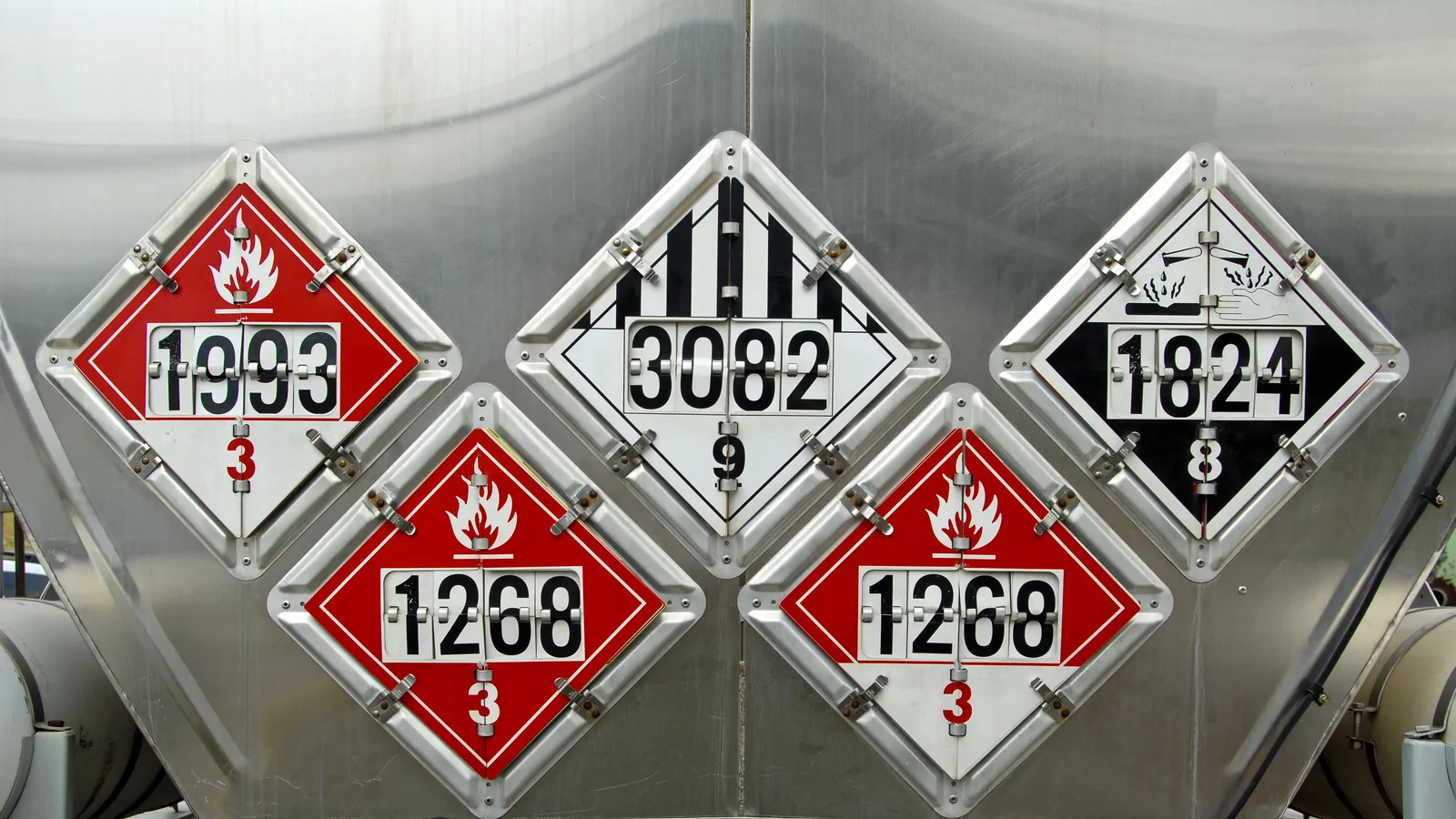
Most oilfield chemicals are classified as hazardous materials under DOT 49 CFR. This means every shipment requires hazmat-certified carriers, proper documentation and placarding, CDL hazmat-endorsed drivers, and compliant tanker equipment.
Common hazard classes for oilfield chemicals include Class 3 flammable liquids (diesel-based drilling muds, solvents), Class 8 corrosives (acids, caustics, completion fluids), Class 9 miscellaneous (elevated temperature materials, environmentally hazardous substances), and Class 6.1 toxic substances (biocides, certain production chemicals). Many oilfield chemicals meet criteria for multiple hazard classes, requiring careful classification and documentation.
Shippers must provide accurate Safety Data Sheets (SDS), proper shipping names, UN numbers, hazard class and packing group, emergency response information, and 24-hour emergency contact numbers. Carriers must ensure their equipment meets DOT specifications for the specific hazard class, maintain current hazmat certifications, inspect and placard vehicles properly, and follow routing restrictions and parking regulations.
For specialized shipping containers like IBCs (Intermediate Bulk Containers), see our guide on hazmat IBC shipping specifications and regulations.
Tank Cleaning and Cross-Contamination Prevention
Oilfield chemicals are formulated to precise specifications, and even trace contamination from a previous load can render an entire shipment unusable. This makes tank cleaning between loads a critical logistics consideration that directly impacts product integrity and operational timelines.
Different chemical categories require different cleaning protocols. Switching from one oil-based product to another oil-based product may only require a simple rinse. But moving from an acidic completion fluid to a water-based drilling mud requires multi-stage cleaning with neutralization, hot water wash cycles, and verified residue testing before loading. Some chemicals demand steam cleaning or specialized solvent flushes to remove residual films.
Carriers specializing in oilfield chemicals maintain cleaning certifications and documented procedures for common product transitions. The logistics challenge is timing: tank cleaning can add 4-12 hours between loads depending on the products involved and the facility location. Experienced freight brokers pre-plan cleaning requirements when scheduling pickups to avoid delays that cascade through multi-load operations.
Wellsite Delivery Considerations for Oilfield Chemicals
Delivering oilfield chemicals isn't like delivering to a warehouse or manufacturing plant. Well sites present unique logistical challenges that require experienced carriers and careful planning.
Most drilling and completion sites are in remote locations, often miles from paved roads. Access roads can be gravel, dirt, or freshly graded lease roads that become impassable in wet conditions. Carriers need equipment appropriate for off-road delivery, clearance for rough terrain, and experience navigating remote areas without reliable GPS coverage.
Site access timing is another critical factor. Active drilling operations run 24/7, but frac operations often have specific windows for chemical deliveries to avoid interfering with pumping operations or creating congestion at the well pad. Coordination with the operator's chemical supplier and logistics coordinator is essential.
Unloading procedures vary by site and chemical type. Some deliveries transfer directly into frac tanks or batch tanks. Others require pumping into temporary storage or mixing vessels. The carrier must have compatible connection fittings and understand site-specific unloading protocols. Many operators require site-specific safety orientations before allowing trucks on location.
Weather and seasonal conditions significantly impact wellsite delivery. Winter operations in northern basins face freeze risks that require heated trailers or insulated equipment. Summer heat in southern regions can cause vapor pressure issues with volatile chemicals. Spring thaw conditions in Canada and the Dakotas can make roads completely impassable for weeks.
Carrier Selection Criteria for Oilfield Chemical Freight
Not every hazmat carrier can handle oilfield chemical delivery. The combination of hazmat compliance, remote site access, and operational timing demands creates a specialized carrier subset that requires careful vetting.
Key qualification criteria include current hazmat certifications and safety ratings, equipment appropriate for the specific chemical and delivery location, demonstrated experience with wellsite delivery in the target basin, 24/7 dispatch capability for emergency or off-hours loads, and proper insurance coverage including pollution liability and wellsite access riders. Carriers must also maintain flexibility for weather delays and site schedule changes that are common in oilfield operations.
Building a qualified carrier network takes time and local market knowledge. Freight brokers specializing in oilfield logistics maintain pre-vetted carrier relationships in every major producing basin, allowing rapid capacity deployment when drilling or completion schedules accelerate unexpectedly.
How Total Connection Handles Oilfield Chemical Logistics
We've been shipping oilfield chemicals since 1995, across every major US producing basin. Our carrier network includes operators who specialize in oilfield delivery with the right equipment, hazmat certifications, and site access experience.
We manage the full logistics chain: carrier selection and compliance screening, equipment matching to the specific chemical, tank wash coordination, DOT documentation, delivery scheduling coordinated with drilling and completion timelines, and 24/7 shipment monitoring.
Call 732-817-0401 or request a quote for your oilfield chemical shipments.
Frequently Asked Questions
What chemicals are used in oil and gas drilling?
Drilling fluids (water-based, oil-based, or synthetic), completion acids, fracturing chemicals (friction reducers, gelling agents, biocides, scale inhibitors), and production chemicals (corrosion inhibitors, demulsifiers, pour point depressants, paraffin inhibitors). Each has specific handling, equipment, and compliance requirements.
Are oilfield chemicals hazardous materials?
Most are. Acids, solvents, biocides, and many other oilfield chemicals are classified under DOT hazmat regulations. Every shipment requires hazmat-certified carriers, proper documentation, and compliant equipment.
How quickly can oilfield chemicals be shipped?
For standard orders, within 24-48 hours on most lanes. For urgent needs during active drilling or frac operations, same-day dispatch is available through our 24/7 operations team. The key is having a logistics partner with carrier depth in oilfield regions.
Can Total Connection handle multi-truck oilfield chemical deliveries?
Yes. Frac operations and large drilling programs often require coordinated multi-truck deliveries on precise schedules. We manage the sequencing, timing, and carrier coordination for multi-load programs as a standard service.
What equipment is needed to transport oilfield chemicals?
Most oilfield chemicals require DOT-certified chemical tankers with appropriate linings (stainless steel, epoxy, or rubber depending on the chemical), hazmat placarding, and compliant safety equipment. Temperature-controlled trailers may be needed for chemicals sensitive to heat or cold. Tank configuration depends on volume, product compatibility, and whether the chemical requires single-compartment or multi-compartment delivery.