
An ISO tank is a reusable steel tank container built to ISO standards for repeat bulk liquid shipments, while a flexitank is a single-use flexible bladder fitted inside a standard 20-foot container for one-way, non-hazardous bulk liquid moves. Both fill the same 20-foot footprint and top out around 6,340 gallons (24,000 liters), but they solve different problems for different freight, and picking wrong costs shippers either unnecessary spend or a rejected load at the terminal.
The choice comes down to what is in the tank, how often you ship it, and whether the equipment needs to survive a second trip. Get that wrong on a hazmat load and you have a compliance problem, not just a cost problem.
What Is an ISO Tank Container
An ISO tank is a cylindrical steel tank mounted inside a rectangular steel frame built to ISO 1496-3 standards, sized to stack, lift and rail like any other 20-foot container. The tank shell sits inside the frame with insulation, heating coils or a stainless interior depending on the product it is built to carry.
Capacity typically runs 5,000 to 6,340 gallons (21,000 to 24,000 liters), depending on the product density and the frame configuration. The steel construction and valve assembly are designed for repeat use, which is the core reason ISO tanks dominate hazmat and food-grade bulk liquid movement: the same tank goes out again after a tank wash and inspection, not into a landfill.
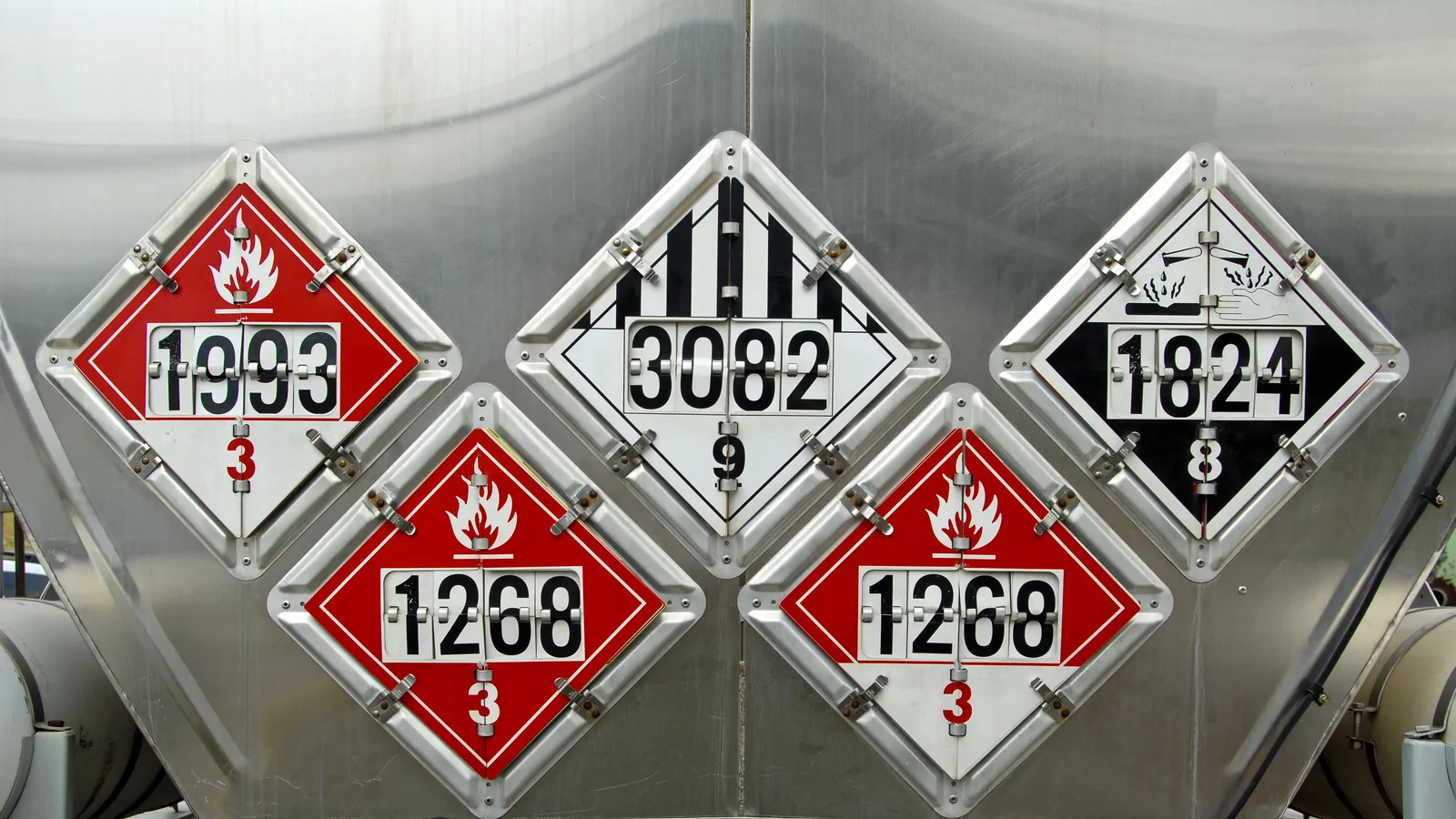
ISO tanks used for hazardous materials must comply with hazard class placarding and UN portable tank specifications (T-codes) under IMDG and 49 CFR Parts 172 through 180. That means the tank itself carries a design code that matches the product's hazard class, packing group and compatibility requirements, and that code has to be verified before the tank is loaded.
What Is a Flexitank
A flexitank is a single-use flexible bladder, usually multi-layer polyethylene, that gets installed inside a standard 20-foot dry container and filled through a valve and fitting at the container door. It converts a box built for pallets and boxes into bulk liquid capacity without touching the container's structure.
Flexitanks hold up to 24,000 liters (about 6,340 gallons) in a standard 20-foot container, similar to an ISO tank's ceiling, but the container itself has to be prepared first. Flexitanks require a container in good condition with no protruding bolts or damage, plus proper bulkhead and door bracing before filling, because the bladder relies on the container walls for structural support rather than carrying its own frame.
Flexitanks are not approved for DOT hazard class liquids or most Class 3, 6.1, or 8 chemicals due to lack of secondary containment integrity. They are built for non-hazardous liquids: food oils, glycerin, wine, non-hazardous industrial liquids, where a single one-way trip and disposal after unloading make sense.
ISO Tank vs Flexitank: Side by Side Comparison
Both options move roughly the same volume in the same footprint. The similarities stop there.
| Factor | ISO Tank | Flexitank |
|---|---|---|
| Capacity | 5,000 to 6,340 gallons | Up to 6,340 gallons |
| Reusability | Reusable after tank wash | Single use, discarded after unload |
| Hazmat eligibility | Approved for Class 3, 5.2, 6.1, 8 with correct T-code | Not approved for hazard class liquids |
| Food-grade eligibility | Yes, with kosher or food-grade wash certification | Yes, for non-hazardous food liquids |
| Typical cost driver | Tank lease and repositioning | Bladder purchase, no reposition cost |
Capacity and Payload
ISO tanks and flexitanks land in the same volume range on paper, but ISO tanks generally deliver more consistent usable payload because the rigid shell does not shift or settle during transit the way a flexible bladder can. A flexitank's actual fill volume also depends more heavily on the container's internal condition and bracing quality.
Cost per Shipment
Flexitanks are usually cheaper per one-way shipment of non-hazardous liquid because there is no tank lease or repositioning cost. ISO tanks win on repeat lanes, where the same tank cycles through wash, inspection and reload and the lease amortizes across loads.
Hazmat and Food-Grade Eligibility
Food-grade ISO tanks require kosher or food-grade wash certification between loads, and that certification travels with the tank's cleaning record. Flexitanks can carry non-hazardous food liquids, but never hazard class product, so any load with a UN number and packing group moves in an ISO tank.
When to Choose an ISO Tank
An ISO tank is the right call when any of the following apply to the load:
- The product carries a UN number and hazard class under 49 CFR 172 through 180 or the IMDG Code, which rules out a flexitank entirely.
- The lane repeats often enough that a leased, reusable tank beats buying a new bladder every trip.
- The product needs a specific T-code, insulation, heating coils or stainless interior that only a purpose-built tank shell provides.
- Food-grade or kosher certification is required and needs to be verifiable through a documented wash record.
Repeat chemical and food-grade shippers tend to standardize on ISO tanks for exactly these reasons: the equipment matches the product once and keeps matching it on every subsequent load.
The verification work happens before booking, not at the rack. The tank's data plate carries the design T-code, the last test dates and the cleaning record, and all three have to line up with the product's UN number, hazard class and packing group before anyone opens a manway. On a repeat lane that check becomes routine, because the same tank specification keeps clearing the same product. Tank wash turnaround is the other planning item. The tank has to be cleaned and certified to the next product's standard between loads, and that cycle time belongs in the lane plan rather than in a surprise phone call at origin.
When to Choose a Flexitank
A flexitank makes sense when the shipment profile looks like this:
- The liquid is non-hazardous and does not require a hazard class T-code or hazmat placarding.
- The move is a single shipment or an infrequent lane where leasing a tank does not pencil out.
- The container can be inspected and properly braced before loading, with no structural damage or protruding hardware.
- Lower per-shipment cost matters more than reuse, and there is no ongoing lane to amortize equipment against.
Flexitanks are common for one-way exports of non-hazardous industrial and food liquids where the shipper does not want to carry tank lease costs on an irregular lane.
Installation is the part that decides whether the shipment goes smoothly. The bladder gets fitted, braced and filled at origin through a valve at the container door, and once it is in place that container is committed to one product for one trip. Discharge and disposal at destination belong in the plan too. Confirm before booking that the receiving facility can pump the bladder out, dispose of it and turn the container back in without running past free time, because detention on a box waiting for a disposal contractor erases whatever the flexitank saved on equipment.
Common Mistakes Shippers Make Choosing Between Them
The wrong equipment choice usually shows up at the port or the rack, not in planning, which is expensive timing to find out. Frequent mistakes include:
- Booking a flexitank for a product that turns out to carry a hazard classification, which gets the load rejected at the loading facility.
- Assuming flexitank pricing beats ISO tank pricing on every lane without running the math on a repeat lane's amortized lease cost.
- Skipping container inspection before flexitank installation, leading to bladder punctures from bolts or corrosion inside an older container.
- Treating food-grade eligibility as automatic instead of confirming the wash certification the specific product requires.
One more shows up on ocean moves: assuming the classification used on a prior shipment still applies. Reformulated products change hazard class, and the SDS that arrives with the current lot is the document that governs the equipment decision, not the copy sitting in a folder from last year. Pull the SDS, confirm the UN number and packing group, then pick the equipment.
Most of these come down to matching the equipment to the product's regulatory classification before booking, not after.
How Total Connection Helps You Choose and Source the Right Equipment
Total Connection is a full-service forwarder built around liquid bulk chemical logistics, with the same team also handling the drayage, warehousing and export documentation around a tank move. We work across a 100,000+ vetted carrier network to source the ISO tank equipment a hazmat or food-grade load requires, and we arrange tank wash programs so a reusable tank keeps meeting the next product's cleaning standard between loads. For non-hazardous liquid shipments, we walk the equipment options through your specific lane and volume before anything gets booked.
Read more on ISO tank container shipping and the full range of liquid bulk transport equipment and tanker types, or start with our complete guide to liquid bulk freight. If your product moves by ocean container, see how we handle container ocean freight for chemical shippers. Visit our liquid bulk and chemical logistics page for the full service, or request a quote to get the right equipment sourced for your next shipment.
Can flexitanks carry hazardous chemicals?
Flexitanks are not approved for DOT or IMDG hazard class liquids. ISO tanks with the correct UN portable tank T-code are the compliant option for hazmat bulk liquids.
Is an ISO tank cheaper than a flexitank for a single shipment?
Flexitanks are usually cheaper per one-way shipment of non-hazardous liquid because there is no tank lease or repositioning cost involved. ISO tanks win out on repeat lanes once the leased tank's cost is spread across multiple loads.
Can ISO tanks carry food-grade liquids?
ISO tanks are approved for food-grade liquids, provided the tank carries kosher or food-grade wash certification between loads. That certification record travels with the tank and gets verified before each new product is loaded.
How much do ISO tanks and flexitanks hold?
Both max out around 6,000 to 6,340 gallons in a standard 20-foot footprint. ISO tanks tend to deliver more consistent usable payload because the rigid steel shell does not shift during transit the way a flexible bladder can.
Do flexitanks require special container preparation?
Flexitanks require a container in good condition with no protruding bolts, rust-through, or structural damage before installation. Proper bulkhead and door bracing has to be in place before filling, since the bladder depends on the container walls for support.