
Vetting dry bulk trucking companies means confirming pneumatic trailer type, checking FMCSA safety scores, and verifying wash-out records before the first load moves. Get any one of those wrong and you end up with a trailer that cannot unload your product, a carrier with a red flag on its Vehicle Maintenance BASIC, or a food-grade shipment sitting behind a load of industrial fertilizer that was never washed out.
What Dry Bulk Trucking Companies Actually Haul
Dry bulk trucking moves dry, free-flowing solids in bulk rather than liquids or packaged freight. Common commodities include cement, plastic resin pellets, flour and other food ingredients, sand and aggregates, and dry fertilizer. The product moves loose in the trailer and is loaded and unloaded pneumatically or by gravity, not pumped through hose like a liquid.
This is the dry-side counterpart to liquid bulk trucking, which uses tank trailers and hose connections instead of pneumatic lines and gravity gates. The two are often confused because both are described as bulk freight, but the equipment, loading method and regulatory triggers are different. A carrier that runs liquid tankers is not automatically equipped or qualified to run pneumatic dry bulk trailers, and the reverse is also true.
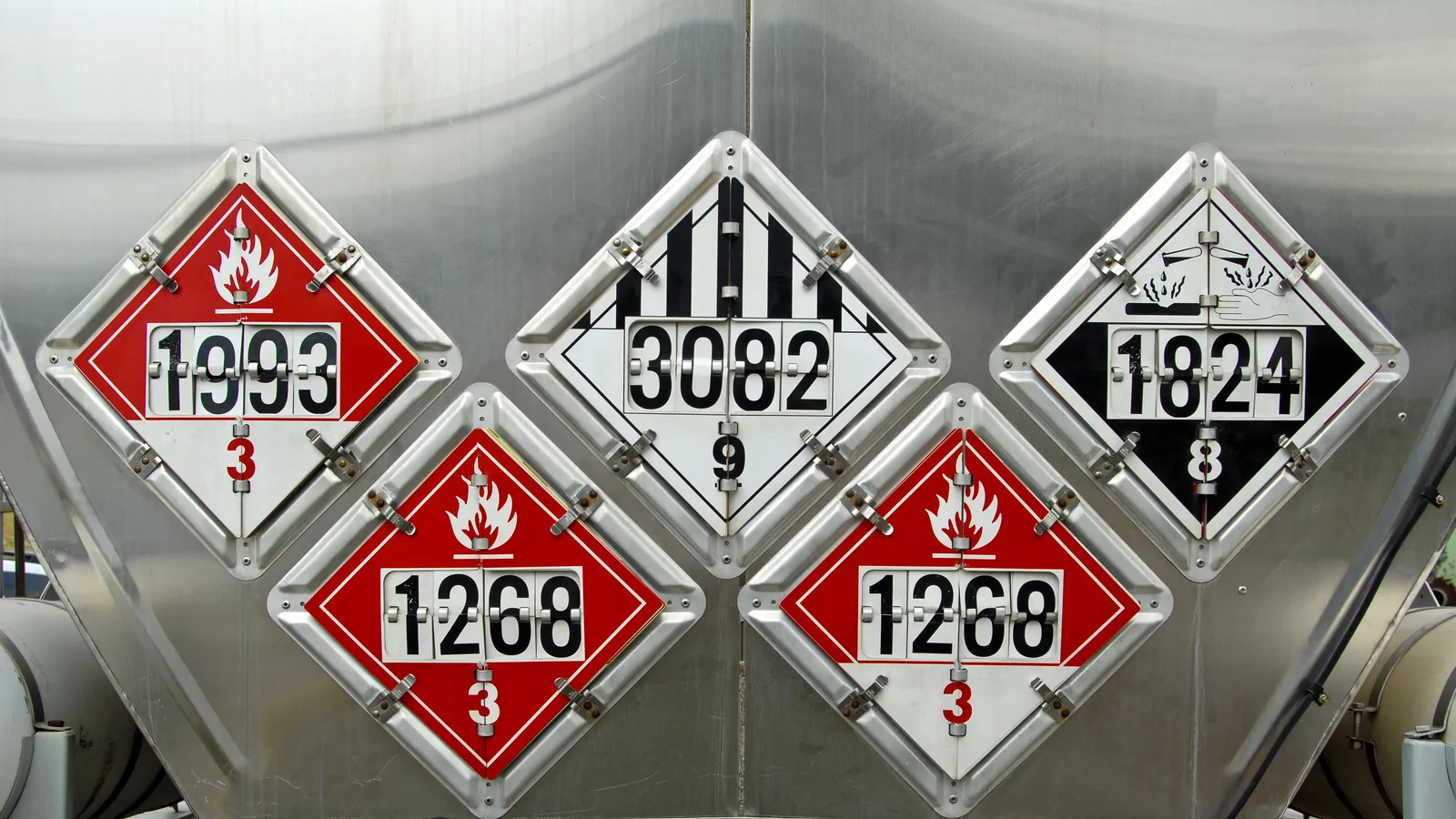
Some dry bulk products carry hazard classifications and some do not. Sand, flour and cement are typically non-hazardous. Certain dry fertilizers, oxidizers and some resin additives are regulated under 49 CFR Parts 172 through 180 and require placarding, driver hazmat endorsement and shipping papers. Knowing which bucket your product falls into determines what you ask a carrier before you tender.
Pneumatic Trailer Types and Why Equipment Match Matters
Dry bulk trailers are not interchangeable, and the wrong match means a load that cannot unload at the receiver's dock. The question to settle before tendering is not what the carrier owns, it is what the receiving facility is built to take.
Dry Bulk Pneumatic Trailers
Pneumatic dry bulk trailers typically carry 800 to 1,150 cubic feet and unload using compressed air rather than gravity, pushing product through a discharge line into a silo or receiving vessel. They are the standard for plastic pellets, flour, and other fine, free-flowing powders that need to be blown into an elevated receiving point. Actual payload depends on product density, so cubic footage alone does not tell you what weight the trailer can legally carry.
Hopper Bottom Trailers
Hopper bottom dry bulk trailers unload by gravity through bottom gates and commonly haul cement, sand and dry fertilizer. They work where the receiving point is at or below grade and does not need product blown in under pressure. A hopper trailer arriving at a dock built for pneumatic unloading, or the reverse, is a load that sits until someone finds the right equipment.
| Trailer Type | Unloading Method | Typical Commodities |
|---|---|---|
| Pneumatic dry bulk | Compressed air, blown through a discharge line | Plastic pellets, flour, fine powders |
| Hopper bottom | Gravity, through bottom gates | Cement, sand, dry fertilizer |
Safety and Compliance Checks Before You Tender
FMCSA's Compliance, Safety, Accountability program scores carriers across seven BASIC categories, including Unsafe Driving and Vehicle Maintenance, and a poor score in either category is a direct signal about how that carrier maintains the trailers your product will ride in. Pull the carrier's CSA scores before you tender, not after a load is already rolling.
49 CFR Part 396 requires motor carriers to systematically inspect, repair and maintain their vehicles, which includes the pneumatic and hopper trailers used for bulk commodities. Ask for the carrier's most recent DOT inspection results and whether any out-of-service violations were tied to trailer condition rather than the tractor.
- Confirm the carrier's FMCSA operating authority is active and not under a conditional or unsatisfactory safety rating.
- Check CSA BASIC scores, specifically Vehicle Maintenance and Hazardous Materials Compliance if your product is regulated.
- Verify current insurance certificates match or exceed what your risk team requires, and confirm cargo insurance covers the commodity you are shipping.
- Ask how recently the specific trailer type you need was inspected, not just the fleet average.
Wash-Out and Cross-Contamination Protocols
Wash-out documentation matters more in dry bulk than shippers expect, especially for food-grade product. A trailer that hauled dry fertilizer last week and was not properly washed can contaminate a load of flour with residue, odor or allergen carryover that ruins the product before it ever reaches your customer.
Ask any carrier moving food-grade dry bulk for wash tickets showing the date, location and method of the last wash, and ask whether they run dedicated trailers for food-grade freight or rotate trailers between food and industrial product. Dedicated trailer assignment is the safer answer, and a carrier that cannot produce a wash ticket on request is a carrier you should not tender food-grade freight to.
For industrial dry bulk, the risk is lower but not zero. Cement residue in a trailer that previously hauled a chemical additive can still affect product quality or trigger a rejected load at the receiver. Build the wash-ticket ask into your standard carrier qualification process rather than treating it as a special request.
Questions to Ask Before You Sign a Carrier
A short, specific list of questions during carrier qualification catches most problems before they become a claim. Ask them in writing, keep the answers in the carrier file next to the insurance certificate, and ask again at annual requalification rather than treating vetting as something you do once at onboarding and never revisit.
- What trailer types do you operate, and can you confirm pneumatic or hopper configuration for the specific lane and receiving facility on this load?
- What are your current FMCSA CSA scores across the seven BASIC categories, and has any category triggered an intervention in the past year?
- Can you provide wash tickets for the trailer assigned to this load, including date, location and wash method?
- Do your drivers carry a hazmat endorsement, and how do you confirm placarding and shipping papers when the commodity is regulated?
- What is your claims history over the past 12 months for cargo damage, contamination or short deliveries on bulk freight?
- What lanes and receiving facilities have you served for this commodity, and can the driver blow product into an elevated silo without site supervision?
The answers matter, but so does how fast they arrive. A dispatcher who needs three days to find a wash ticket is telling you exactly how closely that trailer is tracked.
Common Mistakes Shippers Make When Vetting Dry Bulk Carriers
The same handful of mistakes show up again and again in dry bulk tendering, and most of them cost more than the qualification work that would have prevented them. Each one traces back to an assumption nobody wrote down before the load was covered.
- Selecting a carrier on rate alone without confirming the trailer type matches the receiving equipment at the destination, which turns a cheap load into a detained one.
- Skipping a physical trailer inspection at loading and relying on the carrier's word that the trailer is clean, dry and free of prior residue.
- Ignoring wash documentation for food-grade product because the carrier has hauled for you before without incident, which is history rather than evidence.
- Assuming liquid bulk tanker experience translates directly to pneumatic dry bulk competence, when the loading method, unloading method and driver skills are different.
- Reading trailer capacity in cubic feet as a weight figure, then finding at the scale that a dense product cubes out long before it reaches legal payload.
Every one of these is caught by a qualification checklist that takes an hour to build and a few minutes to run per carrier.
Working With a Forwarder Instead of a Single Carrier
Total Connection is a freight forwarder built on liquid bulk and chemical logistics, and that same operator depth carries into dry bulk, truckload, LTL, drayage, ocean, air, and warehousing. Total Connection vets from a network of more than 100,000 carriers across the United States, Canada and Mexico and matches equipment to the product, whether that means a pneumatic trailer for resin pellets, a hopper bottom for cement, or an ISO tank for a chemical liquid on the same account. Total Connection carries $5M in general liability coverage, above the $1M industry standard, and assigns a named team that stays with the account rather than a rotating desk, so the person who learned your receiving facility in March is the person covering your load in November.
For more on the trailer types and specs behind dry bulk trucking, see the dry bulk trucking guide. If you are comparing modes, read what is FTL freight and the case for dedicated trucking. If your dry bulk program runs alongside chemical liquid freight, see how to find chemical tanker trucks. Read more about the truckload and LTL services Total Connection runs, or request a dry bulk quote to get your next load in front of a vetted carrier.
What is the difference between dry bulk and liquid bulk trucking?
Dry bulk trucking hauls dry, free-flowing solids such as cement, plastic pellets or flour in pneumatic or hopper trailers. Liquid bulk trucking uses tank trailers to move liquids and chemicals, loaded and unloaded through hose and pump connections rather than air pressure or gravity gates.
How much does a pneumatic dry bulk trailer hold?
Pneumatic dry bulk trailers typically carry 800 to 1,150 cubic feet, unloading with compressed air through a discharge line rather than gravity. Actual payload weight depends on the density of the product, so a trailer's cubic footage does not translate directly into a fixed tonnage across commodities.
Do dry bulk carriers need a hazmat endorsement?
A hazmat endorsement is required only when the commodity being hauled is classified as a hazardous material under 49 CFR Parts 172 through 180. Many common dry bulk products like sand, cement and flour are non-hazardous. Certain dry fertilizers, oxidizers and chemical additives are regulated and require a driver with a hazmat endorsement and proper placarding.
How do I know if a dry bulk carrier washes out trailers properly?
Ask the carrier for wash tickets showing the date, location and method used for the trailer's last wash. For food-grade product, also ask whether the carrier runs dedicated trailers for that commodity rather than rotating trailers between food-grade and industrial loads.
What safety records should I check before hiring a dry bulk trucking company?
Review the carrier's FMCSA Compliance, Safety, Accountability scores across the seven BASIC categories, with particular attention to Vehicle Maintenance and Unsafe Driving. Also confirm current insurance certificates and ask for recent DOT inspection results tied specifically to the trailer type you need.