
Food grade tanker companies are motor carriers and logistics providers certified to transport edible liquid commodities in stainless steel tanker equipment that meets FDA sanitary transportation standards. Not every tank truck that shows up clean qualifies. The difference between a compliant food grade carrier and a flex-fleet operator hauling whatever pays is the difference between a delivered load and a rejected one, and in some cases, an FDA enforcement action.
Contamination risk is the first thing shippers of edible oils, sweeteners, juice concentrates, and liquid dairy need to think about when vetting carriers. A single load hauled in a trailer with undisclosed prior chemical cargo can destroy an entire product batch. The cost is not just the freight. It is the product, the customer relationship, and potentially a recall. This article breaks down exactly how to evaluate food grade tanker companies before you book a load.
What Makes a Tanker Truly Food Grade
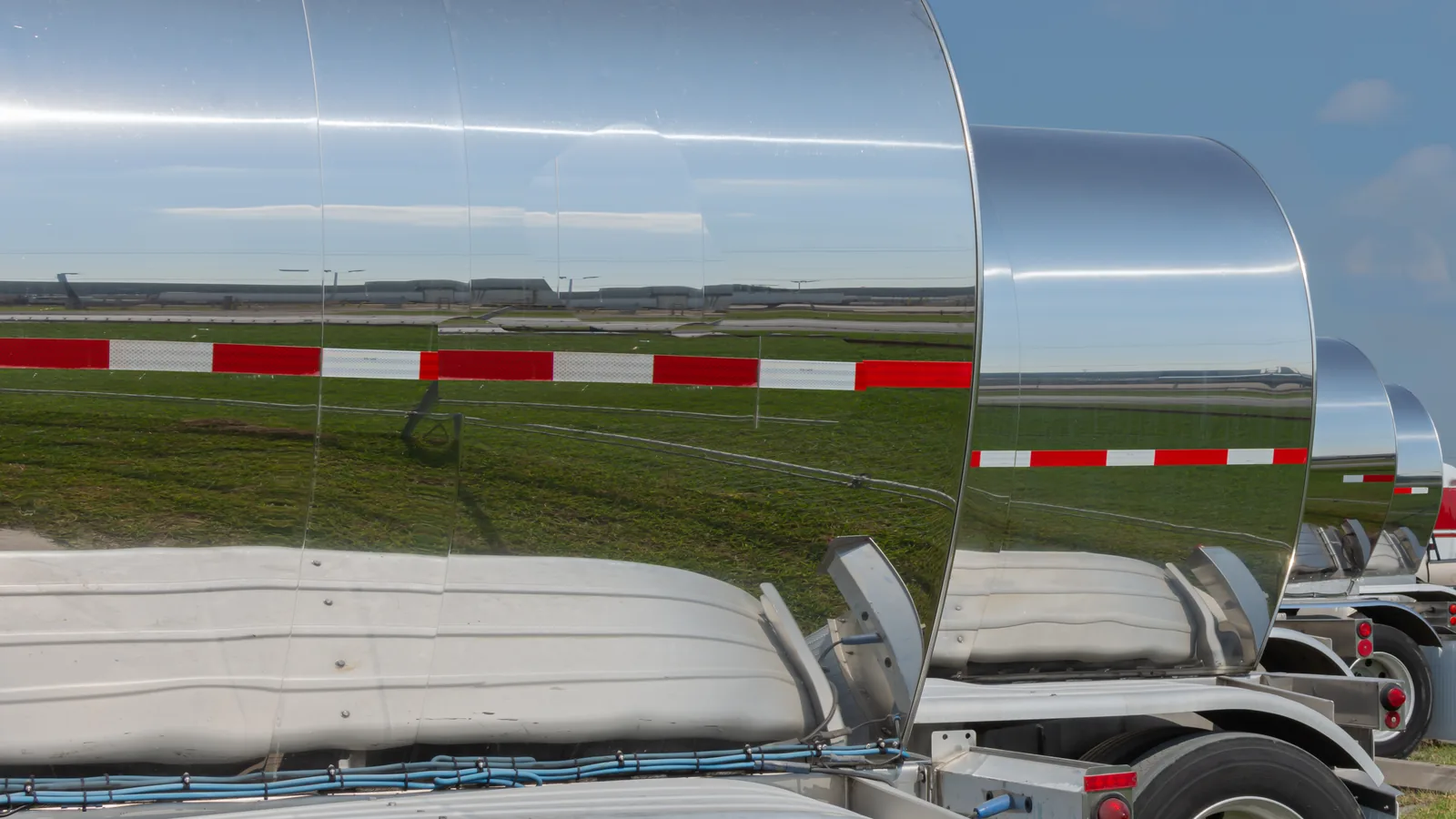
A tanker is food grade when its construction, prior cargo history, cleaning protocols, and certification status meet the standards required for direct contact with edible commodities. That definition rules out a large portion of the liquid bulk fleet operating in North America.
Stainless Steel Construction and Interior Standards
304 and 316 stainless steel are the accepted interior materials for food grade tankers. 316 stainless offers better corrosion resistance against acidic products like vinegar and citrus concentrates. Carbon steel trailers are not acceptable for food grade applications regardless of how recently they were cleaned.
Interior welds need to be ground smooth. Pits, crevices, and rough weld seams trap residue and create harborage points for bacteria. USDA and FDA inspection guidelines specifically reference interior surface finish as a contamination risk factor. Any trailer with pitted walls or compromised interior coating should be rejected before loading.
Dedicated vs. Flex Fleets
Dedicated food grade fleets haul nothing but food and beverage commodities. Flex fleets haul food grade on some loads and industrial or chemical commodities on others. Some flex operators are fully compliant and document every load meticulously. Many do not.
The risk with flex fleets is prior product exposure. A trailer that hauled industrial glycerin, then a chemical-grade solvent, then got washed and loaded with edible oil is technically legal if the wash was done correctly. But trace contamination from certain chemicals does not fully wash out, and the documentation burden on shippers to prove that clean status is significant. Dedicated fleets eliminate most of that exposure.
Kosher and Halal Certification
Certain edible commodity shippers require kosher or halal certification for their tanker equipment and carriers. This is not a logistics preference. It is a product specification with contractual and market consequences if violated.
Kosher-certified trailers must be inspected and certified by a recognized rabbinical authority. Halal certification requires compliance with Islamic dietary law governing prior cargo and equipment handling. Shippers moving certified products need to confirm that carrier equipment holds current certificates, not just verbal assurances from a dispatcher.
FDA and FSMA Sanitary Transportation Rule Requirements
The FSMA Sanitary Transportation of Human and Animal Food rule has been enforceable since 2017 and applies to shippers, carriers, loaders, and receivers hauling food for human consumption in vehicles or containers. It lives under 21 CFR Part 1, Subpart O. Ignorance of the rule does not protect you from an enforcement action.
Shipper Responsibilities Under 21 CFR Part 1
Shippers bear primary responsibility for specifying sanitary transportation requirements in their carrier agreements. That means defining acceptable prior cargo, required trailer temperatures, cleaning requirements, and documentation expectations in writing before the first load moves.
- Shippers must specify in writing the sanitary conditions required for the vehicle or container, including temperature controls, prior cargo restrictions, and any required cleaning procedures before loading.
- If a shipper determines that food transported in bulk requires protection from cross-contact with non-food items or allergens, those requirements must be communicated to the carrier in the transportation agreement.
- Shippers are responsible for verifying that carrier equipment meets the specifications they define, either through carrier certification, documented inspections, or third-party audit records.
Carrier Responsibilities and Documentation
Carriers operating under FSMA must maintain records of prior cargo, cleaning procedures, and temperature control compliance. These records must be available for FDA inspection and should be made available to shippers upon request. A carrier that cannot produce this documentation on demand is a liability, not a partner.
Temperature control requirements apply to commodities where temperature abuse creates a food safety risk. Liquid dairy, certain juice concentrates, and products requiring refrigeration during transit fall under these provisions. The rule requires carriers to have equipment capable of maintaining specified temperatures and documentation confirming that temperatures were maintained throughout transit.
When FSMA Exemptions Apply
FSMA sanitary transportation rules exempt farms, restaurants, and retail food establishments from most carrier-side requirements. They also exempt shipments of shelf-stable food in completely enclosed packaging that prevents direct food contact with the vehicle interior. Bulk liquid commodities do not meet that exemption. Edible oils, liquid sweeteners, and juice concentrates transported in tankers are fully subject to the rule.
Trailer Wash and Sanitation Standards
A wash ticket is not paperwork. It is your legal and operational evidence that the trailer presented for loading was cleaned to an acceptable standard before your product went in. No wash ticket means no proof. In an audit or a contamination dispute, that absence lands on the shipper.
CIP Procedures and What They Cover
Clean-in-place (CIP) procedures circulate cleaning and sanitizing solutions through the tanker interior without disassembly. A proper food grade CIP sequence includes a pre-rinse with hot water, a caustic wash cycle, an acid rinse to neutralize alkaline residue, a final hot water rinse, and in some cases a sanitizing rinse with food-safe sanitizers. The entire sequence is logged by time, temperature, and chemical concentration at a certified wash station.
CIP alone is not always sufficient after certain prior cargoes. Allergen-contaminated trailers, trailers that hauled flavored or high-sugar products, and trailers previously used for certain chemical-grade commodities may require full manual inspection and an additional wash cycle before food grade certification can be issued.
Third-Party Wash Stations and Audit Trails
Third-party wash stations like Ruan, Quality Carriers' wash facilities, and independent certified stations provide documented wash tickets with time stamps, chemical logs, and inspector signatures. These records are the foundation of any FSMA audit trail for transportation sanitation.
- Always require that the wash ticket accompany the driver at the time of pickup. A ticket faxed later or emailed after loading is not acceptable for pre-load verification.
- Wash tickets should identify the prior cargo washed out, the wash procedures performed, the date and time of each wash step, and the facility name and certification status.
- For allergen-sensitive products like certain nut oils or soy-based commodities, the wash ticket alone is not enough. Require written confirmation from the carrier that the prior cargo was not an allergen that cannot be mitigated through standard CIP procedures.
Wash History as an Ongoing Record
Single wash tickets cover one load. Audit-ready food grade shipping programs maintain wash history across multiple loads for each trailer. If a trailer moves between chemical-grade glycerin and edible glycerin, you want documentation of every wash cycle in between, not just the most recent one. Carriers with serious food grade programs maintain this history by trailer number. Carriers that cannot produce it are operating without the documentation FSMA expects.
How to Vet a Food Grade Tanker Broker vs. Asset Carrier
The distinction between a food grade asset carrier and a food grade broker matters less than the depth of the vetting process each one applies to the equipment that loads your freight. A poorly run asset carrier can contaminate a load just as easily as a broker who places freight with unvetted capacity.
What to Demand from Any Carrier
Before you authorize a carrier to load food grade product, you need specific documentation in hand. This is not optional, and it is not administrative formality. It is your compliance record.
- Current Certificate of Insurance with minimum liability limits appropriate for food grade liquid bulk freight, naming your company as an additional insured where required by your contracts.
- Active MC authority confirmed through FMCSA's SAFER system, verifiable at the time of tender, not based on a copy of an authority letter from six months ago.
- Written prior cargo disclosure for the specific trailer assigned to your load, not a general fleet policy statement.
- Wash ticket for the assigned trailer, issued within the time frame your transportation agreement specifies, typically within 24 to 72 hours of loading depending on the commodity.
- Temperature monitoring documentation if the commodity requires controlled transit conditions.
Why a Specialized Broker Can Access More Compliant Capacity
A broker focused on liquid bulk freight maintains active relationships with dedicated food grade fleets across multiple regions. When equipment is tight in the Gulf Coast during peak edible oil season, or when a Northeast dairy shipper needs a same-week move, a specialized broker can source compliant capacity that a shipper calling carriers directly will not reach.
The key word is specialized. A general freight broker who occasionally places liquid bulk loads does not have the carrier relationships, the vetting protocols, or the commodity knowledge to manage food grade moves reliably. Total Connection has spent 30 years building carrier relationships specifically in liquid bulk, including dedicated food grade fleets that do not take cold calls from unknown shippers.
Learn more about our liquid bulk freight services and how we vet carriers for food grade and chemical tanker moves.
Commodities Commonly Moved in Food Grade Tankers
Understanding what moves in food grade tankers helps shippers identify whether their commodity requires dedicated equipment and what contamination risks are relevant to their specific product chemistry.
| Commodity | Typical Tanker Type | Key Handling Considerations |
|---|---|---|
| Edible Oils (soy, canola, palm) | Stainless steel, insulated | Temperature maintenance, prior allergen disclosure required |
| High Fructose Corn Syrup (HFCS) | Stainless steel, heated | Viscosity at low temps, requires heat trace or insulation |
| Liquid Sugar | Stainless steel, food grade lined | High contamination risk from fermentation if residue remains |
| Juice Concentrates | Stainless steel, refrigerated | Temperature control critical, FDA Subpart O applies |
| Liquid Dairy | Stainless steel, refrigerated | Pasteurization verification, strict temp logging required |
| Wine and Vinegar | 316 stainless preferred | Acid resistance, prior cargo restrictions, kosher/halal flags |
| Potable Water | Stainless steel, NSF-61 certified | NSF/ANSI 61 certification required for human consumption |
| Food Grade Glycerin | Stainless steel | Prior cargo disclosure critical, chemical-grade glycerin is common cross-contact risk |
Glycerin deserves specific attention. Food grade glycerin and chemical grade glycerin are often produced at the same facilities and moved by the same carrier fleets. The prior cargo documentation requirement for glycerin loads is not bureaucratic overlap. It is a direct contamination risk that has caused recalls.
For a broader look at how bulk liquid commodities are classified and shipped across modes, see our article on liquid bulk freight shipping fundamentals and our breakdown of ISO tank container shipping for chemical and food grade liquids.
Red Flags When Booking Food Grade Loads
Most food grade contamination events do not happen because a carrier was dishonest. They happen because someone in the booking chain cut a corner, skipped a verification step, or accepted verbal assurance in place of documentation. These are the specific red flags that should stop a booking in its tracks.
- The carrier or dispatcher cannot identify the prior cargo on the specific trailer assigned to your load. Fleet-level prior cargo policies are not the same as trailer-specific disclosure.
- No wash ticket is available, the wash ticket is more than 72 hours old without an explanation, or the wash station listed on the ticket is not a certified food grade facility.
- The carrier's MC authority is inactive, in revocation status, or cannot be confirmed through FMCSA's SAFER database at the time of tender.
- A broker cannot provide documentation of its carrier vetting process and does not hold an active FMCSA broker authority. Unlicensed brokers operating in liquid bulk freight are a compliance and liability exposure for the shipper.
- The rate is significantly below market. Food grade compliant carriers carry higher operating costs. A bid that undercuts the market by 20 percent or more usually means the carrier is cutting corners somewhere, and in food grade liquid bulk, corners have nowhere safe to fall.
- The carrier pushes back on providing written prior cargo disclosure or treats the documentation request as unusual. Any food grade operator worth booking handles these requests routinely and without friction.
Total Connection holds MC 280101, maintains $5 million in general liability coverage, and has been vetting food grade liquid bulk carriers for 30 years. We do not place food grade loads with carriers who cannot satisfy every documentation requirement above. If you need compliant food grade tanker capacity, see our food grade tanker shipping service, our liquid bulk and chemical logistics page, or request a quote on your lane and commodity. For the broader carrier-vetting playbook, read our guides on tanker trucking companies and bulk liquid transport companies.
Frequently Asked Questions
What qualifies a tanker as food grade?
A food grade tanker must be constructed of 304 or 316 stainless steel with smooth interior welds, must have documented prior cargo history limited to food-safe commodities, and must have been cleaned at a certified wash station with a documented CIP procedure. Equipment certification alone is not sufficient without the accompanying wash and prior cargo documentation. FDA FSMA requirements under 21 CFR Part 1 govern the operational standards that carriers and shippers must meet.
What is the FSMA Sanitary Transportation Rule and who does it apply to?
The FSMA Sanitary Transportation of Human and Animal Food rule is a federal regulation enforceable since 2017 that governs the transport of food for human consumption in vehicles and containers. It applies to shippers, carriers, loaders, and receivers involved in food transportation. Bulk liquid food shippers are fully subject to the rule and must document sanitary requirements in carrier agreements. Carriers must maintain records of prior cargo, cleaning, and temperature controls.
How do I verify a food grade tanker carrier's compliance before booking?
Verify the carrier's MC authority through FMCSA SAFER before tendering the load. Require a Certificate of Insurance, a trailer-specific prior cargo disclosure, and a wash ticket from a certified wash station issued within the time frame defined in your transportation agreement. For temperature-sensitive commodities, confirm the carrier has functioning temperature monitoring equipment and a documented protocol for logging transit temperatures.
What is the difference between a dedicated food grade fleet and a flex fleet?
A dedicated food grade fleet transports only food and beverage commodities in all of its equipment. A flex fleet moves food grade freight on some runs and industrial or chemical commodities on others. Dedicated fleets carry lower cross-contamination risk and simpler prior cargo documentation. Flex fleet trailers can be compliant, but the documentation burden is higher and the contamination risk from chemical prior cargoes is real if wash procedures were not executed correctly.
Why does prior cargo disclosure matter for food grade liquid bulk shipments?
Prior cargo disclosure identifies what was transported in a specific trailer before your food grade product. Certain chemical commodities leave trace residues that standard CIP procedures cannot fully eliminate, and allergen cross-contact from prior food-grade loads can trigger labeling violations or recalls. FSMA requires shippers to specify prior cargo restrictions in writing. A carrier that cannot provide trailer-specific prior cargo history is a compliance and product safety risk regardless of their general reputation.
Can a freight broker handle food grade tanker shipments?
A freight broker with active FMCSA broker authority, deep carrier relationships in liquid bulk, and a rigorous carrier vetting process can manage food grade tanker shipments effectively. The broker must be able to produce documentation of carrier compliance for every load, including prior cargo records, wash tickets, and current insurance certificates. Brokers without specific liquid bulk experience or established carrier relationships in food grade fleets should not be handling these shipments.