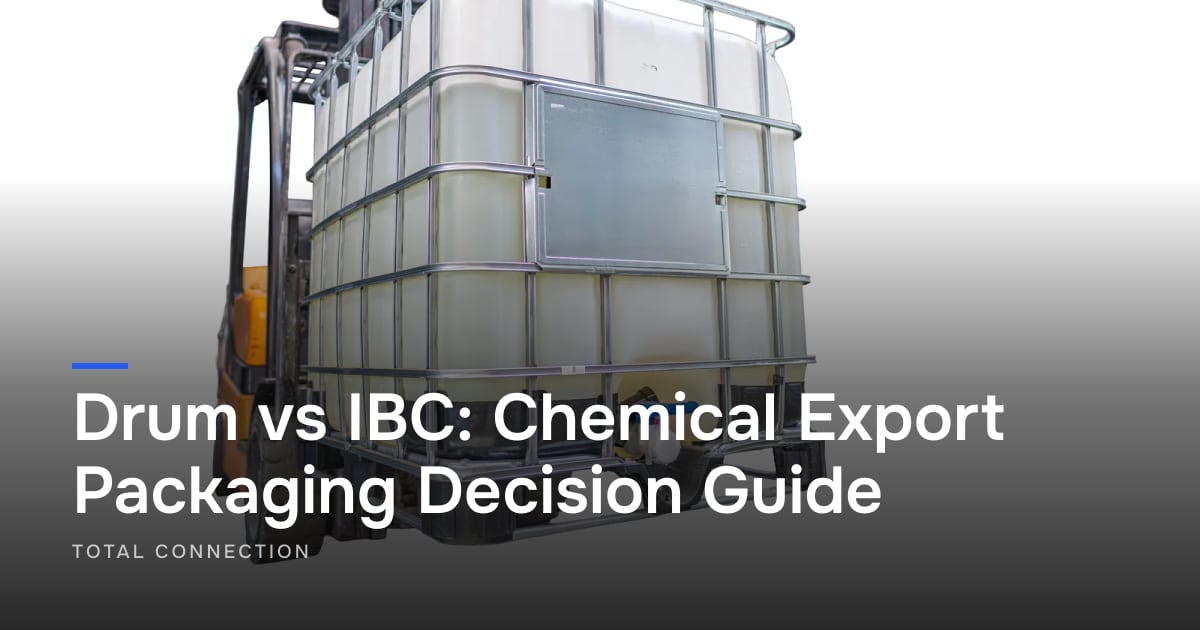

Switching a chemical product line from 55-gallon steel drums to 275-gallon IBC totes changes freight cost through trailer cube utilization, handling equipment and tote return trips, not through unit capacity. The capacity ratio is 5 to 1, one 275-gallon tote to five 55-gallon drums, and a 53-foot dry van commonly loads 20 to 22 pallets depending on pallet configuration and weight limits. Both formats also carry their own hazmat packaging rules, 49 CFR 178.700 through 178.723 for IBCs and 49 CFR 178.504 for metal drums, so a conversion changes the paperwork as well as the freight math.
Drums vs Totes: What Changes in the Freight Equation
A standard 55-gallon steel drum and a standard 275-gallon IBC tote are both common packaging formats for liquid chemicals, and the capacity difference between them is approximately 5 to 1. That ratio is the number most shippers start with when they ask whether converting to totes will cut freight cost, and it is also the number that misleads them.
Freight cost is driven by how much product moves per trailer, per mile, not by how much product fits in a single container. Palletized drums do not use trailer space the same way totes do, and the handling steps at origin and destination add cost that has nothing to do with container capacity. A packaging conversion decision has to run through cube utilization, handling labor and return logistics before it produces a real freight cost number, and that is the analysis this piece works through.
This matters most for shippers already using liquid bulk and chemical logistics services, where packaging format decisions ripple into equipment selection, dock scheduling and tank wash cycles. The same questions come up again at the next tier of volume, when a shipper asks whether the product should leave packaged freight entirely and move in a tanker or ISO tank.
Trailer Cube Utilization: Drums vs IBC Totes
Drum stacking and pallet configuration
Drums are typically palletized four to a pallet on standard 48-by-40-inch pallets, and a 53-foot dry van commonly carries around 20 to 22 pallets depending on pallet configuration and weight limits. That puts a drum load in the range of 80 to 88 drums per trailer before weight limits take over, which they often do first with dense liquid chemicals.
Tote footprint and stacking limits
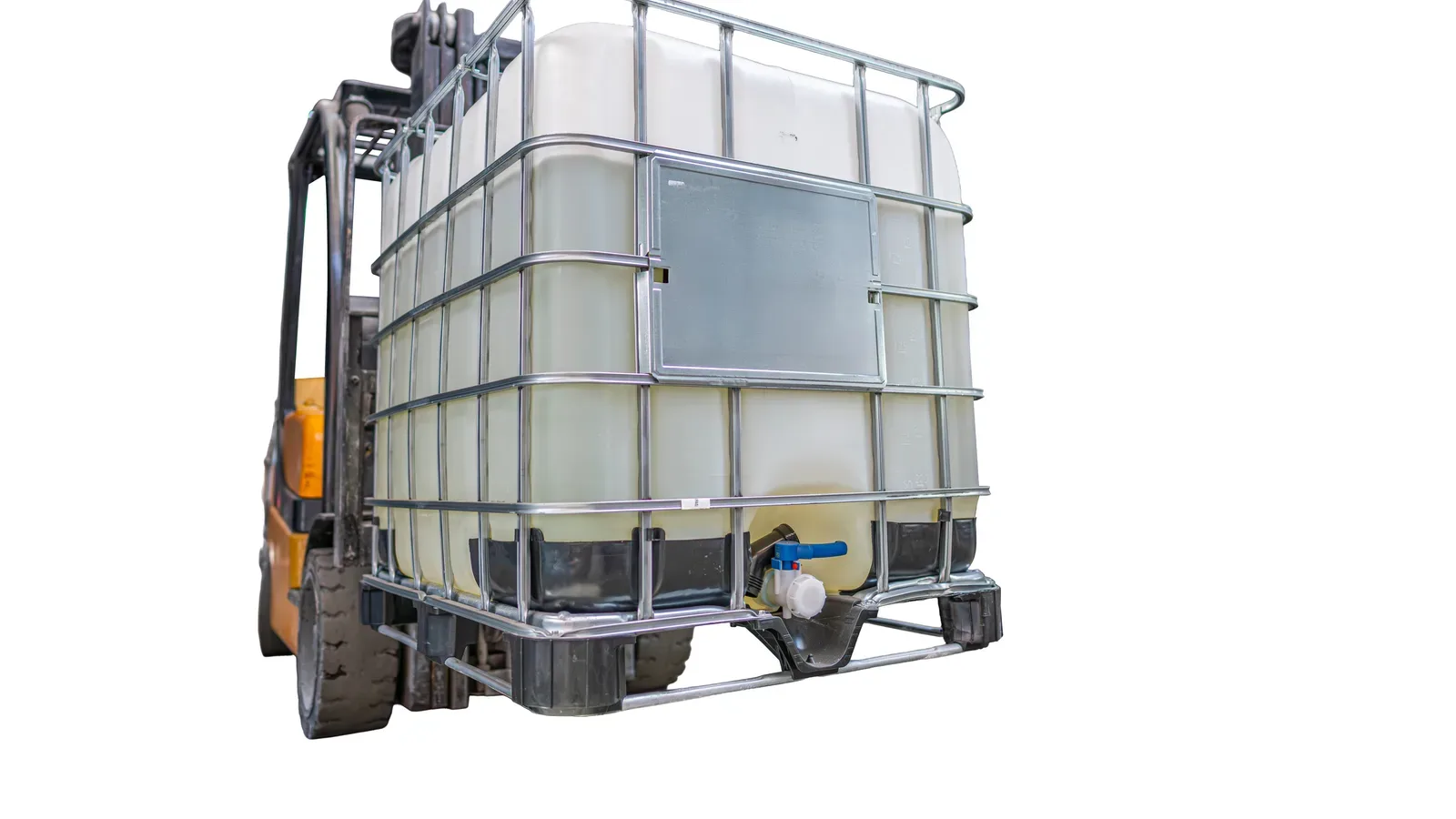
A 275-gallon IBC tote sits on a footprint close to a standard pallet and generally cannot be double-stacked when full, unlike empty totes on the return trip. That single-stack limitation means a trailer loaded with totes often reaches its weight limit before it reaches its cube limit, while a trailer loaded with drums can sometimes stack higher before hitting the same weight ceiling.
The practical effect is that cube utilization gains from totes are real for some products and modest for others. A dense corrosive that hits trailer weight limits in either format will not see much freight savings from the switch. A lighter specialty chemical that was leaving cube unused in a drum configuration may see a genuine improvement. Run the math on the actual product weight per gallon before assuming the tote wins.
Handling Equipment and Labor Cost Differences
Packaging format changes the equipment a dock needs, and equipment changes labor time and cost on both ends of the move. Drums are commonly handled with drum handlers, drum dollies or standard pallet jacks, and loading or unloading a drum shipment is usually a manual or semi-manual process per unit.
Totes typically require forklifts with tote-rated forks or pump-out equipment connected at the manway or valve, and unloading a tote is often a single connection and pump cycle rather than dozens of individual unit moves. That can cut dock time meaningfully on high-volume lanes, but it also means a facility without tote-handling equipment faces a capital cost before it sees any freight savings.
- Drum handling: drum handlers, pallet jacks and manual unit-by-unit loading and unloading, which means more labor hours per shipment.
- Tote handling: tote-rated forklift forks or pump-out connections at the valve, fewer individual moves, faster dock turns but higher equipment investment.
- Mixed fleets: some shippers keep both formats in service and need equipment for each, which adds cost rather than removing it.
- Receiver capability: the consignee dock matters as much as the shipping dock, since a receiver without tote equipment will push the format back to drums.
Return Logistics and Tote Fleet Costs
Single-trip drums are typically disposed of or recycled at the destination and do not travel back to origin. Reusable IBC totes are different: they typically require a tank wash or reconditioning cycle before reuse or return, which adds a service step and a return freight leg that drums never incur.
That return trip is where a lot of projected tote savings disappear on paper. A tote that has to travel back empty, get washed, get inspected and get restaged before its next fill adds cost and cycle time that a disposable drum program does not carry. Shippers running a dedicated tote fleet need to weigh that reverse logistics cost against the cube and handling gains on the forward leg.
- Track the empty return leg cost per tote, including freight and any deadhead miles the return creates.
- Add the tank wash or reconditioning charge per cycle before the tote can go back into service.
- Count the float: totes sitting in wash, inspection or staging are capital that is not moving product.
- Compare total cycle cost against a single-trip drum program that has no return leg but higher per-unit packaging and disposal cost.
Finding the Volume Threshold Where Totes Pay Off
There is no universal volume threshold where totes beat drums on freight cost. The right answer depends on the cube utilization actually achieved with each format for a specific product's density and viscosity, the equipment already on hand at both ends of the lane, and whether volume is high enough to absorb the reconditioning and return cost of a reusable tote fleet.
A shipper moving a light-density specialty chemical in low volumes might never generate enough tote turns to justify the wash cycle cost. A shipper moving high volumes of a dense corrosive that already maxes out trailer weight in drum form may see almost no freight benefit from switching formats at all, even though the tote looks more efficient on paper.
The better approach is a lane-by-lane and product-by-product cube and cost model rather than a blanket packaging decision, checked against the compatibility of the product with the cleaning cycle a reused tote requires between fills. Classification and packaging authorization matter the same way, which is why a conversion on a regulated product should be reviewed alongside the equipment and documentation notes in our guide to shipping sulfuric acid.
Comparison at a Glance: Drums vs IBC Totes
The table below lines up the two formats across the factors that actually drive the freight cost delta: unit capacity, trailer cube utilization, handling equipment, reverse logistics and the hazmat packaging section each format falls under. Read it as a starting frame rather than a verdict, because the weight of each row changes with product density and with what equipment the shipping and receiving docks already run.
| Factor | 55-Gallon Drums | 275-Gallon IBC Totes |
|---|---|---|
| Capacity per unit | Approximately 55 gallons | Approximately 275 gallons, a 5 to 1 ratio to a drum |
| Trailer cube utilization | Around 20 to 22 pallets per 53-foot trailer, cube-limited on light products | Fewer units per trailer, often weight-limited before cube-limited |
| Handling equipment | Drum handlers, pallet jacks, manual unit handling | Tote-rated forklift forks or pump-out connections at the valve |
| Return and reverse logistics | Single-trip, typically disposed or recycled at destination | Tank wash or reconditioning cycle before reuse, plus a return freight leg |
| Hazmat packaging rules | Metal drums under 49 CFR 178.504 | IBCs under 49 CFR 178.700 through 178.723 |
Two rows usually decide the outcome. If the product is dense enough to hit trailer weight limits in either format, the cube row stops mattering and the handling and return rows carry the decision.
Working With a Forwarder During a Packaging Conversion
A packaging conversion touches more of the supply chain than the packaging line itself. Trailer selection, dock scheduling, hazmat documentation and any tank wash or reconditioning cycle all shift when a product moves from drums to totes, and a forwarder that only quotes the freight leg misses most of the decision.
Total Connection works the full move: the drum or IBC freight itself, the tank wash program for reusable totes, and the same team handling the related truckload and LTL, drayage, transload, warehousing and export legs that come out of a packaging change. Both formats fall under DOT hazardous materials packaging rules, IBCs under 49 CFR 178.700 through 178.723 and metal drums under 49 CFR 178.504, and getting the classification and packaging paperwork right on both sides of a conversion avoids delays that erase any freight savings the switch was supposed to deliver.
If a product line is being evaluated for a drums-to-totes switch, start with a lane-specific cube and cost review before committing to new equipment or a tote fleet. Our liquid bulk and chemical logistics team runs that review with the freight, the wash and the documentation in the same conversation. For the wider format and mode picture, read the complete guide to liquid bulk freight, and for what changes when packaged freight moves between modes at a terminal, see transloading in the chemical supply chain. Send us the lane, the product and the volume at /quote?mode=liquid-bulk.
Does switching from drums to totes always lower freight cost?
Not always. The outcome depends on the cube utilization actually achieved with totes versus drums for that specific product, plus whether return logistics for reusable totes offset the per-gallon savings from fewer units per shipment.
How many drums equal one IBC tote?
A 275-gallon IBC tote holds roughly the volume of five 55-gallon drums, a 5 to 1 ratio. Actual freight savings still depend on how efficiently each format fills a trailer once weight limits and stacking constraints are factored in.
What handling equipment changes when converting to IBC totes?
Totes typically require forklifts with tote-rated forks or pump-out equipment connected at the manway or valve, while drums are usually handled with drum handlers or pallet jacks. A facility without tote-handling equipment on hand faces an upfront capital cost before seeing any freight benefit.
What is the volume threshold where totes make sense over drums?
There is no universal threshold. It depends on the trailer cube actually achieved with each format, the return trip and reconditioning cost for reusable totes, and whether the product is compatible with the tank wash cycle a reused tote requires between fills.
Are IBC totes regulated differently than drums for hazmat?
Both formats fall under DOT hazardous materials packaging rules, but under different sections. IBCs are covered under 49 CFR 178.700 through 178.723, while metal drums are covered under 49 CFR 178.504, and each has its own construction and testing requirements.