
Rail tank car shipments typically require a minimum of one car lot, around 20,000 to 30,000 gallons, while tank trucks move 5,000 to 6,500 gallons per load under DOT 407 or DOT 412 specification. That gap in unit size is the whole decision. A logistics manager watching monthly volume climb on a liquid bulk lane eventually hits a point where rail's per-gallon economics beat truck, but only if the receiving site can actually take a rail car.
Rail Tank Car vs Tank Truck: The Core Tradeoff
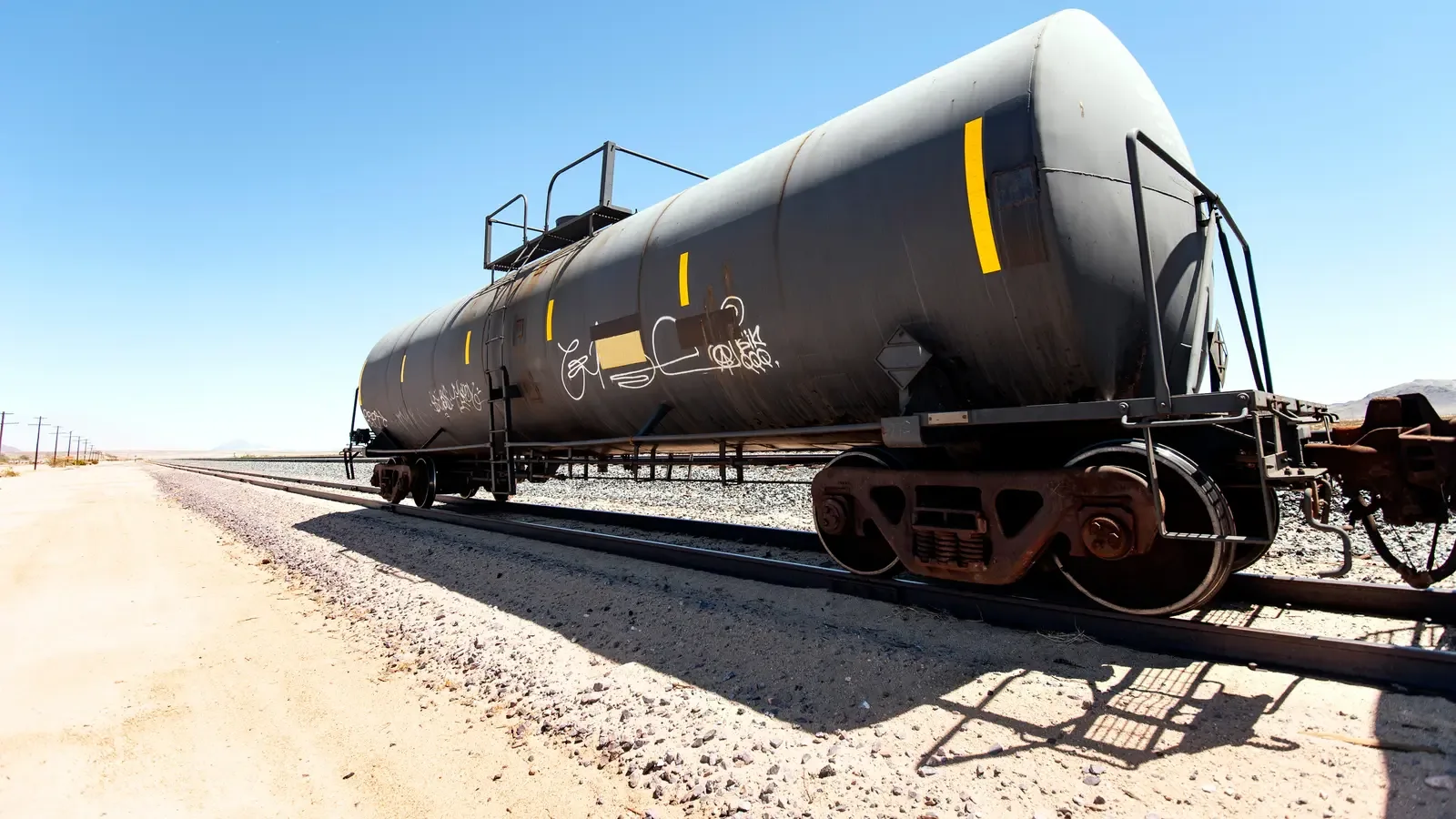
Tank truck shipping under DOT 407 or DOT 412 specification moves product in increments of a few thousand gallons, loaded and unloaded at a dock or rack with no special track infrastructure. Rail tank car shipping moves product in car-lot increments, built and classified under Association of American Railroads specifications rather than DOT truck rules, with no requirement for over-the-road driving but a hard requirement for rail access at both ends.
The tradeoff is not simply cost per gallon. Truck gives a shipper flexibility: order one load, ten loads, or none, with no fixed infrastructure commitment. Rail gives a shipper scale: once volume clears the car-lot threshold and the receiver has a way to spot and unload a car, the per-gallon freight cost usually drops. The decision point sits where volume, siding access and transit tolerance intersect, and getting it wrong in either direction either strands a shipper with underused rail infrastructure or leaves money on the table paying truck rates for rail-scale volume.
The answer changes lane by lane, which is why total gallons alone never settles it. A chemical manufacturer moving three truckloads a week to one customer sits in a different position than one consolidating ten truckloads a week across three receivers, even when the monthly gallon figure looks similar on paper.
Equipment Specifications: DOT Tank Trucks vs AAR Tank Cars
DOT 407 and DOT 412 trailers
DOT 407 tank trailers are the general-purpose chemical hauling spec under 49 CFR Part 178, used for non-corrosive liquids, with payloads generally running in the 5,000 to 6,500 gallon range depending on product density and axle limits. DOT 412 tank trailers are specified for corrosive and certain reactive chemical cargoes and carry a similar 5,000 to 6,500 gallon payload range, but with heavier wall construction, different valve and manway configurations, and compatibility built around hazard class 8 corrosives.
AAR tank car classes
Rail tank cars are built and classified under AAR specifications, such as the 211 and 212 series, rather than DOT truck specs, and typically carry 20,000 to 30,000 gallons per car. At those capacities one car replaces several truckloads of the same product. Car selection follows the same logic as trailer selection: lining material, pressure rating, heating coils and bottom or top unloading fittings all depend on the product's hazard class and handling requirements, not just its volume.
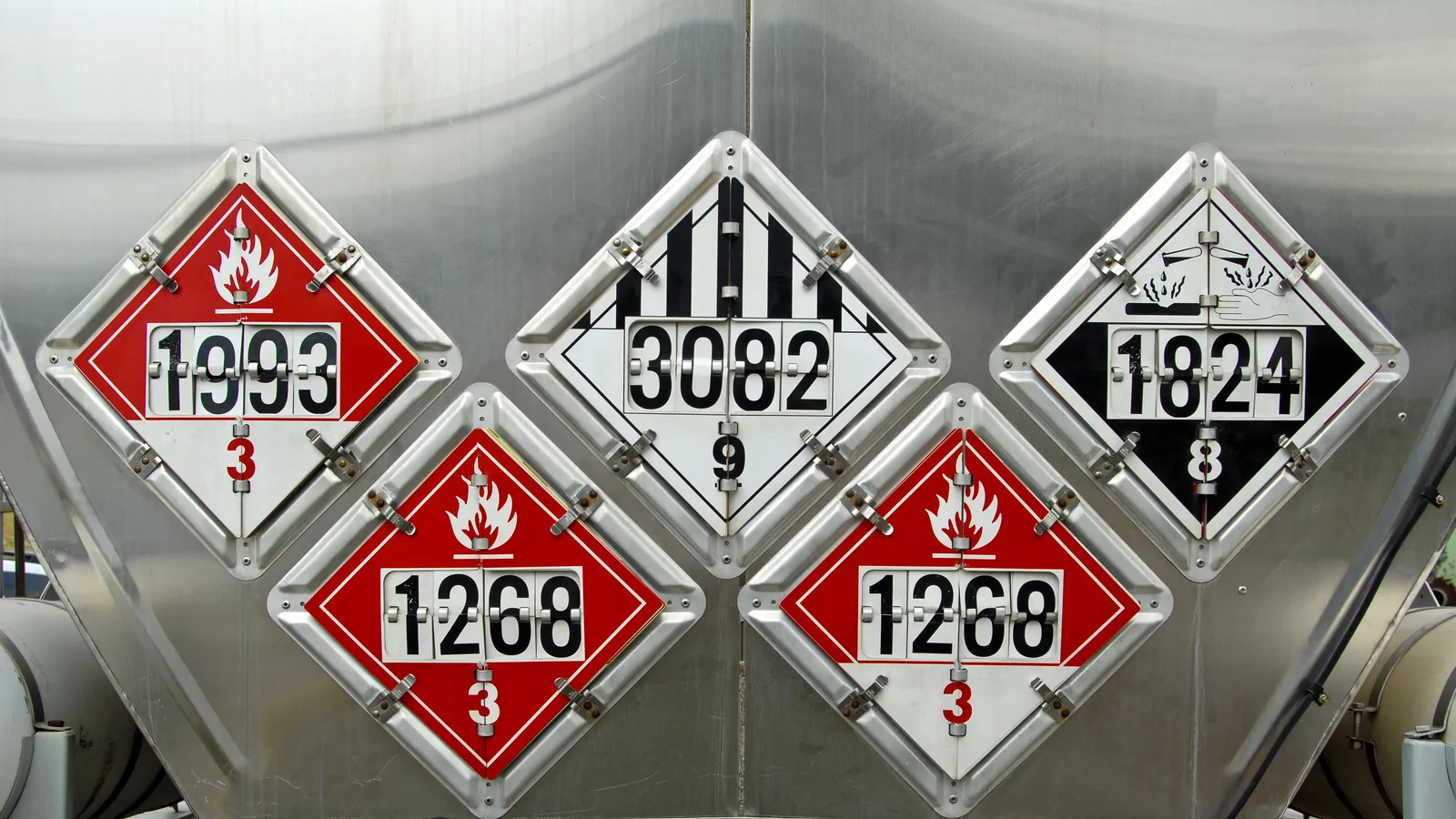
Hazmat materials moving by rail fall under the same hazard class and packing group framework used for truck, 49 CFR Parts 172 through 180, so classification work done for a truck shipment carries over directly to a rail shipment of the same product. What changes is the equipment spec sheet, not the regulatory classification.
Volume Thresholds: When Rail Starts to Pencil Out
Rail tank car shipping is priced and ordered by the car lot, which means the practical minimum is one full car, roughly 20,000 to 30,000 gallons. A shipper moving less than that on a lane is paying for unused capacity if they order a car, or is simply not a rail candidate yet. Tank truck shipping has no equivalent floor. A single truckload or a partial load still moves economically under DOT 407 or DOT 412 service.
The threshold question is really a question about lane distance and truck rate exposure over time, not a single gallon number:
- Lanes that do not fill a full car lot in a month rarely justify the fixed cost of rail access and are better served by tank truck, even at a higher per-gallon rate.
- Lanes consistently clearing one or more car lots a month, especially on longer hauls where truck mileage cost accumulates, start to show rail's per-gallon advantage.
- Lanes with seasonal or irregular volume often work best as a mixed strategy rather than an all-or-nothing switch.
Distance matters as much as volume. A short-haul lane rarely shows a rail advantage even at car-lot volume, because truck's speed and flexibility outweigh the per-gallon savings and the product still needs a truck leg at one or both ends. A long-haul lane running car-lot volume on a steady schedule is where rail typically starts to win, and it is the first place to run the numbers.
Infrastructure Requirements: Siding Access and Receiver Readiness
Direct rail delivery generally requires a private or leased siding at the receiving site, or access to a transload facility where the car is spotted and the product is transferred to truck for final delivery. Tank truck delivery requires none of this. A truck backs up to a dock or rack and loads or unloads; a rail car needs track, a spot, and either in-plant unloading equipment or a transload partner nearby.
This is where volume alone can mislead a shipper. A facility moving car-lot volume but lacking a siding is not a rail-direct candidate without first solving the infrastructure problem, which can mean a capital project, a lease negotiation with the railroad, or a standing transload arrangement.
Total Connection coordinates transloading between rail and truck for chemical shippers who do not have direct siding access, connecting rail car delivery to a nearby truck leg so the receiver never has to build track. That arrangement lets a shipper capture rail's per-gallon economics on the long haul while keeping the final delivery on a truck under the same DOT 407 or 412 spec used for any other truckload move. It is also where the full forwarder matters: the same team running the transload can arrange the truck leg, the drayage, the warehousing if product needs to stage, the tank wash between loads and the compliance paperwork across both modes, rather than a shipper managing two separate vendors.
Comparison Table: Rail Tank Car vs Tank Truck
The table below sets the two modes side by side on the factors that actually decide a lane: capacity per unit, minimum order size, what the receiver needs on the ground, and how transit behaves once the product is moving. Read it as a first filter rather than a verdict, because product compatibility, lining requirements and receiver operating hours can override any single row on a specific move.
| Factor | Tank Truck (DOT 407/412) | Rail Tank Car (AAR spec) |
|---|---|---|
| Typical capacity per unit | 5,000 to 6,500 gallons | 20,000 to 30,000 gallons |
| Minimum order quantity | Single load, no car-lot minimum | One full car lot minimum |
| Infrastructure required | Dock or loading rack access | Private siding or transload facility |
| Typical transit characteristics | Direct, faster, more predictable | Longer transit, subject to switching and interchange delays |
| Best fit | Lower monthly volume, shorter lanes, flexible scheduling | Car-lot volume, longer lanes, consistent demand |
Two rows carry most of the weight. Minimum order quantity tells a shipper whether rail belongs in the conversation this quarter. Infrastructure tells them whether it belongs in the conversation at all, because a lane can clear car-lot volume and still be a truck lane when the receiver has no track and no transload facility within a workable drayage radius. The transit row matters for inventory planning more than for freight cost: a plant running lean on tank storage will feel switching and interchange delays long before the per-gallon savings show up on an invoice.
Common Mistakes When Switching Modes
Shippers moving from truck to rail, or considering the switch, tend to repeat a small set of errors that cost time and money before the first car ever moves.
- Ordering a rail car before confirming siding or transload capacity at the receiving end, which leaves a loaded car with nowhere to unload.
- Assuming rail transit time tracks truck transit time on a mileage basis, when switching, yard dwell and interchange between railroads add time a truck schedule never carries.
- Treating the equipment spec as interchangeable, when a product compatible with a DOT 412 trailer may need a different lining or pressure rating in an AAR tank car class.
- Committing to rail-only service on a lane with volatile demand, instead of keeping a truck option in reserve for surge volume above what the rail schedule can absorb.
- Skipping a re-check of hazard class and packing group paperwork under 49 CFR Parts 172 through 180 on the assumption that rail and truck documentation are identical, when car-specific placarding and car certification requirements still apply.
Most of these mistakes trace back to treating the mode switch as a procurement decision rather than an operational one. The equipment, the infrastructure and the compliance paperwork all need to line up before the first car-lot order goes out.
Choosing the Right Mix for Your Lane
The right answer for most growing liquid bulk lanes is a mix rather than a single mode: a base volume that clears the car-lot threshold moving by rail where siding or transload access exists, with tank truck under DOT 407 or 412 spec covering surge volume, shorter lanes and any receiver that cannot handle rail. That mix lets a shipper capture rail's per-gallon savings without losing the flexibility truck provides when demand shifts.
Total Connection runs the truck side of that mix under DOT 407 and 412 specification and coordinates the transload that connects rail car delivery to the final truck leg when a receiver has no siding. The same team handles equipment selection, hazmat classification work under 49 CFR Parts 172 through 180, drayage, warehousing and the export leg, so a volume threshold decision does not turn into two vendor relationships. For the wider picture, start with our complete guide to liquid bulk freight, then see what transloading means for the chemical supply chain for how rail and truck legs connect, and liquid bulk transport equipment and tanker types for the truck-side equipment detail. If your lane involves a specific regulated chemical, how to ship sulfuric acid covers one of the most common corrosive moves. Start with our liquid bulk and chemical logistics service, or go straight to get a liquid bulk quote and we will run the volume and lane numbers with you.
What is the minimum volume to justify rail tank car shipping?
Rail tank car shipping is ordered by the car lot, so the practical minimum is one full car, roughly 20,000 to 30,000 gallons. Below that threshold, tank truck under DOT 407 or 412 specification is typically more cost effective, since it has no equivalent minimum order size. The exact breakeven point also depends on lane distance, since longer hauls favor rail's per-gallon economics more than short hauls do.
Does rail tank car shipping require a private siding?
Most direct rail delivery requires a private or leased siding at the receiving facility so the car can be spotted and unloaded on site. Shippers without a siding are not excluded from rail, but they need access to a transload facility where the product moves from the rail car to a truck for final delivery. Total Connection arranges this transload coordination for chemical shippers who lack direct siding access.
What is the difference between a DOT tank trailer and a rail tank car?
DOT tank trailers, including DOT 407 and DOT 412 specifications, are built and regulated under 49 CFR Part 178 for over-the-road truck transport, typically carrying 5,000 to 6,500 gallons. Rail tank cars follow Association of American Railroads specifications instead of DOT truck rules, with typical capacities of 20,000 to 30,000 gallons and different loading, venting and unloading mechanics suited to rail terminals and sidings.
Can a shipper split volume between rail and tank truck on the same lane?
Splitting volume between rail and tank truck is a common strategy for lanes with growing but uneven demand. A shipper can move a steady base volume by rail once it clears the car-lot threshold, while using tank truck under DOT 407 or 412 spec to cover surge volume or deliveries to receivers without rail access. This mixed approach captures rail's per-gallon savings without losing the scheduling flexibility that truck provides.
How does transit time compare between rail tank car and tank truck?
Tank truck transit is generally faster and more predictable because the load moves directly from origin to destination without intermediate handling. Rail tank car transit is typically longer and less predictable, since cars are subject to switching, yard dwell and interchange between railroads along the route. Shippers with tight delivery windows need to account for this difference when choosing a mode.
What hazmat classification rules apply to rail tank car shipments?
Rail tank car shipments of hazardous materials fall under the same hazard class and packing group framework used for truck shipments, found in 49 CFR Parts 172 through 180. The classification work a shipper has already done for a truck shipment of a given product carries over directly to a rail shipment of that same product. What differs between the two modes is the equipment specification and the car or trailer certification, not the underlying hazard classification.